Dwight Eisenhower didn’t pardon the Thanksgiving turkeys he was given.
He ate them, during both of his terms in the White House.
That’s one postwar Thanksgiving habit that didn’t last, and plenty of others went with it. Some ended because of TV rules, playoff schedules and department stores going under. Others faded as tastes, food-safety advice and public attitudes changed.
If your parents or grandparents sat down to Thanksgiving in the 1950s or ’60s, their table held things yours probably doesn’t.
So what did that holiday actually look like?
1. Kids in rags begging on Thanksgiving
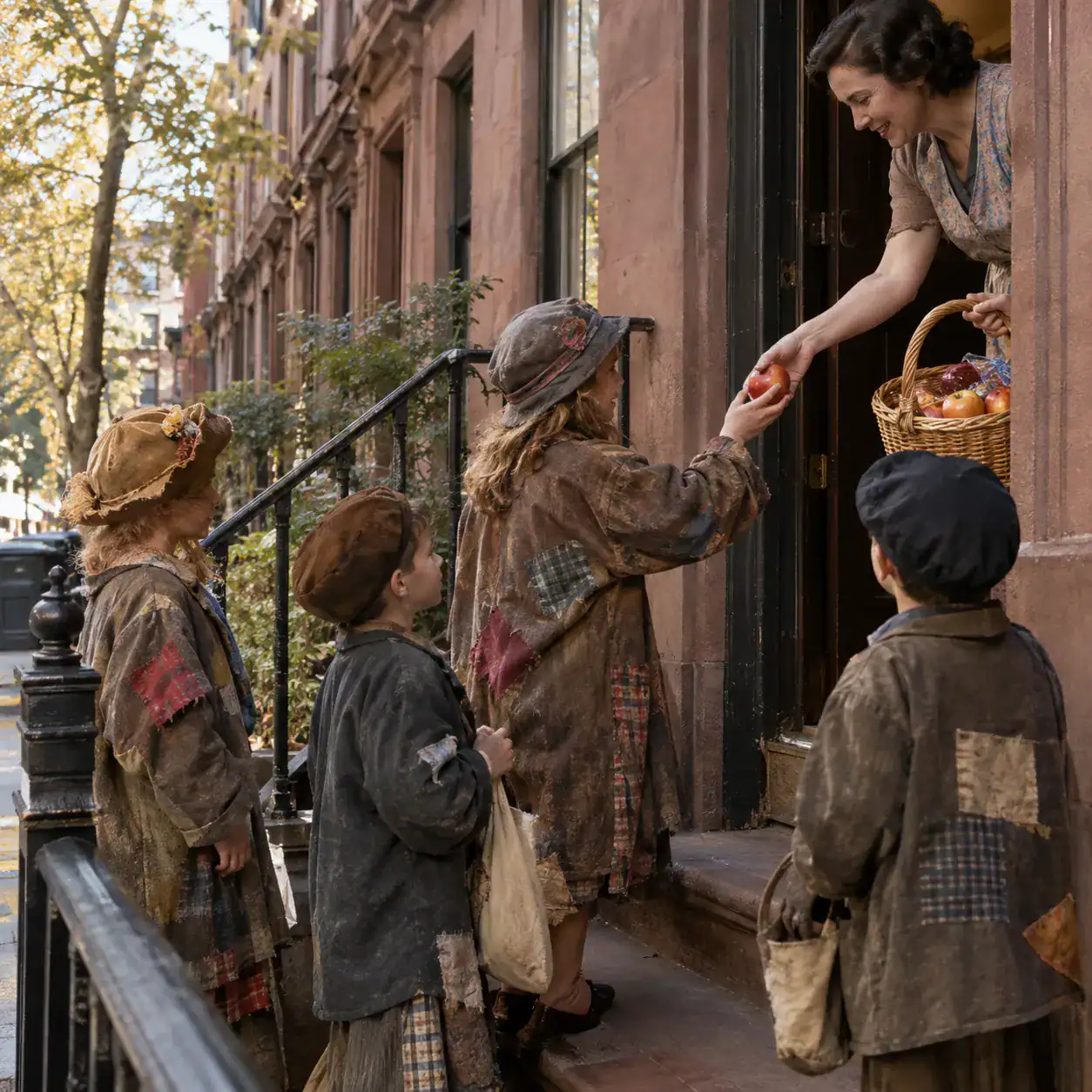
New York City once had a Thanksgiving custom that looks a lot like trick-or-treating. Children dressed as beggars went door to door asking for pennies, candy and fruit. It was called Ragamuffin Day, it dates to at least 1891, and it peaked in the early 1900s.
Adults weren’t charmed. Around 1930 the New York Times ran articles against it, saying the children “annoy adults.” By 1937 some organizations were holding Thanksgiving parades to steer kids away from begging.
By the 1950s it was a fading leftover, surviving in pockets of the city, and Halloween had taken its place. The last recorded Thanksgiving Day Ragamuffin parade, by one count, was in 1956. Bay Ridge, Brooklyn, has held a Ragamuffin parade since 1966.
2. The president ate the turkey
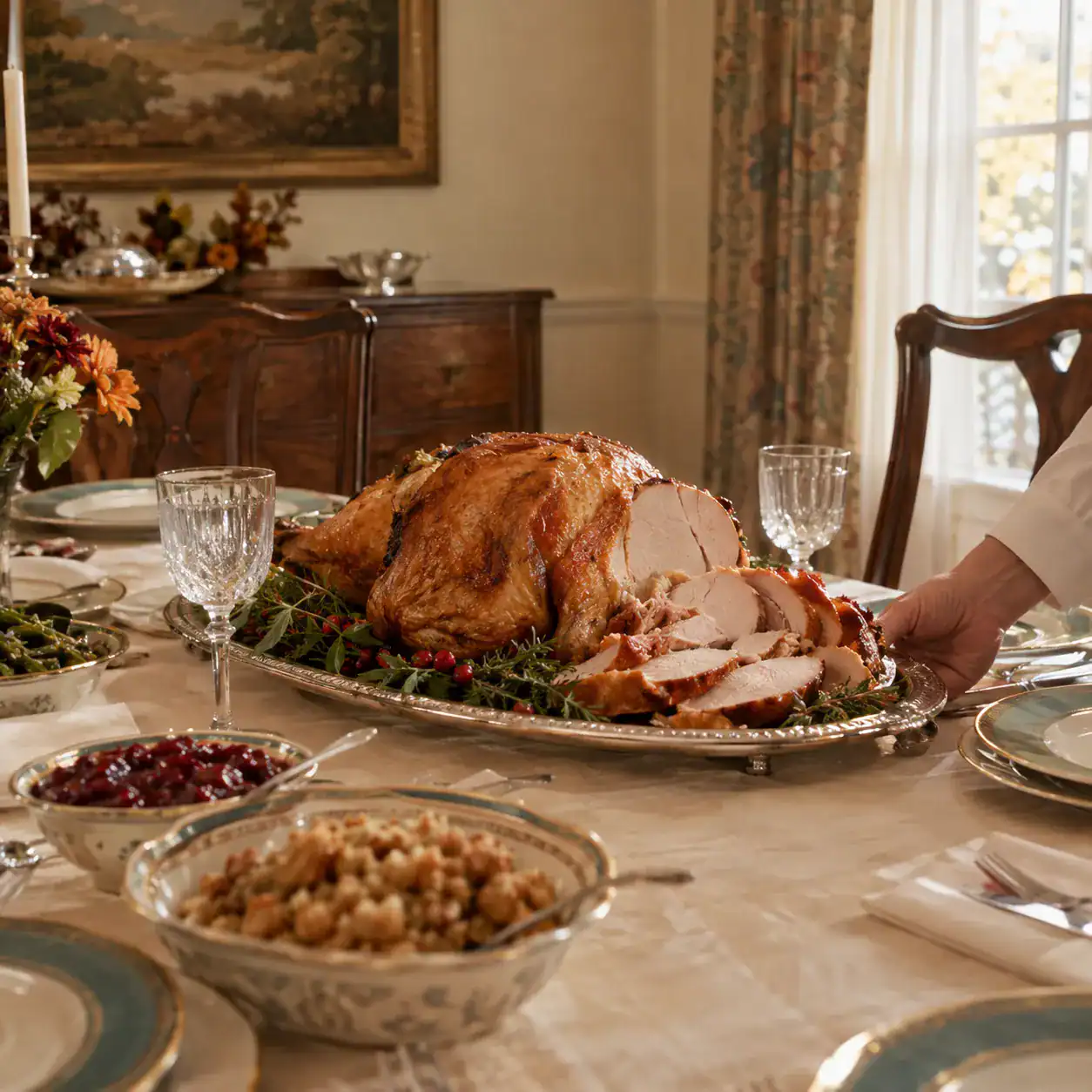
The official turkey presentation to the president started in 1947 under Harry Truman. Records at the Truman Library show he admitted eating at least some of the birds. Eisenhower Library documents show Eisenhower ate the ones presented to him during both terms.
He did have one gentle moment with a bird. In 1954, Eisenhower held a cranberry in his palm and fed it to the turkey.
On November 19, 1963, John F. Kennedy stood in the Rose Garden with a 55-pound turkey from the National Turkey Federation and the Poultry and Egg National Board and decided to spare it. “Let’s keep him going,” he said. Kennedy was assassinated three days later.
The pardon didn’t become a permanent ritual until George H. W. Bush made it one in 1989.
3. A juice cocktail before the turkey
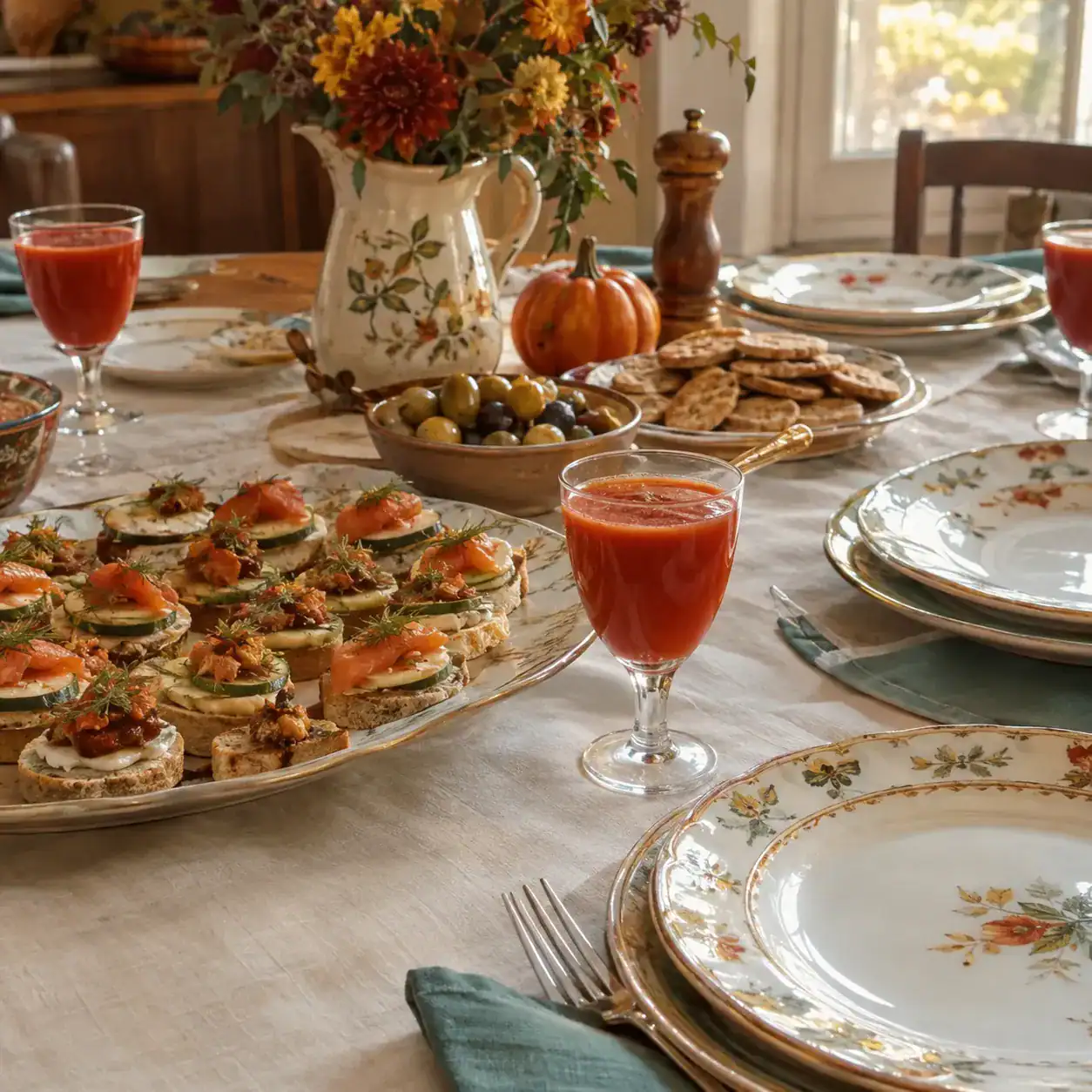
Menus of the era often opened with a small first course in a glass. A 1951 home economics textbook said an informal dinner should begin with cold, spiced tomato juice and canapés.
The 1963 Better Homes and Gardens Birthdays and Family Celebrations Thanksgiving menu started with a tomato starter, hot or cold, alongside curried wheat bites, melon pickles and assorted olives. Cookbooks of the day pushed fancier versions too, like tomato-sauerkraut juice and “pineapple-lemon foam cocktails” made with whipped egg whites.
It’s a course most hosts now skip.
4. Santa climbed a ladder into Gimbels’ window
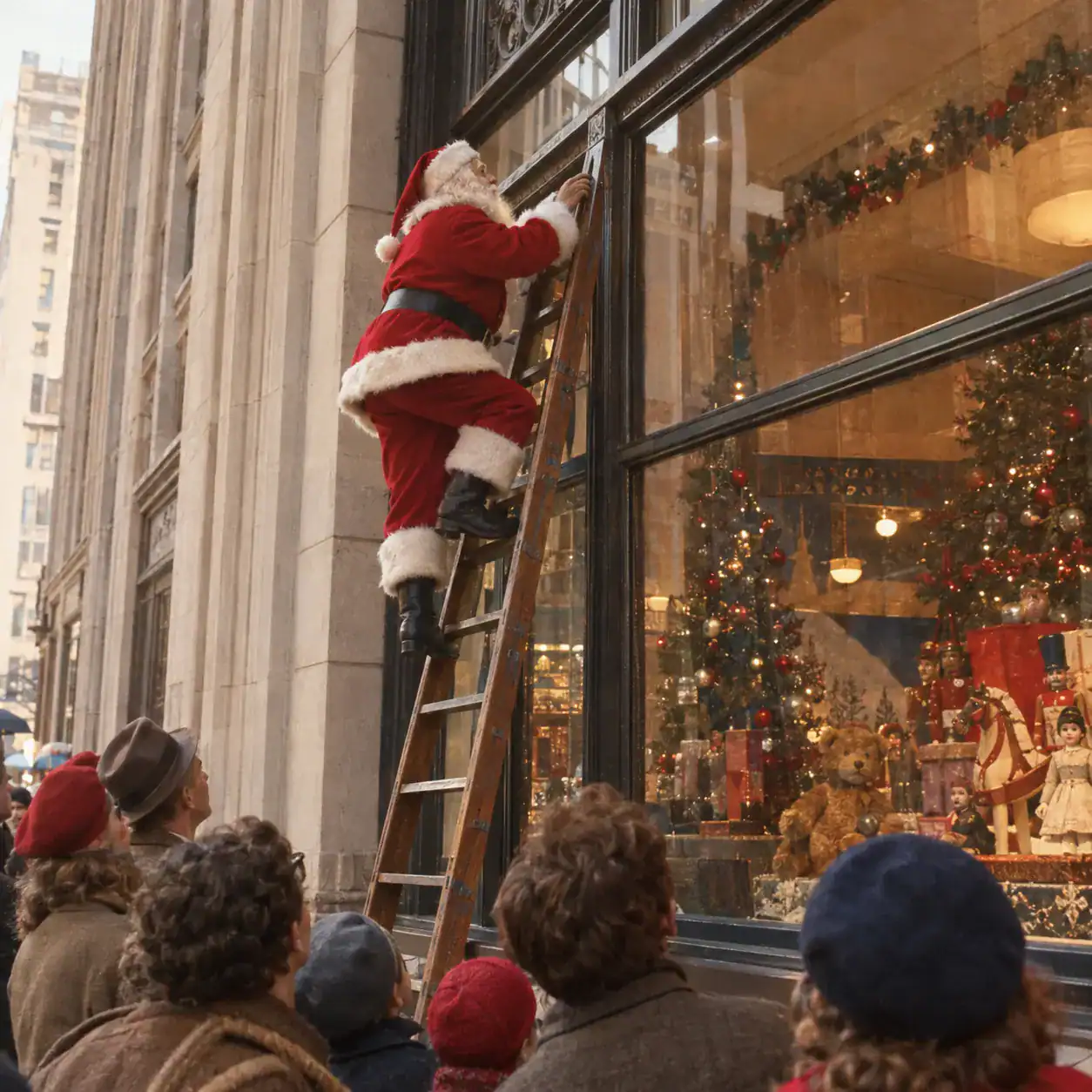
Philadelphia’s Thanksgiving parade began in 1920 as a Gimbel Brothers production. For over six decades it ended the same way. Santa climbed a ladder into the Gimbels window at Ninth and Market Streets, the signal that the holiday shopping season had started.
Then Gimbels was liquidated in 1986, and the parade nearly went with it. Stern’s chairman said, “I think the best we could do this fast is to buy the Mummers some T-shirts.” After 56 days, WPVI (Channel 6) stepped in to save it.
The parade still runs as the 6abc parade, and the Philadelphia Inquirer notes it has been called the country’s oldest Thanksgiving parade. Santa’s climb into a department store window ended with Gimbels.
5. Oysters in the stuffing, the soup and the cocktail glass
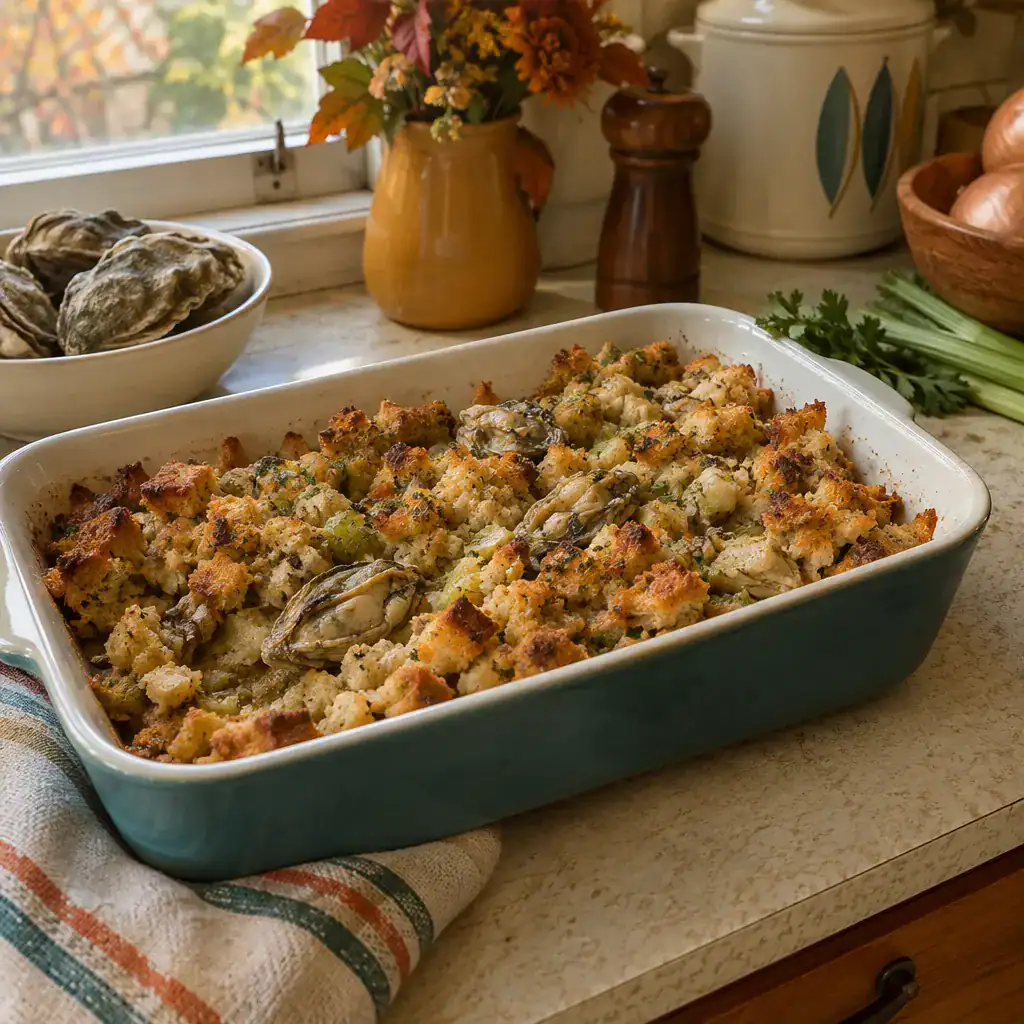
In 1954 the U.S. Fish and Wildlife Service sent out a press release calling oysters a Thanksgiving tradition. It came with recipes for cocktail sauce, oyster bisque and oyster stuffing.
Oysters were on the rails too. The Pullman Company put oyster dressing in its Thanksgiving turkeys, and a mid-20th-century Union Pacific dining-car cookbook included it.
A federal agency talking up oysters suggests they were already slipping. Food writers say oysters stayed central to the holiday for many people as late as 1956, then regulation and health-safety risks sharply cut their popularity. Oyster dressing survives mainly in South Carolina, Missouri and Kansas.
6. Detroit couldn’t watch its own Thanksgiving game
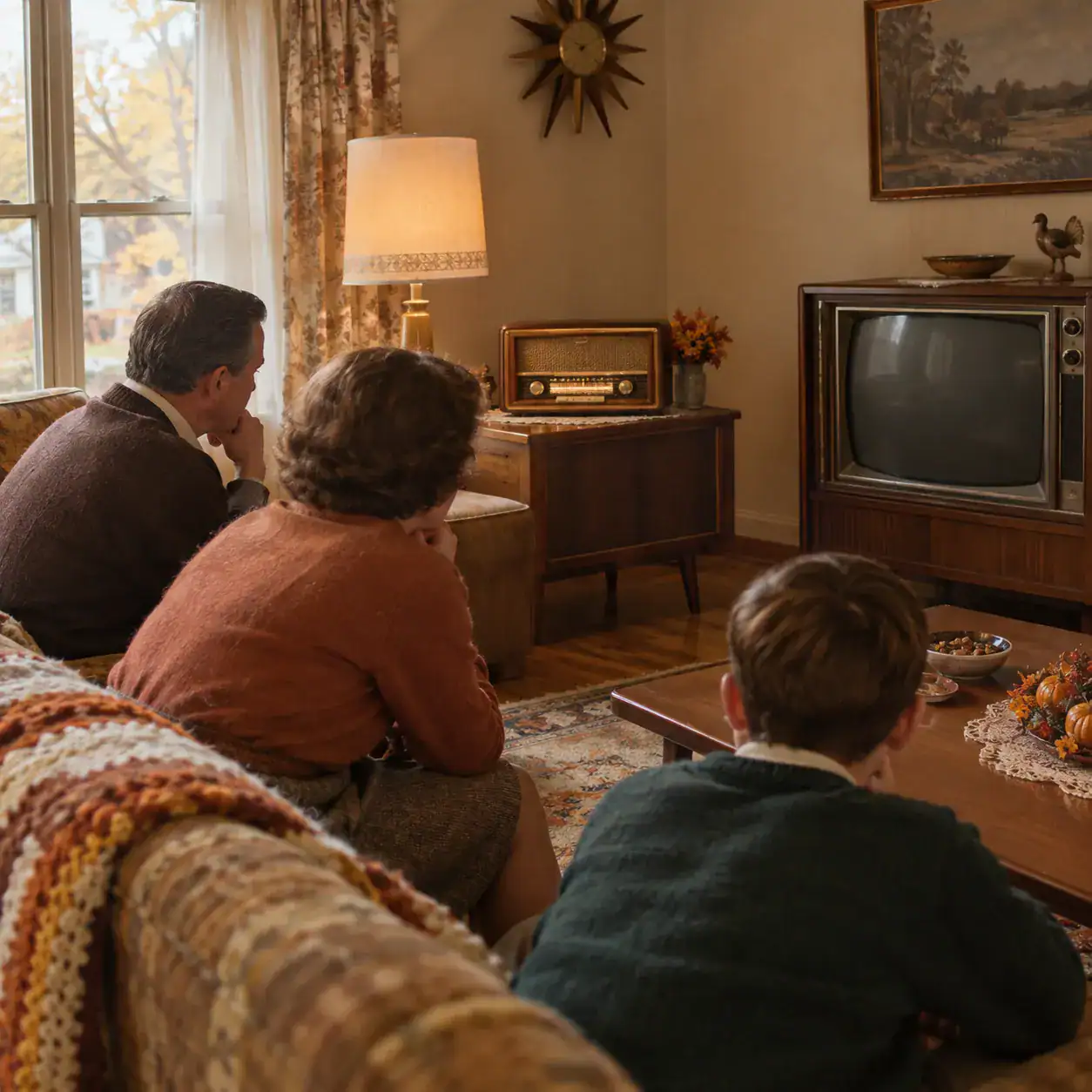
Before 1973, NFL home games were generally blacked out on local television, even when they sold out.
The Lions hosted the Thanksgiving game, and from 1951 to 1963 it was the only one in the NFL. Under the blackout rule, Detroit-area stations couldn’t carry the Lions’ home games, Thanksgiving included.
That changed when Nixon signed Public Law 93-107 on Sept. 14, 1973. It lifted home-market blackouts for games sold out 72 hours before kickoff.
7. The divided glass relish tray
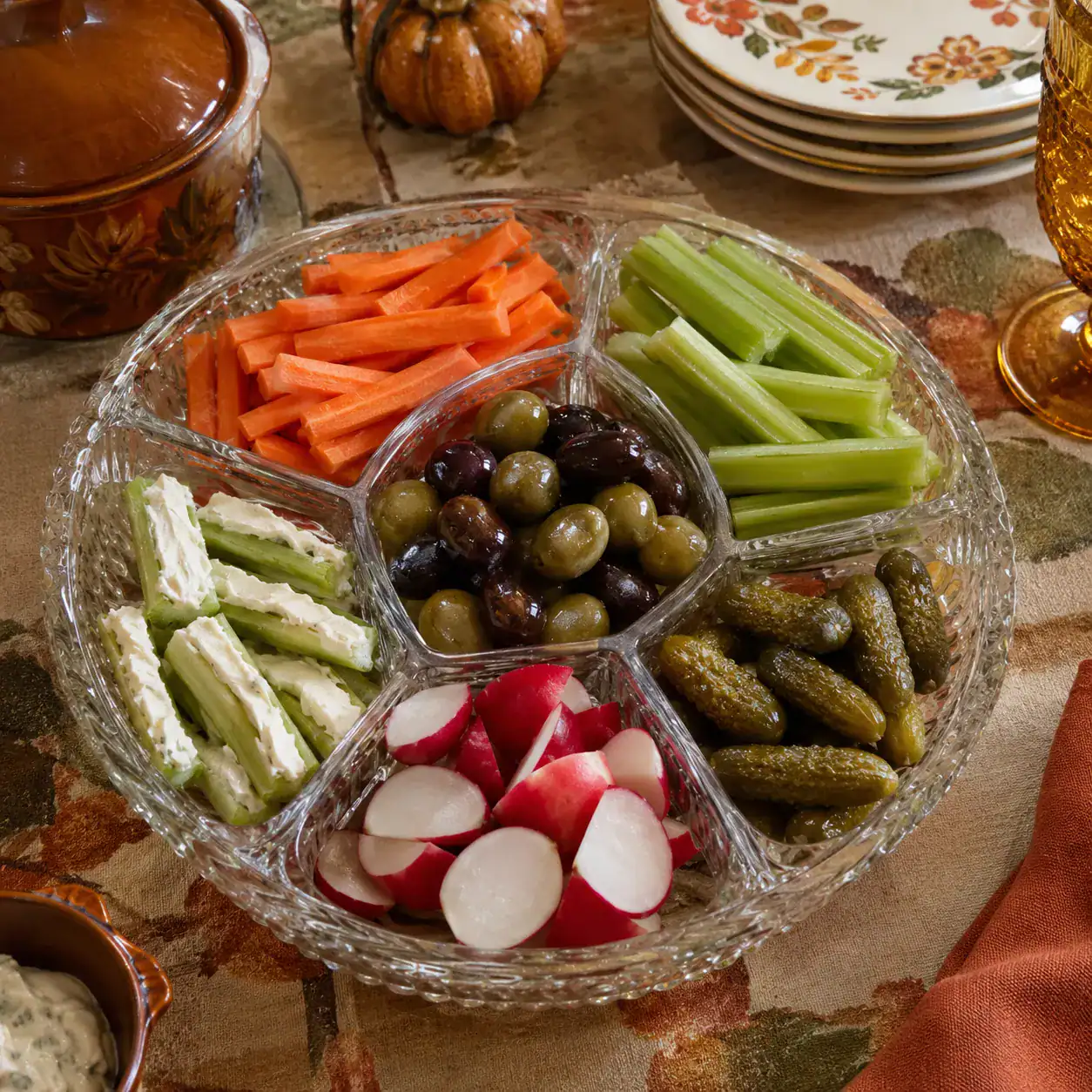
Home refrigerators made the relish tray a mainstay starting in the 1930s. A typical one held carrot sticks, celery often stuffed with cream cheese, black and pimento-stuffed olives, radish roses and sweet gherkins.
The classic dish was pressed glass, and it was partitioned for a reason. The dividers kept the pickle juices from running together.
It was a fixture of mid-century holiday tables that faded over the following decades. Restaurants kept serving relish trays after home cooks started letting them go.
8. Cranberry “candles” that you actually lit
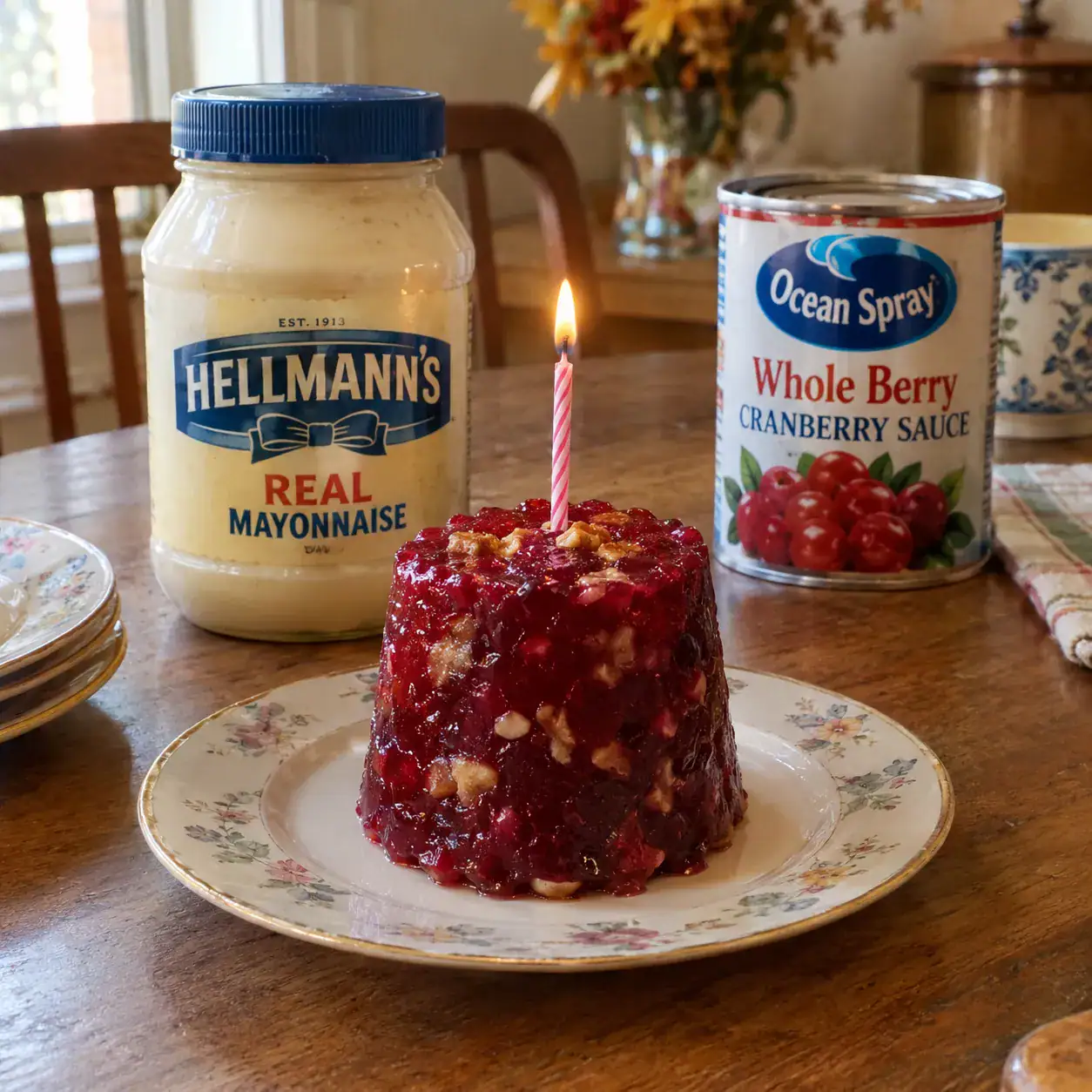
A 1960 Hellmann’s holiday ad pitched a salad called the cranberry candle. You mixed Ocean Spray whole cranberry sauce, fruit gelatin, mayonnaise, diced apple or orange and walnuts, then molded it in 6-ounce juice cans.
After unmolding, each cylinder got a birthday candle. The instructions ended: “Cut thin birthday candles in half to shorten. Insert into tops of cranberry candles. Light.”
“You’ll start a whole new family tradition,” the ad promised. Nobody knows how many families actually did. It was an advertised recipe, not a measured trend.
9. Packers vs. Lions, every single Thanksgiving
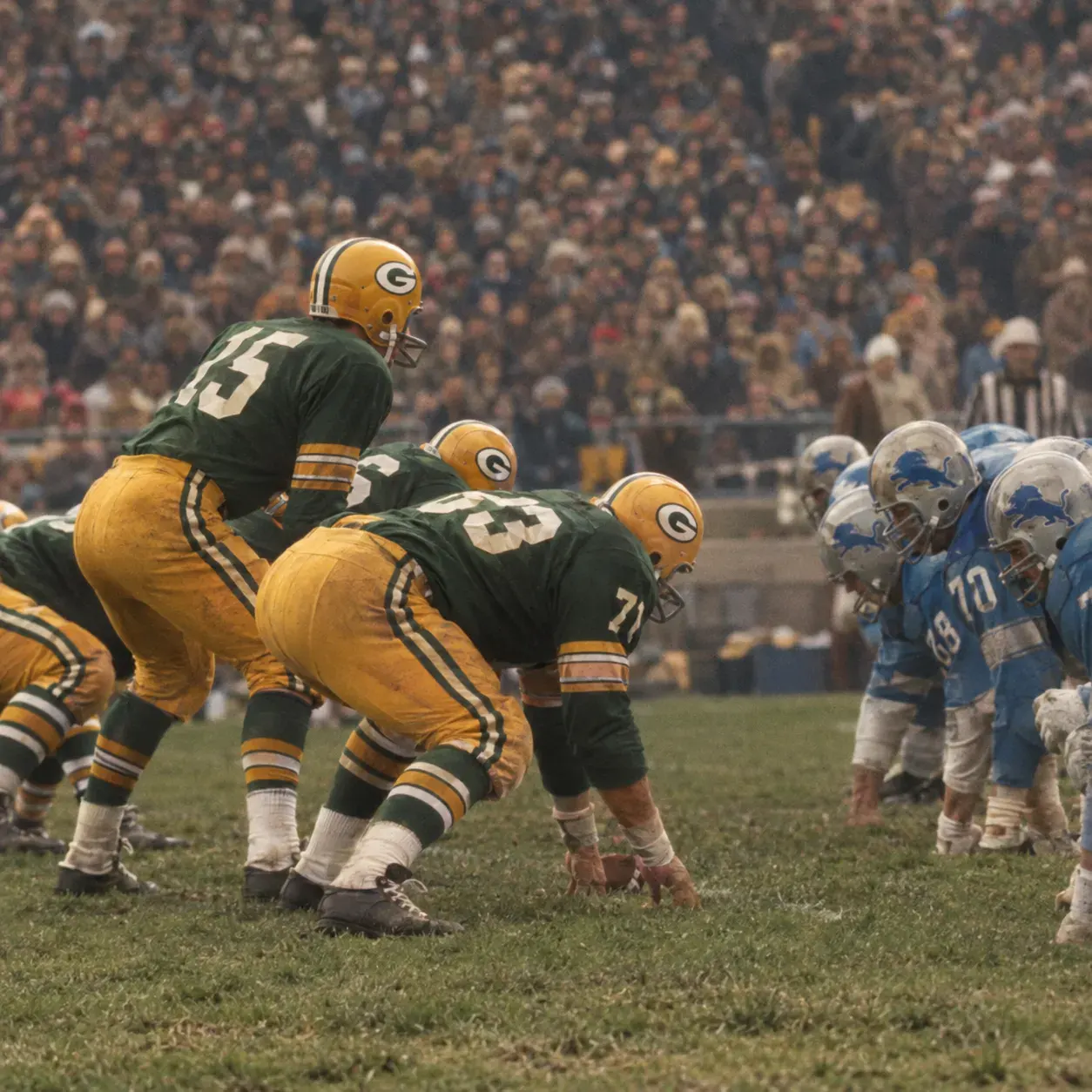
From 1951 through 1963, the Packers played the Lions every Thanksgiving. Detroit went 9-3-1 in those 13 games.
Vince Lombardi wanted out. He complained that “four days is not enough time to get ready for a game” and pressed Commissioner Pete Rozelle to find Detroit another opponent. His first objection came after the 1961 game, which Green Bay won 17-9.
His mood didn’t improve in 1962. The Lions won 26-14 and sacked Bart Starr nine times for 83 yards.
After a tie in 1963, Rozelle freed Green Bay from the annual date. The two teams didn’t meet on Thanksgiving again until 1984.
10. A bronze bird on the platter
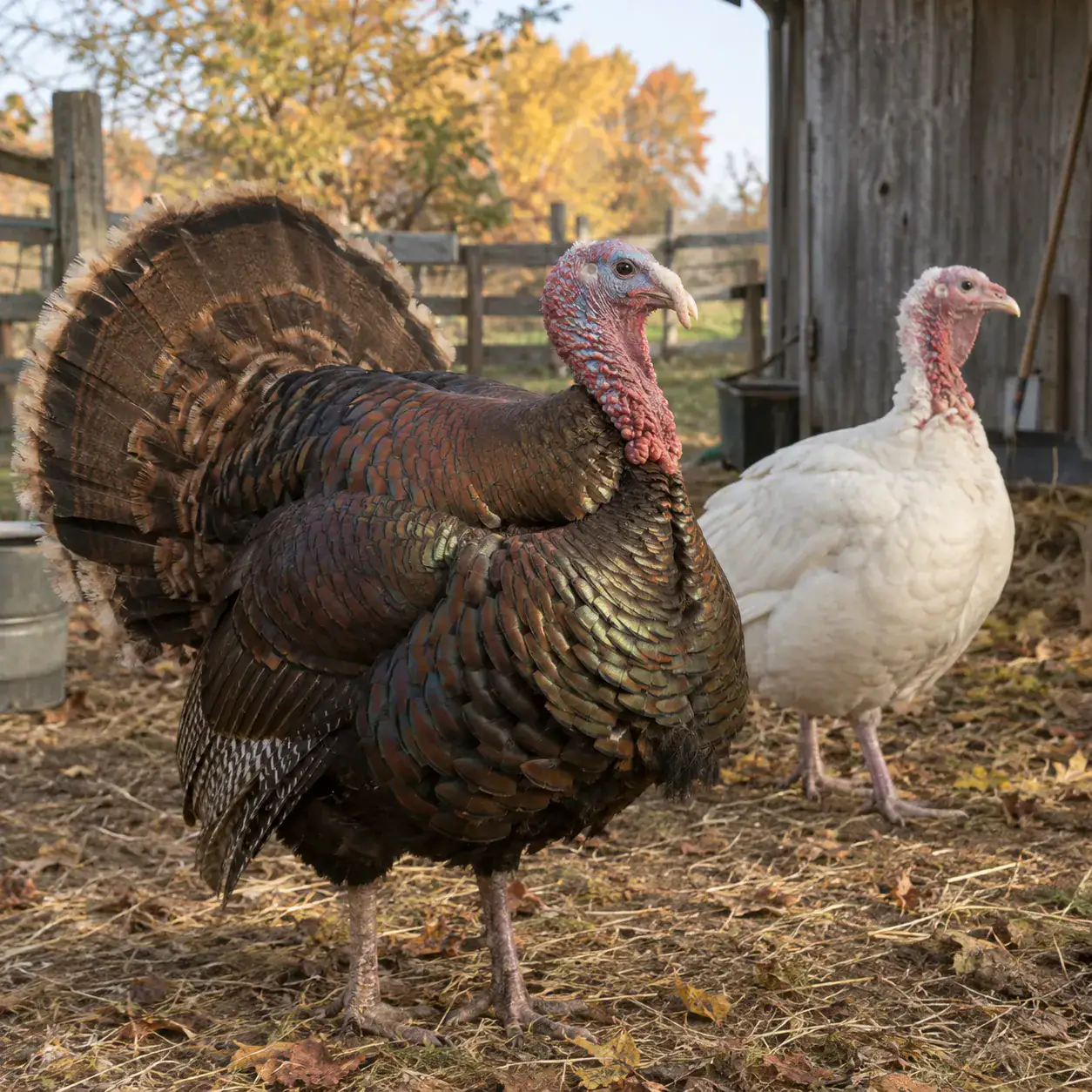
The Bronze turkey was recognized in the American Poultry Association’s Standard of Perfection in 1874. Its broad-breasted version was the commercial standard until the 1960s.
The problem was cosmetic. Dark pinfeathers showed on the plucked bird. Beginning in the 1960s, the Broad Breasted White, bred by crossing the Broad Breasted Bronze with the White Holland, replaced it in most commercial production because retailers liked its cleaner-looking carcass.
Heritage Bronze turkeys are still raised today. The bronze bird simply disappeared from most supermarket cases.
11. Newark’s Bamberger’s parade
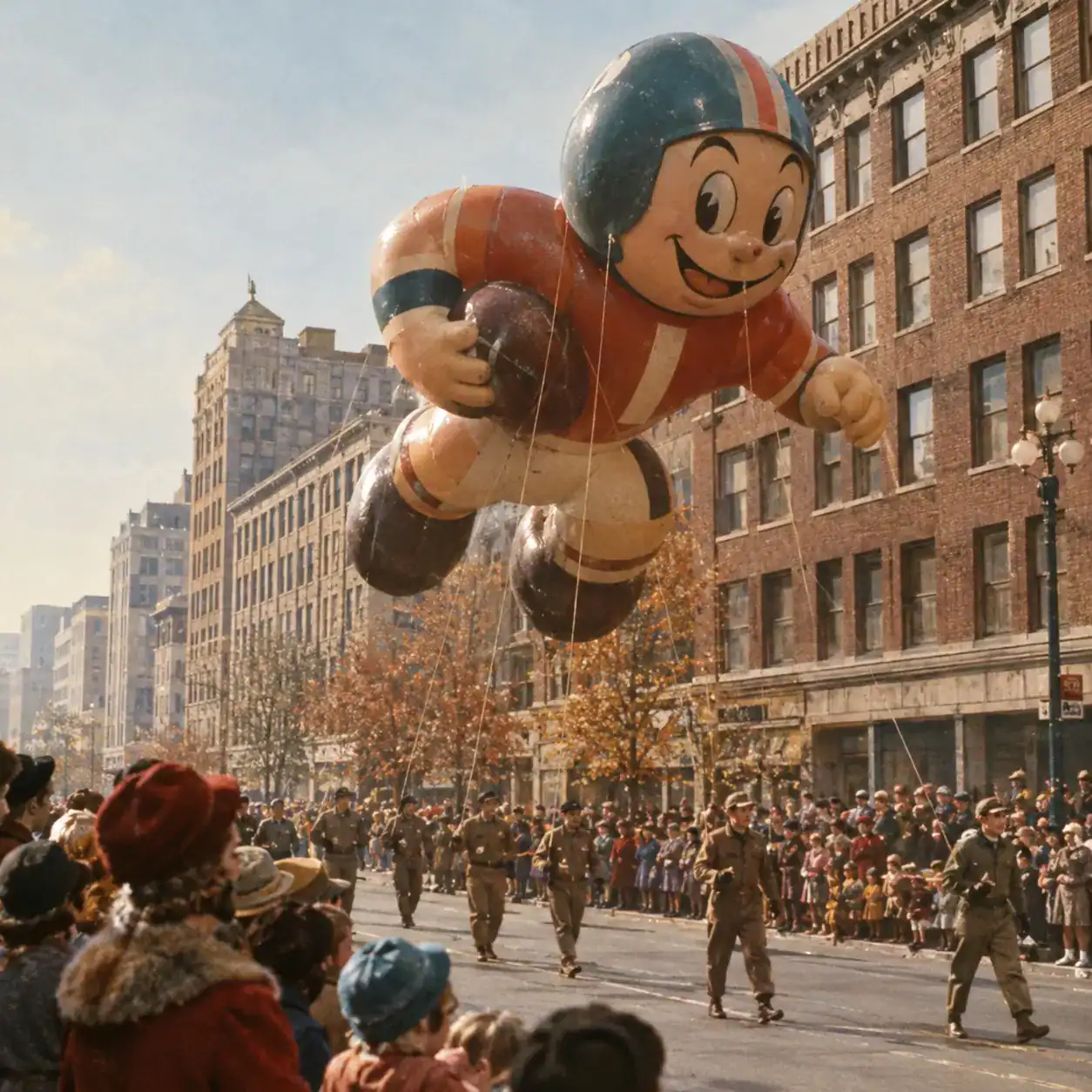
Newark had a Thanksgiving parade of its own, run by the Bamberger’s department store. Bamberger’s employee Tony Sarg organized it, with “giant comic figures,” a 100-foot dragon and helium balloons.
It drew a crowd. A 1931 account described “crowds of 250,000, more than half the population of Newark.”
According to Newark historians, the parade ran until 1957.
12. Creamed onions
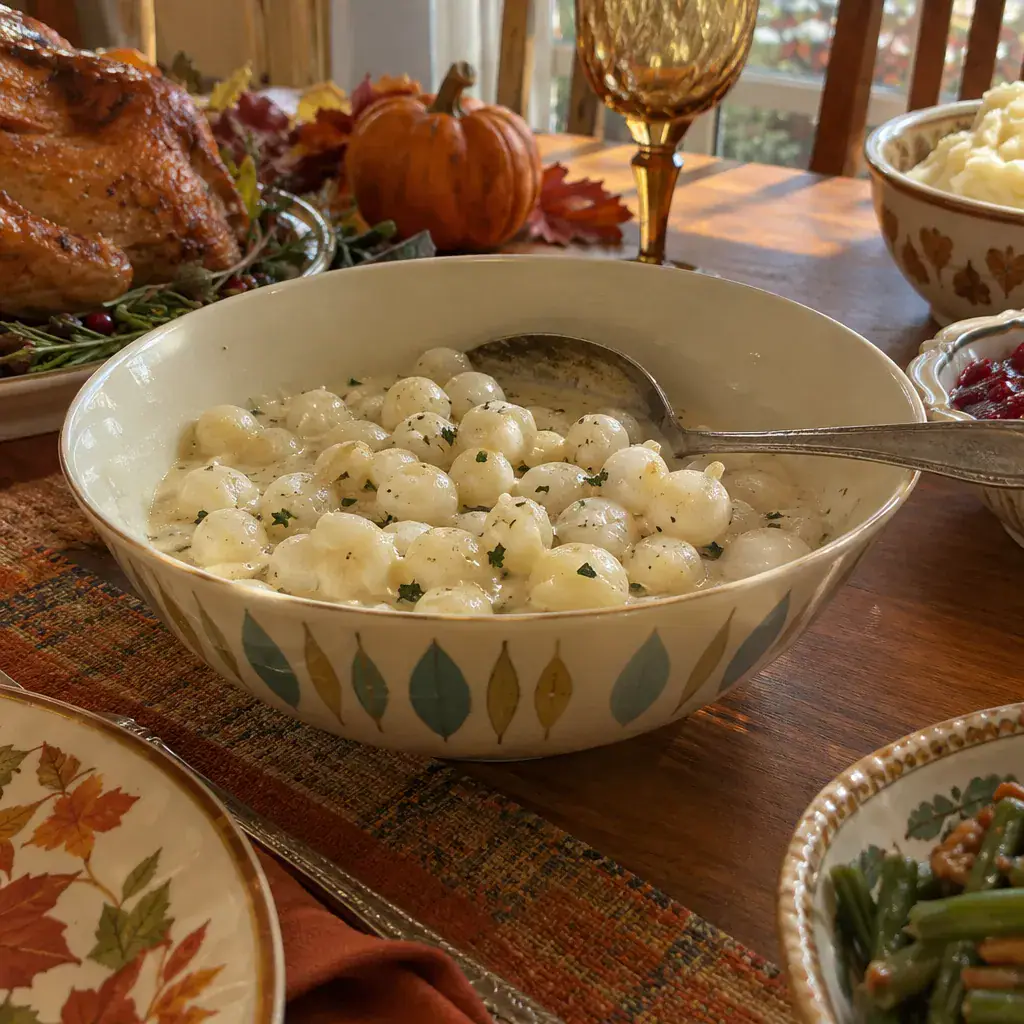
Creamed onions came out of English cooking and hit their peak in the early 20th century, when they were a go-to side for parents and grandparents nationwide. At mid-century they were still on many grandparents’ tables.
Then they slipped away. One food writer suggests they’re just too much work, or that their “bland, beige appearance” did them in. Peeling a pile of small onions was probably part of it.
Tasting Table calls them “The Creamy Onion Side Dish No One’s Really Eaten In Decades.” That’s a little strong. Some New England tables still serve them.
13. Jell-O salad as a holiday showpiece
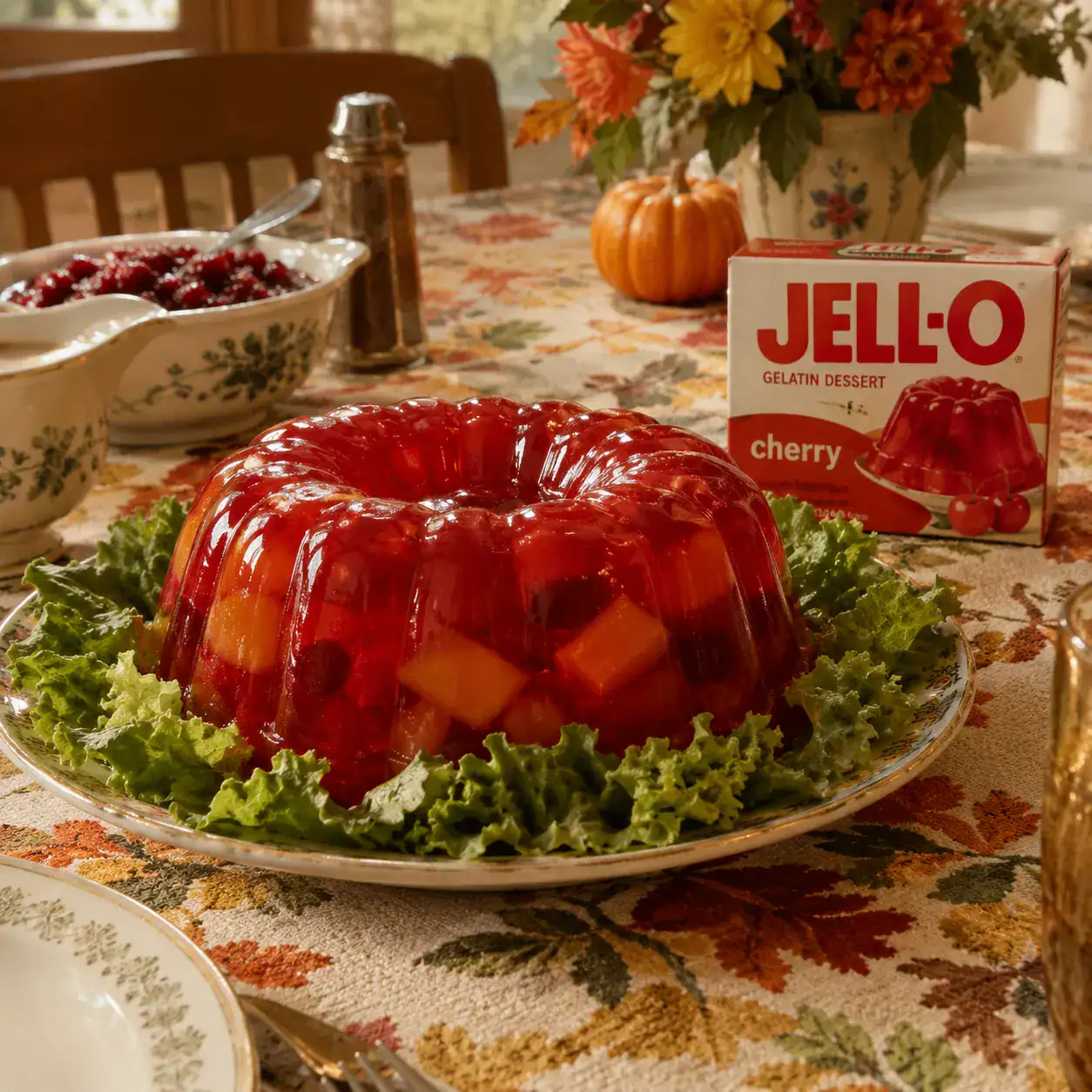
Jell-O’s 1955 slogan was “A Jell-O salad makes the meal.” A 1961 Bon Appétit holiday issue suggested a gelatin Waldorf salad with a gelatin sour-cream-and-onion dressing.
Jell-O sales peaked in 1968, then fell about 2% a year for two decades. By 1987 the company sold roughly half as many boxes. Those figures cover the whole brand, not just salads, but the molded-salad trend mostly died out in the 1970s.
Culinary historian Laura Shapiro summed up how strange it now looks: “Nobody but us thinks that a salad is a red molded strawberry flavored thing on a lettuce leaf.” Jell-O salads still hold on in parts of the Midwest and in Latter-day Saint communities.
14. Turkey roasted in a grocery bag
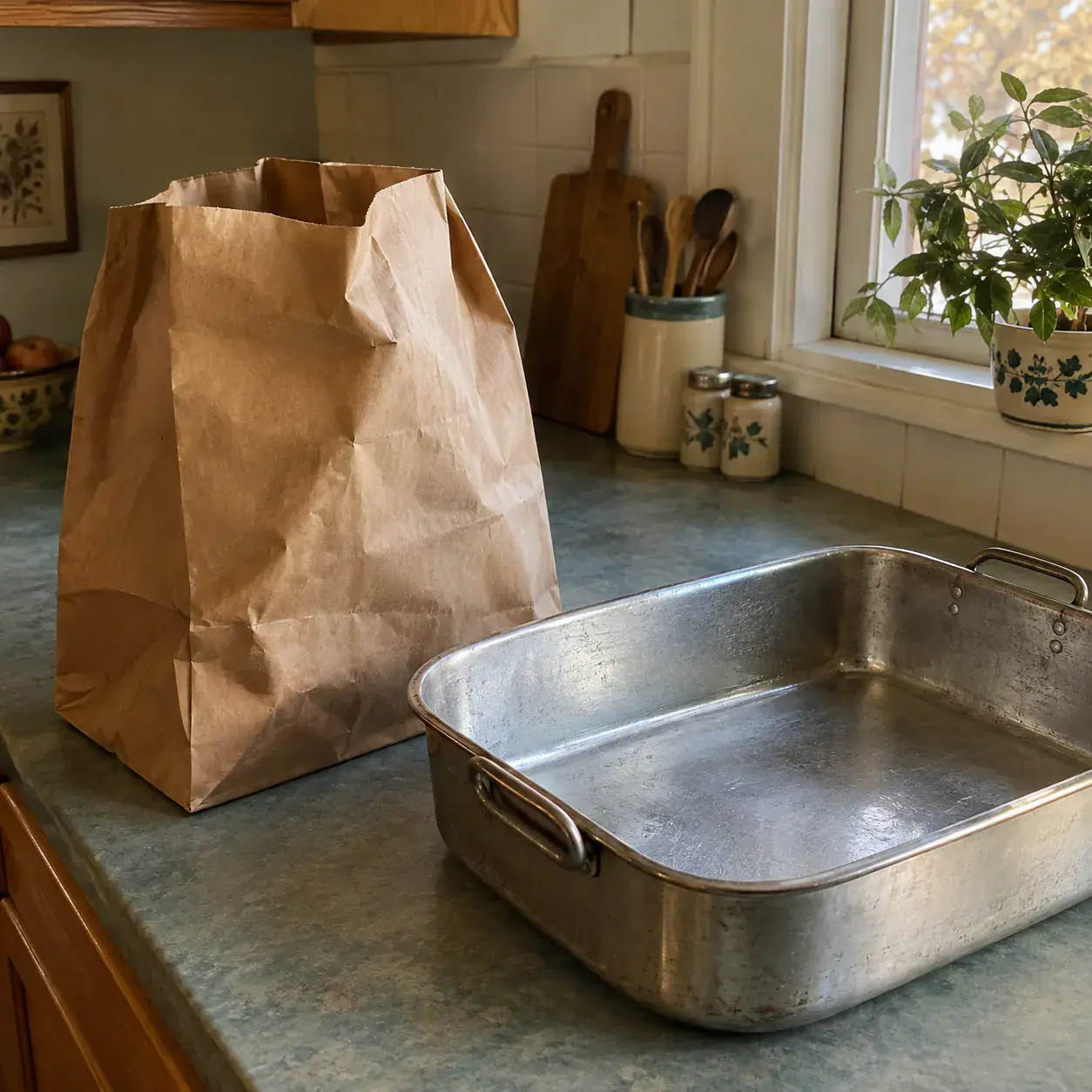
One Bronx family’s tradition started in the 1950s, when the mother began roasting the turkey inside an oiled brown paper grocery bag. “Once she started doing it, it was a revelation,” the family recalls. They still make it.
It was a method many home cooks swore by. Food-safety experts say not to try it.
The University of Illinois Extension says brown paper bags were never intended for cooking, and recycled bags can contain glue, ink and chemicals, some even tiny metal shavings. USDA-based guidance warns the bags “are not sanitary, may cause a fire, and can emit toxic fumes.” A store-bought oven bag is the safe replacement.
15. Penn vs. Cornell on Thanksgiving Day
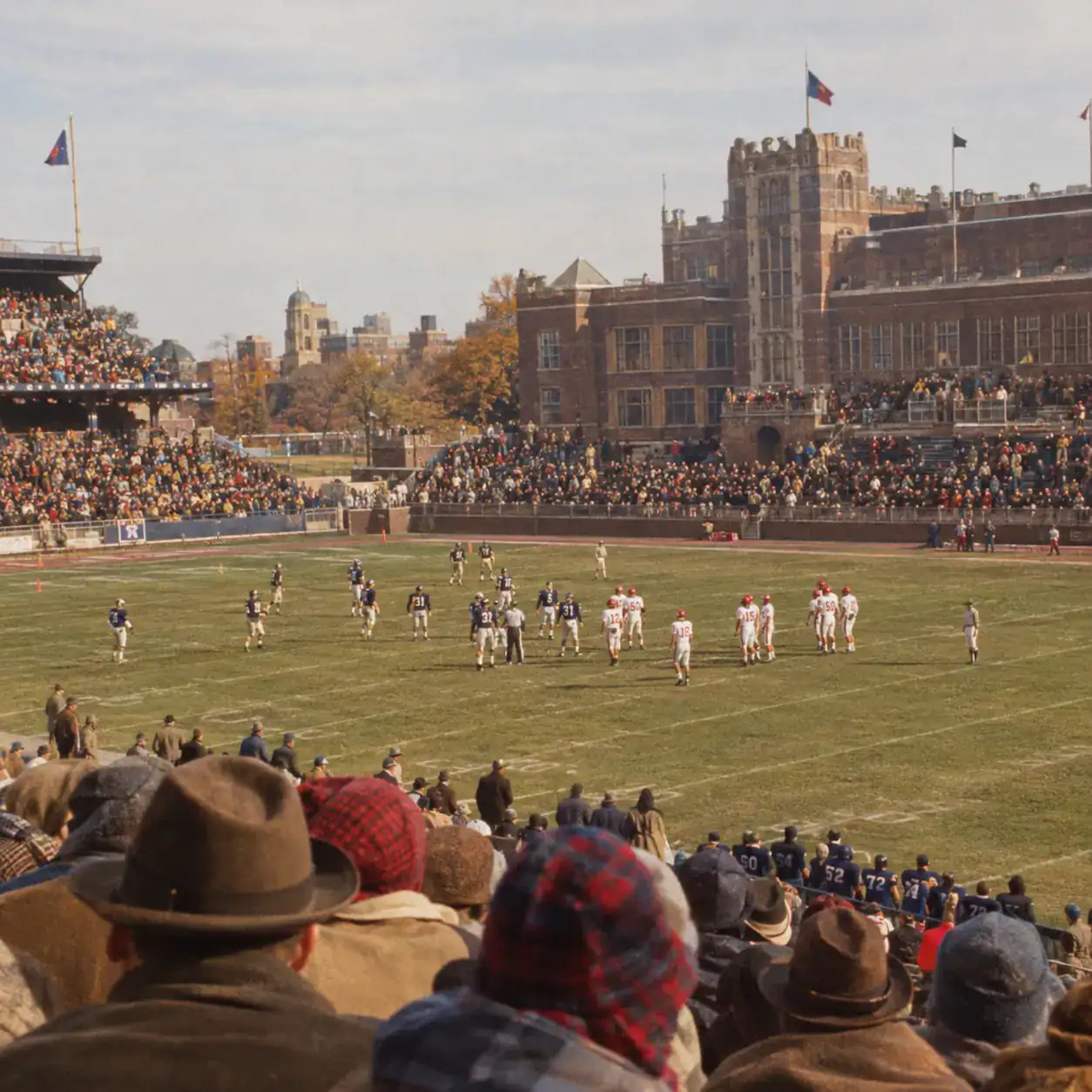
Penn and Cornell played on Thanksgiving almost every year from 1895 to 1938. In 1938 the crowd at Franklin Field reached 70,000.
FDR’s 1939 change to the holiday’s date interrupted the tradition. The game came back to Thanksgiving on and off after that, and through much of the 1950s and into the mid-’60s, Penn and Cornell still played on Thanksgiving Day.
By 1965 attendance had fallen to 10,543, and the rivalry moved to a standard home-and-away schedule. One last Thanksgiving game in 1989 drew 10,000.
16. “Black Friday” was a police complaint
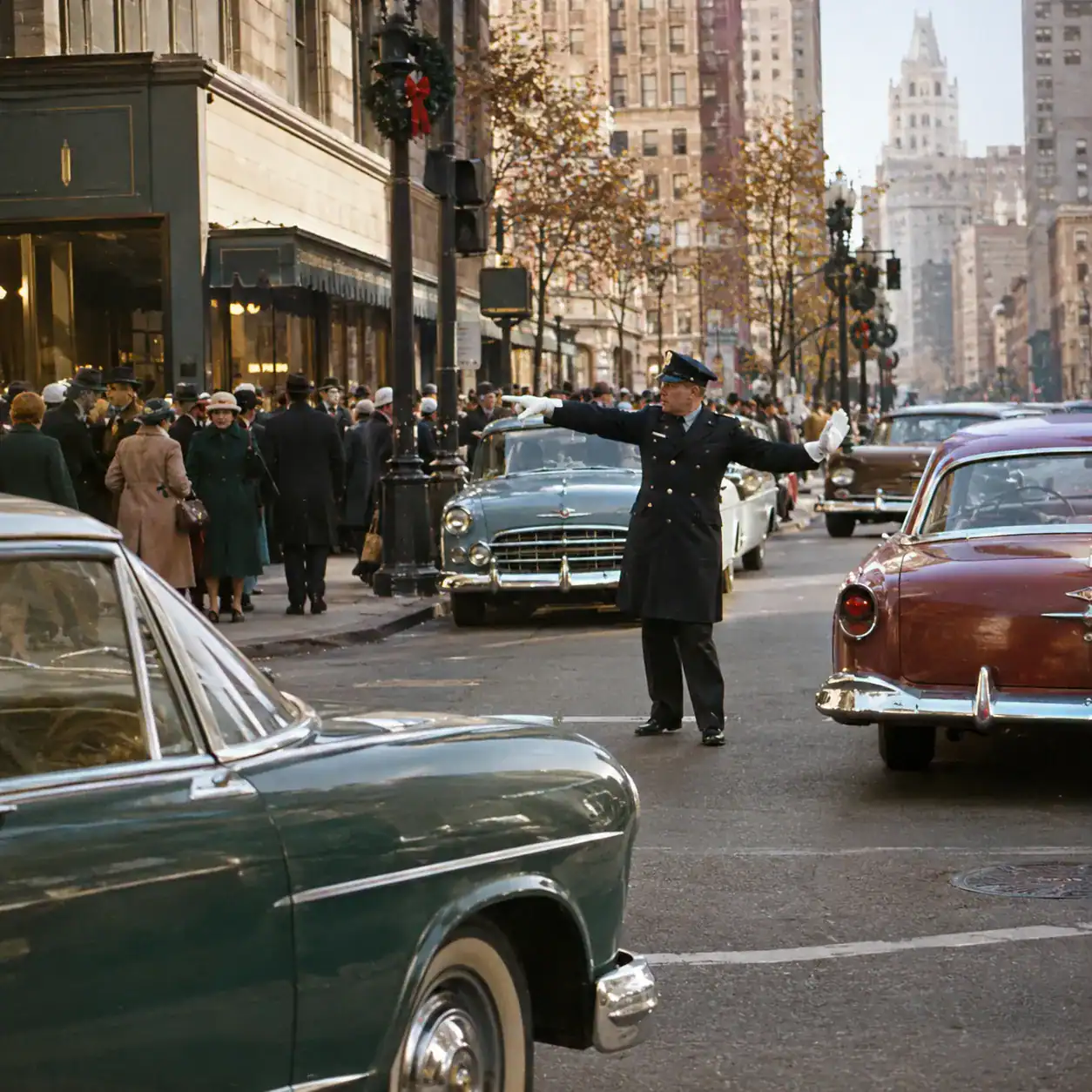
In the 1950s, “Black Friday” wasn’t a sales pitch. Philadelphia police used it for the chaos on the day after Thanksgiving, when hordes of suburban shoppers and tourists flooded the city ahead of the Army-Navy game that Saturday. Officers called the next day Black Saturday.
In 1961 merchants tried to rename it “Big Friday.” It didn’t take. The story about stores going from red ink to black was in print by 1981.
The shopping day survived. The police meaning didn’t. The Army-Navy game later settled on the first Saturday in December, then moved to the second Saturday in 2009.
17. Hot Dr Pepper with a lemon slice
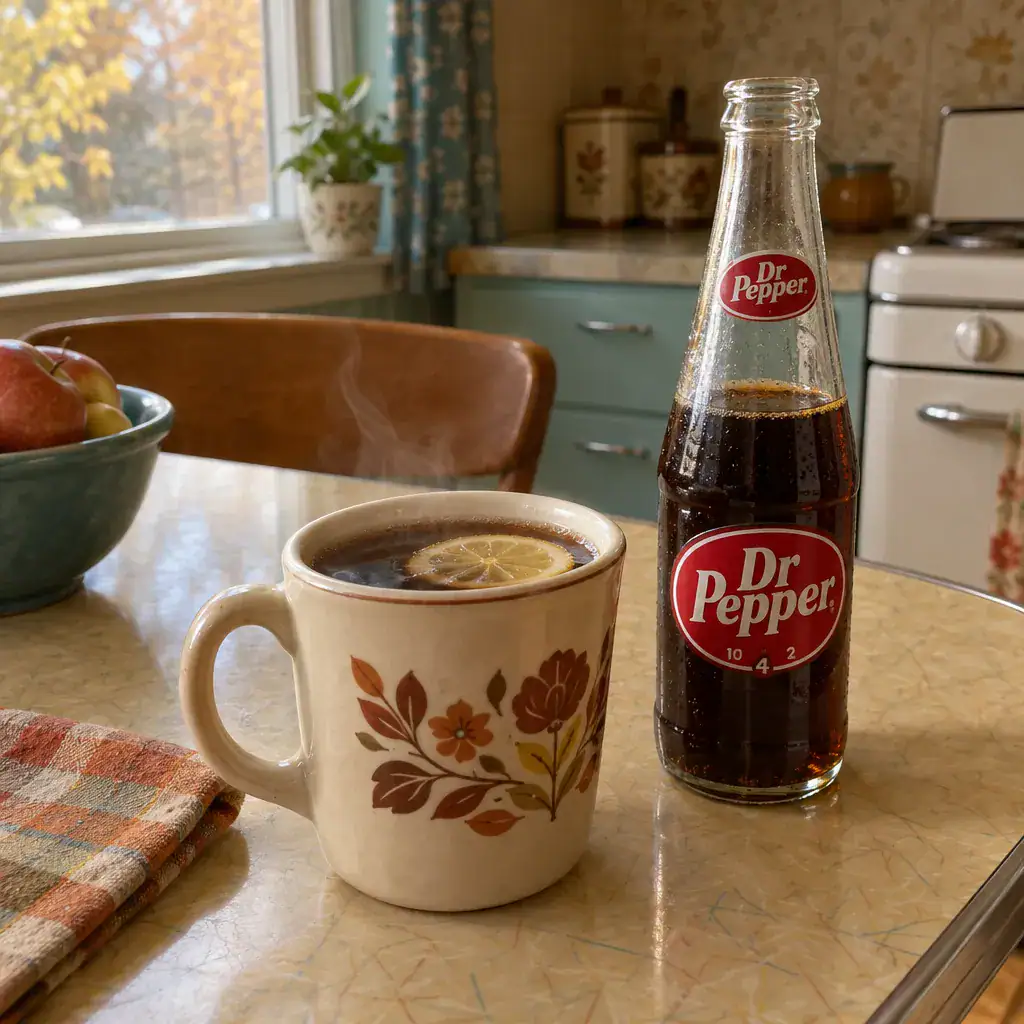
In September 1958, Dr Pepper president Wesby R. Parker came up with a hot version of the soda. It was heated to about 180°F and poured over a thin slice of lemon. Overheating ruined the flavor, and the oils in the lemon rind mattered.
Ads in the 1960s, including TV spots with Dick Clark, sold it as a holiday drink, and you could mail away for special mugs. It stayed popular on holiday tables, especially in Texas and the South, well into the 1970s.
The Dr Pepper Museum in Waco still serves it from November through February.
18. Paper frills on the drumsticks
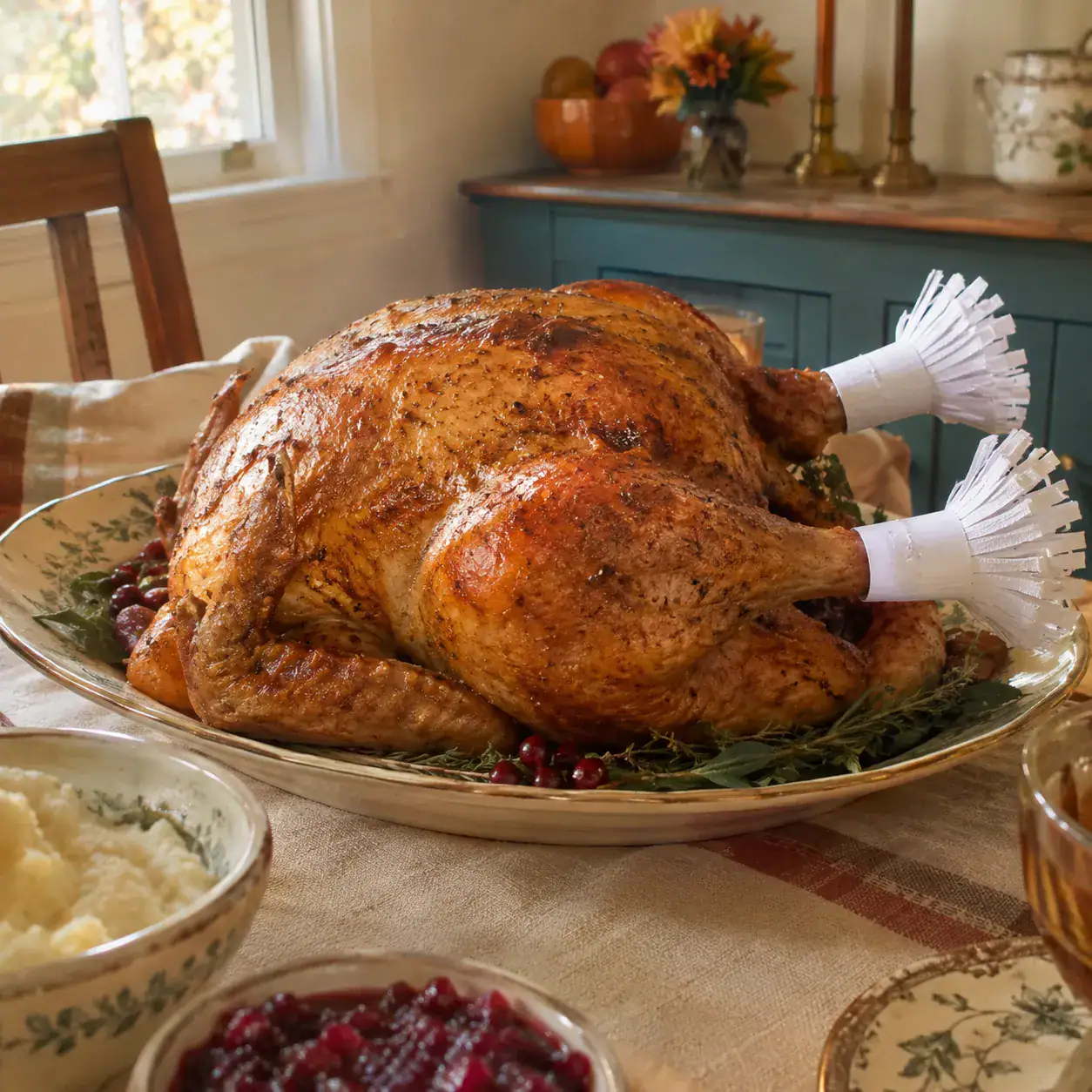
Paper trimmings on bone ends go back to the 17th century, according to John Cordy Jeaffreson’s A Book About the Table from 1875. Some people call them turkey booties.
They were still a party trick after the war. In 1951, Iowa’s Kossuth County Advance told readers, “Dress up any leggy food with them for parties or the children’s birthdays…They will be thrilled.”
They’ve fallen out of fashion in recent decades.
19. Hudson’s parade in Detroit
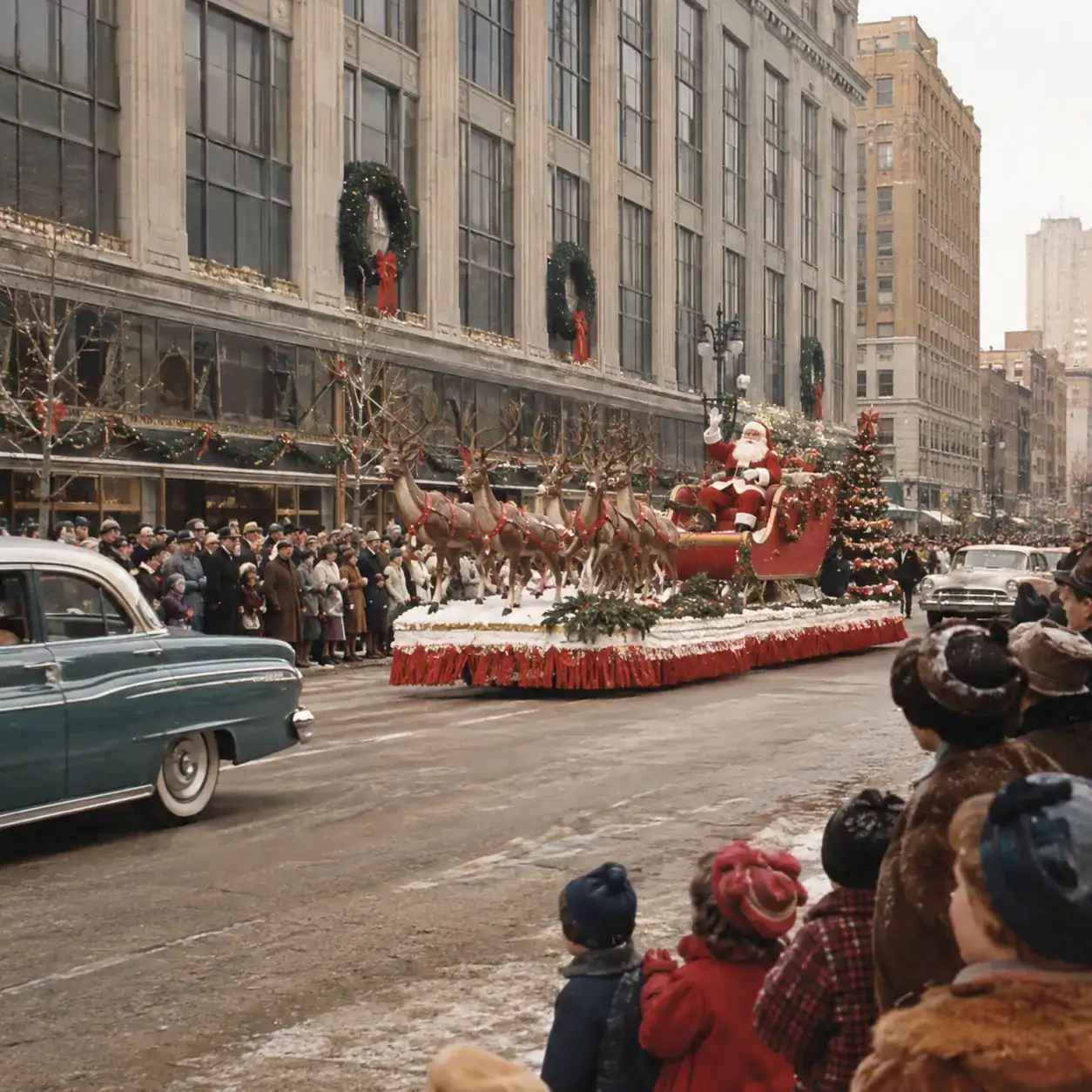
Detroit’s Thanksgiving parade was a department store creation too. Charles Wendel, display manager of the J.L. Hudson Company, started it in 1924, and Santa has appeared since 1925.
Hudson’s stayed the primary sponsor until 1979. That year, facing economic hardship in a struggling city, it handed management of the parade to Detroit Renaissance.
The parade carries on as America’s Thanksgiving Parade, run by the Michigan Thanksgiving Parade Foundation.
20. Mincemeat pie from the jar
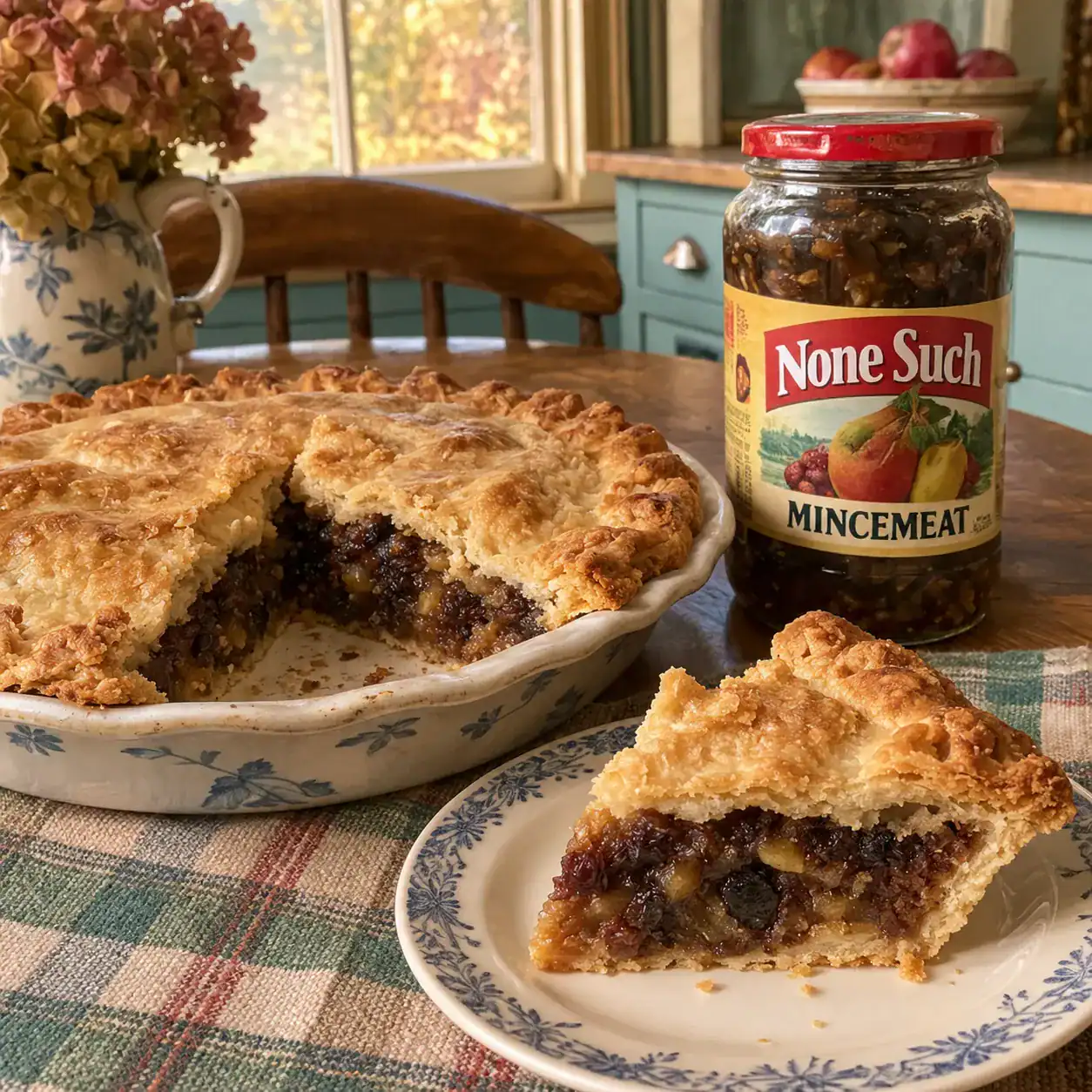
Mincemeat has deep Thanksgiving roots. Puritans served it at Thanksgiving because they didn’t celebrate Christmas.
Mid-century mincemeat could still contain meat. A 1995 Minnesota Public Radio report recalls a beef-and-apple recipe made in 1957, alongside the commercially sold None Such brand.
A culinary historian explained the slide to The Takeout: “Once there was less need to preserve meat, there was less need to make mincemeat.” In 1995, Minnesota Public Radio reported that Borden had no plans to drop None Such “even though sales keep going down.” Today it’s mostly a grandparent’s pie.
21. Pilgrim hats and paper headdresses at school
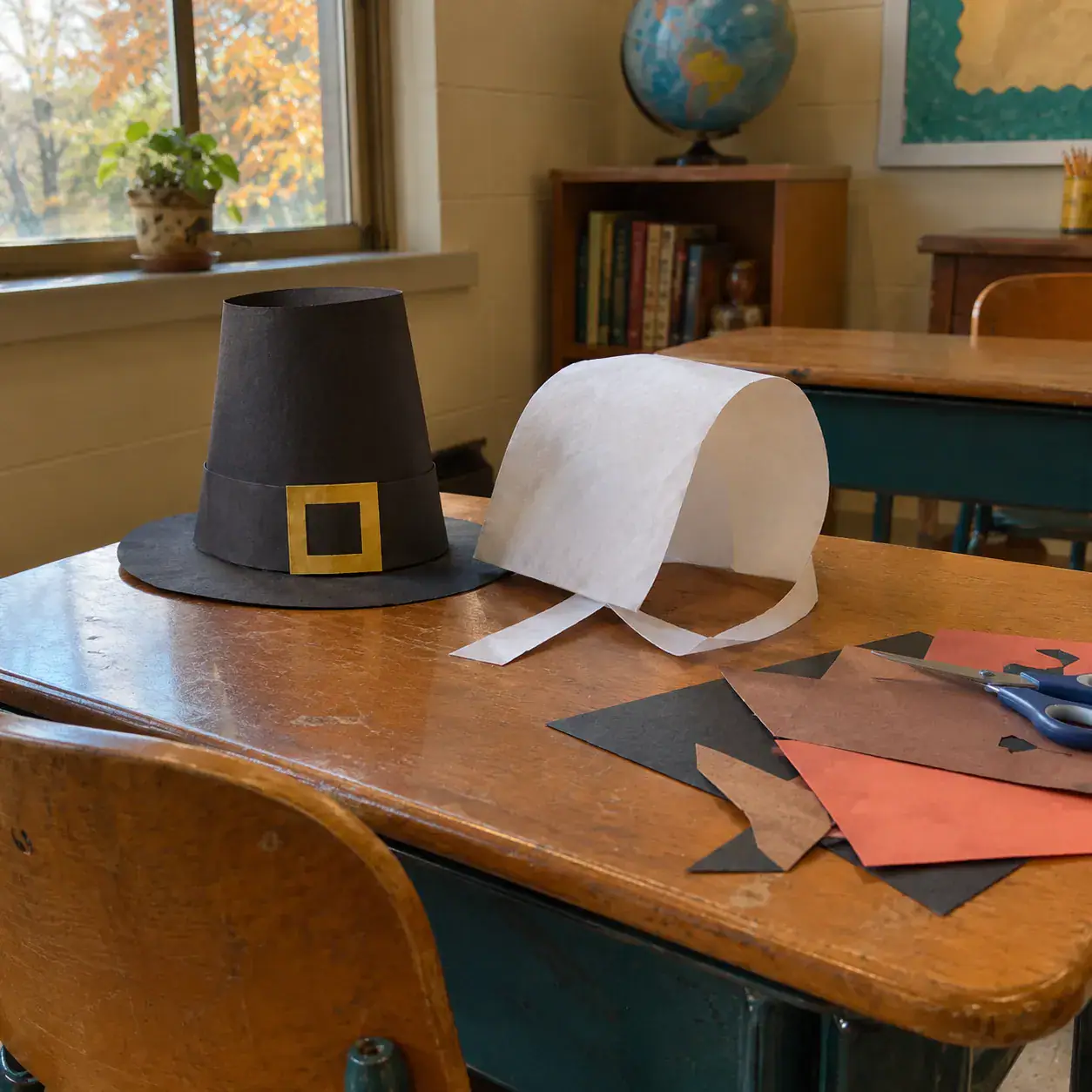
For generations of schoolchildren, Thanksgiving meant handmade paper Pilgrim hats and bonnets, or fringed vests and paper Native American headdresses. In Claremont, California, two elementary schools held a joint Thanksgiving feast in those costumes for four decades, until the district dropped the costumes after parent complaints.
The objections were that the costumes were stereotypical, and educators pushed for more accurate teaching about the holiday. Arlington Public Schools in Massachusetts ended its annual Colonial costume tradition in 2018.
Many schools have dropped the costumes, though some still use them. “Progress seems to be gaining momentum, but there’s still a lot of work to do,” Ed Schupman of the Smithsonian’s Native Knowledge 360 said in 2020.
22. Texas vs. Texas A&M on Thanksgiving Day
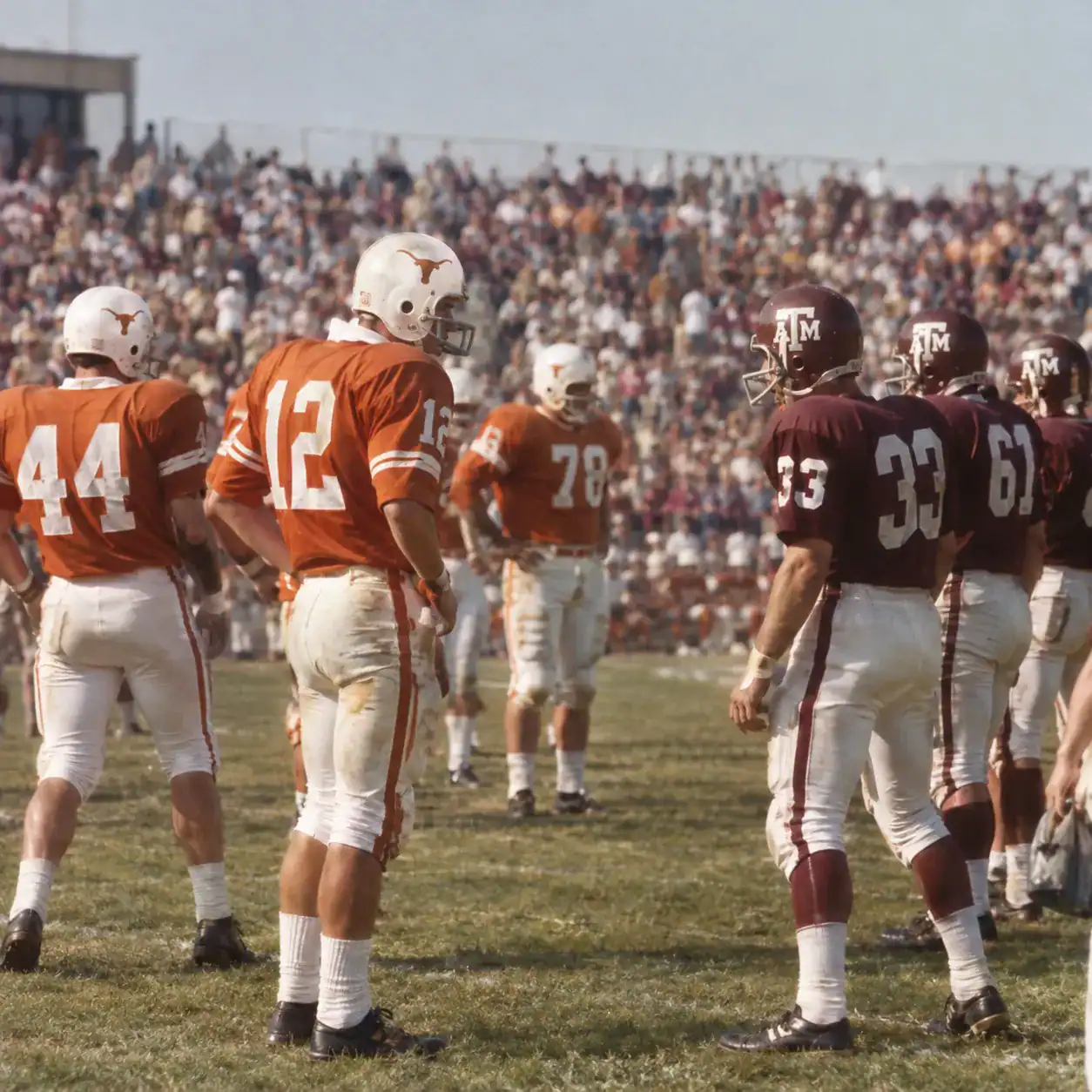
Texas and Texas A&M played 63 of their games on Thanksgiving. The postwar decades belonged to Texas. From 1951 through 1974, the Longhorns won 21 of 24, including a 9-7 win over No. 1 A&M in 1957.
On Thanksgiving Day 2011, what had been the third-longest-running rivalry in college football ended.
The rivalry came back on Saturday, November 30, 2024, with Texas winning 17-7 at Kyle Field, and the 2025 game was set for the Friday after Thanksgiving. The Thanksgiving Day game is the part that’s gone.
23. The hometown high school Turkey Day game
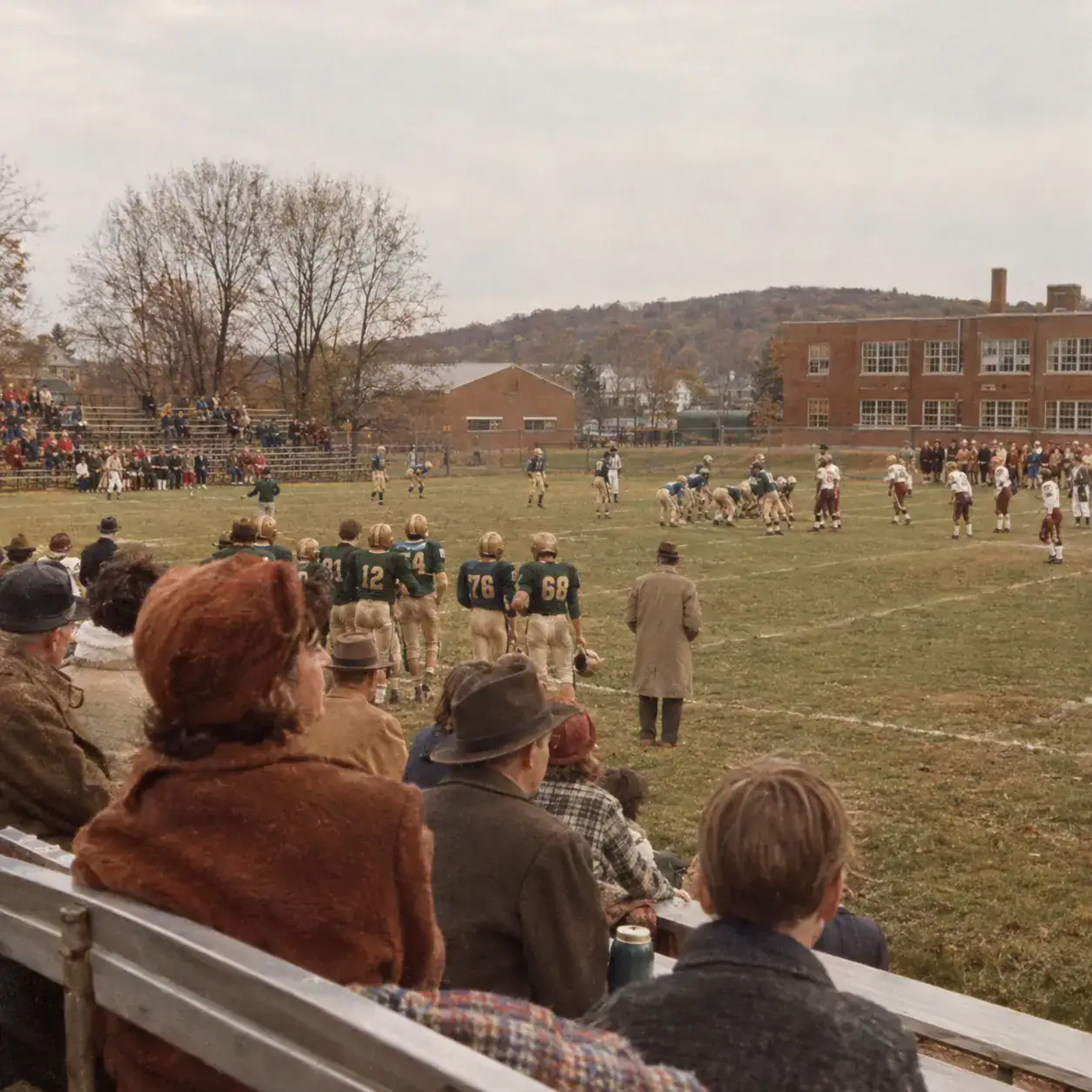
On November 23, 1965, the Wilkes-Barre Record listed nine local Thanksgiving rivalries, including Kingston against Coughlin, Plymouth against Nanticoke and Avoca against Duryea.
Those annual schoolboy games “slowly dissolved in the mid-1970s,” the Times Leader reports, as regional playoffs arrived and schools merged. In Southeastern Pennsylvania, Thanksgiving games fell from 28 in 2005 to 10 in recent years, largely because of statewide playoffs.
Some very old rivalries have ended. Roselle against Roselle Park in New Jersey wrapped up after 106 years. Massachusetts and other states still have plenty of Turkey Day games, but in many places they’ve thinned out.
24. The good china and Sunday clothes
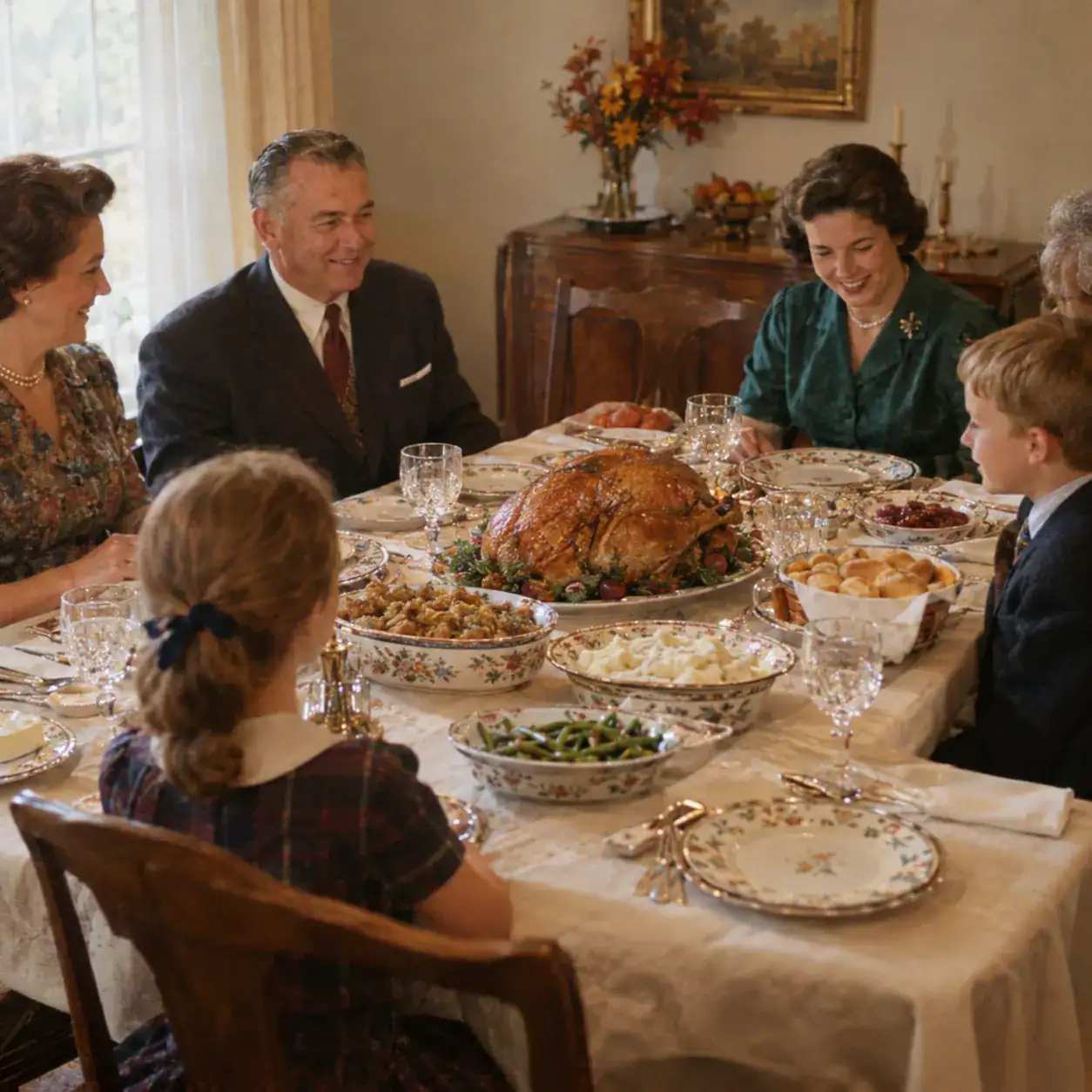
For most of the 20th century, a set of fine china was one of the first things an American couple owned together. Holidays like Thanksgiving were what it was saved for.
If old family photos are any guide, people dressed for it too. Period snapshots show suits and dresses at the table, and many families dressed the kids up as well.
Today, younger people often turn down the inherited set. It has to be washed by hand, and it takes up storage space.
25. Ashtrays on the table
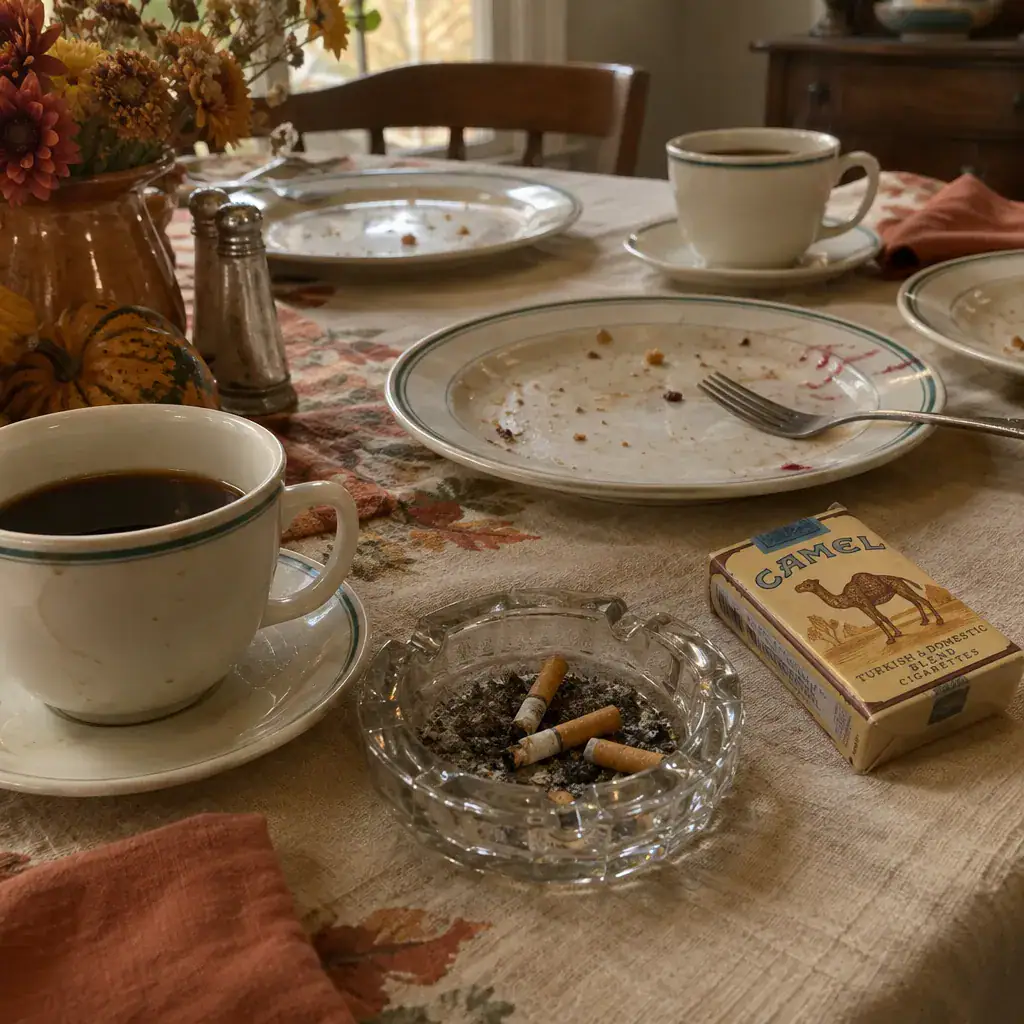
In 1954, 45% of American adults smoked cigarettes, the highest figure Gallup has recorded. With nearly half of adults smoking, the after-dinner cigarette was an ordinary part of many holiday tables.
Cigarette makers had tied smoking to the Thanksgiving meal for years. A 1936 Camel ad promised “the peaceful feeling that comes from good digestion and smoking Camels!” The digestion claim was false.
By 2023, Gallup’s figure was down to 12%.
The table only your relatives remember
A few of these ended on a specific day, with a signed law or a store’s liquidation. Most just faded. At some point the relish tray stayed in the cupboard, and nobody marked it as the last time.
That’s why the best record of your family’s version is probably a person. If an older relative sat at a 1950s or ’60s Thanksgiving table, ask them which of these their family kept.
For more questions to bring to that conversation, Generational Journeys is an e-book of 170 interview questions for drawing out family stories, and the cranberry candles are a fine place to start.