

You can’t Google these memories.
They live in your bones. In the smell of sun-dried towels and purple ink. In the sound of ice trays cracking and carousel slides clicking.
We’re antiques now. Walking, talking relics who remember when television signed off at night and milk arrived in glass bottles before breakfast.
Our childhoods weren’t documented in cloud storage. They existed in metal lunchboxes and scratchy wool blankets that lived in every trunk “just in case.”
Nobody’s trying to go back. But man, we had it good.
The world felt like it was going somewhere. People believed in progress, in possibility, in a future that actually made sense.
And the stuff we grew up with? Pure magic disguised as ordinary life.
Here are 25 things that prove we lived through something special.
1. X-Ray Shoe-Fitter Machines
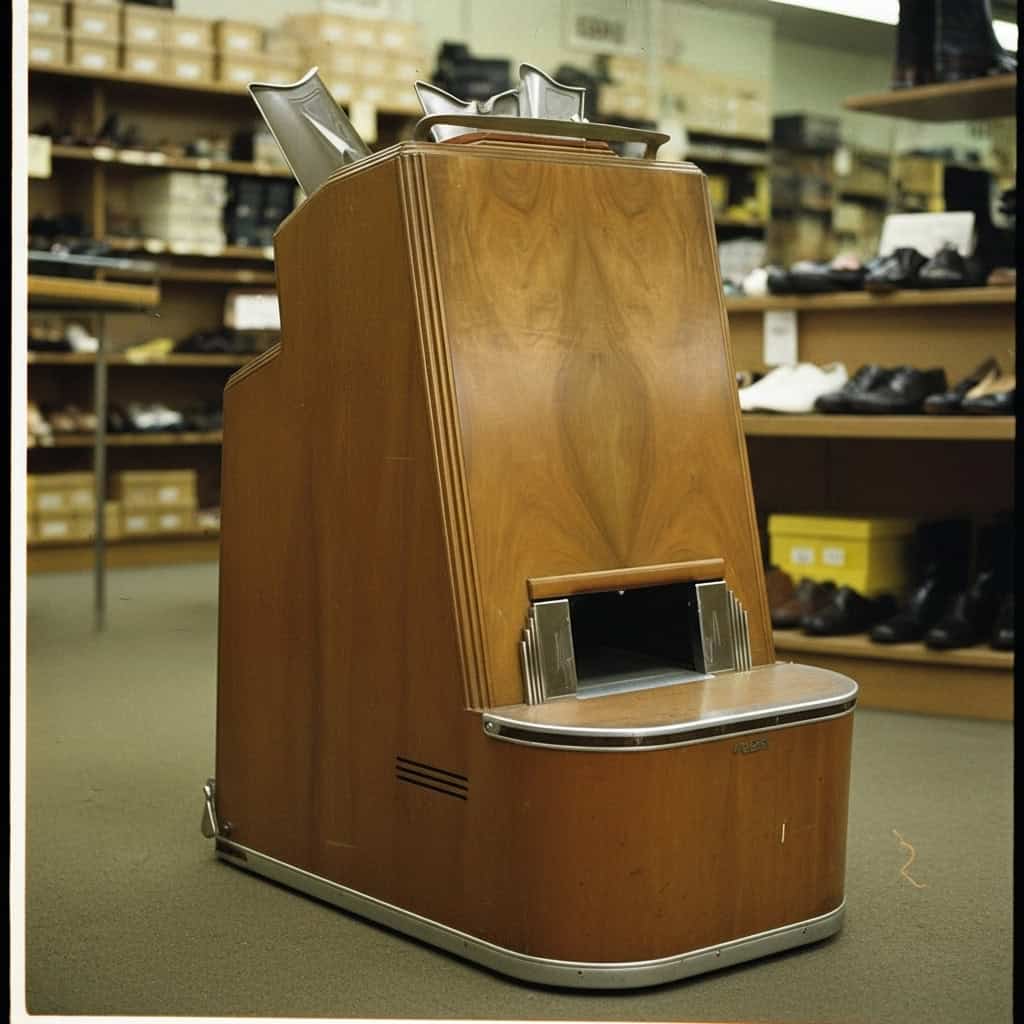
You’d step up onto the platform, slide your feet inside, and peer down through the viewer.
Bones. Moving. Wiggling toes inside your shoes like a tiny skeleton show.
The machine hummed. Your mom watched the salesman point at the outline of your foot. And you felt like you were seeing straight into the future.
It was magic and science wrapped in a wood-and-metal box at the shoe store.
The usual setting ran about 20 seconds. Pennsylvania became the first state to ban the machines, in 1957.
By 1960 they were mostly gone. If you stood on one in the early ’60s, you caught the very end.
2. Mimeograph Smell
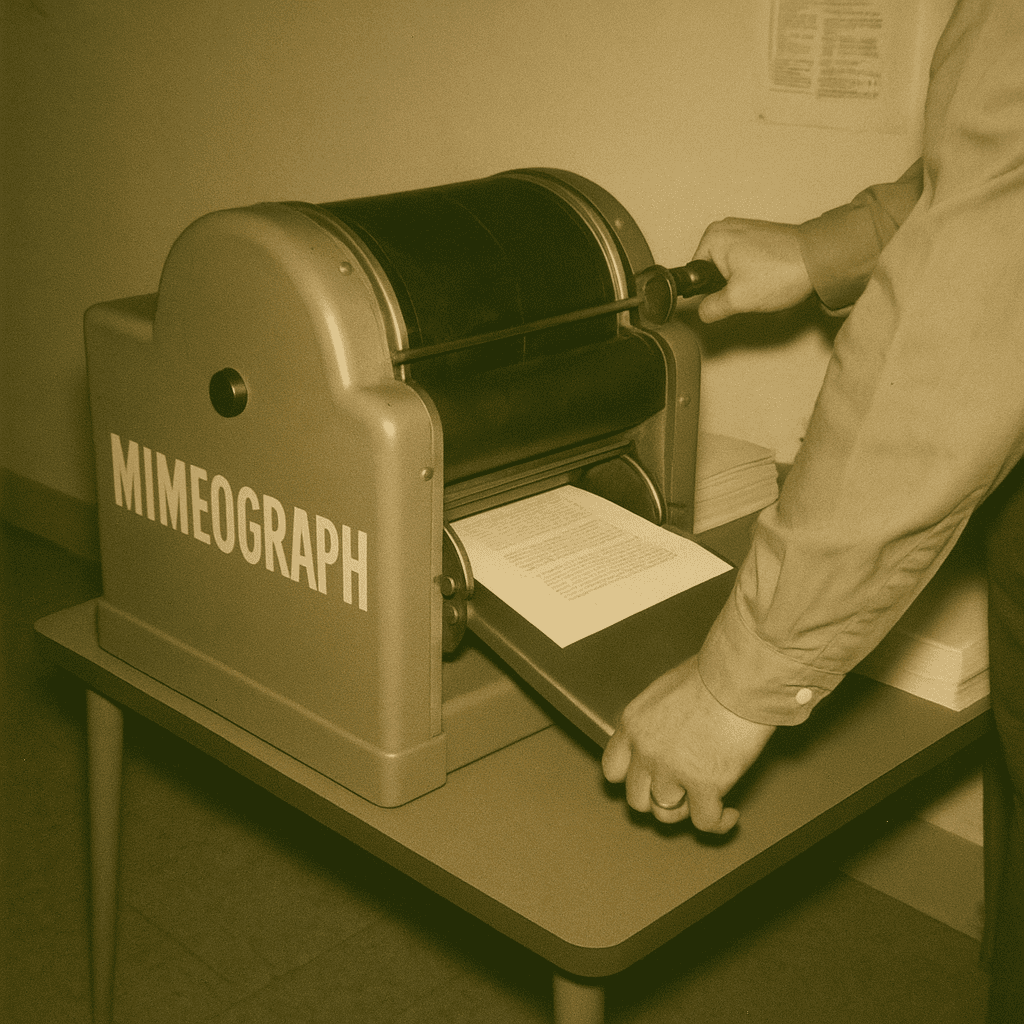
That purple ink. That warm, chemical sweetness.
The teacher handed out fresh worksheets, still damp from the machine. You’d lift the paper to your nose and breathe it in like it was fresh-baked bread.
Every kid did it. Nobody questioned it.
That smell meant school was real, homework was coming, and somehow—it was oddly comforting.
Those purple sheets actually came off a spirit duplicator, sold as the Ditto machine. Kids just called them dittos.
The sweet smell was the alcohol in the fluid. One master made about 40 good copies before the purple faded.
3. Bank Drive-Thru Pneumatic Tubes
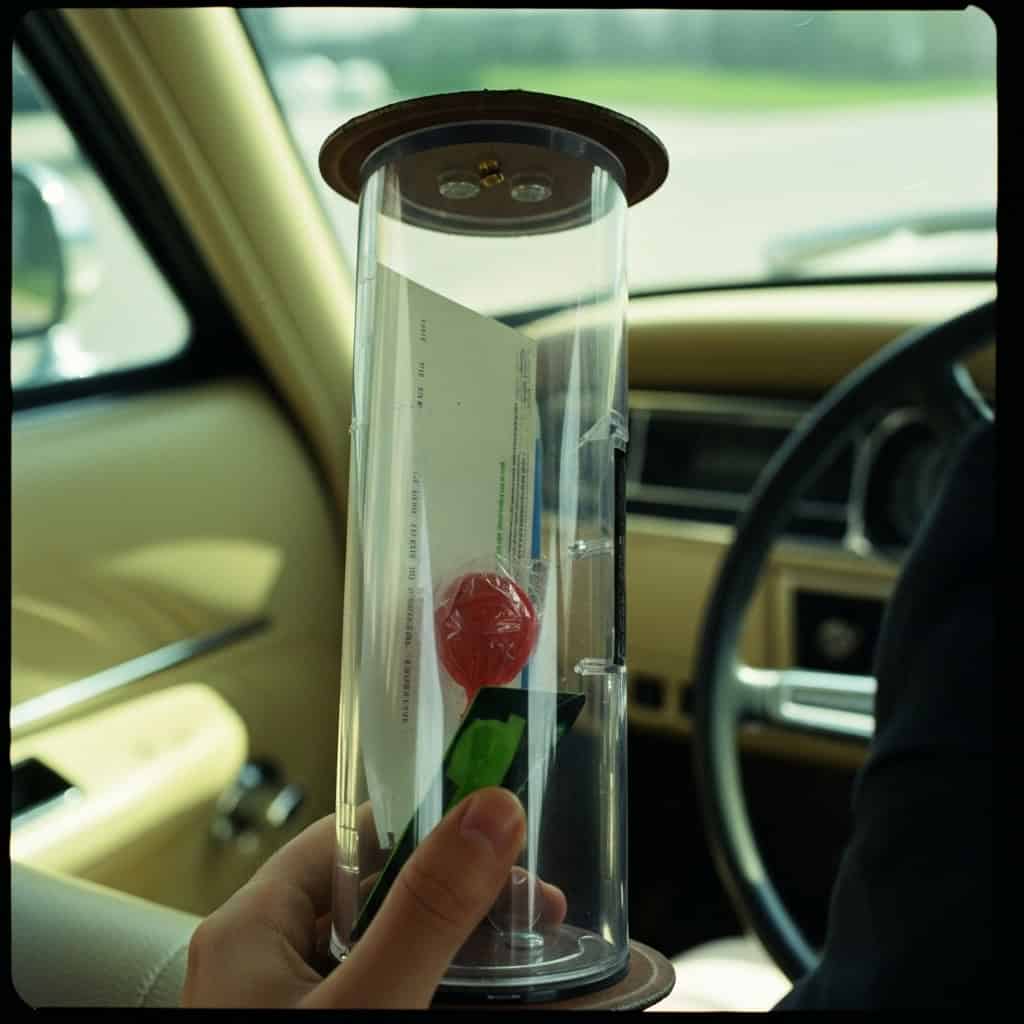
You’d pull up to the window, load your deposit slip and cash into the cylinder, and whoosh—it vanished into the tube like a tiny spaceship.
Seconds later, it came flying back with a receipt and a lollipop.
Pure magic on a Tuesday afternoon.
The sound alone—that pressurized hiss—made banking feel like the future had arrived early.
Banks borrowed the tube idea from department stores. By the 1960s, drive-up teller islands were a common sight.
In February 1964, Chicago’s Marina City Bank went further. Its “Teleview Teller” showed up on a closed-circuit TV screen.
4. View-Master Reels
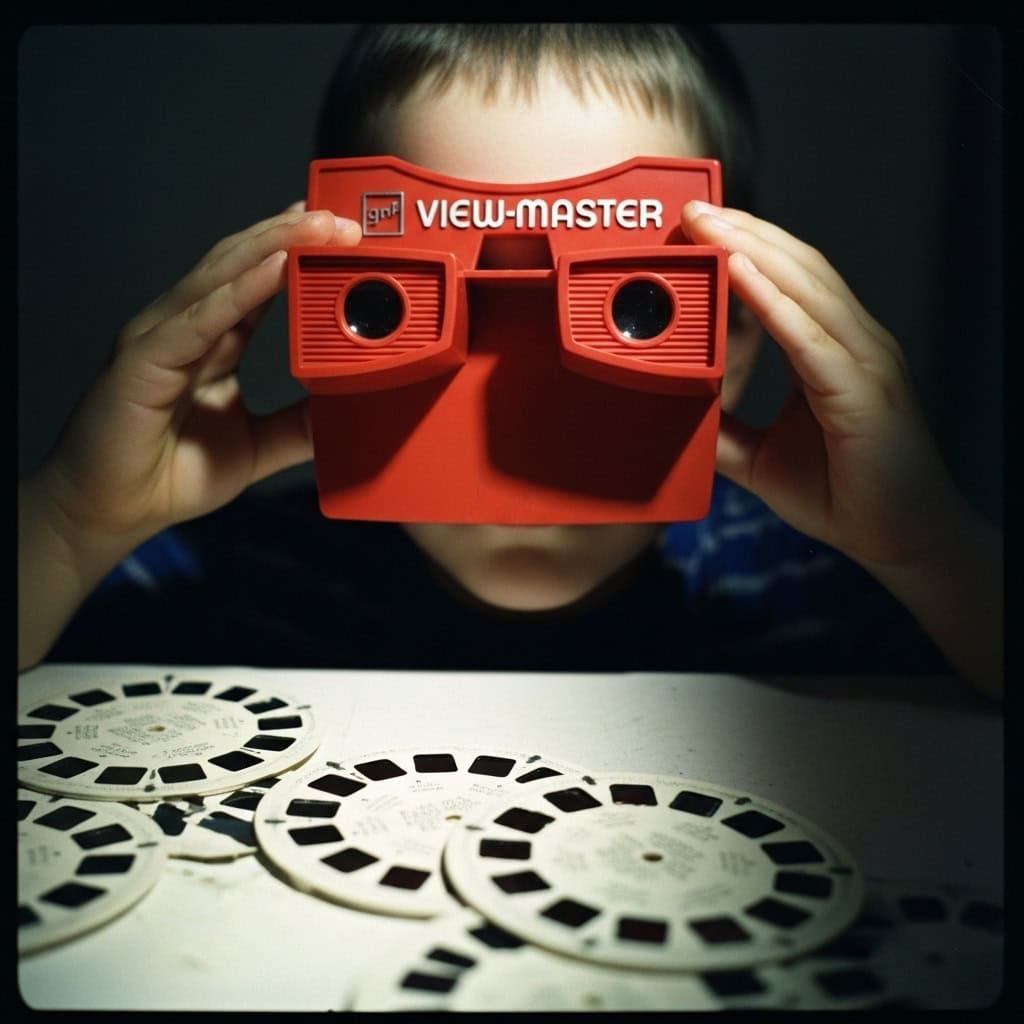
That red plastic viewer. Those round cardboard discs with tiny picture windows.
Click. A 3D scene of the Grand Canyon.
Click. Mickey Mouse waving at you from Disneyland.
Click. A cartoon world you could hold in your hand.
You’d flip through the same reel twice just because you could. It wasn’t a screen. It wasn’t moving. But somehow it transported you anyway.
Each reel held seven scenes. Sawyer’s of Portland, Oregon, made them, and GAF bought the company in 1966.
5. Full-Service Gas Stations

You pulled in. An attendant in a cap walked up, filled your tank, checked your oil, cleaned your windshield, and handed you a free map.
No credit cards. No touch screens. Just coins, a nod, and a smile.
You didn’t even get out of the car.
That was normal. That was just what service meant.
Regular gas averaged about 31 cents a gallon in 1960. Rand McNally and Gousha printed many of the free maps.
America’s first remote-controlled self-serve pumps opened June 10, 1964, in Westminster, Colorado. Most state fire codes still banned them.
6. Green Stamps
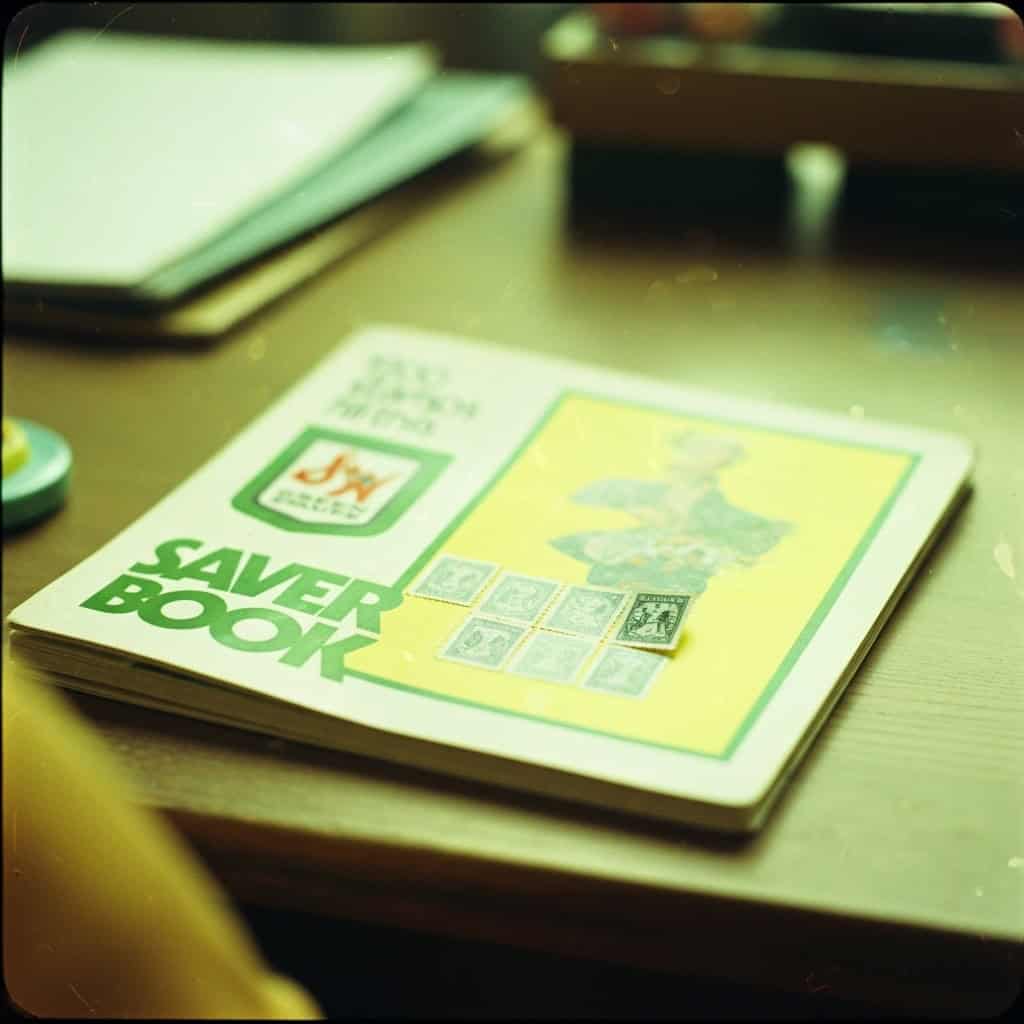
S&H Green Stamps were currency. Real currency.
You peeled them off at the grocery store, stuck them into little booklets with damp fingers, and saved up for months.
The reward catalog was a dreamland—blenders, fans, toasters. When you finally had enough books to trade in, it felt like winning the lottery.
You didn’t just buy a toaster. You earned it.
It took 1,200 points to fill one book. That’s 24 pages at 50 points a page.
In the 1960s, S&H issued more stamps than the U.S. Post Office. It mailed about 35 million catalogs a year.
7. Aluminum Ice Trays

Medieval torture devices disguised as kitchenware.
You’d grip that freezing metal lever with both hands, yank it up, and pray the cubes wouldn’t fly across the floor.
Half the time they did. The dog scattered. The noise echoed through the house.
But those cubes? Colder than anything a modern fridge could ever make.
General Electric sold its lever tray as the “Redi-Cube.” A GE engineer named Edward H. Roberts invented it.
Metal helped the water freeze quickly. Cheaper plastic trays took over anyway, and the kitchen got quieter.
8. TV Sign-Offs
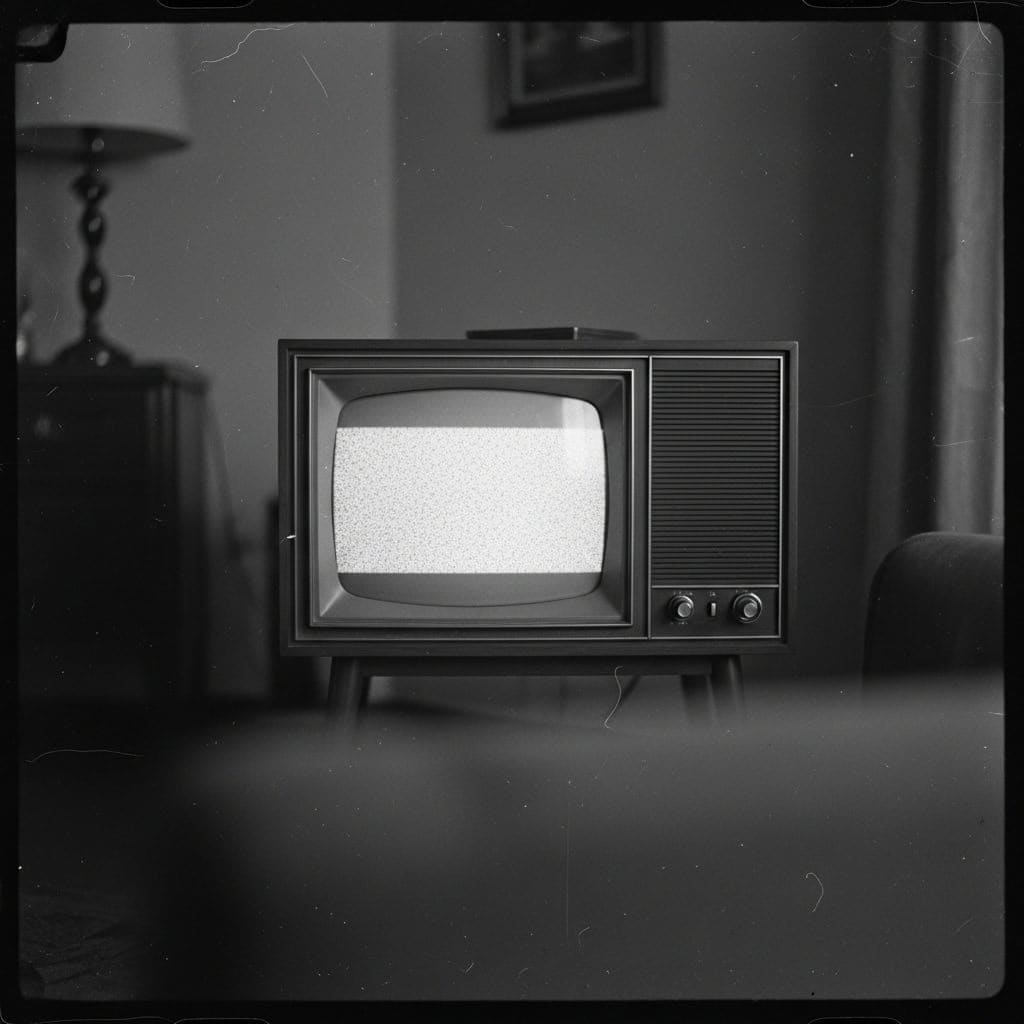
The national anthem played. The screen showed the flag waving.
Then came the test pattern. Then static.
That was it. Television was done for the night.
No streaming. No late-night reruns. Just white noise and the knowledge that the world had officially gone to sleep.
Many stations showed the RCA Indian-head test pattern, introduced back in 1939.
Color TV made that old pattern obsolete during the 1960s, one more thing the decade quietly retired.
9. The First Color TV
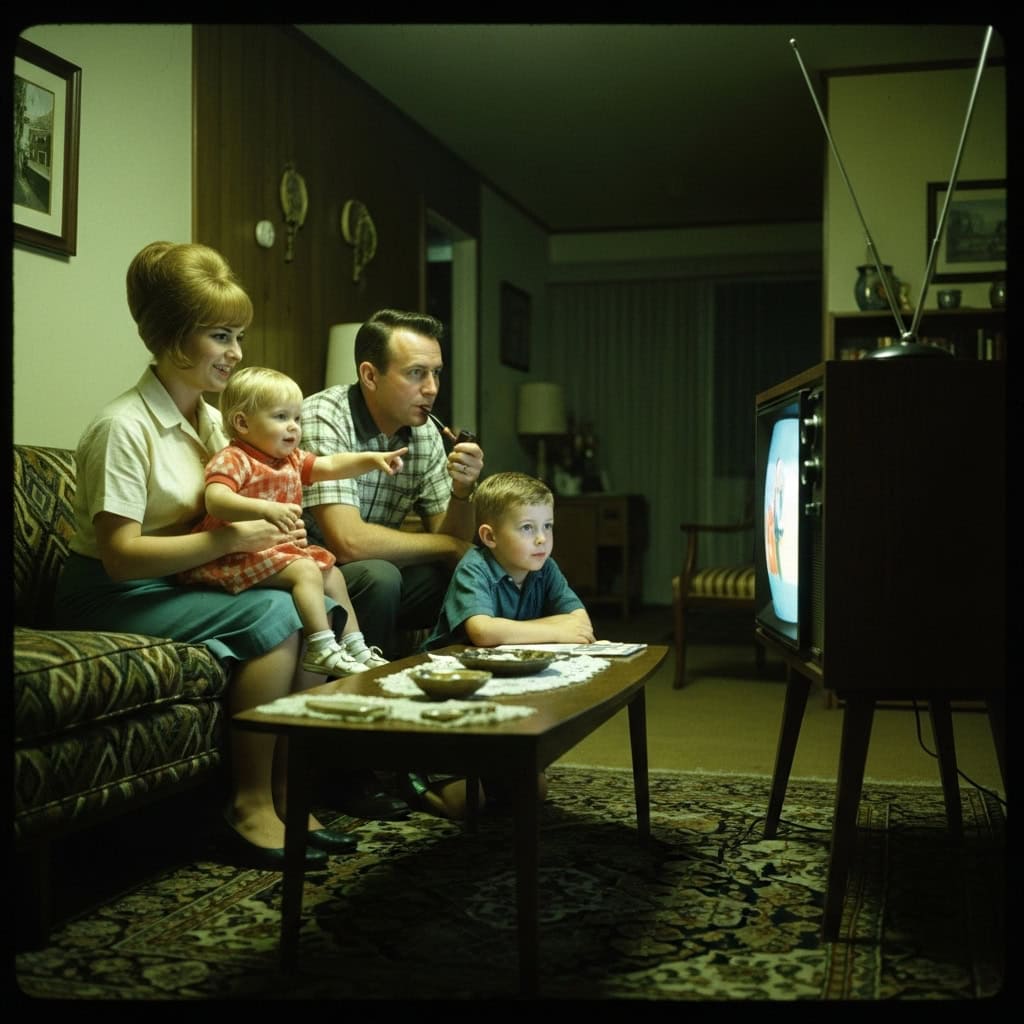
It was an event. A neighborhood gathering.
Families crowded into living rooms to see “The Future” flicker to life in shades of green, red, and blue.
At commercials, they’d show the NBC peacock so you could adjust the colors on your set.
You’d sit there, mesmerized, watching Bonanza in full color—because Little Joe’s green jacket actually looked green.
In 1965, one ad offered a 21-inch GE color set for $499.
By NBC’s count, under one TV home in ten had color in January 1966. No wonder living rooms filled up.
10. Slide Projectors and 8mm Home Movies
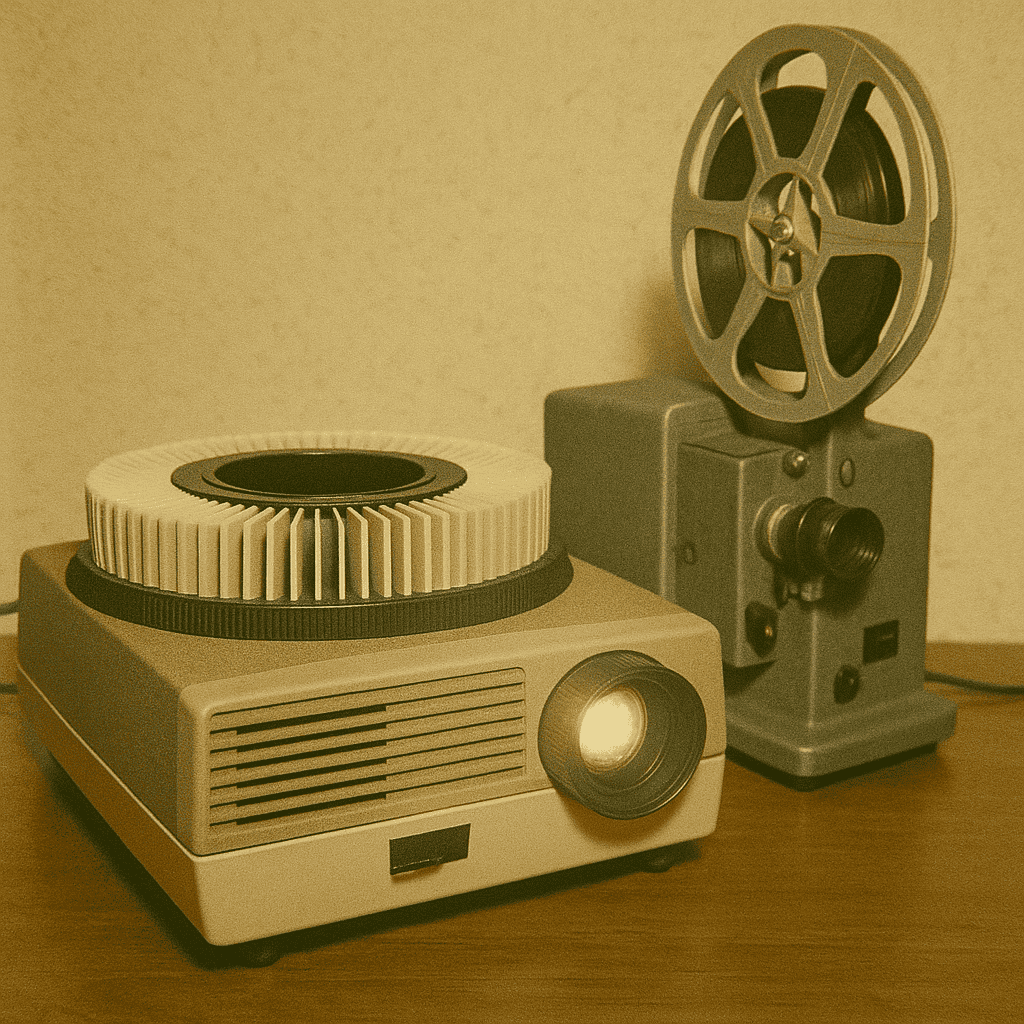
Click. Whirr. Chunk.
That carousel spun. Slides loaded one by one. Half of them upside down.
Grandma by the lake. A blurry vacation. Someone’s birthday cake.
You sat in the dark with a paper plate, pretending it wasn’t boring—but somehow those grainy, jittery moments stuck with you forever.
Home movies didn’t need sound. They just needed to exist.
Kodak’s first Carousel arrived in 1961, holding 80 slides a tray. Super 8 film followed in 1965.
11. Plastic Couch Covers
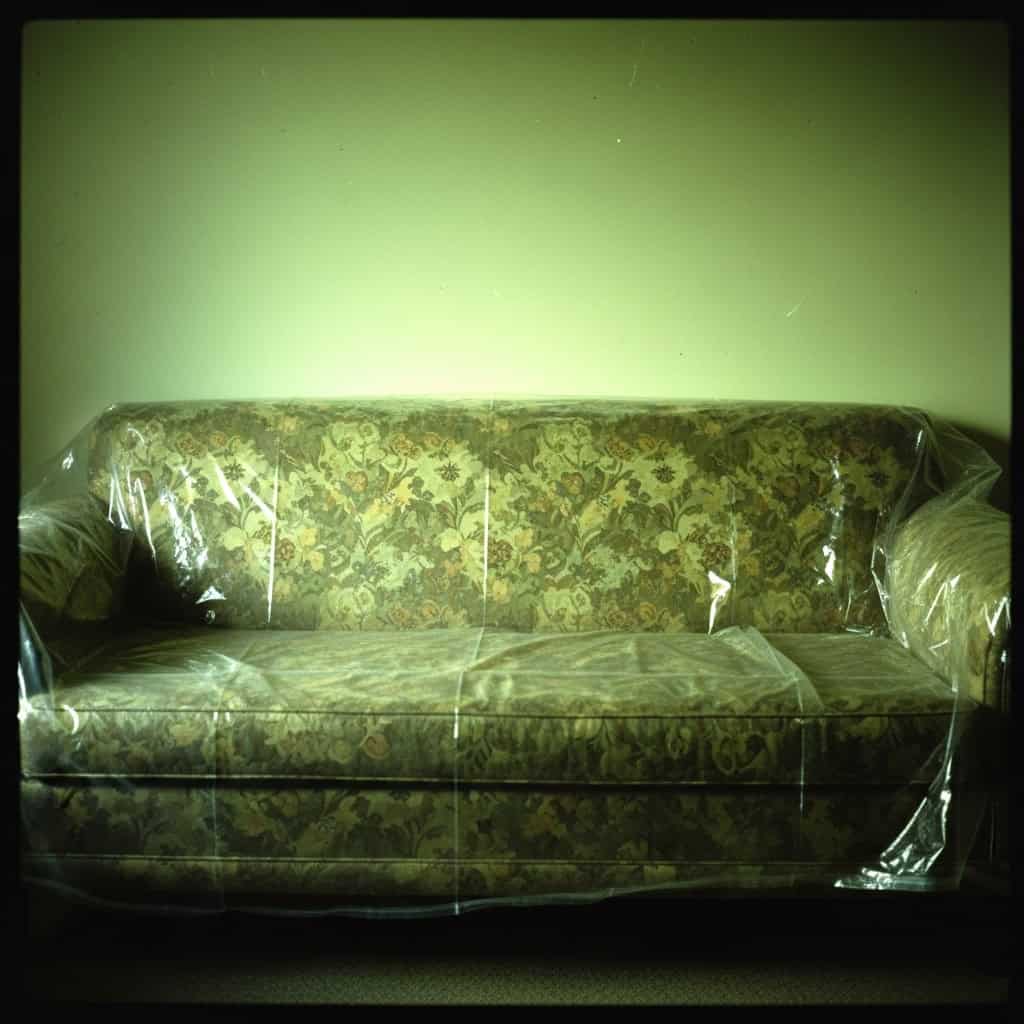
Summer torture devices.
They were meant to protect the furniture, but they trapped every ounce of heat and humidity.
You’d sit down in shorts and immediately regret it. Legs stuck. Backs sweaty.
But you weren’t allowed to take them off. Not until company left. Maybe not even then.
Families bought the clear vinyl covers at big department stores like Boston’s Jordan Marsh, or had them made to fit.
In a lot of homes, they guarded the good sofa in the front room.
12. Returnable Soda Bottles
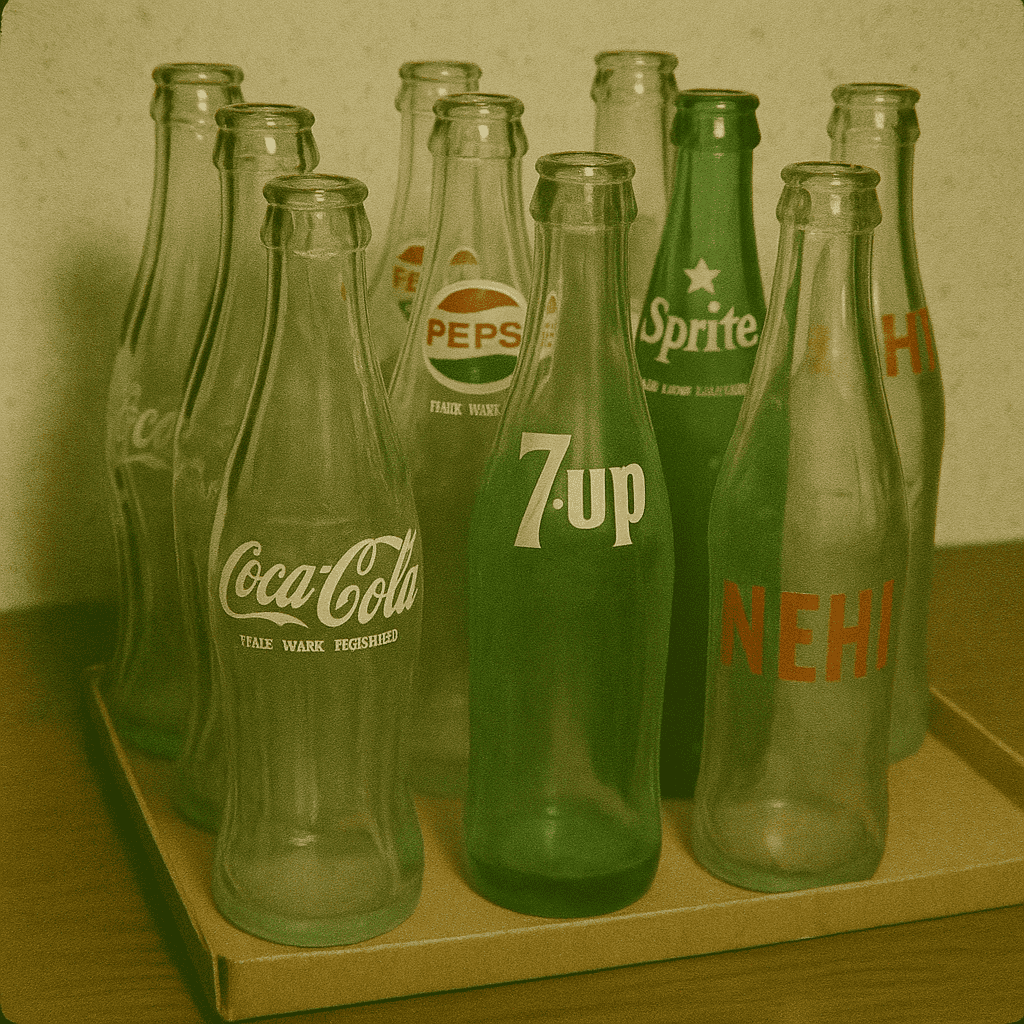
Bottles were money in disguise.
You’d collect them from the yard, the garage, anywhere you could find them. Bring them back to the store clinking in a cardboard box.
Nickels in return. Then you’d turn around and spend it on candy.
Every bottle had a shimmer of opportunity.
The deposit was usually two cents for a small bottle and a nickel for a big one.
By 1965, cans already held about 13% of the soda market. The refillable bottle’s days were numbered.
13. The Sears Catalog
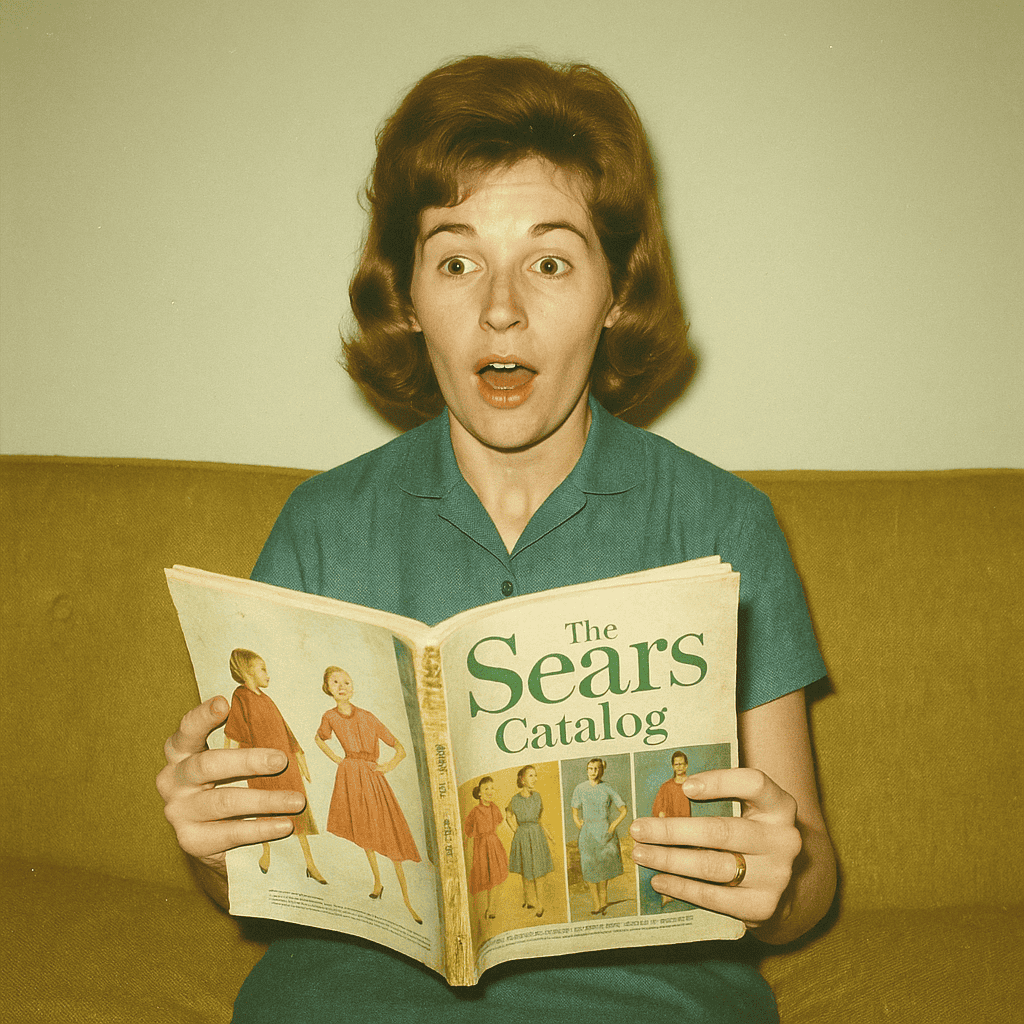
A brick of dreams. Thicker than your school textbooks.
Toys, clothes, furniture—all in one book you could hold in your lap and dog-ear for hours.
You circled things in pen. You pretended Santa read it, too.
And when the Christmas Wish Book arrived? That was better than any parade on TV.
The Wish Book landed in late summer or early fall, giving you months to wear out the toy pages.
The 1968 edition ran 605 pages. A full 225 of them were toys.
14. Clotheslines and Wooden Clothespins
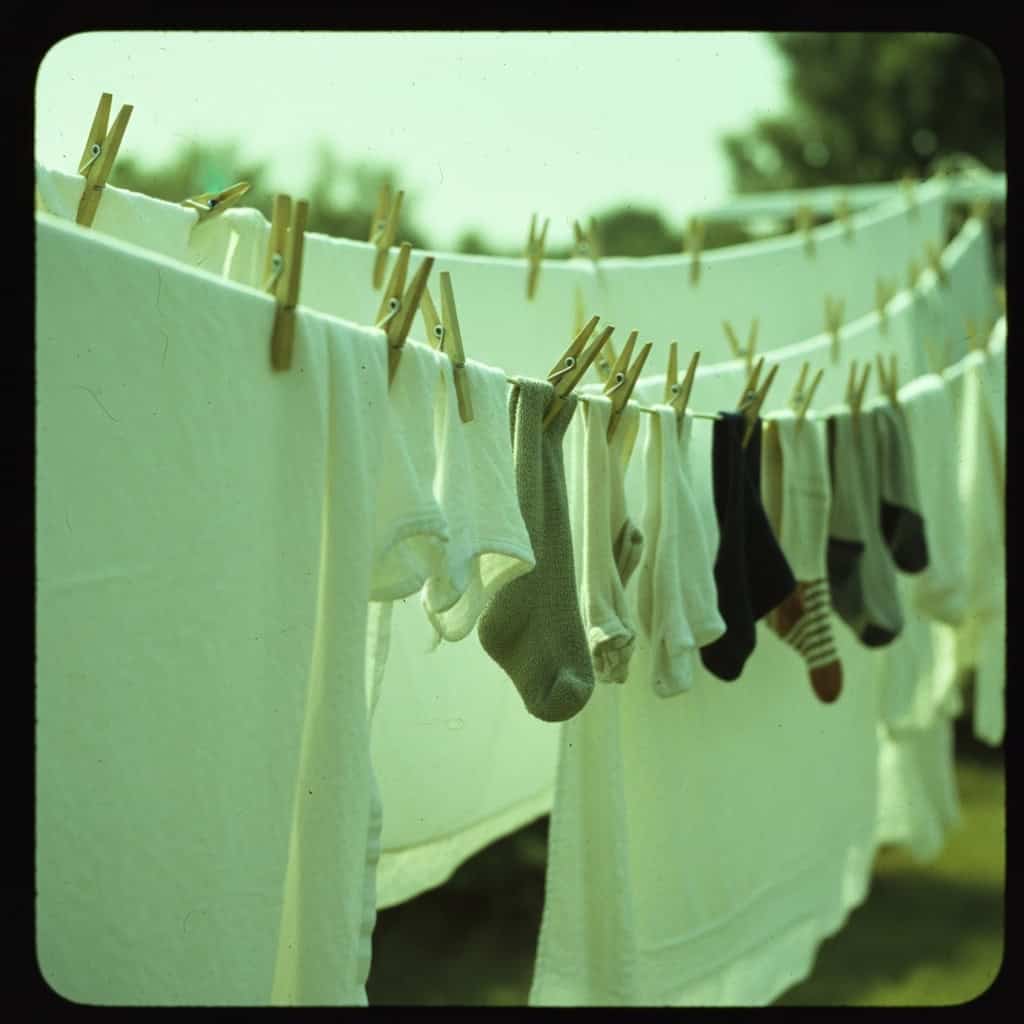
Lines stretched across every backyard. Baskets of pins sat on the porch.
Sheets flapped in the breeze. Towels dried stiff as boards.
They didn’t smell like fabric softener. They smelled like sunshine. Like sky. Like summer itself.
You didn’t need a dryer to feel clean.
In 1960, only about one home in five had a clothes dryer.
For families using backyard clotheslines, the weather set the laundry schedule.
15. Metal Lunchboxes
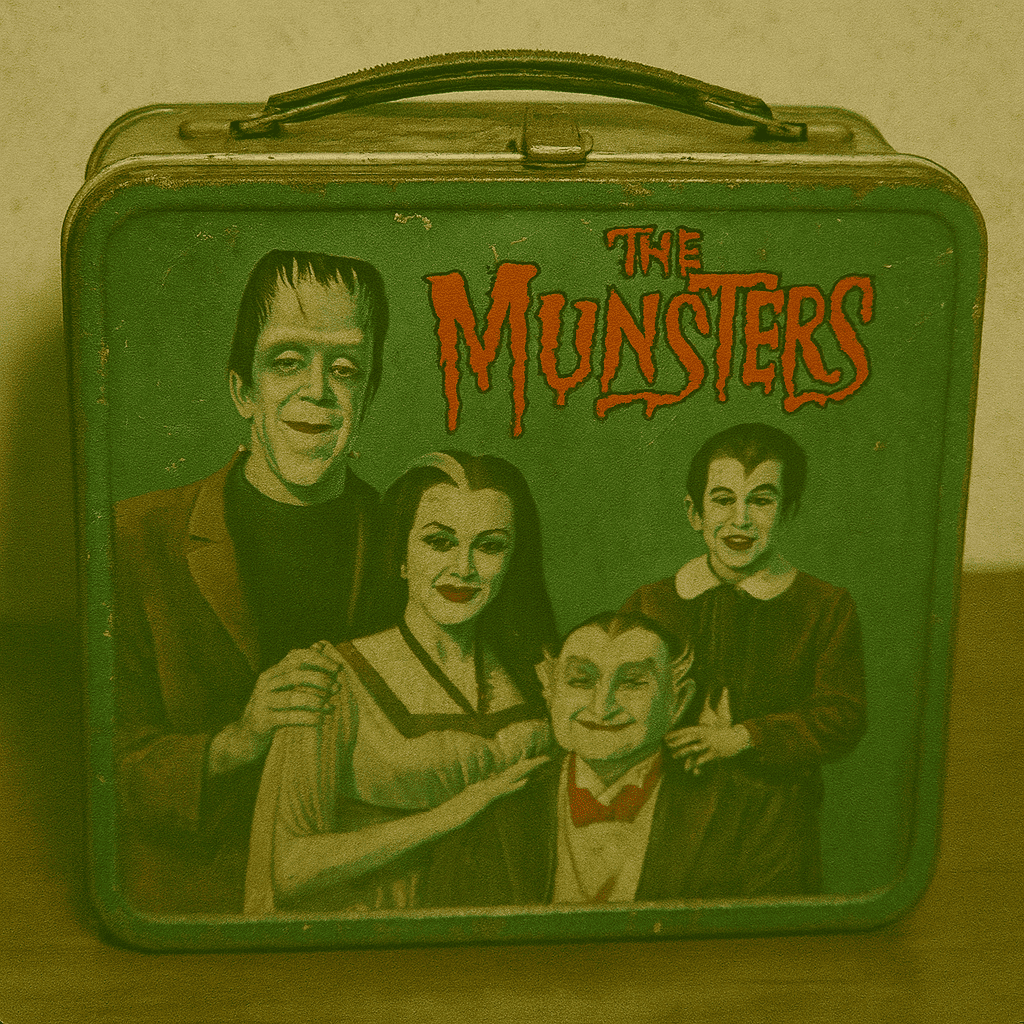
Built like tanks. Cartoon art on the front. A thermos inside that always smelled faintly of milk.
You carried your favorite show or comic plastered on the outside—proof of who you were before you even spoke.
If your little brother threw it, it left a dent in the wall. And the floor. And possibly his forehead.
Aladdin’s domed Jetsons box came out in 1963. King-Seeley Thermos put Peanuts on one in 1966.
More than 120 million metal lunch boxes sold between 1950 and 1970, in over 450 designs.
16. Fizzies

Drop a tablet in water. Watch it fizz. Boom—instant “soda.”
It tasted like sugar and chemicals and childhood ambition.
You didn’t care that it was strange. You made it yourself, and that made it better than anything from the store.
Warner-Lambert took Fizzies national in 1962. You could pick grape, orange, cherry, root beer, cola and more.
Then the 1969 federal ban on cyclamate sweeteners spelled the end of the original Fizzies.
17. Chemistry Sets
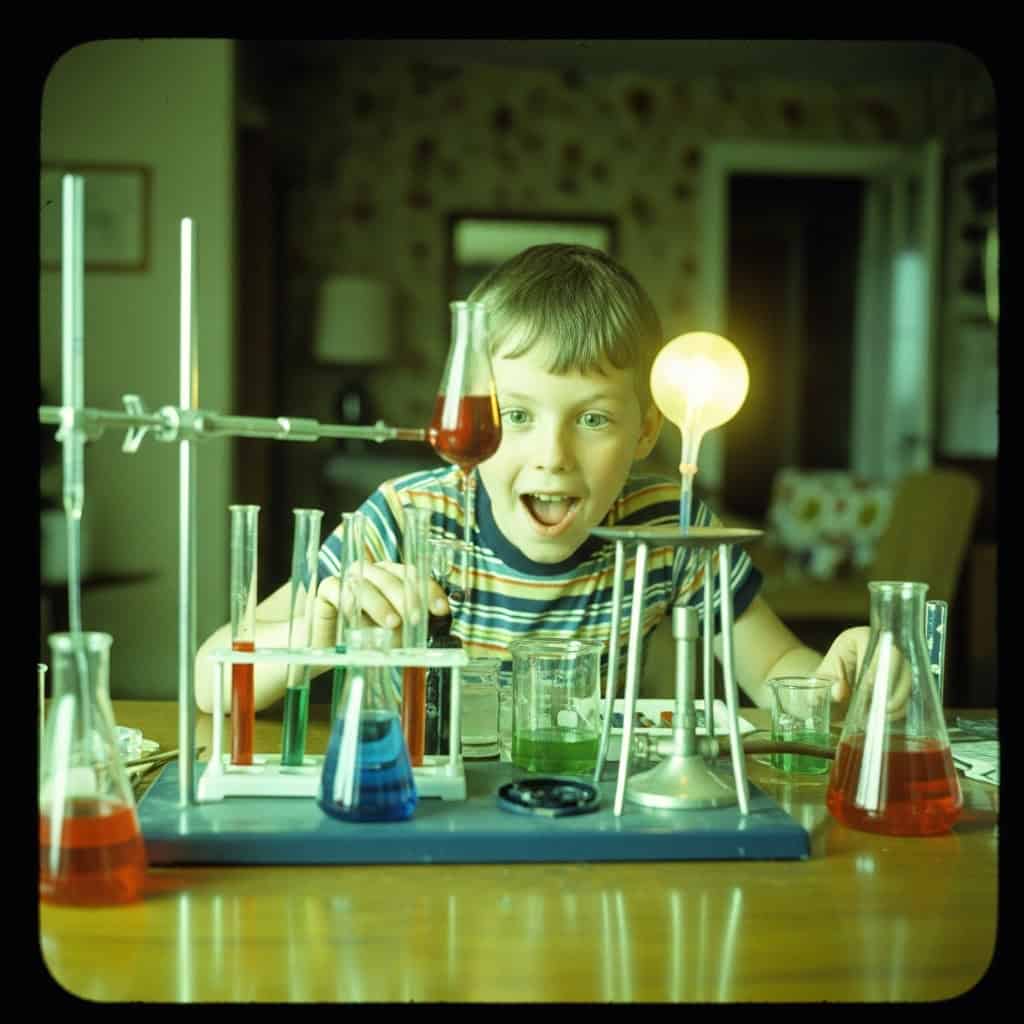
Real burners. Glass beakers. Actual chemicals that could bubble, smoke, and stain the kitchen table.
This was before safety rules. Before warning labels that covered half the box.
You mixed things. You heated things. You hoped nothing exploded.
And somehow—we all survived.
A.C. Gilbert and Chemcraft were the big names. Chemcraft’s slogan: “Experimenter Today… Scientist Tomorrow.”
Many sets had an alcohol lamp in the box. After the Toy Safety Act of 1969, the lamps were pulled.
18. Rabbit Ears and Tinfoil
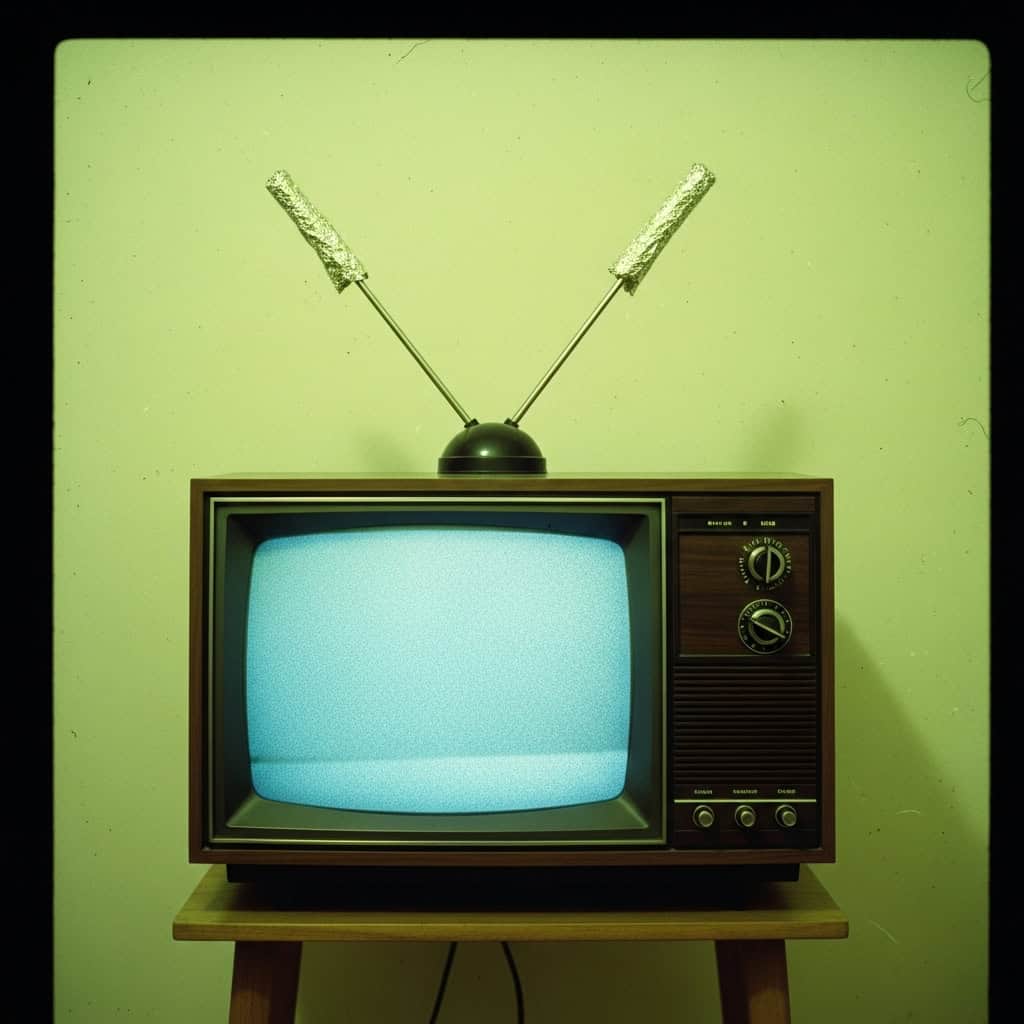
The ultimate teamwork.
One person held the antenna. Another adjusted the tinfoil. A third person yelled directions from the couch.
You twisted. You tilted. You prayed.
And when the picture finally cleared? Victory.
From May 1964, new sets shipped with UHF reception. Those extra channels could leave families wrestling with antennas again.
Most indoor and rooftop antennas picked up UHF poorly. More channels on the set, more directions shouted from the couch.
19. Drive-In Theaters
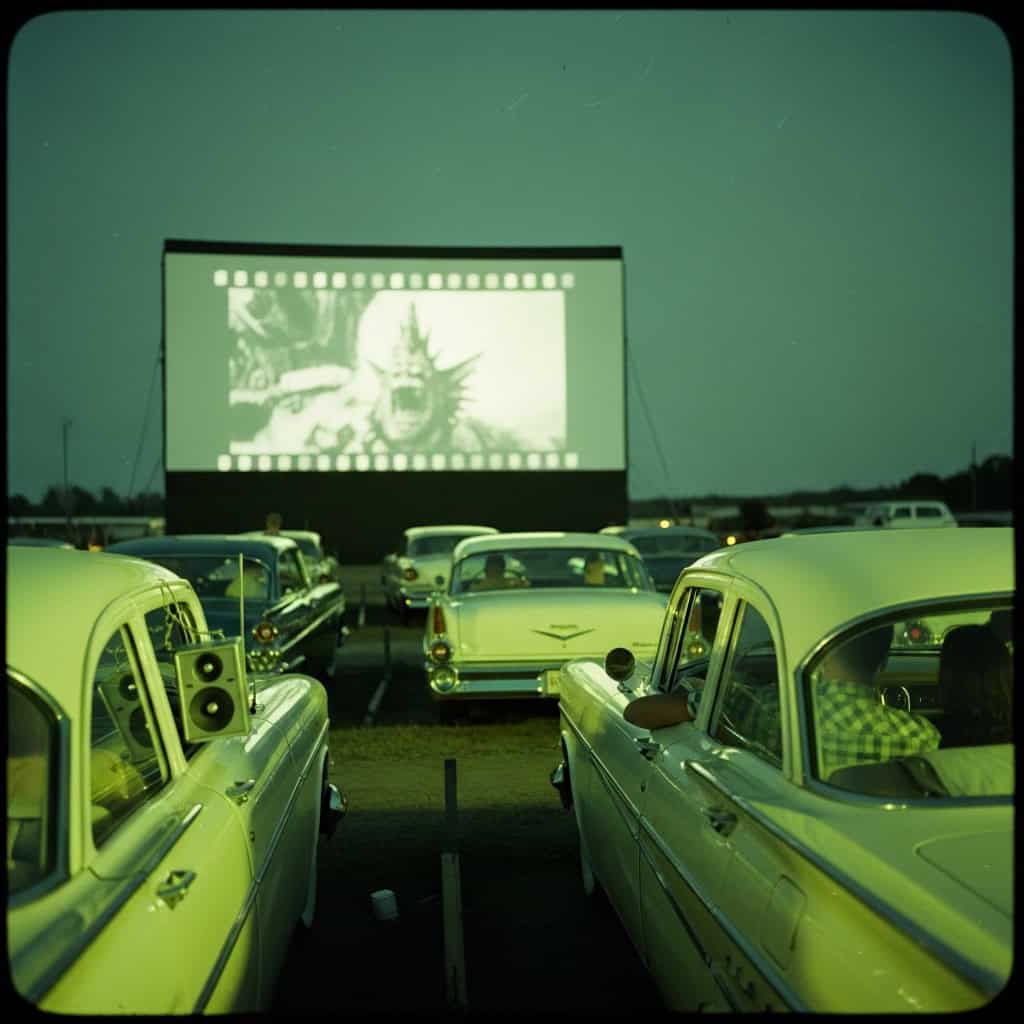
You’d pull in, hang the clunky metal speaker on your window, and hope it actually worked.
Families in station wagons. Couples in convertibles. All staring at a glowing screen under the stars.
If you spilled popcorn, nobody cared. The car was already a mess anyway.
Drive-ins hit their peak in 1958, with 4,063 of them across the country.
Admission was often by the carload. Kids came in pajamas, ready to doze off in the back seat.
20. Milkman Deliveries
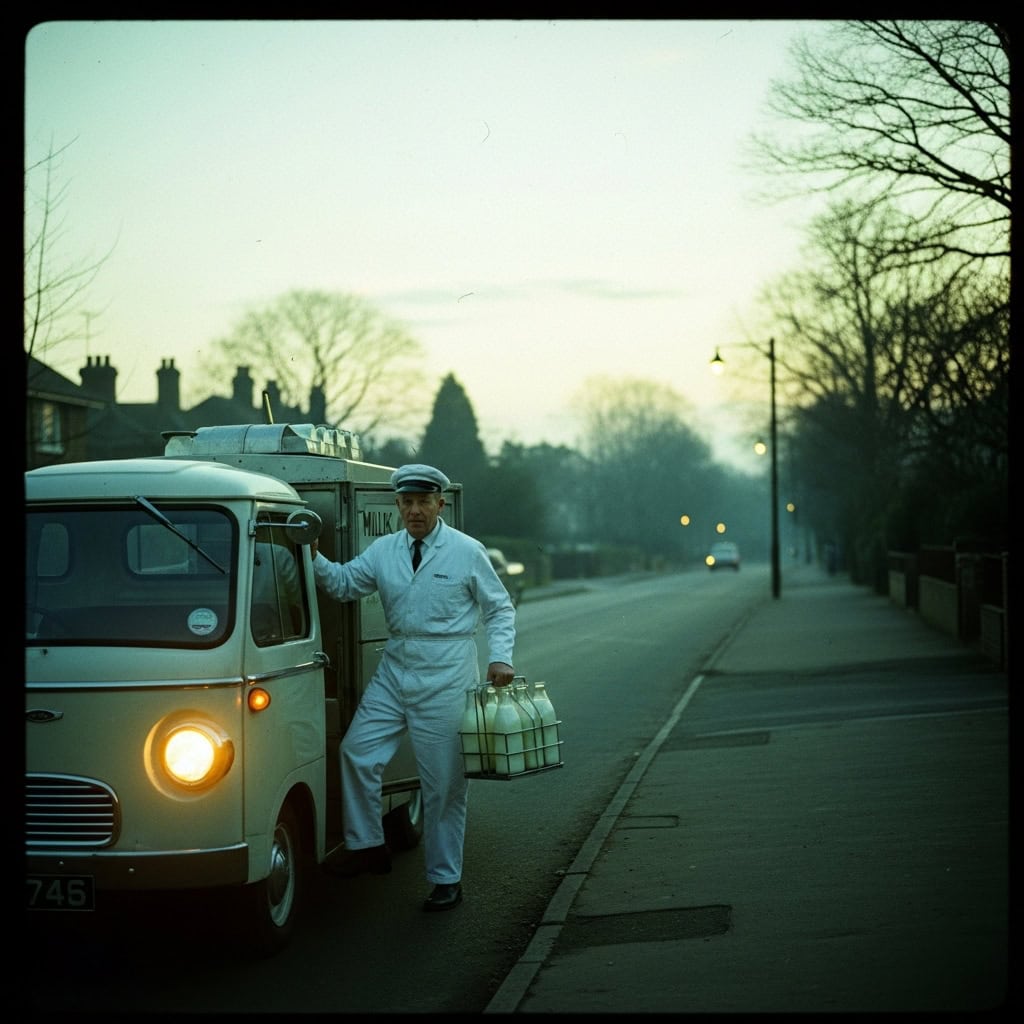
Fresh glass bottles on your doorstep before breakfast was even on the table.
You’d hear the clink of bottles before you heard the alarm clock.
And if you were lucky? Chocolate milk. A little surprise that made your morning feel like Christmas.
In 1954, more than half of all milk sold came to the door.
By 1963, the milkman’s share had dropped below four in ten. Supermarkets and better refrigerators were taking over.
21. Gas-Station Giveaways
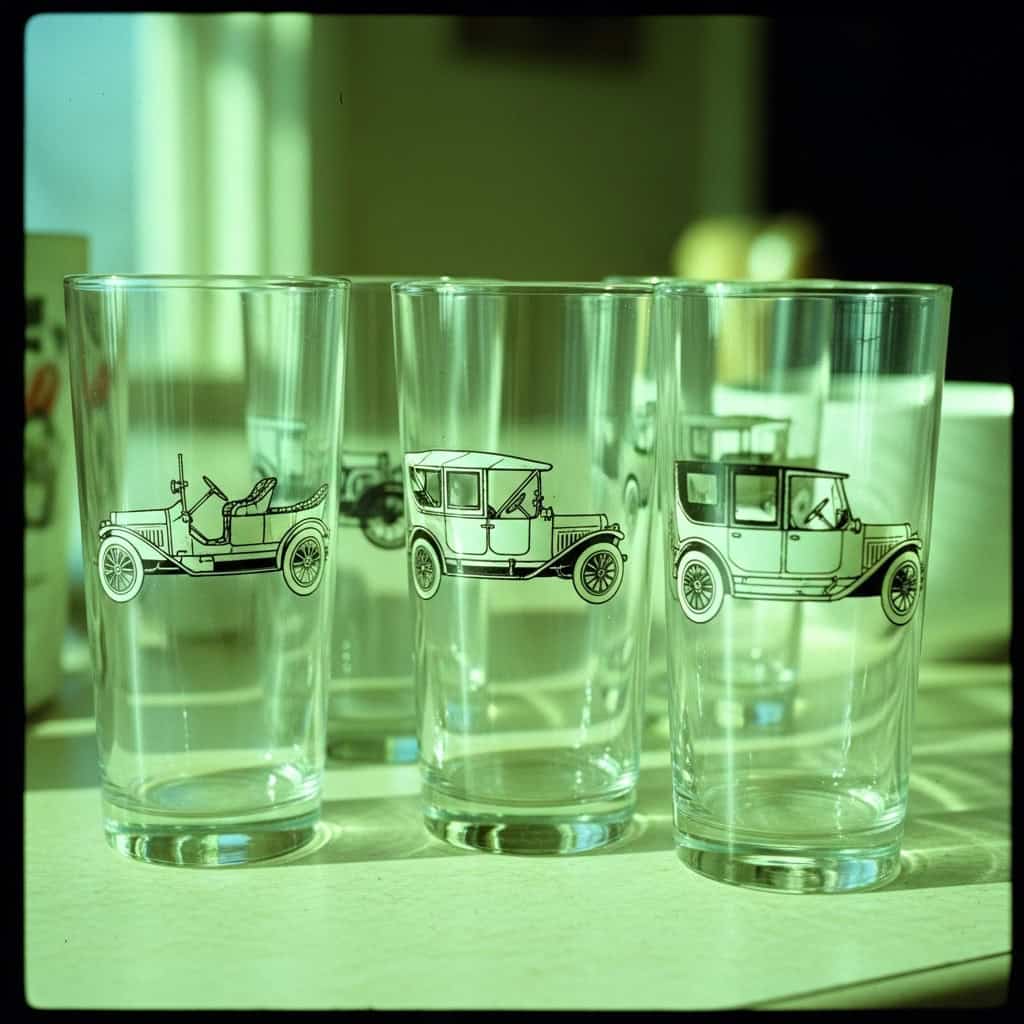
Toy dinosaurs. State maps. Glass tumblers printed with state flowers.
You didn’t just buy gas. You got stuff.
Free stuff that sat in kitchen cabinets for decades, outliving the car that brought it home.
At stations offering glassware, a fill-up came with a tumbler coupon. Even the gas stop helped stock the kitchen cabinet.
Collecting a full set took repeat fill-ups. Those matching glasses came home a little at a time with the gasoline.
22. Free Toasters for Opening a Bank Account
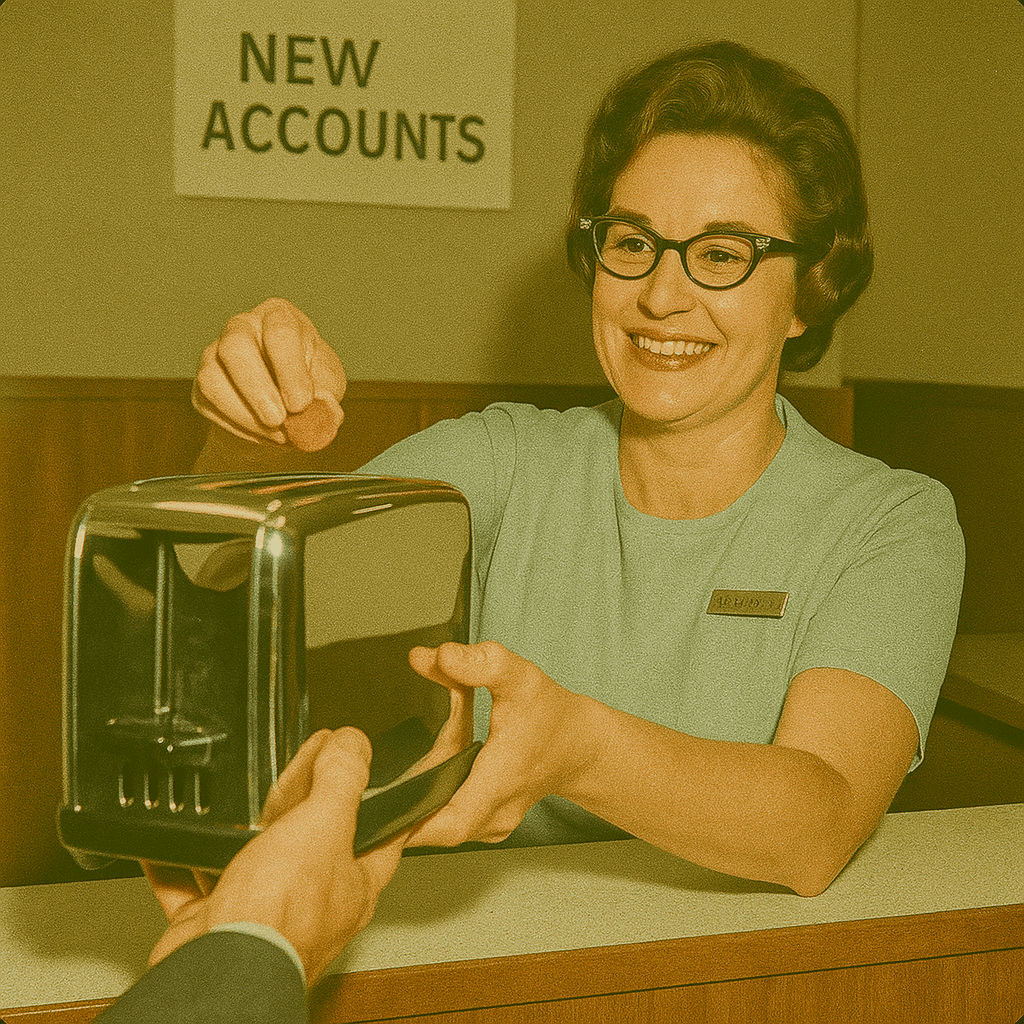
Walk into a bank. Open an account. Walk out with a toaster.
Or glassware. Or a blanket.
Banks didn’t just want your money—they wanted to furnish your kitchen while they were at it.
Federal rules capped the interest banks could pay on deposits, so plenty competed with gifts and services instead.
In May 1960, Life called banks “flashy, lovable, open-handed” and described lobby ice shows and dog shows.
23. The Scratchy Wool Car Blanket
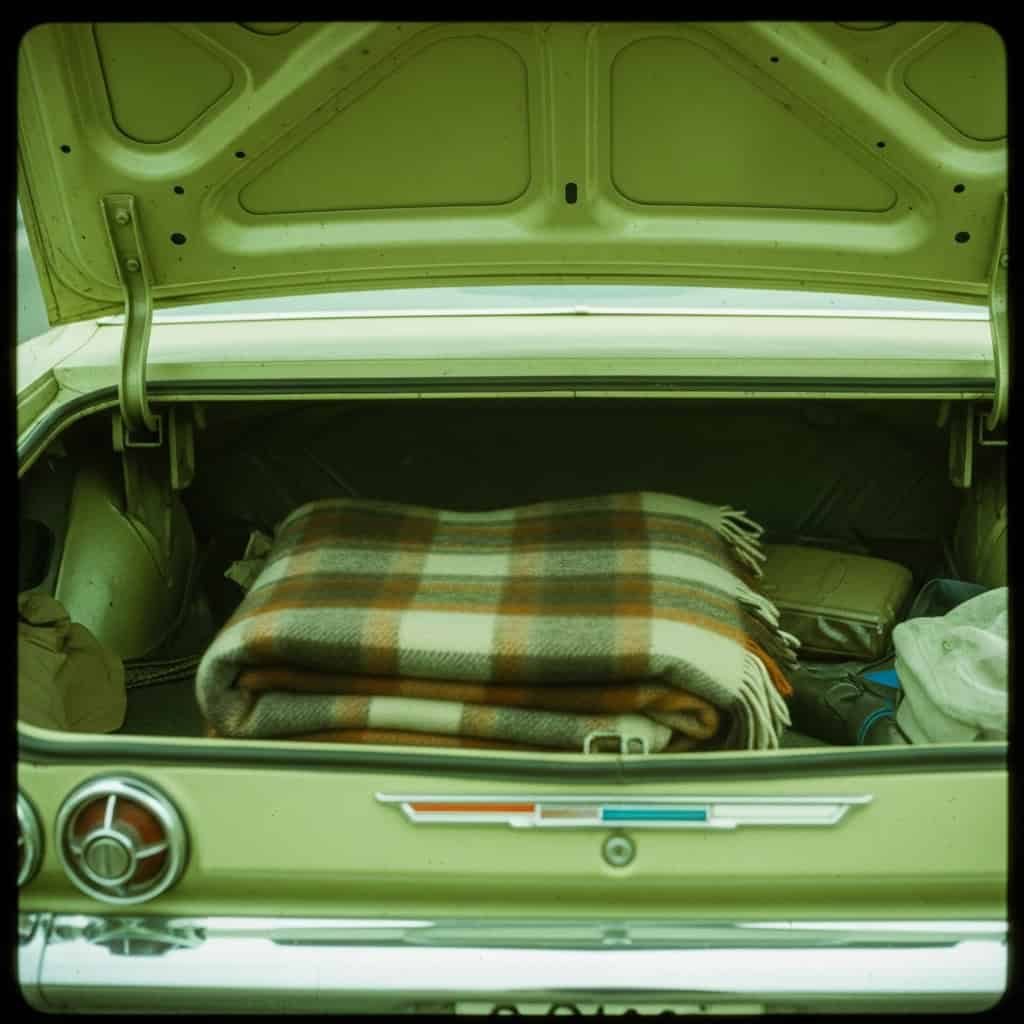
Every trunk had one. Every family used it exactly twice a year.
It smelled like mothballs and gasoline. It scratched your neck. It weighed a thousand pounds.
But it was there “just in case,” and that was enough.
The fancy name was the “motor robe,” which Pendleton gave its travel blanket in the early 1930s.
It came out for chilly football games and roadside breakdowns, then went straight back in the trunk.
24. Formica Kitchen Tables
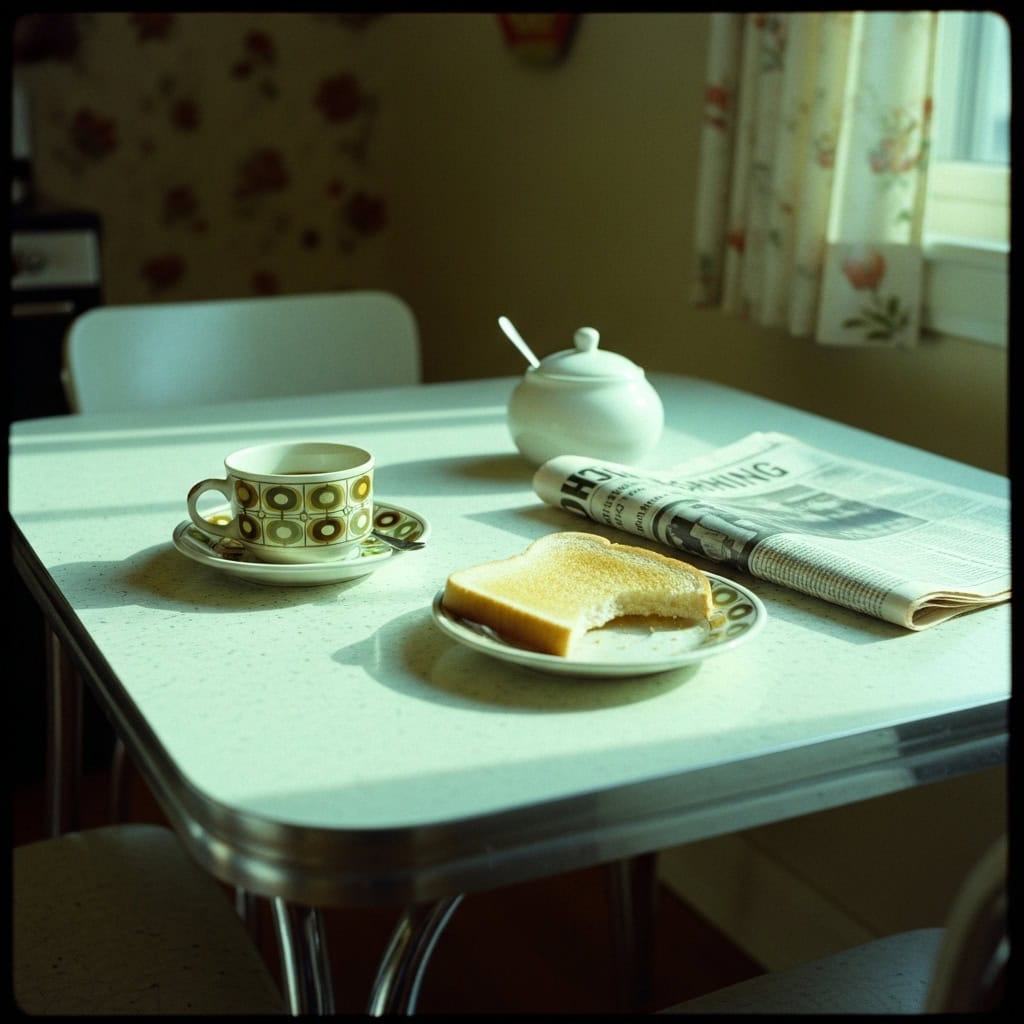
Not granite. Not glass. Formica.
Usually mint green or yellow. Chrome legs that wobbled just enough to spill your milk.
You ate there. Did homework there. Fixed the occasional toaster there.
Scratched, stained, and somehow perfect.
The squiggly Boomerang pattern started life in Brooks Stevens’s studio as “Skylark.”
Formica opened its own design studio in 1965. The selling point stayed the same: one wipe and it was clean.
25. The Yellow Pages
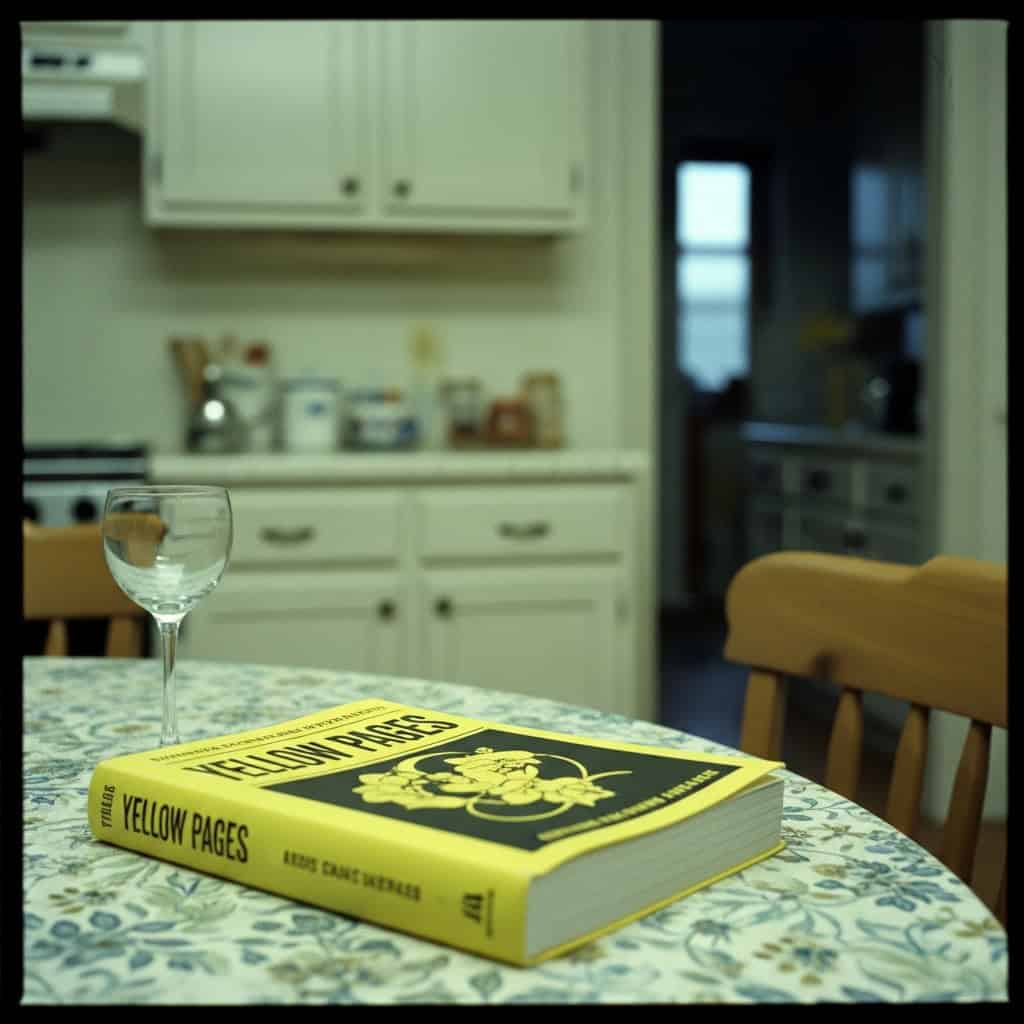
Thick as a dictionary. Heavy as a brick.
Need a plumber? Flip to P. Lost the dog? Check the classifieds.
It was a phone book, a booster seat, and a doorstop in one.
You didn’t Google. You lifted.
Artist Henry Alexander drew the “walking fingers” logo in 1962. AT&T never registered it as a trademark.
“Let your fingers do the walking” hit national TV on January 19, 1962, during the Bell Telephone Hour.
The Stuff Family Legends Are Made Of
These weren’t just objects. They were markers. Moments. Evidence that you were there, living through the simplest—and maybe the best—version of America.
Life wasn’t perfect back then. But it was ours.
We watched our bones wiggle in X-ray machines. We sniffed purple ink like it was perfume. We traded bottle caps for candy and stamp books for toasters.
We didn’t have much. But we didn’t feel like we were falling behind.
Those memories? That’s your family story. That’s the wild, weird, wonderful childhood that shaped who you became—and it’s worth preserving.
Document those adventures. Save those scar stories. Because that wild childhood—that’s the stuff family legends are made of.
Need help? Check out our Generational Journeys E-Book for 170 Interview Questions to Unlock Your Family’s Past.