

Pull out an old Christmas photo from your childhood and look past the people for a second.
Behind your parents, there’s a glittery cardboard house on the end table. On the window, a frosted Santa somebody sprayed onto the glass. On the mantel, a felt elf hugging its knees.
You haven’t thought about that elf in decades, and now you can’t stop looking at it.
If your family celebrated Christmas in an American living room in the 1960s, the tree got all the attention, and most of the photographs.
But the rest of the room was quietly doing the work of making the house feel like Christmas: a glass dish of ribbon candy nobody ate, a ceramic angel from the dime store, a stocking somebody sat down and sewed your name onto.
Every one of those things started as somebody’s idea. So who dreamed up the stuff in the background of your family’s Christmas?
1. Glass Wax Window Stencils
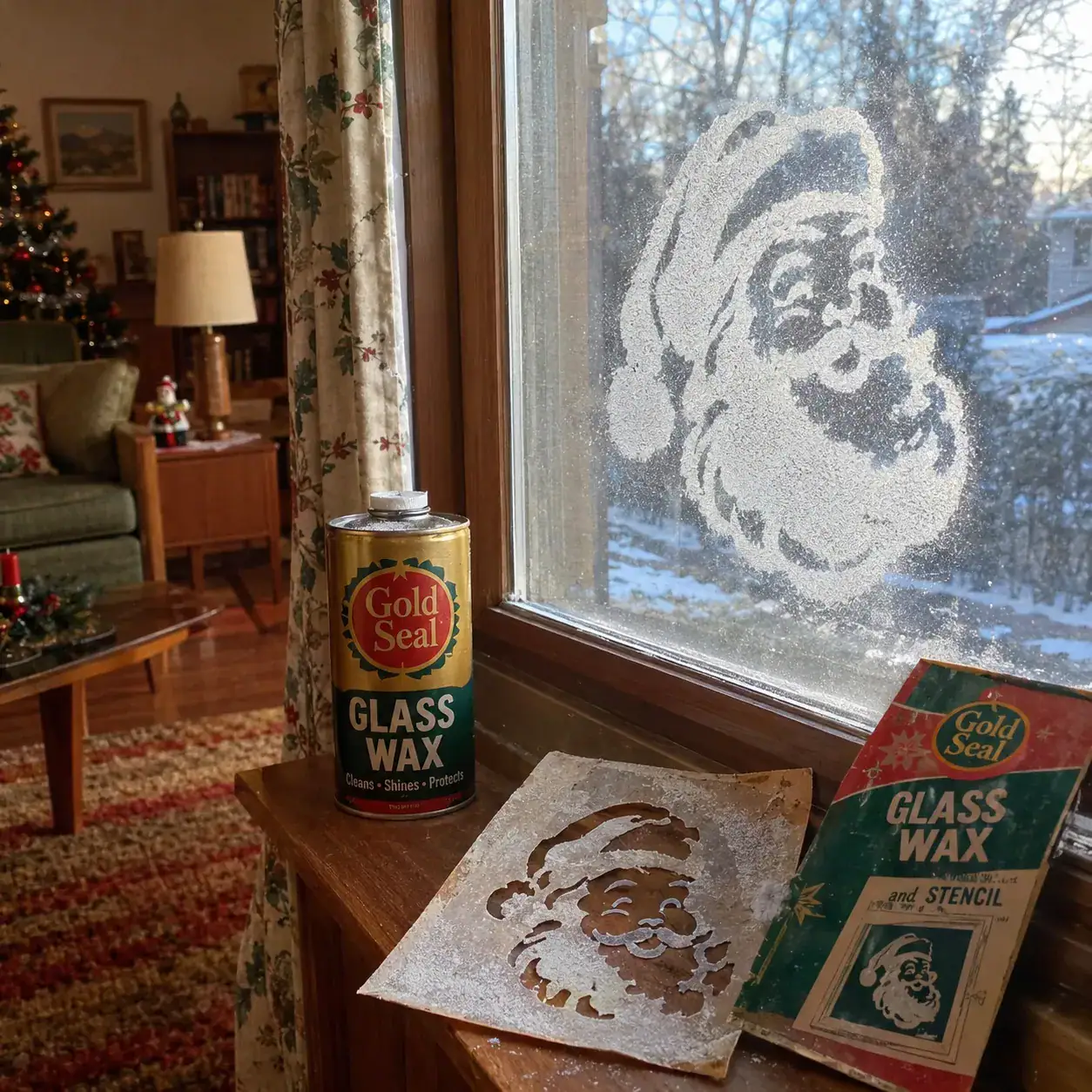
Glass Wax was a window cleaner made by the Gold Seal Company of Bismarck, North Dakota. The Christmas idea didn’t come from the company.
It came from a schoolteacher who wrote to company president Harold Schafer to say her students were using the cleaner to make pictures on their classroom windows.
Gold Seal started advertising stencil sets in November 1956: 23 holiday cut-outs for 59 cents. They sold out by mid-December.
After the stencils were promoted on the Perry Como Show, the company sold fifty more carloads of Glass Wax that year, and the promotion was one of eight to win an award in the “New Product” category out of 16,000 national sales promotions.
You applied the Glass Wax through the stencil, and it dried into a white, powdery figure. The Henry Ford museum keeps a 1960s package in its collection, still promising “QUICK! EASY! FUN!”
2. The Rotating Color Wheel
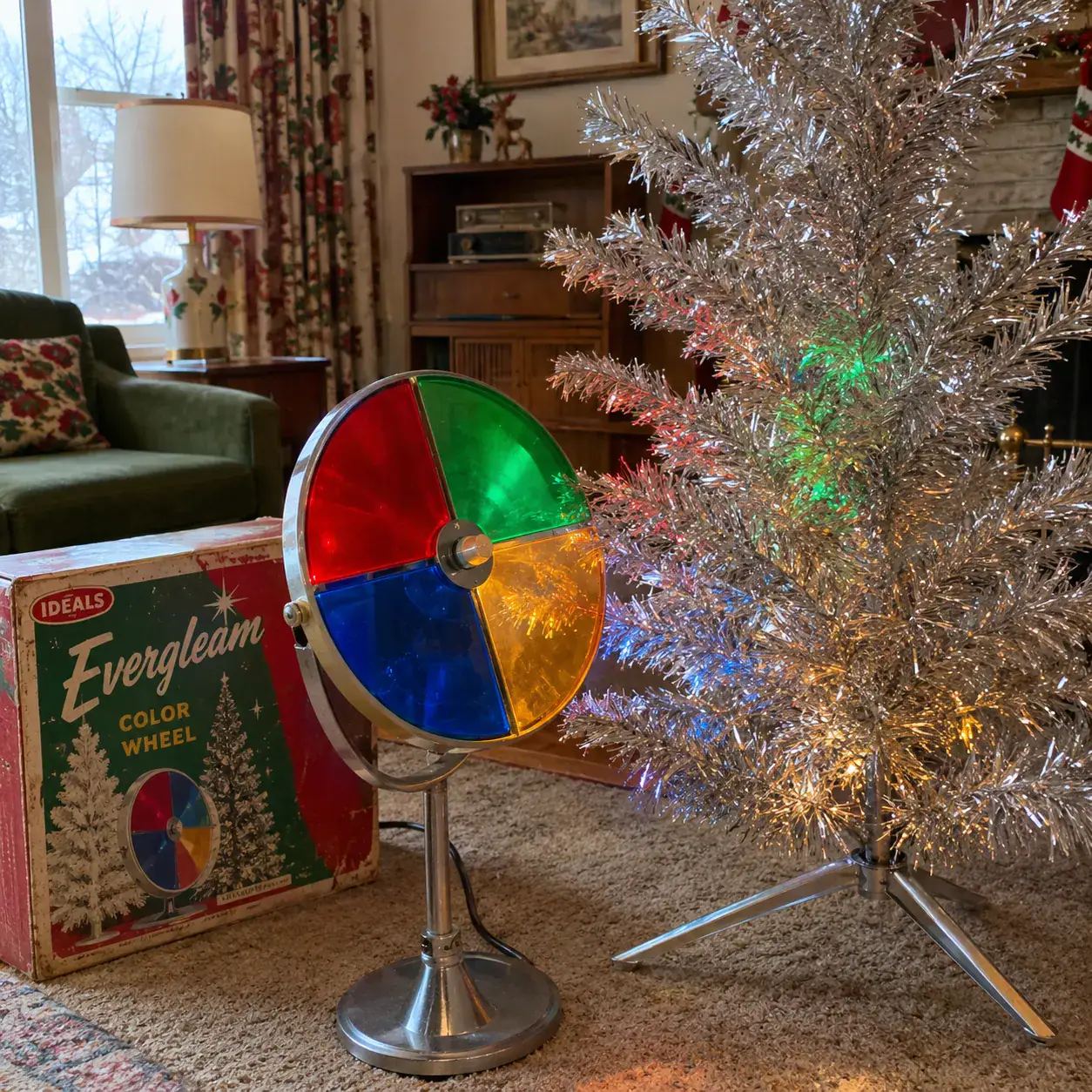
If your family had a silver aluminum tree, the light show came from the floor.
The Aluminum Specialty Company of Manitowoc, Wisconsin, sold more than one million of its Evergleam trees between 1959 and 1969, according to The Henry Ford, and they were lit by a four-color revolving color wheel.
There was a reason nobody strung lights on them. Electric lights on highly conductive aluminum branches were dangerous.
The Henry Ford puts it bluntly: the trees were “completely safe unless you foolishly strung it with electric lights.” So the wheel sat on the floor and turned, washing the whole tree in one color after another.
The craze didn’t last. The 1965 TV special A Charlie Brown Christmas “has been blamed for cutting the aluminum Christmas tree craze short.”
3. Gurley Candles Nobody Lit
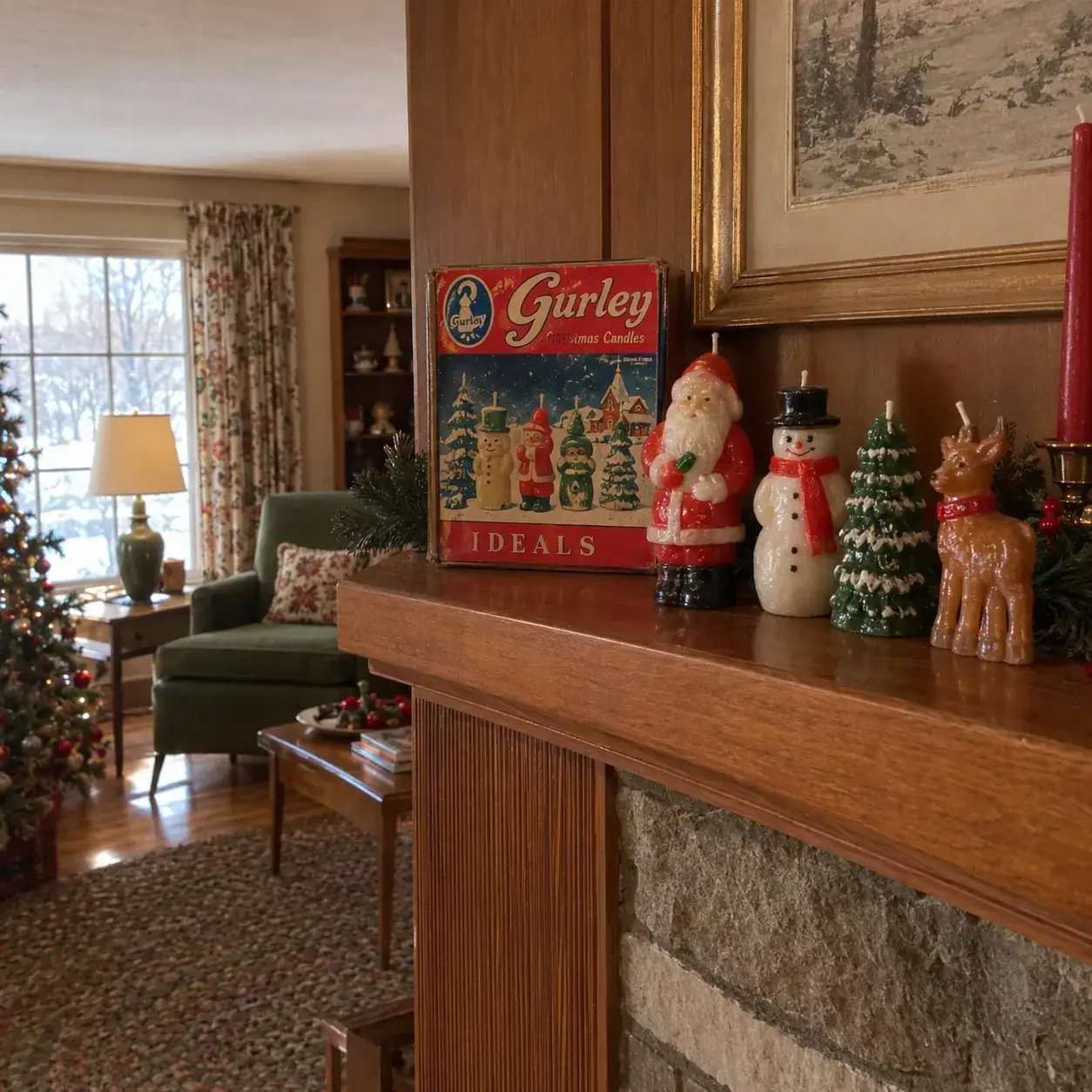
These little wax figures were born from an oil company’s leftovers.
In 1939, Franklin C. Gurley’s W&F Manufacturing in Buffalo, New York, which already made candy and wax novelties like wax lips, started a candle line for Socony-Vacuum Oil Company (now ExxonMobil).
The point was to reuse excess paraffin left over from refining oil.
The candles were sold as “Tavern.” Gurley bought the Tavern rights and renamed the company Gurley Novelty in 1949.
Its figures sold at dime stores such as Ben Franklin and Woolworth, for as little as a dime apiece.
They were never really meant to burn. Gurley marketed them as small wax figures for display, not as practical candles. Sales peaked in the late 1960s.
4. Swedish Angel Chimes
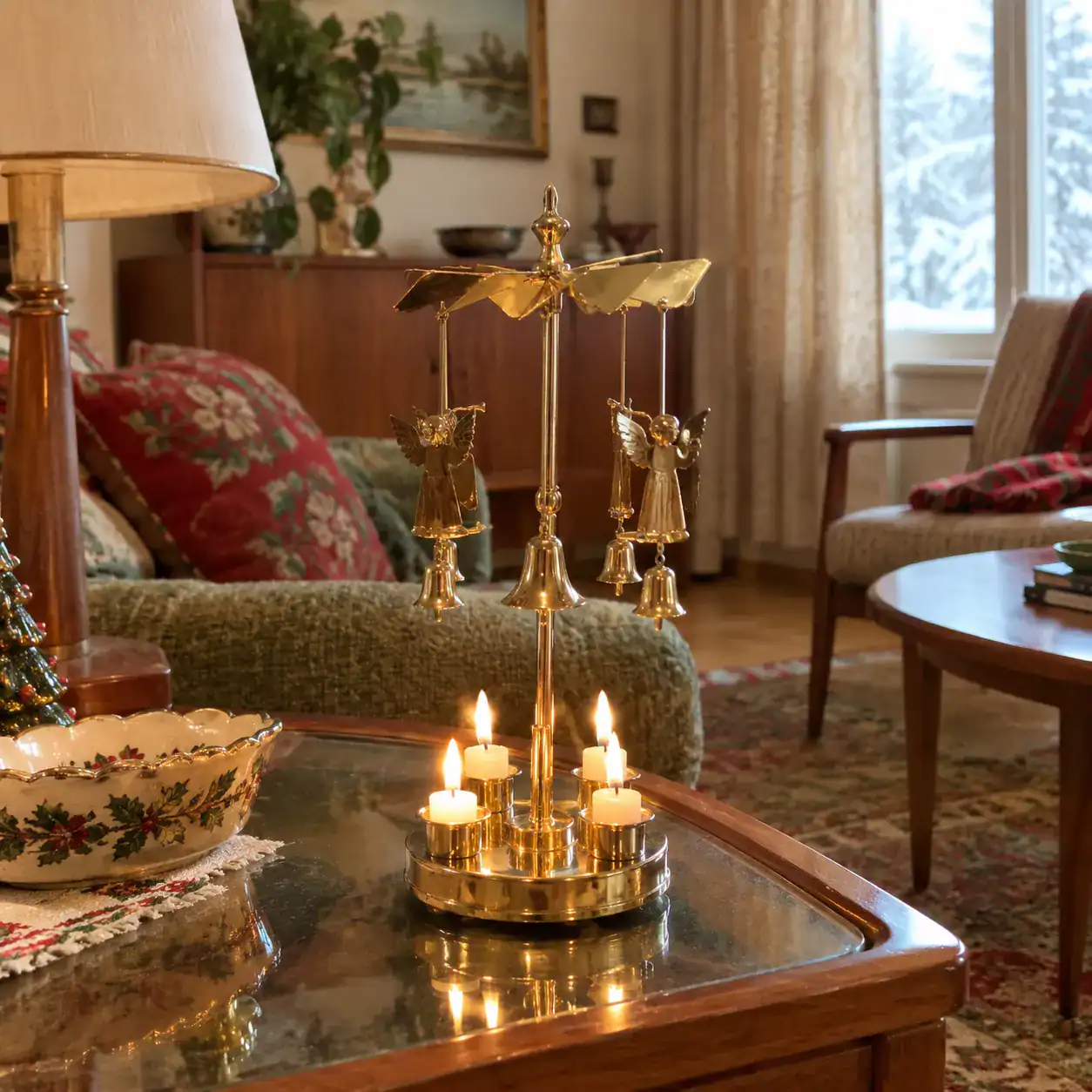
You lit the small candles at the base, and their heat turned a little turbine on top.
The brass angels began to fly in a circle, and as they passed, they struck tiny bells.
The idea is older than most people guess. The earliest known patent was filed in 1905 by Walter Stock of the German toy firm Adrian & Stock.
After World War II, Swedish-made chimes caught on across Europe and North America.
By the late 1950s, the standard Swedish stamped-brass chime was being mass-produced “in the hundreds of thousands,” and the 1958 Sears Christmas Book listed models to retail for a dollar or less.
Collector Eric Holzenberg calls it “the candle chime most baby-boomers remember.”
5. The Poinsettia on the End Table
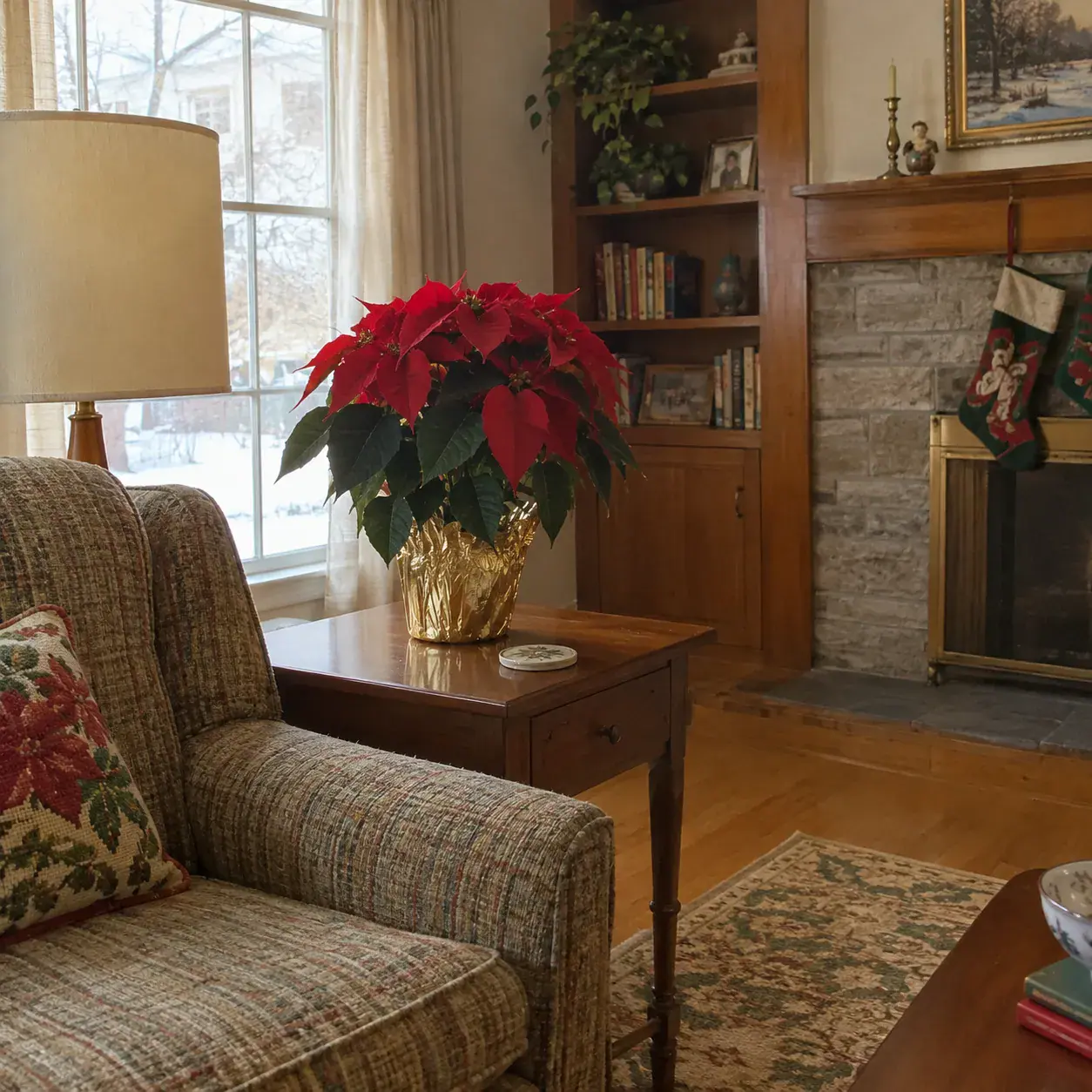
Paul Ecke Jr. took over his family’s poinsettia business in 1963.
Every holiday season he sent poinsettias to the White House, to local television stations and to national talk shows.
Over the years that list included Bob Hope’s Christmas specials, Johnny Carson’s Tonight Show, the Dinah Shore Show and Good Morning America.
The plants were free. Stations set them out on their holiday sets from Thanksgiving to Christmas, so the poinsettia on the TV screen looked a lot like the one on your end table.
One popular version of this story says Ecke decorated “Late Night with Johnny Carson” in 1960. That one doesn’t hold up. Carson didn’t host The Tonight Show until 1962.
6. The Ceramic Christmas Tree
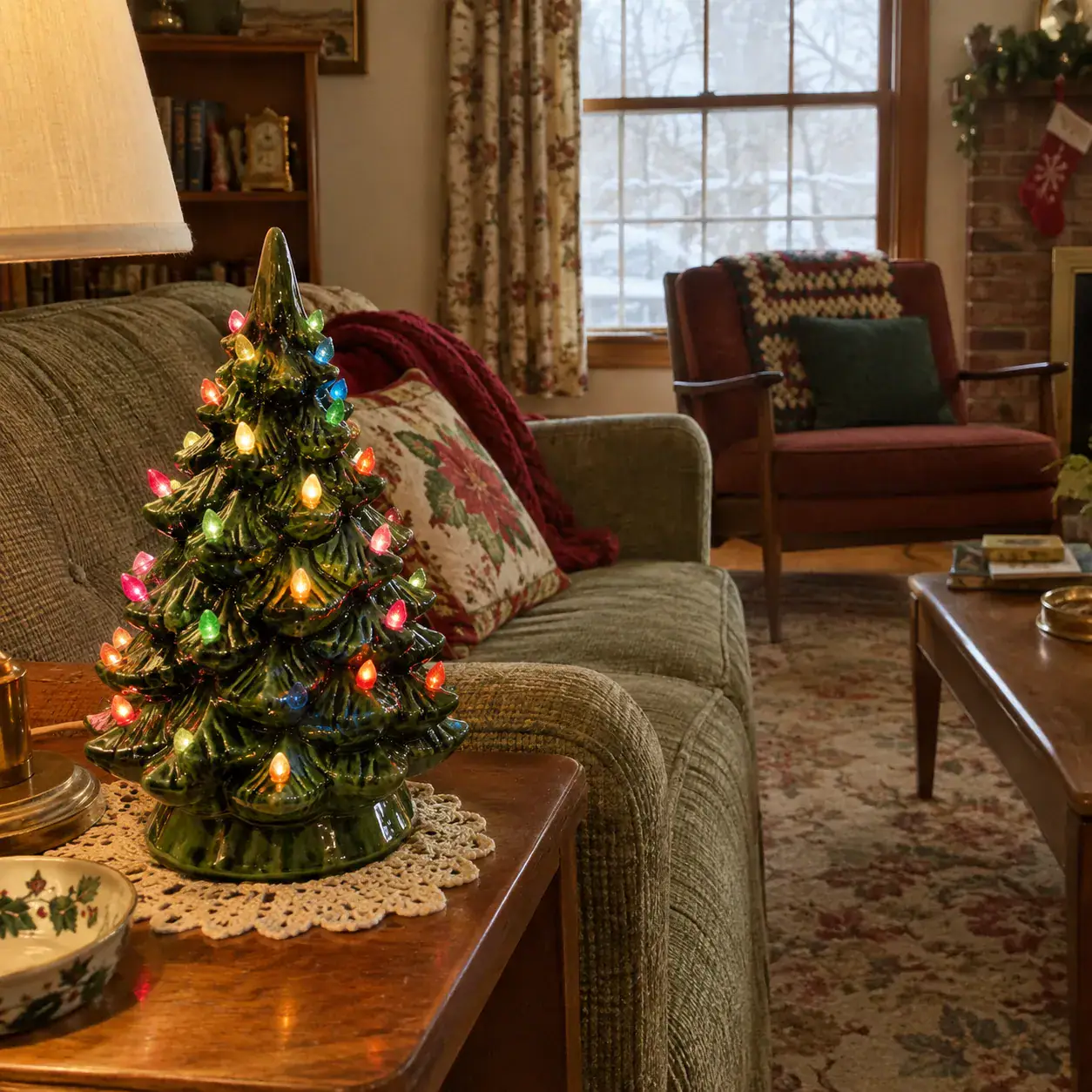
This one belongs to the end of the decade.
The first commercially designed ceramic trees were issued in 1958 by Atlantic Molds, but the real wave came in the last half of the 1960s, when thousands of ceramics shops sprang up across the US.
People made their own trees from mass-produced molds at shop workshops, and for many it became a family affair.
Early trees had tiny lights that were lit individually. Later versions from the 1970s ran on a single bulb.
If your family’s ceramic tree came home from a ceramics class, it was likely part of a boom that peaked into the 1970s.
7. Holt-Howard’s Winking Santas and NOEL Angels
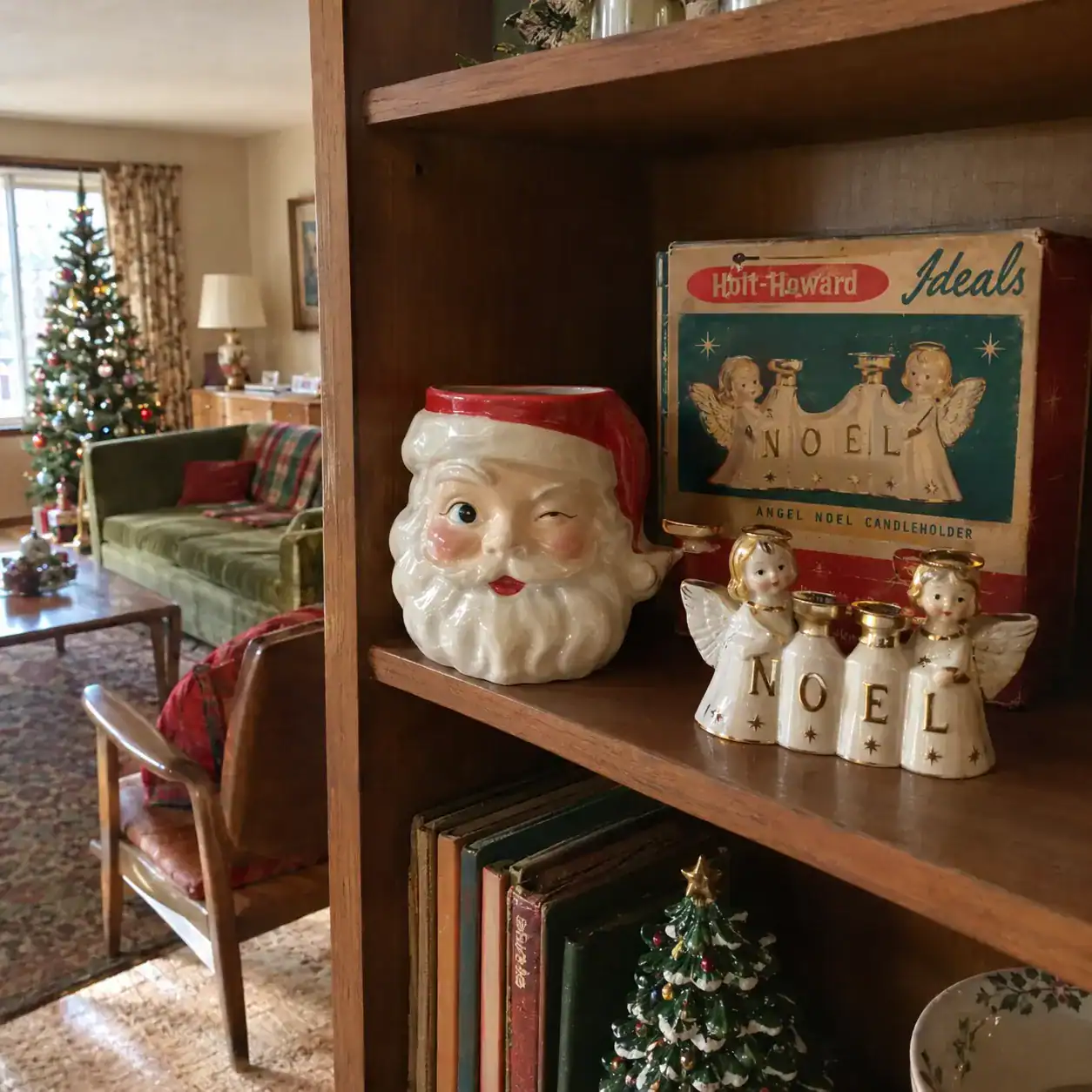
In 1949, brothers John and Robert Howard and their college friend Grant Holt used a family loan of $9,000 to start importing decorative objects from Japan.
Their first wares were Christmas ceramics, and the names alone are worth the trip:
North Pole Jet Stream Santa Ashtrays, Winking Santa Punch Bowl Sets, Starry-Eyed Santa Pitchers with Mugs and Angel NOEL Candleholders.
Yes, a Santa ashtray.
Holt-Howard sold through gift shops, department stores and catalogs, moved to Stamford, Connecticut, in 1959, and kept its “HH” mark until 1979.
8. Lefton and Napco Ceramic Angels
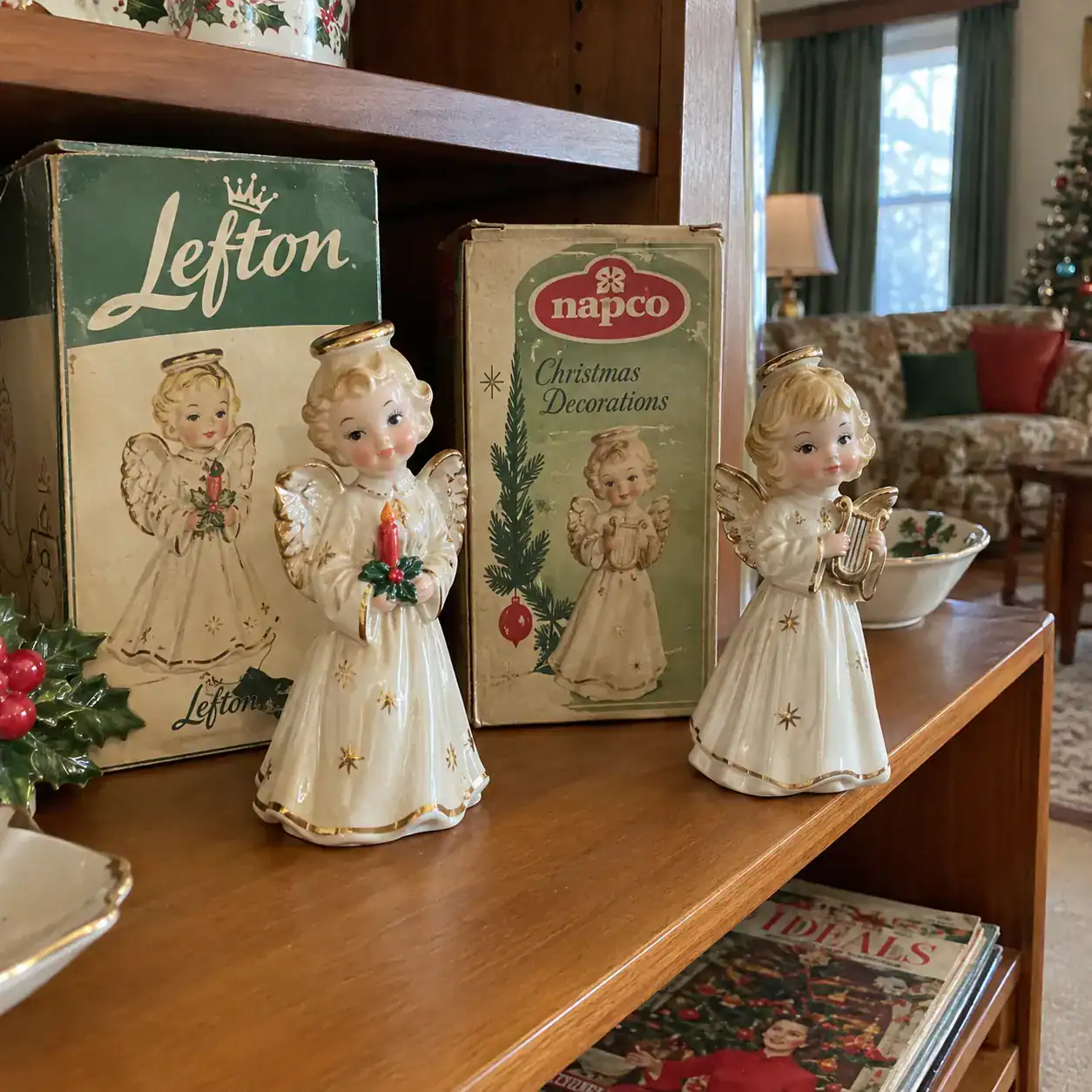
Lefton, Napco and Holt-Howard produced many angel figurines during the ’50s and ’60s.
They had hand-painted faces and were typically marked “Made in Japan.”
The angels themselves had changed.
By the 1950s, makers had swapped the old paper and cardboard for fabric and had moved into celluloid, porcelain, wood and white metal.
The little ceramic one on the shelf was the newer kind.
9. Knee-Hugger Pixie Elves
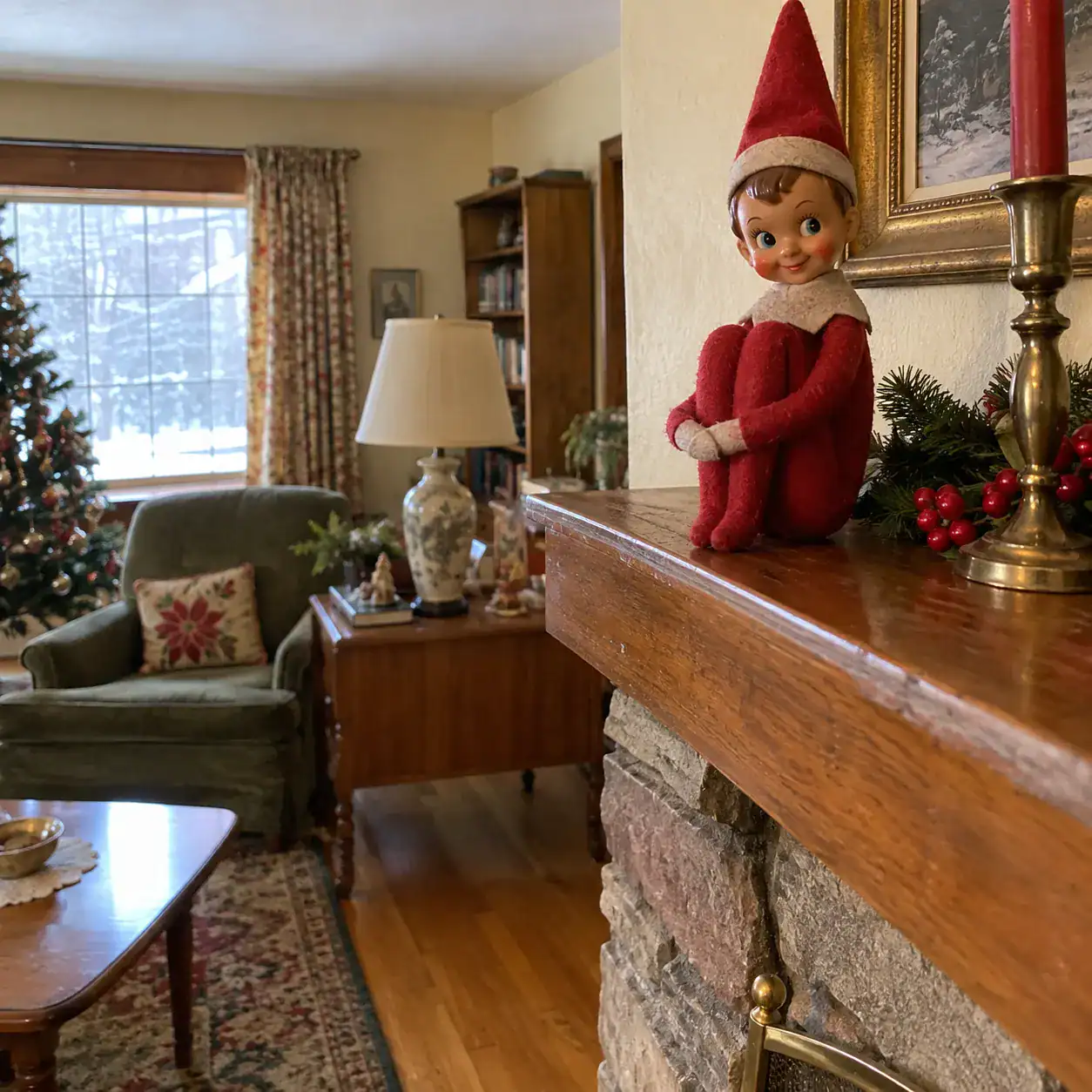
They were originally called “knee-hugger” elves, and they were made in Japan in the 1950s and 1960s.
A felt body went over a wire frame.
The long legs were pulled up and the arms wrapped around the knees, so the elf could perch on the edge of a shelf or a wreath.
If one sat on your mantel, it probably looks familiar now.
The vintage pixie resembles the doll sold with the modern Elf on the Shelf book from the mid-2000s.
10. Beistle Honeycomb Bells and Paper Decorations
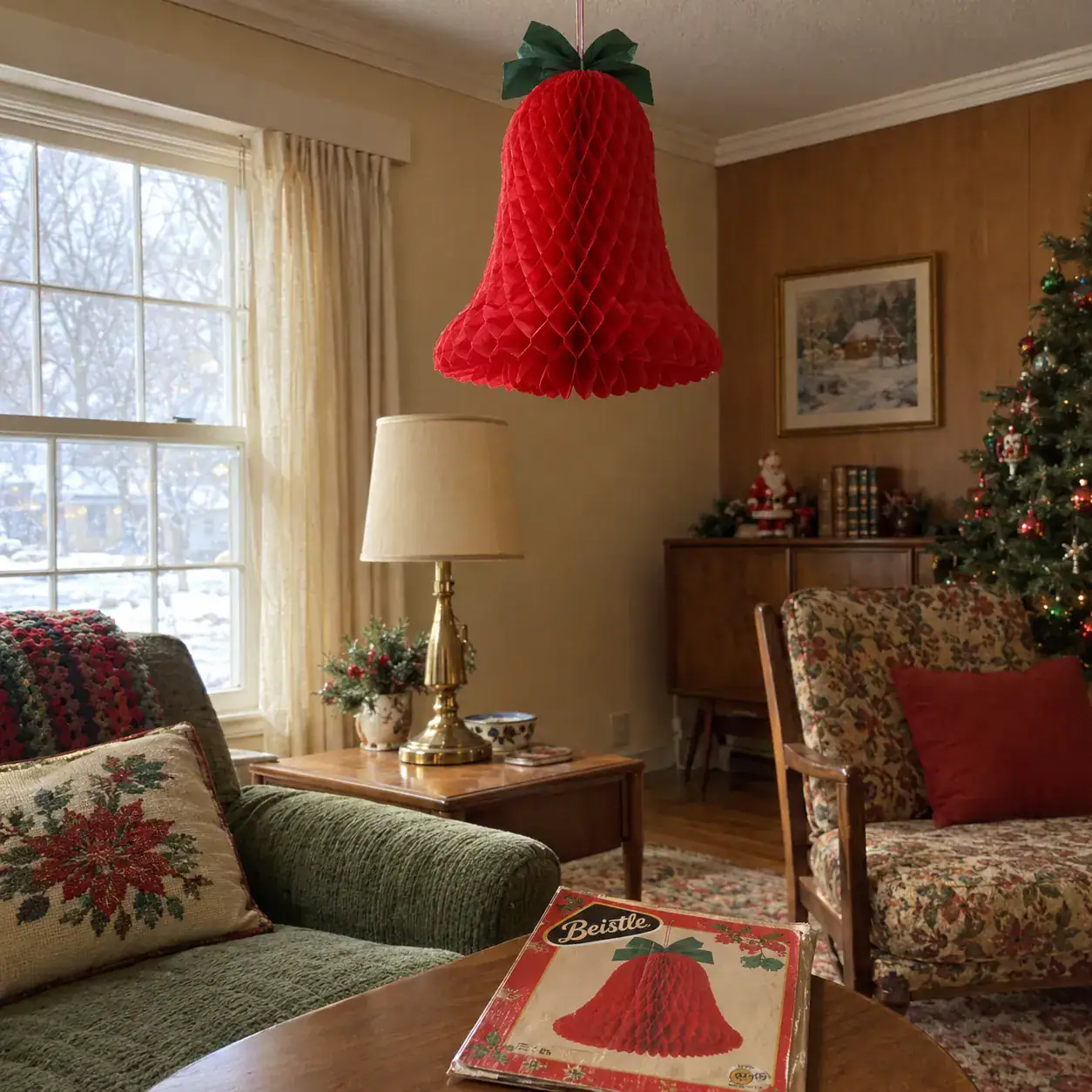
Martin Luther Beistle saw German honeycomb tissue in 1900.
By 1907 he had created the Beistle Company, later moved it to Shippensburg, Pennsylvania, and by 1910 was the first manufacturer offering honeycomb tissue decorations in America.
Honeycomb is layers of tissue glued alternately, so the flat paper opens into a 3-D shape.
With Raymond Fleming, Beistle patented a “Folding Ornament of Expanding Tissue” in 1925. It was the Christmas bell.
Some of these decorations hung from the ceiling and others stood on tables.
If a folded paper bell hung in your house in the 1960s, the design was already decades old.
11. The Advent Calendar
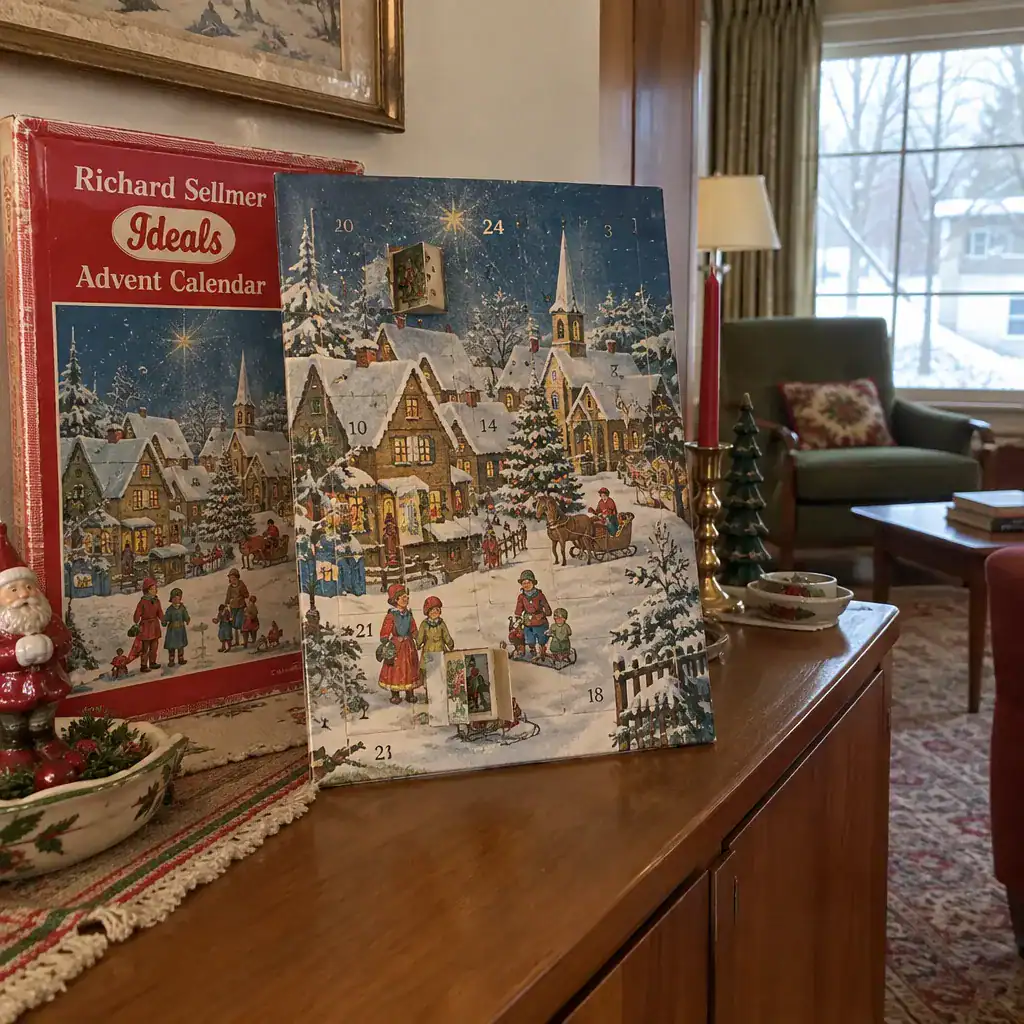
A single news photo did a lot of the work here.
In 1953, a photo of President Eisenhower’s grandchildren David, Barbara and Susan, ages 6, 5 and 3, with an Advent calendar ran in several national newspapers.
It is credited with popularizing Advent calendars in the US.
The calendar came from Richard Sellmer’s firm in Stuttgart, Germany.
Sellmer’s first calendar, “Small Town,” came out in 1946 and showed the snowy buildings of his village with 24 little windows to open.
12. The Wall of Christmas Cards
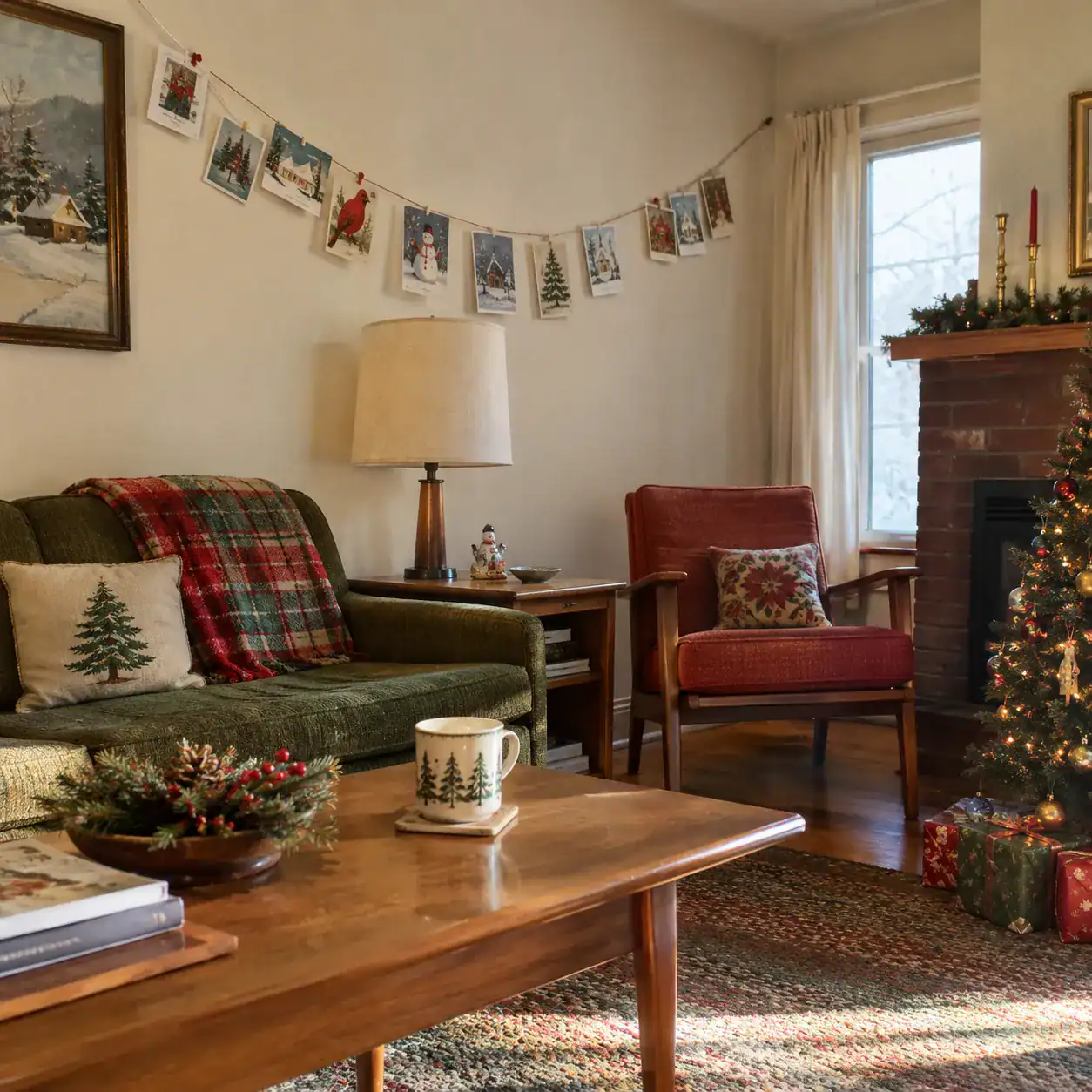
The numbers were enormous. About 300 greeting card publishers produced five billion cards in the US in 1958, according to a 1964 article in the University Daily Kansan.
Nearly half were Christmas cards, and the cost of sending them was $150 million.
Hallmark plant manager Robert D. Payne told the paper that Christmas sales were increasing each year.
His explanation: “As people move around more, they send more cards.”
All those cards needed somewhere to go. Many ended up lined along the mantel, hung over a string across a wall or along the ceiling molding, or taped to the back of the front door.
One baby boomer remembers a family that covered the door in aluminum foil before taping the cards to it.
13. Glittery Japanese Cardboard Houses
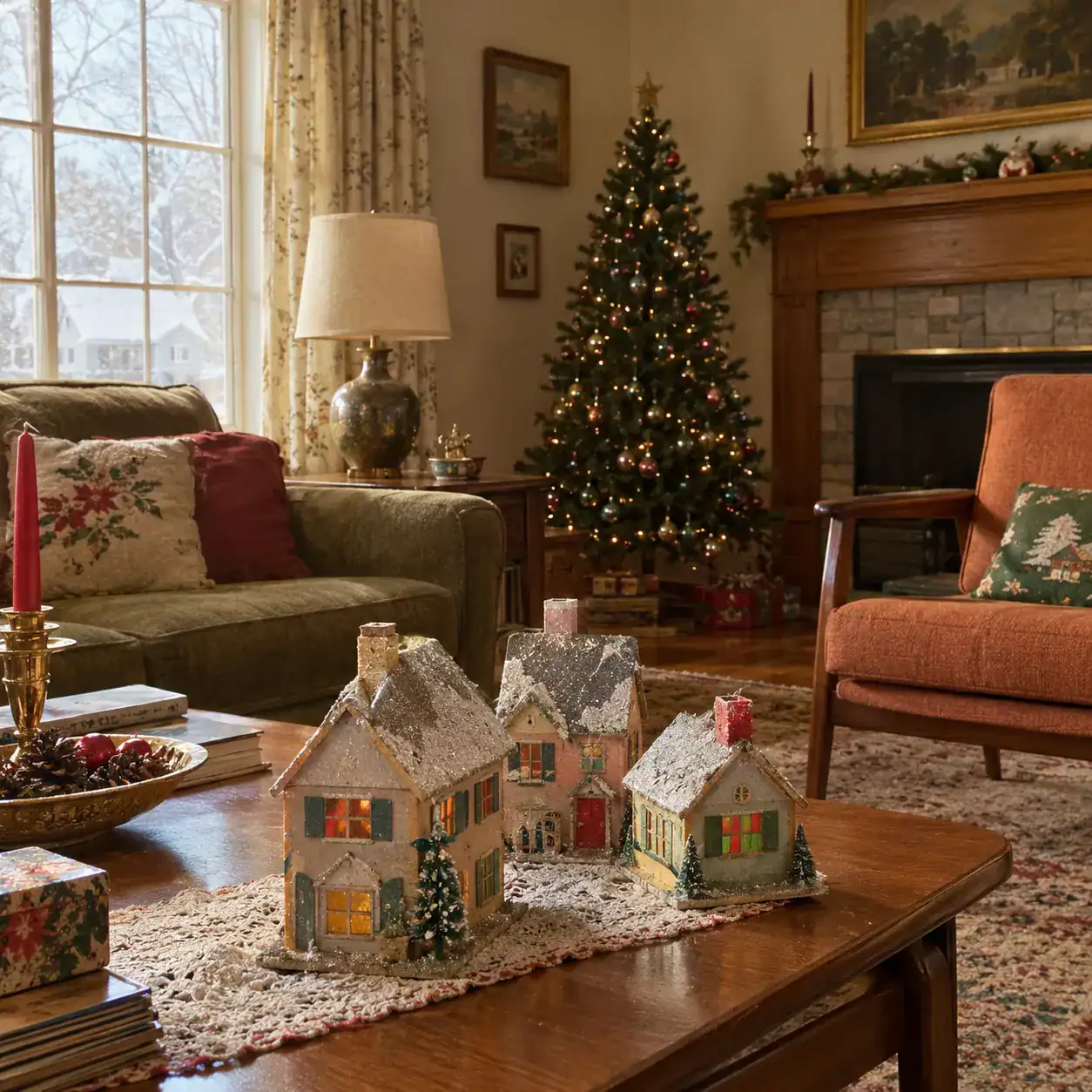
German-American families called a Christmas village display a “putz,” and these little glittery houses became known as putz houses.
Japanese makers began producing them around 1927 and 1928, first as candy boxes, with a hole in the back for a tree light.
World War II all but put an end to them. Japan made them again after the war, and the charm held up until the early 1950s. After that, the houses got smaller, flimsier and simpler.
Here’s the twist. By around the middle of the 1960s, the little paper house had all but vanished from stores.
In many 1960s living rooms, the ones on the table were older houses brought out of the box each year.
14. Bottle-Brush Trees
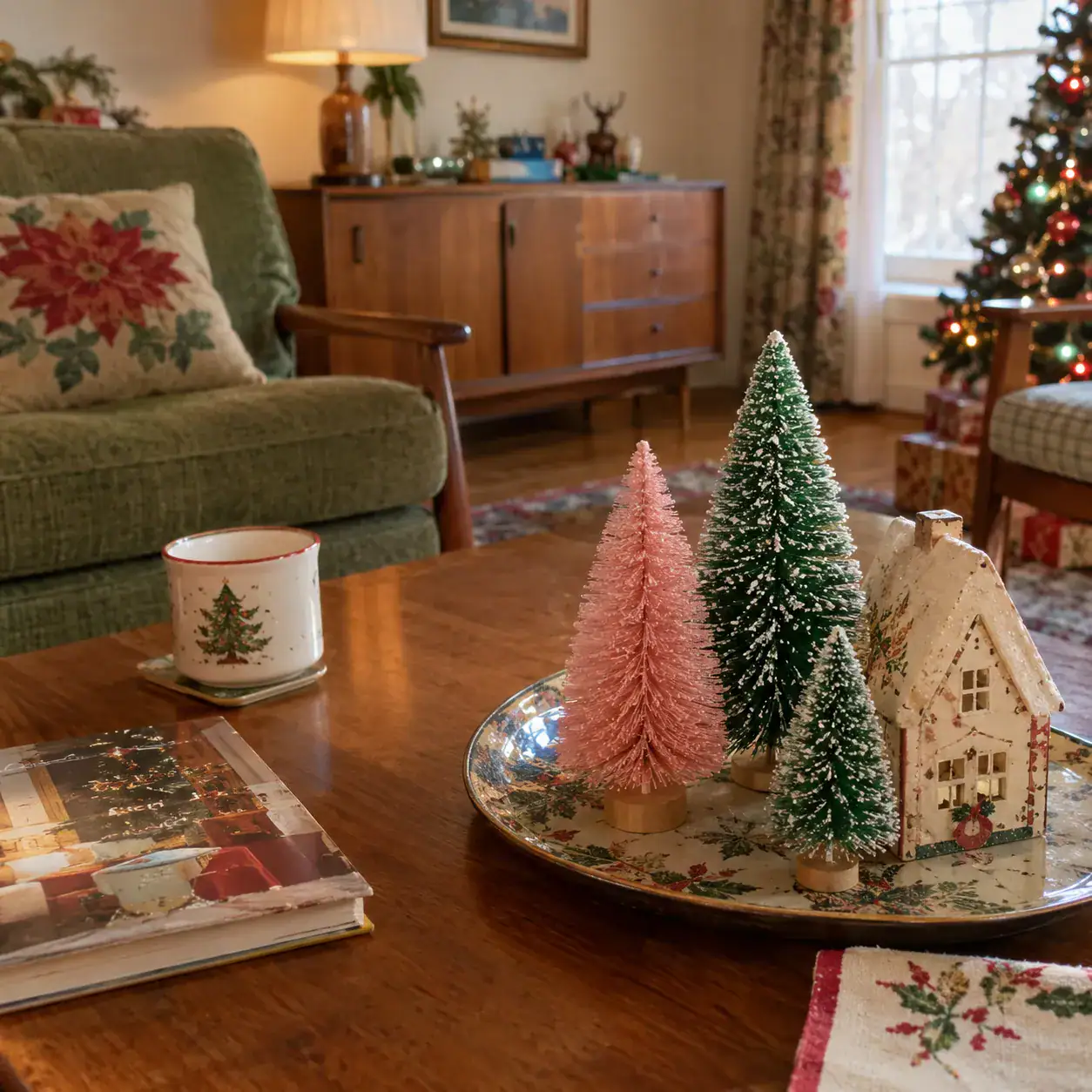
You may have heard that the “Addis Brush Company” made the first brush trees from toilet-brush machinery in 1930.
That story is a myth.
Hagley Museum and Library found “no evidence of any company by that name here in America.” The English Addis company bought a tinsel-tree maker around 1970.
The real story is less funny but true. By the 1950s, the American Brush Machinery Company of Mount Vernon, New York, was making artificial trees on twisted-wire brush machines.
First came bottle-brush trees in pastel colors, then green PVC. The small ones often stood beside those cardboard houses.
15. Plasticville Fences and Villages Under the Tree
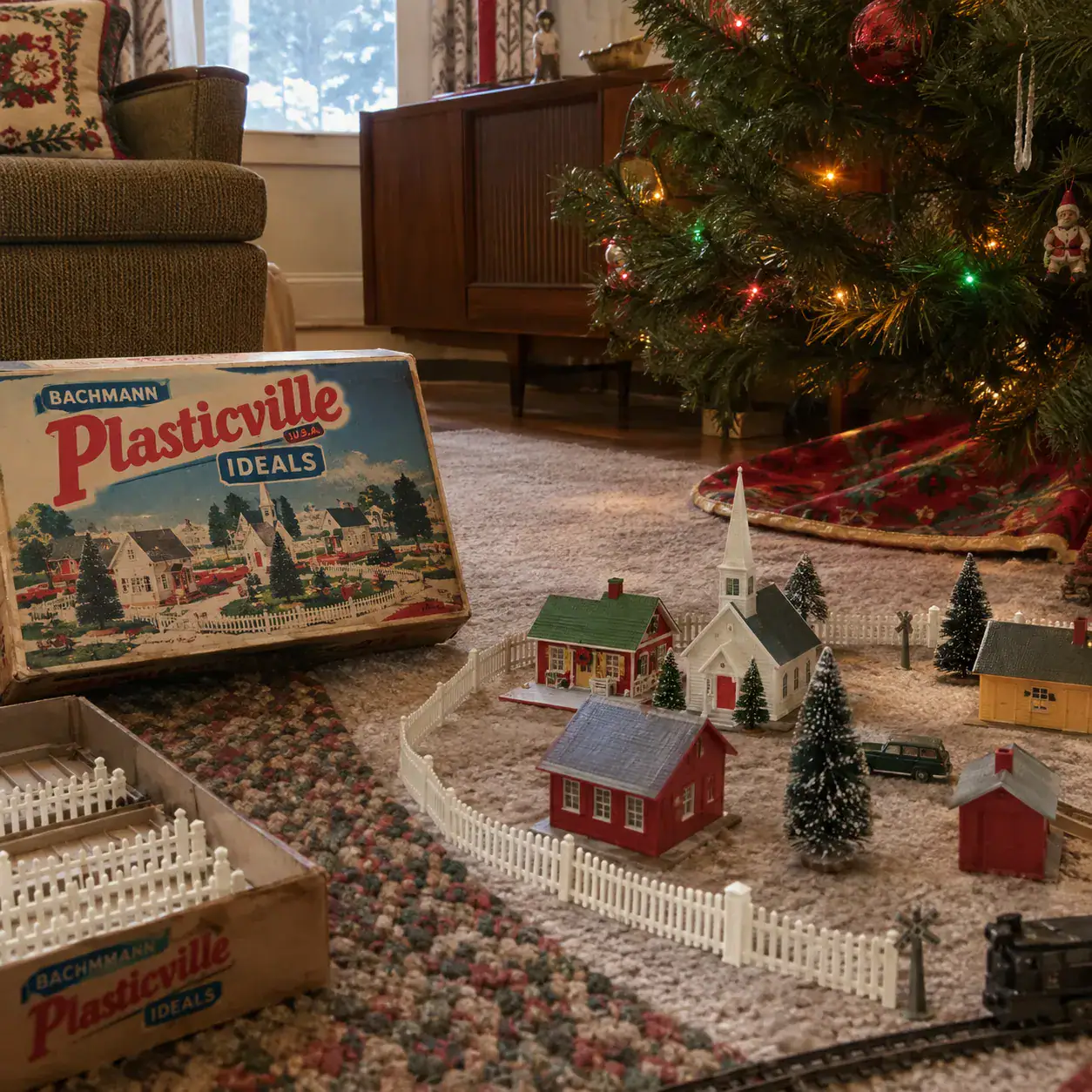
Bachmann Industries of Philadelphia introduced Plasticville in 1947.
Its first product was a plastic fence, marketed as a Christmas tree accessory, the kind that ringed the base of the tree.
Then buyers started using it with their train sets.
The line grew, with houses and stores by 1950, and Plasticville quickly became the most popular brand of train buildings on the US market.
Bachmann added new buildings every year until 1958, and Lionel licensed and boxed them in the late 1950s.
16. The Yule Log on TV
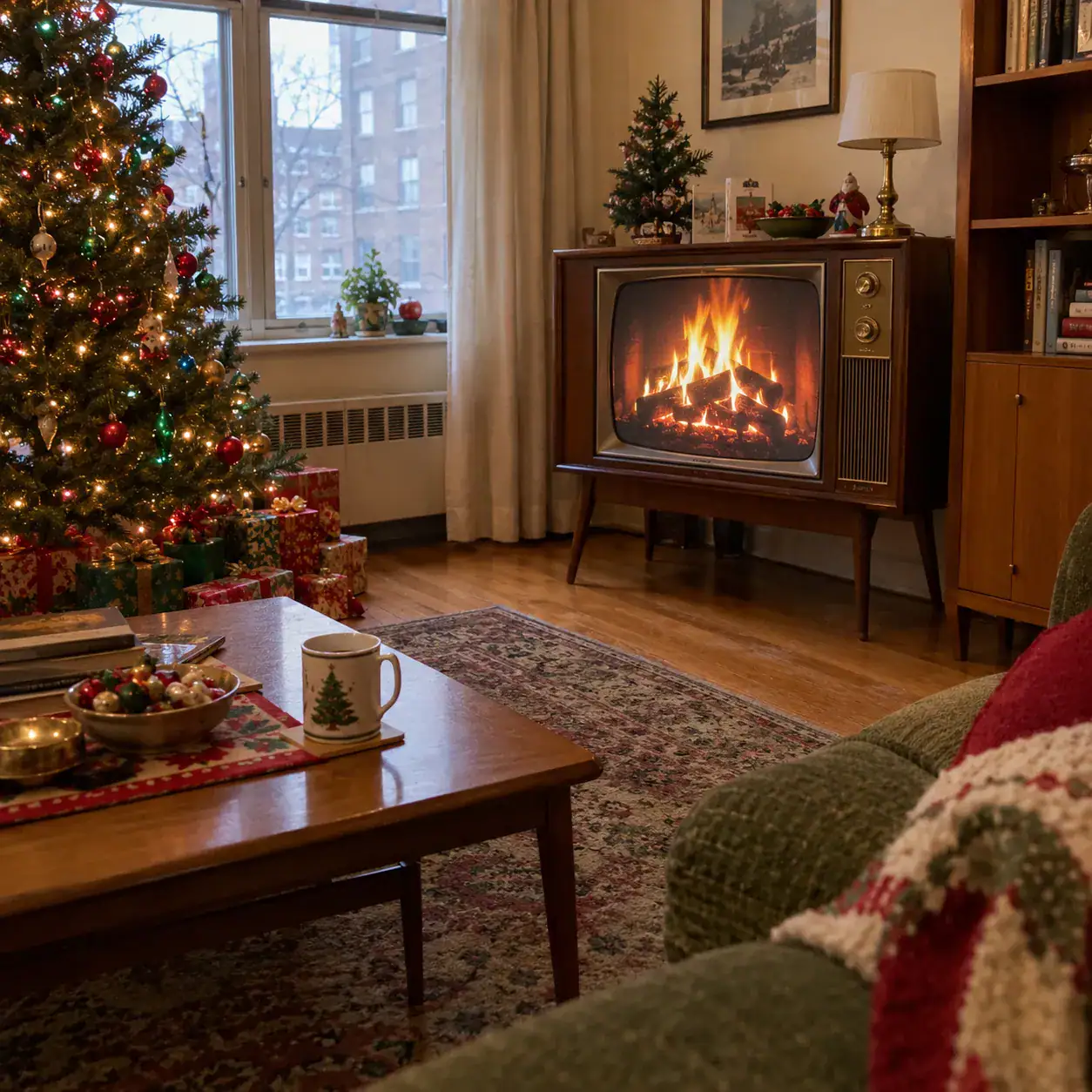
This one is for New Yorkers.
In 1966, WPIX president Fred M. Thrower created the Yule Log as “a televised Christmas gift to those residents of New York who lived in apartments and homes without fireplaces.”
It was filmed at Gracie Mansion, the mayor’s residence.
The original loop ran 17 seconds. For the first Christmas Eve broadcast, on December 24, 1966, the station canceled about $4,000 worth of advertising and ran three hours of the fire with Christmas music and no commercials.
The film didn’t hold up.
The 16mm film was deteriorating, so the log was refilmed in California in 1970.
17. Nutcrackers
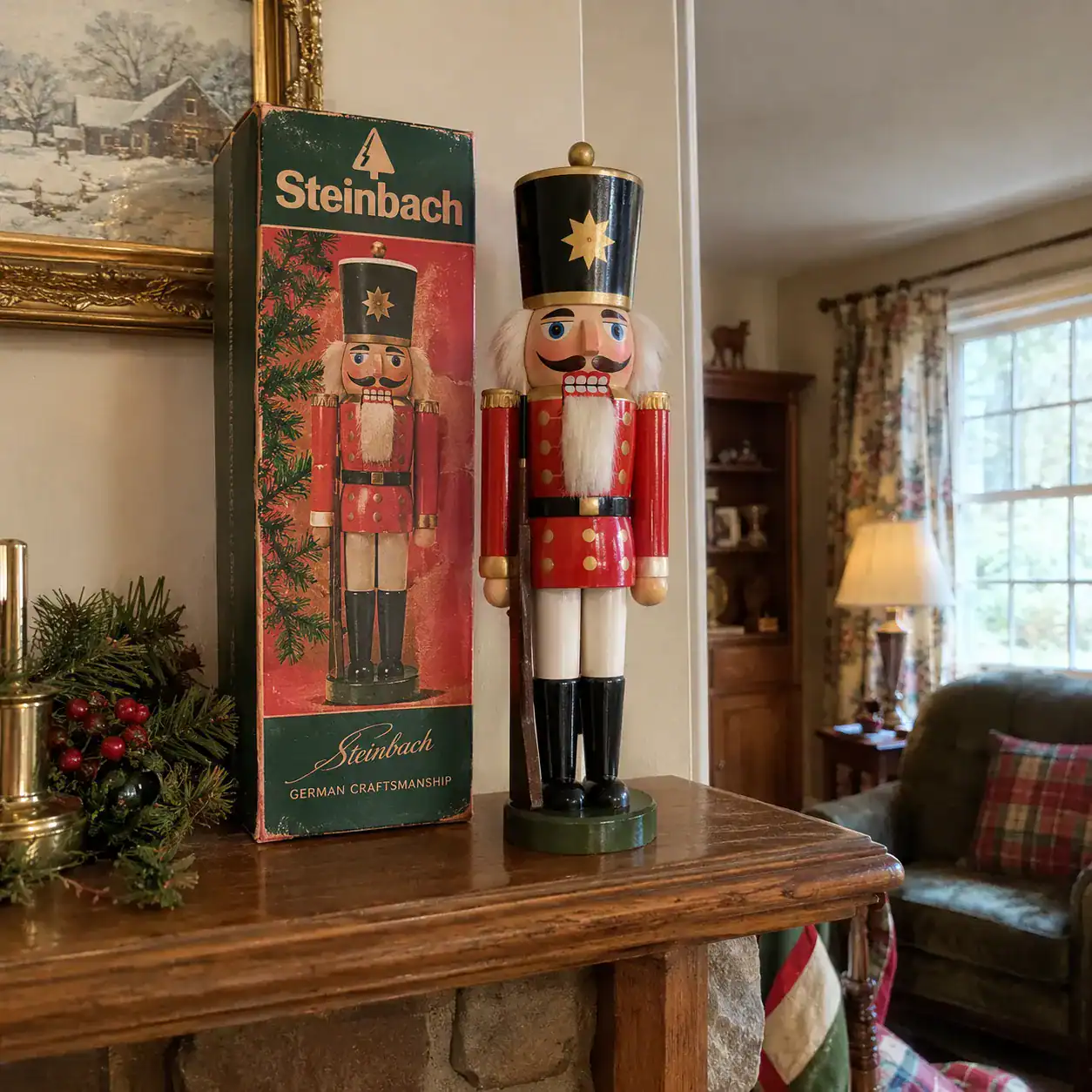
After World War II, nutcrackers carved in Germany’s Erzgebirge region began making their way into homes around the world.
American soldiers stationed in Europe brought them home as souvenirs.
If someone in your family served in Europe after the war, that wooden soldier on the mantel may have come home with them.
By the 1950s, nutcrackers had become fixtures of US holiday decor, helped along by the growing popularity of The Nutcracker ballet.
The Steinbach family of nutcracker makers worked hard to build the American market.
18. Hard-Plastic Santa Candy Containers
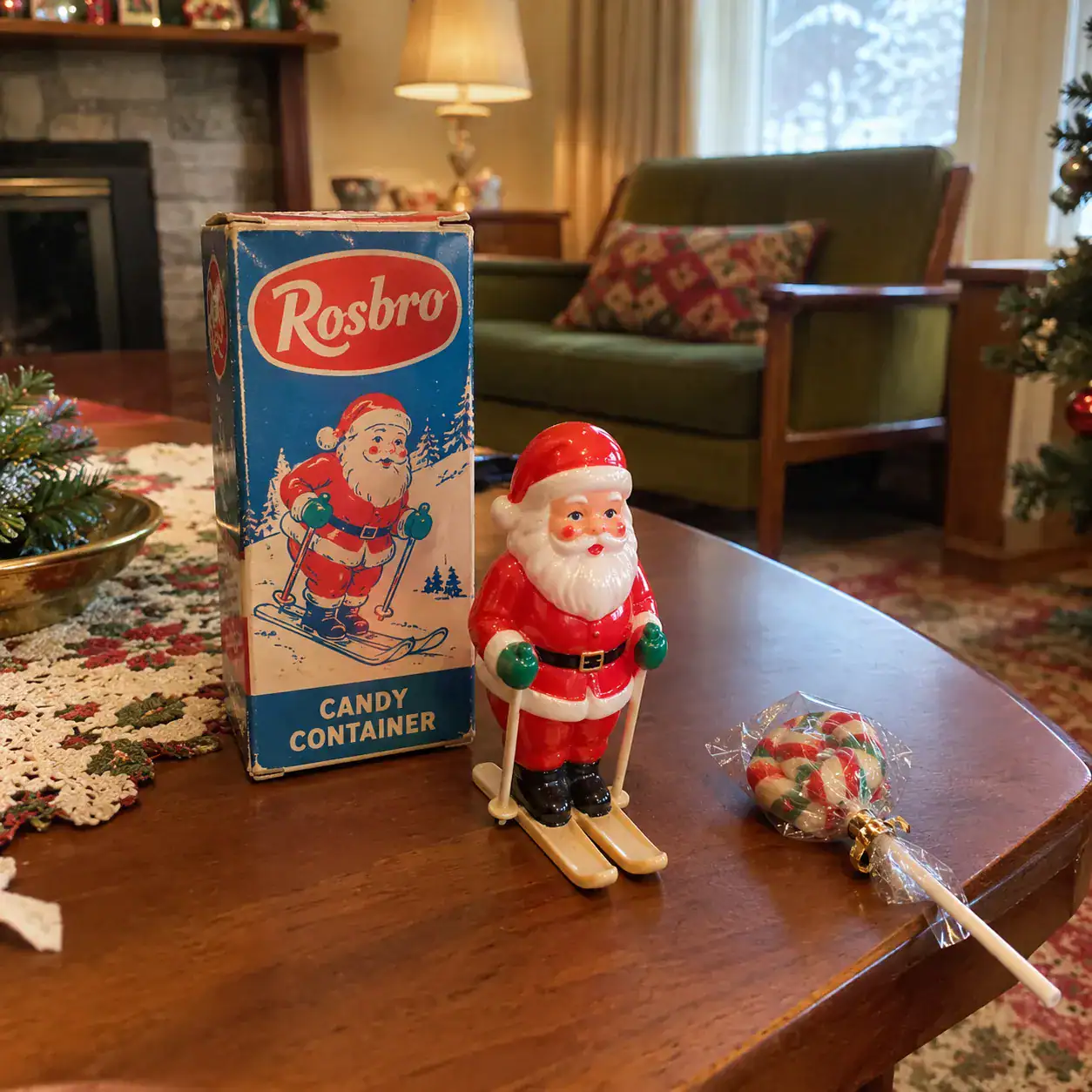
These Santas were usually no more than three or four inches tall.
They rode skis, blew horns, sat in carts or drove reindeer, and many held cellophane-wrapped lollipops.
Major makers included Rosbro and Rosen of Providence, Rhode Island.
They often sold for less than 10 cents and worked as stocking stuffers, party favors, table decorations or ornaments.
Their most popular years ran from 1952 until around 1958. Many of the ones still sitting out in the 1960s were holdovers from the decade before.
19. Lighted Plastic NOMA Figures
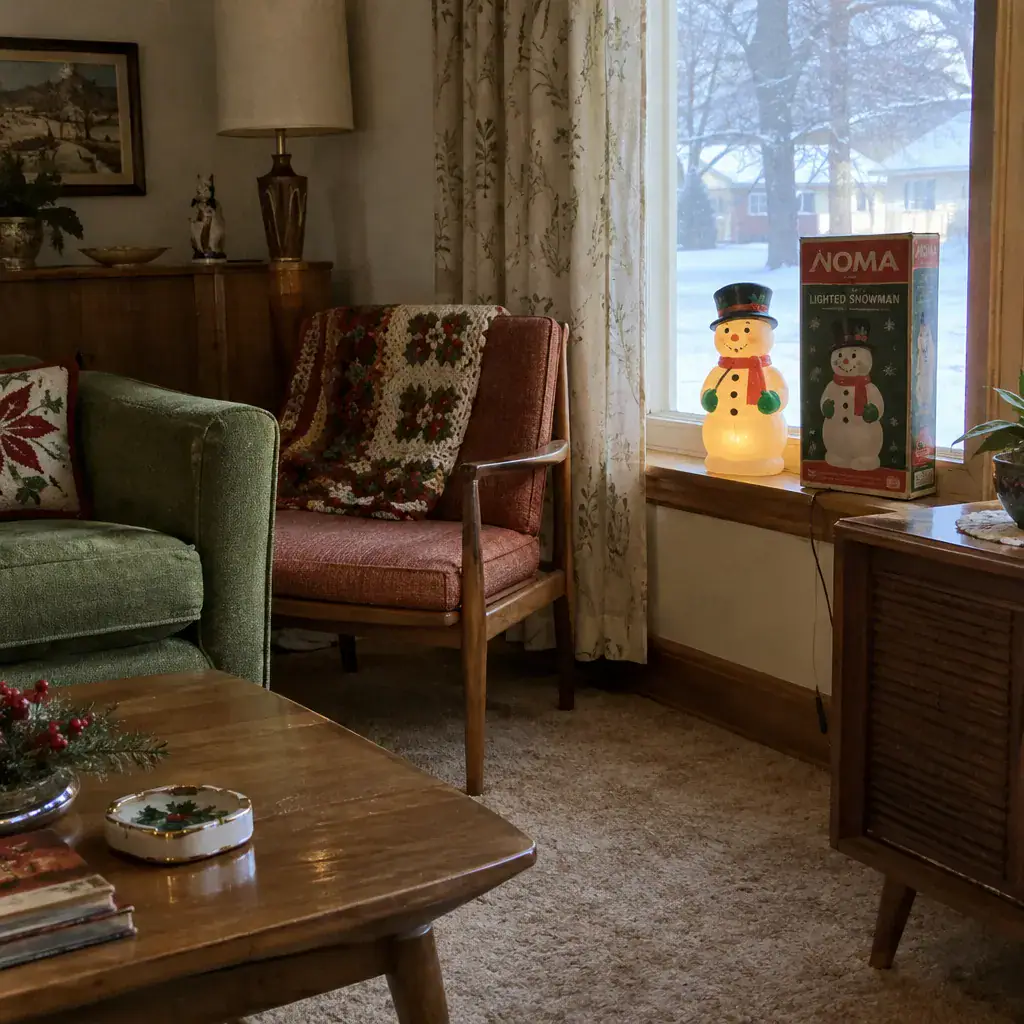
NOMA was then the leading maker of Christmas lighting, and its flat-backed, hard-plastic lighted figures were a common offering from the late 1940s through the 1950s and 1960s.
They stood on their own or hung on a wall: elves, candy canes, holly arrangements, candle groupings, bells and snowmen.
The company’s window candles went back to 1927 and came with connectors so you could join several together.
The decade was hard on the company, though. NOMA Lites filed for bankruptcy in 1965 as cheaper imported light sets moved in.
20. Felt Sequin Stockings
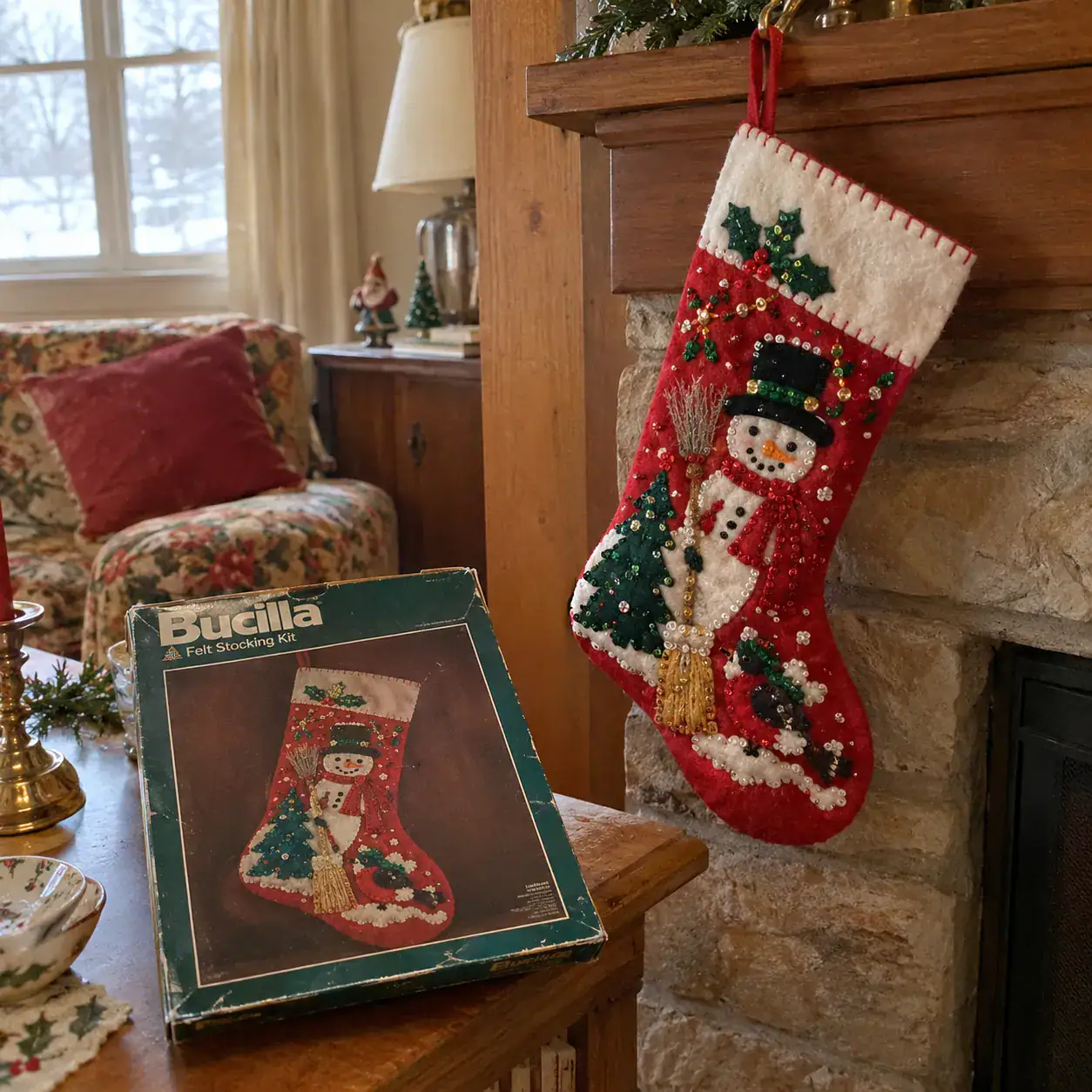
By the 1960s, many Christmas stockings were hand-sewn from felt kits and covered in sequins.
Bucilla was known for those kits: stamped felt, sequins, beads and floss, all in one box.
The brand traces back to the Bernhard Ulmann Company of 1867.
If your stocking had your name stitched across the top, someone sat down with a needle and a pile of sequins to make it.
21. The Ribbon-Candy Dish
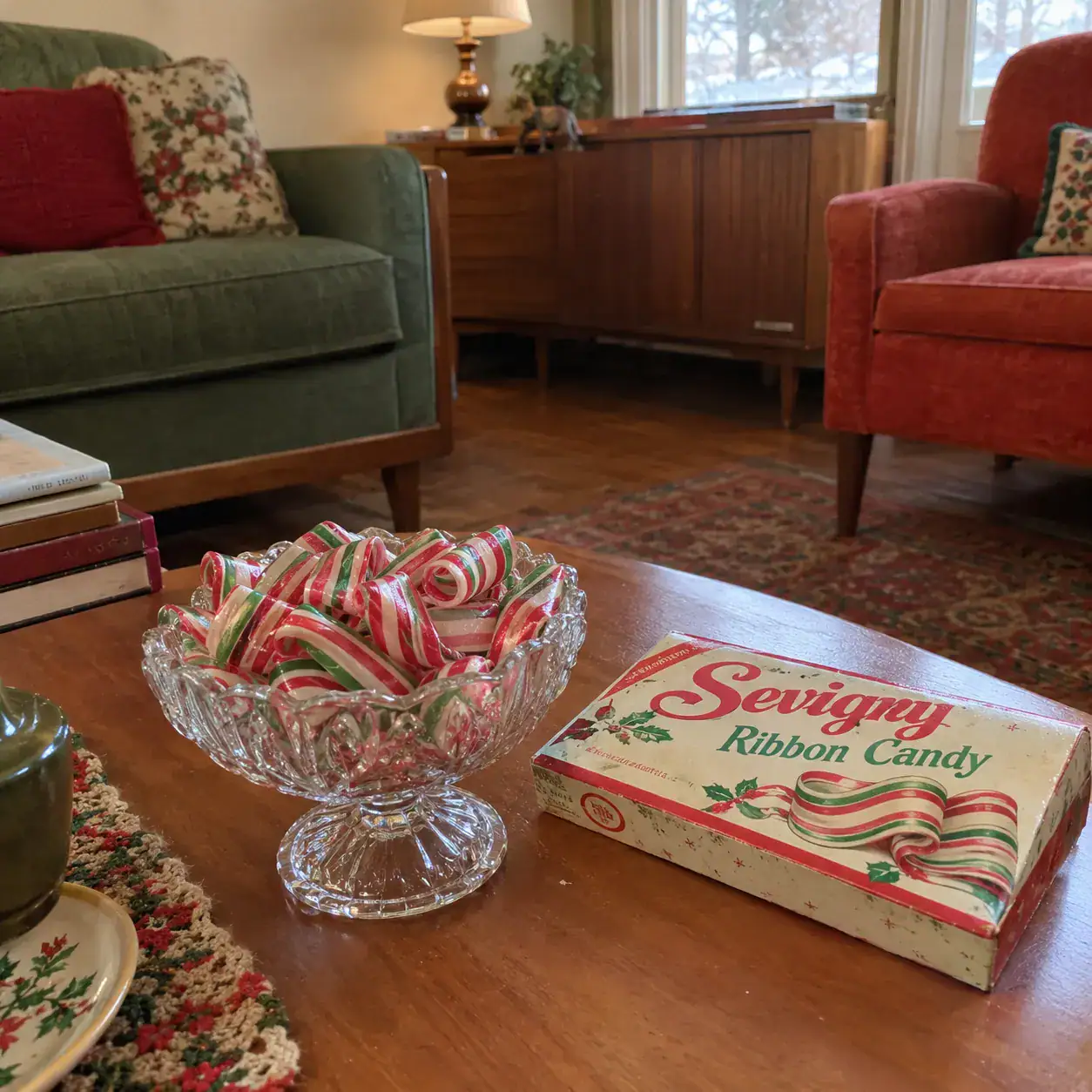
Plenty of people remember a glass dish of ribbon candy on the coffee table, more for looking at than eating.
Making those thin, folded loops used to be slow handwork.
In the 1940s, Sevigny Candy built a machine that did the job, which made Christmas ribbon candy available far and wide.
F.B. Washburn, a candy company family-owned since 1856, didn’t get into ribbon candy until the 1960s.
In 1986 it bought Sevigny’s and became the hidden maker behind several brands.
Before discontinuing ribbon-candy production in 2019, it turned out 400 pounds an hour, 10 hours a day, four days a week during its production season.
22. Snow Globes
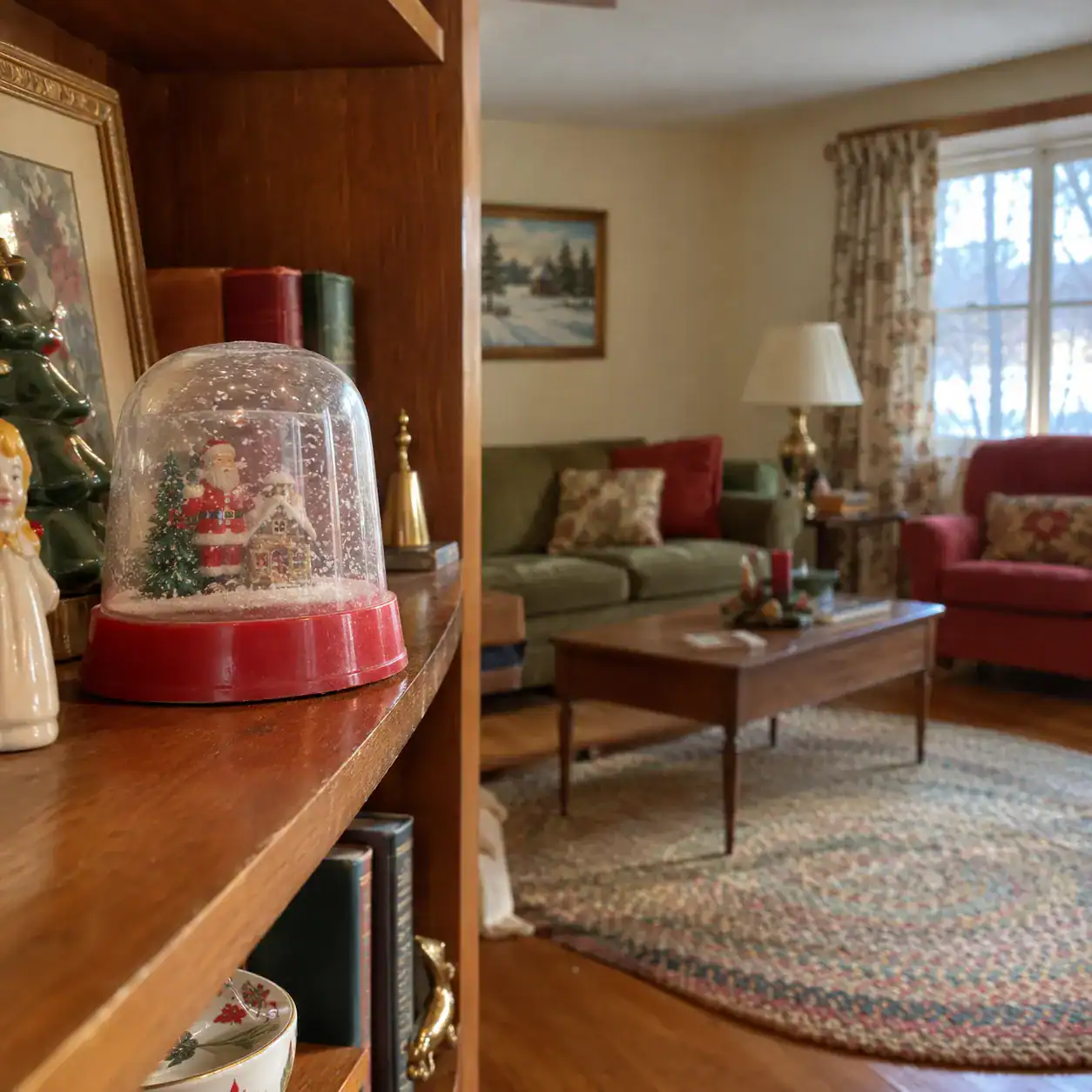
The first US patent tied to snow globes was filed in 1927 and granted in 1929 to Joseph Garaja of Pittsburgh.
In the 1950s, snow globes became available in plastic.
That changed who made them.
By the early 1960s, inexpensive plastic snow domes from Hong Kong and Japan had largely taken over the market.
23. The Christmas Ideals on the Coffee Table
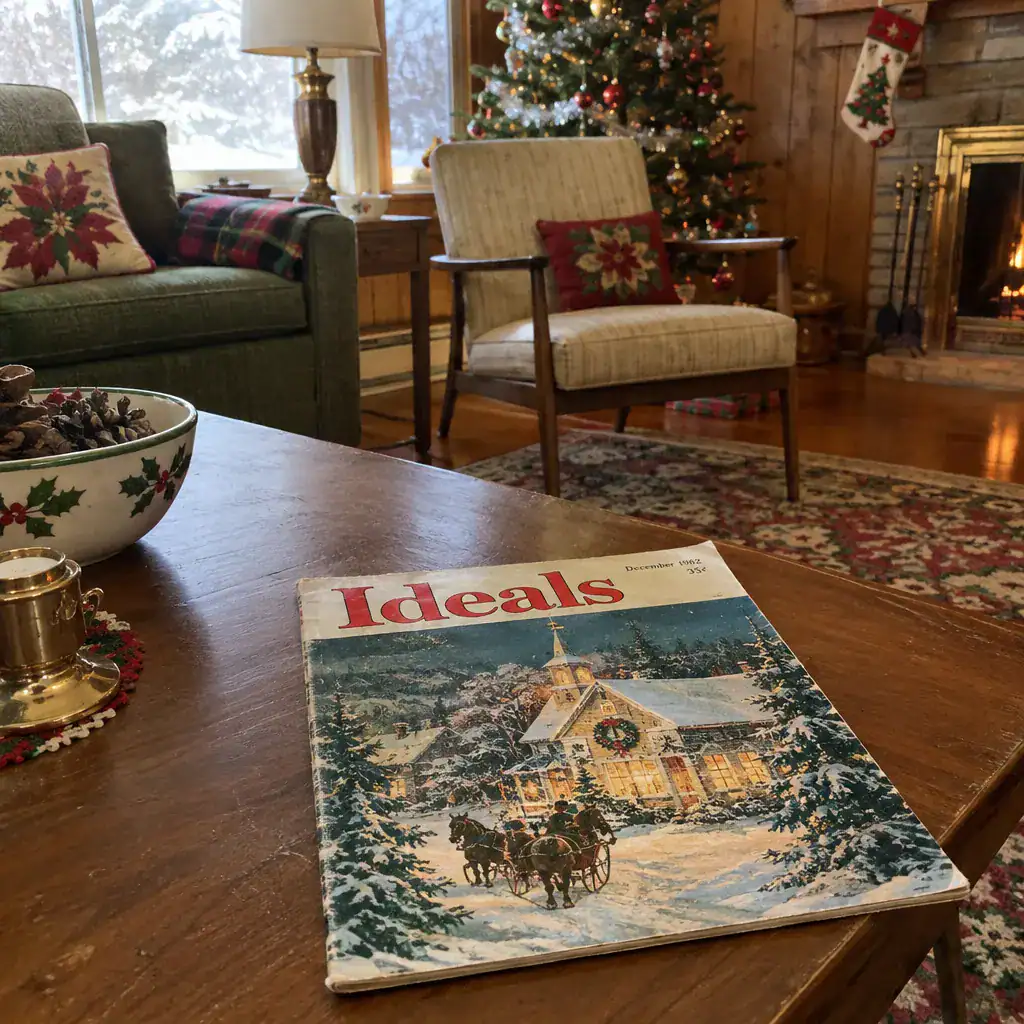
Ideals began as a collection of poems added to a company newsletter.
Van B. Hooper, a public-relations manager, founded it in Milwaukee in December 1944, as World War II was ending.
It became a holiday tradition, especially with Christian families at Christmas.
In many homes, the Christmas issue sat on the coffee table, and annual Christmas issues are still published.
24. Danish Blue-and-White Christmas Plates
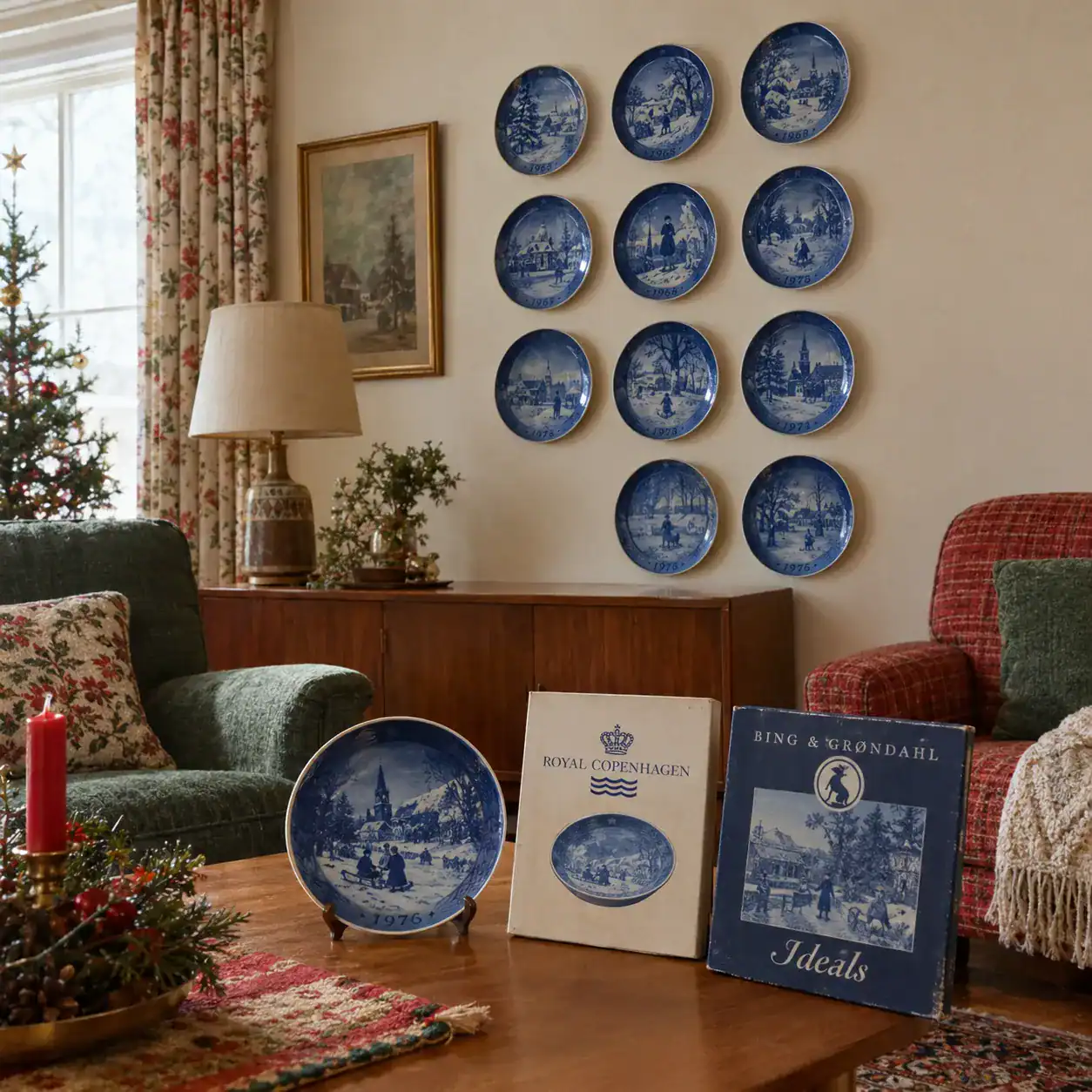
If your family had Danish roots, there may have been a wall of blue and white.
Bing & Grøndahl issued the first Christmas plate in 1895, called “Behind the Frozen Window,” and destroyed the molds to keep the plates collectible.
Royal Copenhagen issued its first in 1908.
In the US, the Museum of Danish America says, the plates became “one of the most famous identifiers of Danish identity.”
Families bought them to mark weddings, births and baptisms.
“A large collection might have dozens of plates, covering a wall in blue and white.”
25. The Magazine-Perfect Holiday Centerpiece
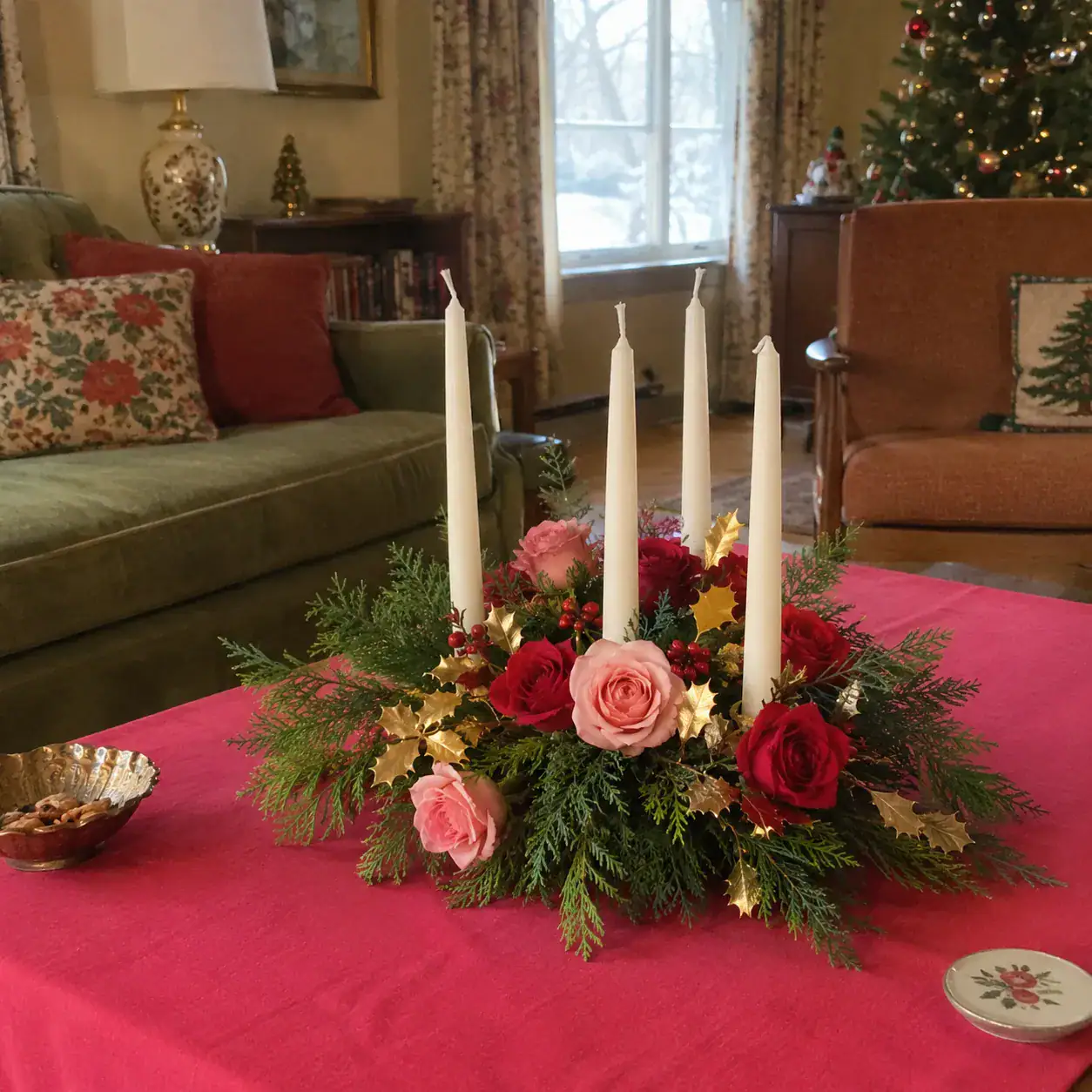
Magazines in the 1960s had big plans for your table.
A 1962 suggestion: “tall white candles and fresh greens and holly, or pink and red roses, or clusters of frosted fruits.”
A 1963 one called for a “circle of candles and holly, filled out with a generous border of blue spruce, against a bright blue cloth.”
By 1965, the look had gone bolder: “pink and red roses, live greens, holly leaves sprayed gold, and tall white candles on a shocking-pink cloth.”
Those were magazine ideals, not snapshots of real homes. The version on your family’s table was probably a little less perfect, and probably better loved.
The Stories Behind the Stuff
None of these things were the main event.
They sat on the windowsill, the mantel and the coffee table while everyone looked at the tree. That’s why they slip so easily into the background of old Christmas photos, and why they can hit so hard when you finally notice them.
Someone in your family may still remember where those pieces came from: who stitched the stocking, who brought the nutcracker home, who made the ceramic tree at a ceramics class. Those stories are the real decorations. Ask while you can.
If you’d like help getting the conversation started, Generational Journeys is an e-book of 170 interview questions to ask your relatives, a good companion for a box of old decorations and a cup of coffee.