An unmarked grave leaves a veteran’s service invisible to anyone walking past. If that veteran is in your family tree, you may be able to change that: eligible veterans can receive a government headstone, and some privately purchased stones can carry a bronze medallion recognizing their service.
A grave is only one place to begin. Your family may have letters worth preserving, missing medals to replace or a living veteran whose stories you have never recorded. These 15 ways to honor a relative this Veterans Day explain who qualifies, what you need and where the limits are, so you can choose something meaningful for the person you want to remember.
1. Request their military service file
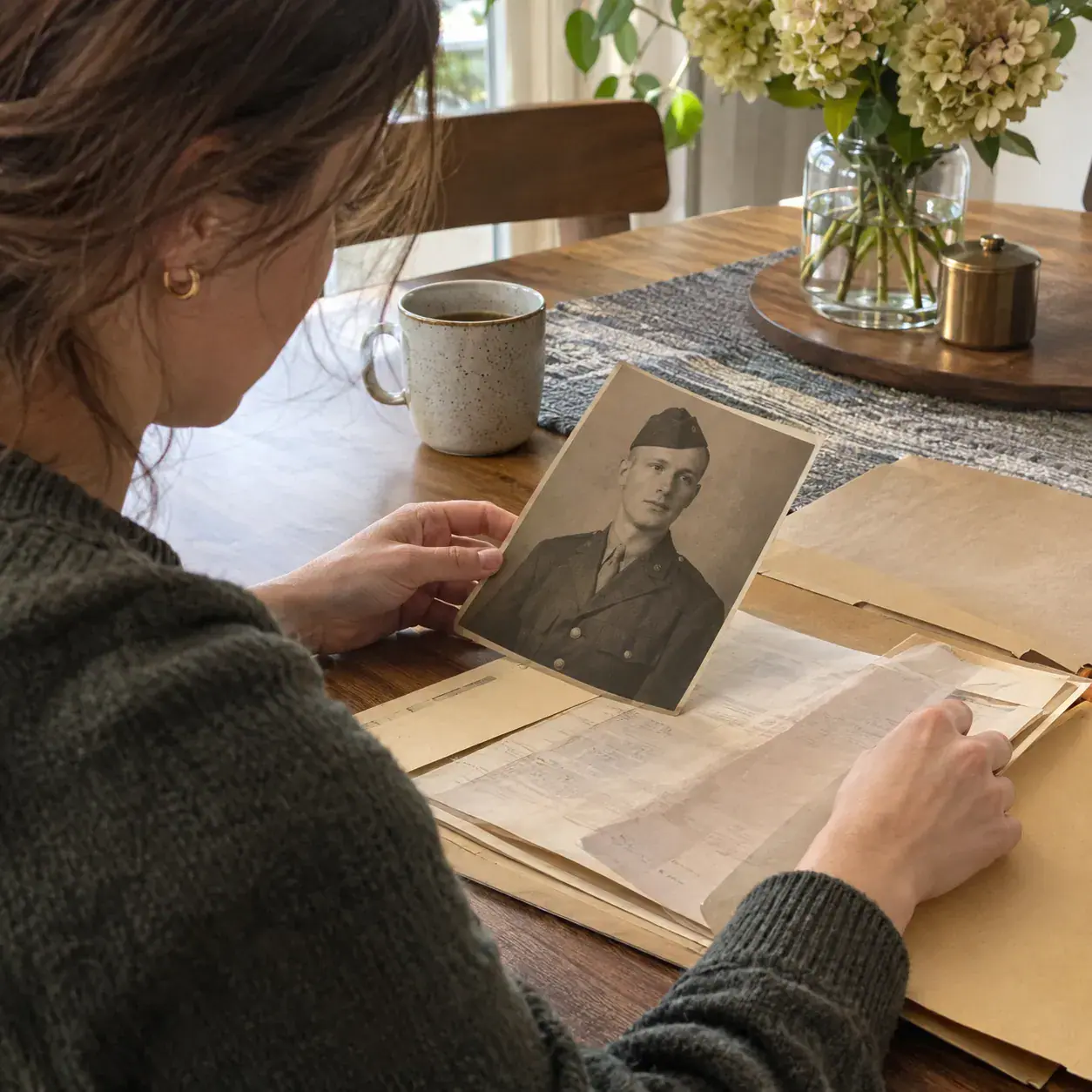
The service file is where most of these honors start. Its formal name is the Official Military Personnel File, or OMPF. The National Personnel Records Center (NPRC) in St. Louis holds many of them, though not all, so a file missing at NPRC is not proof that none exists.
Who can ask matters. The veteran can request their own file, and so can next of kin of a deceased veteran. The National Archives defines next of kin narrowly: a surviving spouse who has not remarried, a father, mother, son, daughter, sister or brother. Grandchildren are not on that list.
That leaves the 62-year rule. A file opens to the general public 62 years after the service member leaves the military. The date rolls forward each year, and in 2026 it covers people who separated in 1964 or earlier. If your grandfather left the service later than that, a parent, aunt or uncle may need to make the request.
Newer files are generally free for veterans and next of kin. Archival files, the ones past the 62-year mark, cost $25 for 5 pages or fewer and $70 for 6 pages or more, per the National Archives fee page as of November 2026. Request online through eVetRecs (vetrecs.archives.gov, which requires ID.me identity verification) or by mailing or faxing a signed SF-180 form to NPRC.
2. Know what the 1973 fire took, and what fills the gap
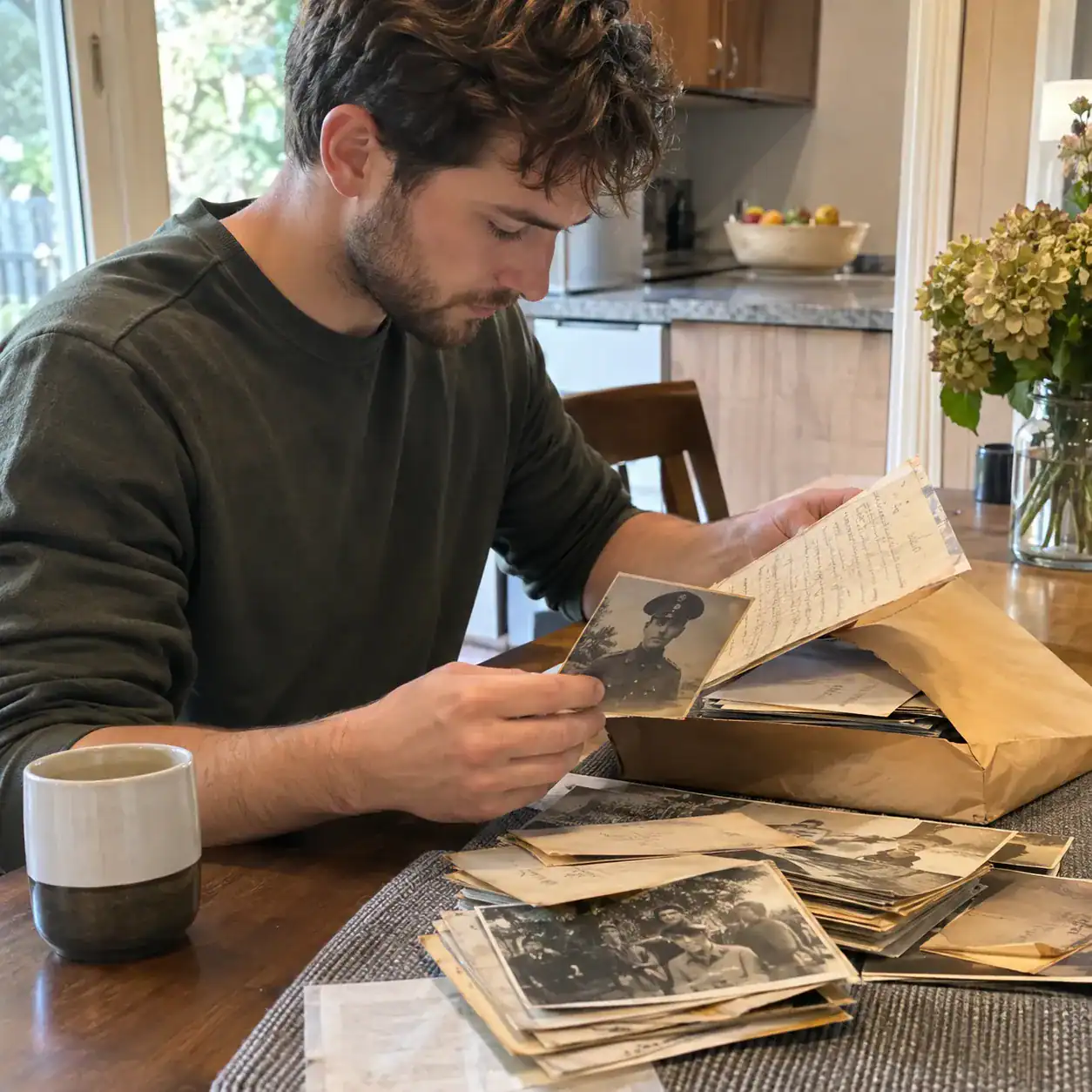
On July 12, 1973, a fire at NPRC destroyed approximately 16 to 18 million Official Military Personnel Files. Two groups took the worst of it.
For Army personnel discharged between November 1, 1912 and January 1, 1960, the loss was 80%. For Air Force personnel discharged between September 25, 1947 and January 1, 1964, with surnames alphabetically after “Hubbard, James E.,” the loss was 75%. The National Archives’ fire page lists those two groups and does not list Navy or Marine Corps losses.
If your veteran falls in one of those ranges, gather any discharge certificate or VA paperwork the family kept. Those copies may help document service the file no longer shows.
The file may be gone or only partly rebuilt. NPRC reconstructs what it can using sources such as VA claims files, state records and military hospital records, but a complete reconstruction is not guaranteed.
3. Put a free government headstone on an unmarked grave
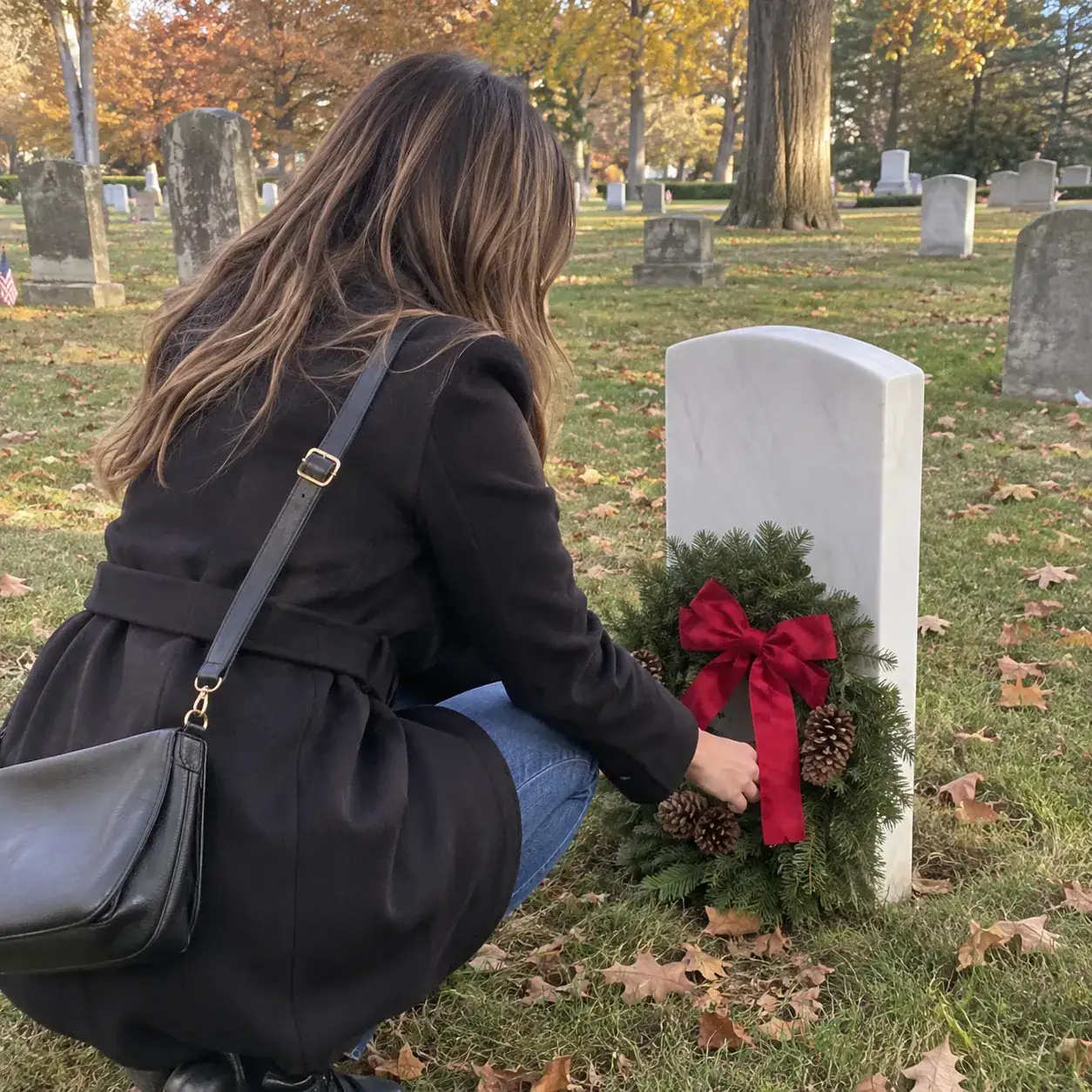
The VA furnishes headstones and markers on request, at no charge to the applicant. That covers unmarked veteran graves anywhere in the world. It also covers graves that already have a marker, for veterans who died on or after November 1, 1990.
Eligibility generally requires a discharge under conditions other than dishonorable. For enlisted service that began after September 7, 1980, or officer service that began after October 16, 1981, there is also a minimum of 24 months’ continuous active duty, with exceptions such as death on active duty. Spouses and dependents buried in private cemeteries are not eligible.
Normally family or the person responsible for the burial applies. Here is the part descendants miss: if the veteran’s service ended before April 6, 1917, any individual representing the deceased may apply. That opens the door for a great-great-grandchild to mark a Civil War or Spanish-American War veteran’s grave. The form is VA Form 40-1330, Claim for Standard Government Headstone or Marker.
4. Add a bronze VA medallion to a family-bought headstone
Some families bought their own stone and never asked the VA for anything. Those graves can still carry a mark of service.
The VA may furnish a medallion for eligible veterans who served on or after April 6, 1917, and whose grave in a private cemetery is marked with a privately purchased headstone or marker. Discharge and minimum-service requirements also apply. Check the VA’s medallion eligibility rules for the veteran’s service group.
The two date rules do different jobs. For headstones, service ending before April 6, 1917 broadens who may apply to anyone representing the veteran. For medallions, service on or after that date is a condition of the veteran’s eligibility.
Later service does not rule out a headstone under item 3’s requirements. As with headstones, spouses and dependents are not eligible.
5. Request a Presidential Memorial Certificate
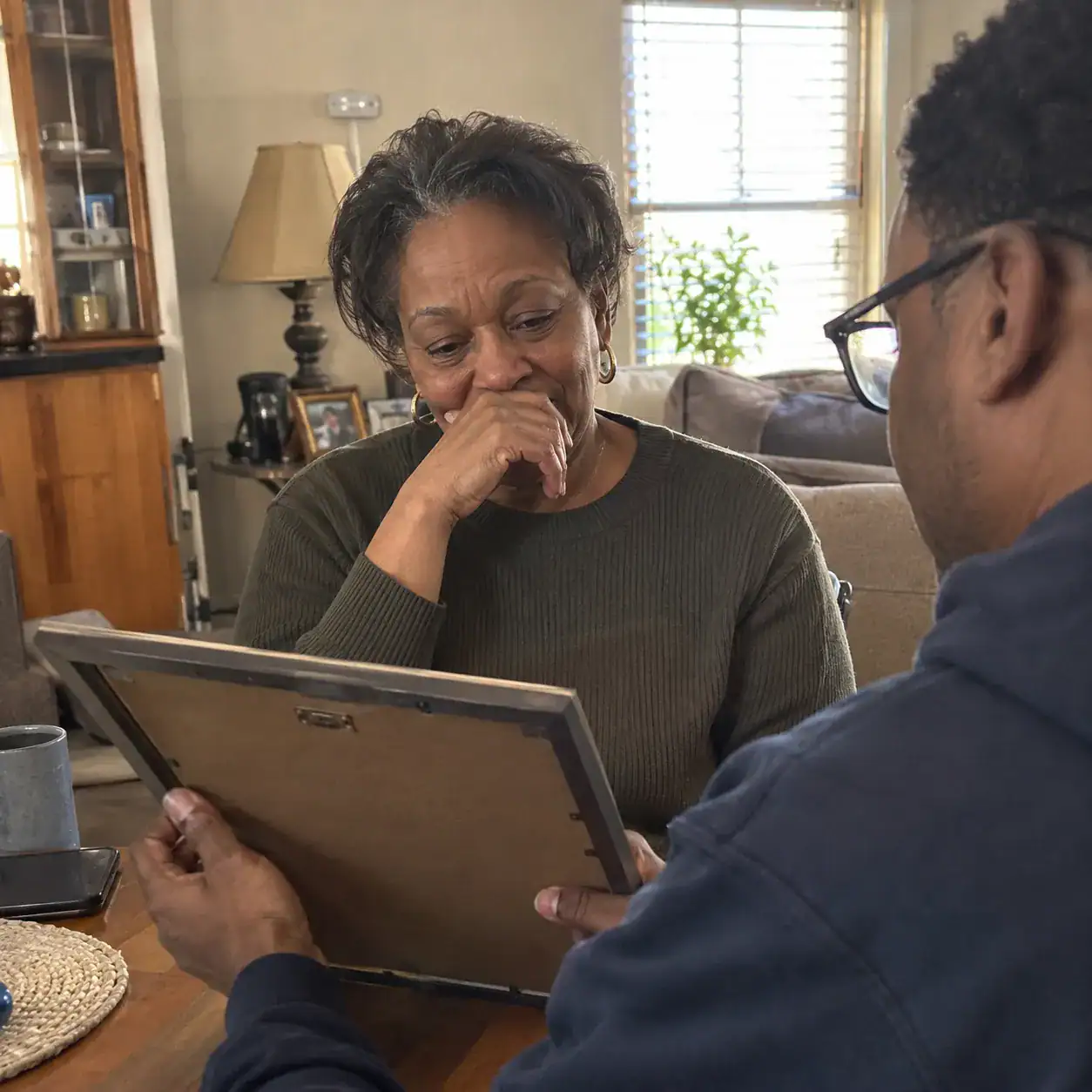
A Presidential Memorial Certificate (PMC) is a certificate honoring a deceased veteran’s service. You can request one if the veteran or reservist is eligible for burial in a national cemetery and you are next of kin, a family member or a close friend. Authorized service representatives can apply too. The form is VA Form 40-0247.
The VA accepts multiple requests for a PMC. If the family has split into several branches, each one can have its own copy. A certificate with the veteran’s name on it gives a cousin something to hang on the wall, which a shared scan does not.
6. Replace medals that were lost or never issued
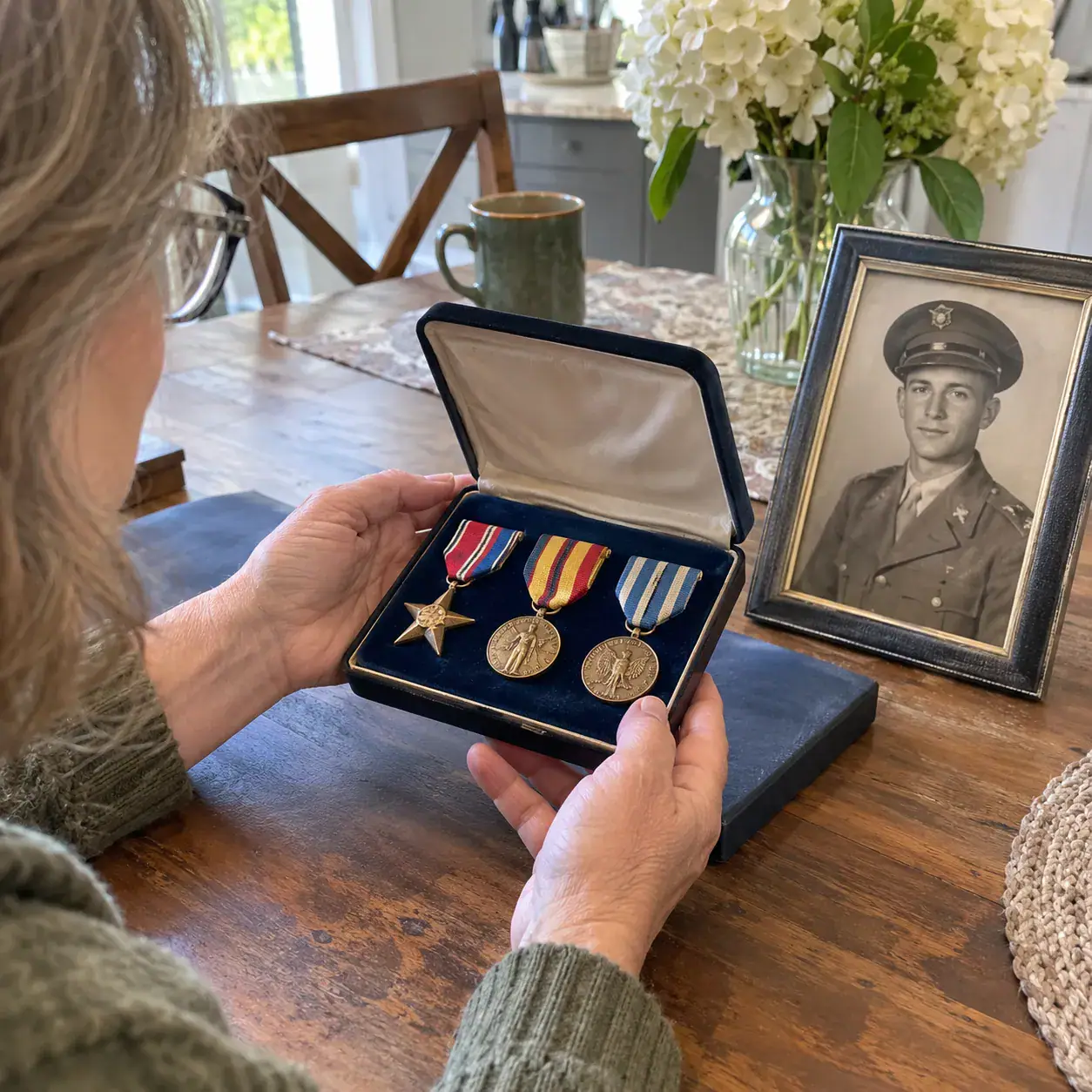
Medals get lost in moves, split among siblings or are never issued at all. In general, the military services handle replacement medal requests for the veteran at no cost. For next of kin, processing and costs vary by branch and by whether the file is archival.
Members of the public can buy an archival file to identify awards, then obtain medals commercially. For service ending less than 62 years ago, they can request award information under the Freedom of Information Act.
For Army and Air Force medal requests, write to the National Personnel Records Center, 1 Archives Drive, St. Louis, MO 63138. For other branches, use NARA’s branch-specific request instructions. For Army and Air Force veterans, NPRC verifies the awards and forwards the request to the service that issues the medals.
Send copies only. The National Archives says documents submitted with a request will not be returned.
7. Find their grave with the VA’s Nationwide Gravesite Locator
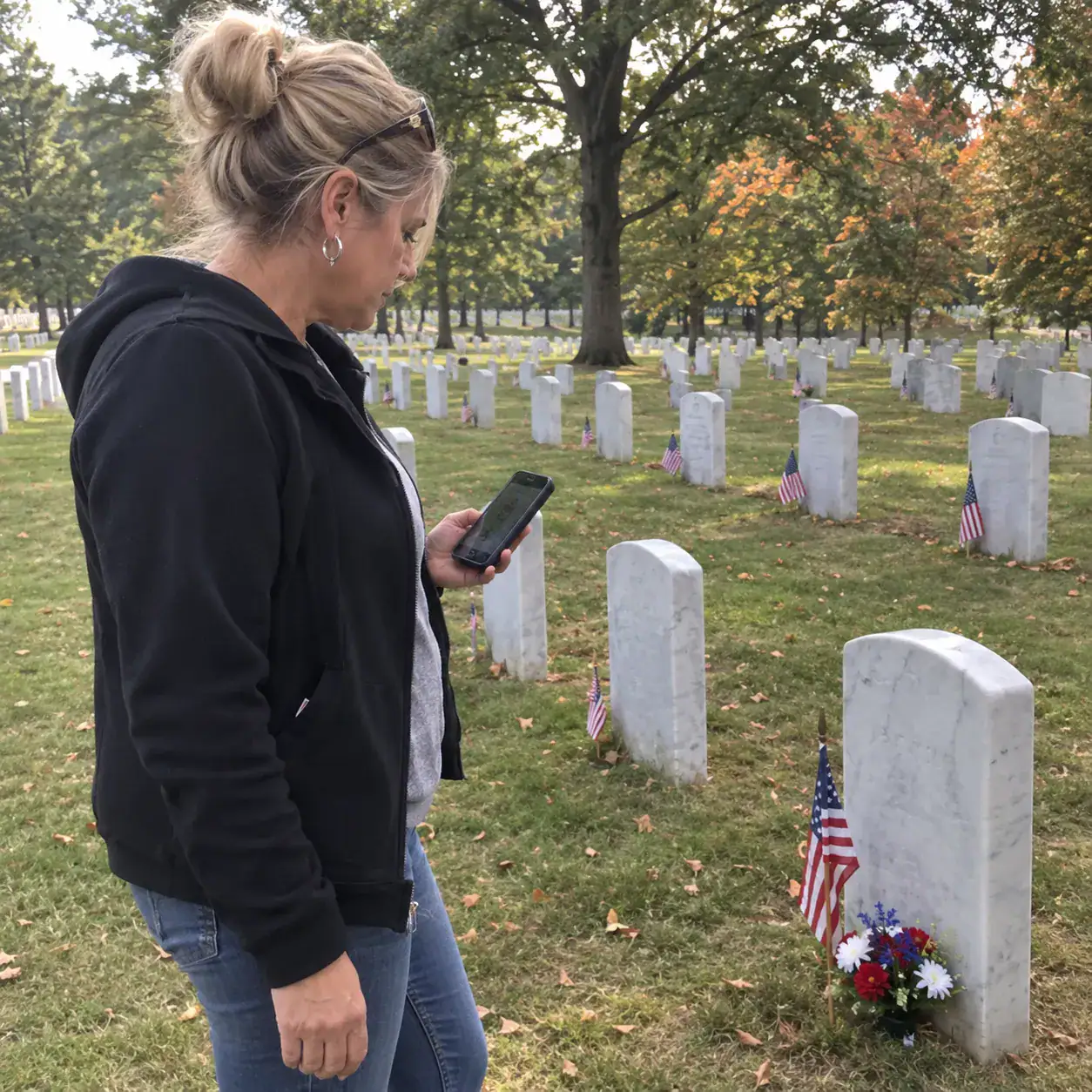
The Nationwide Gravesite Locator (gravelocator.cem.va.gov) searches VA national cemeteries, state veterans cemeteries and military post cemeteries. Secondary descriptions of the tool say it also includes veterans in private cemeteries when the grave has a government marker, with records going back to about January 1997, the earliest electronic records.
So if your veteran is in a VA or state veterans cemetery, or got a government marker in a private cemetery in recent decades, the locator may show the exact site. An older private burial may not appear at all.
A grave you can locate is a grave you can visit. Veterans Day is a good day to go.
8. Give their letters and photos a permanent home at the Library of Congress
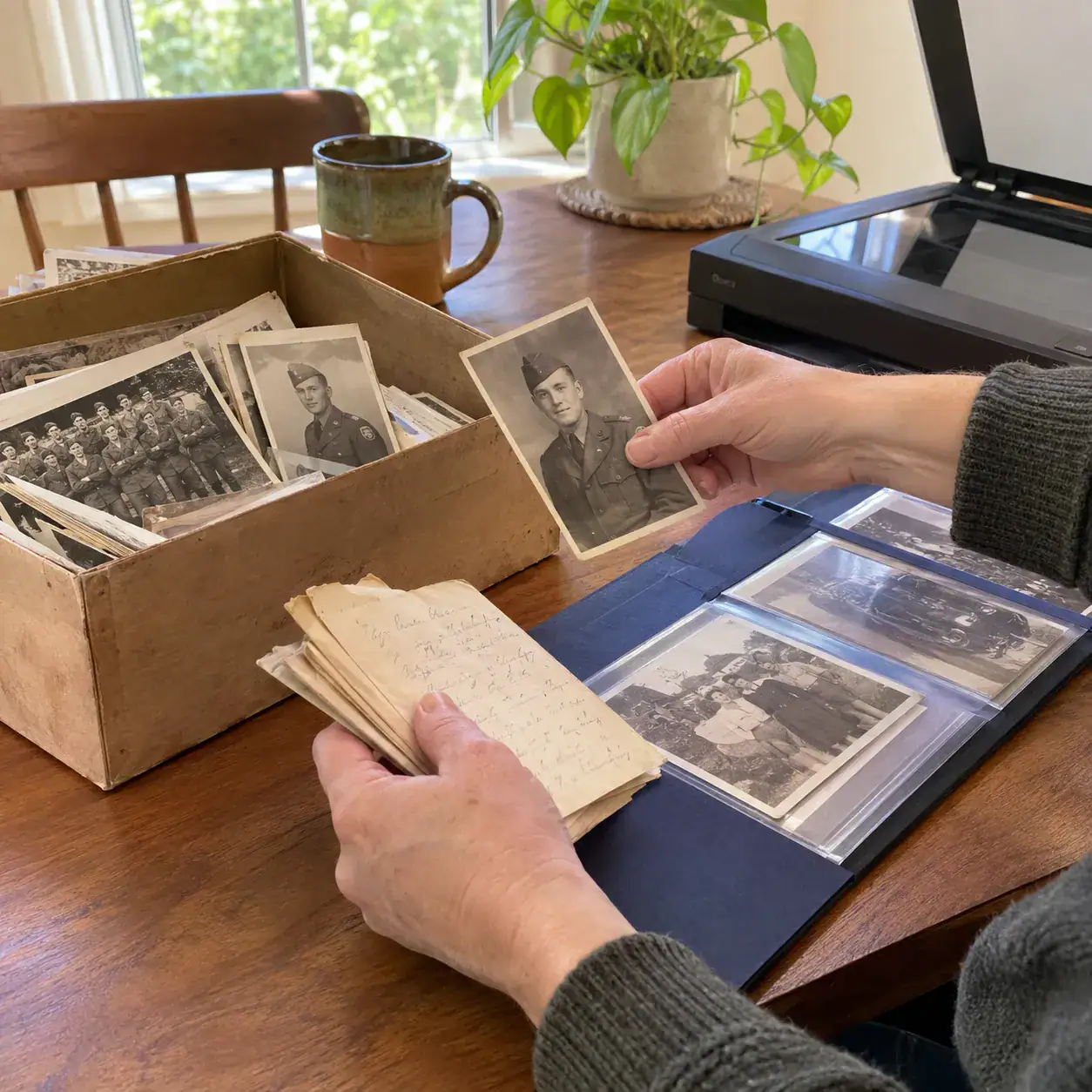
Congress created the Veterans History Project (VHP) at the Library of Congress in 2000. It collects firsthand accounts from US veterans who served from World War I to the present, and it accepts donations from the families of deceased veterans. A 2016 Library of Congress blog post said the project regularly receives posthumous donations of correspondence and photographs, originals carefully kept by veterans’ families.
Mark Ryan Black’s audio letters are one example. Another is Kenje Ogata, a Japanese-American soldier in the World War II Army Air Forces. More than 100 pieces of his correspondence, including letters in the wartime format called V-Mail, were donated to VHP. They document his war, including the period after he was shot down over occupied Europe.
VHP’s minimum is often called the 30-20-10 rule: at least 30 minutes of unedited audio or video interview, or 20 or more pages of original, unpublished memoirs, journals or diaries, or 10 or more original photographs, letters or similar items. A Biographical Data Form and a release form are required. Get current forms at loc.gov/vets.
Since 2016, VHP has also taken oral histories from Gold Star family members: a parent, spouse, sibling or child of a service member who died as a result of their service during a period of war. Both the interviewer and interviewee must be at least 18.
The catch is plain: VHP wants originals, and originals are not returned. Scan everything first, and make sure the family agrees before the box leaves.
9. Record a living veteran’s story before Veterans Day passes
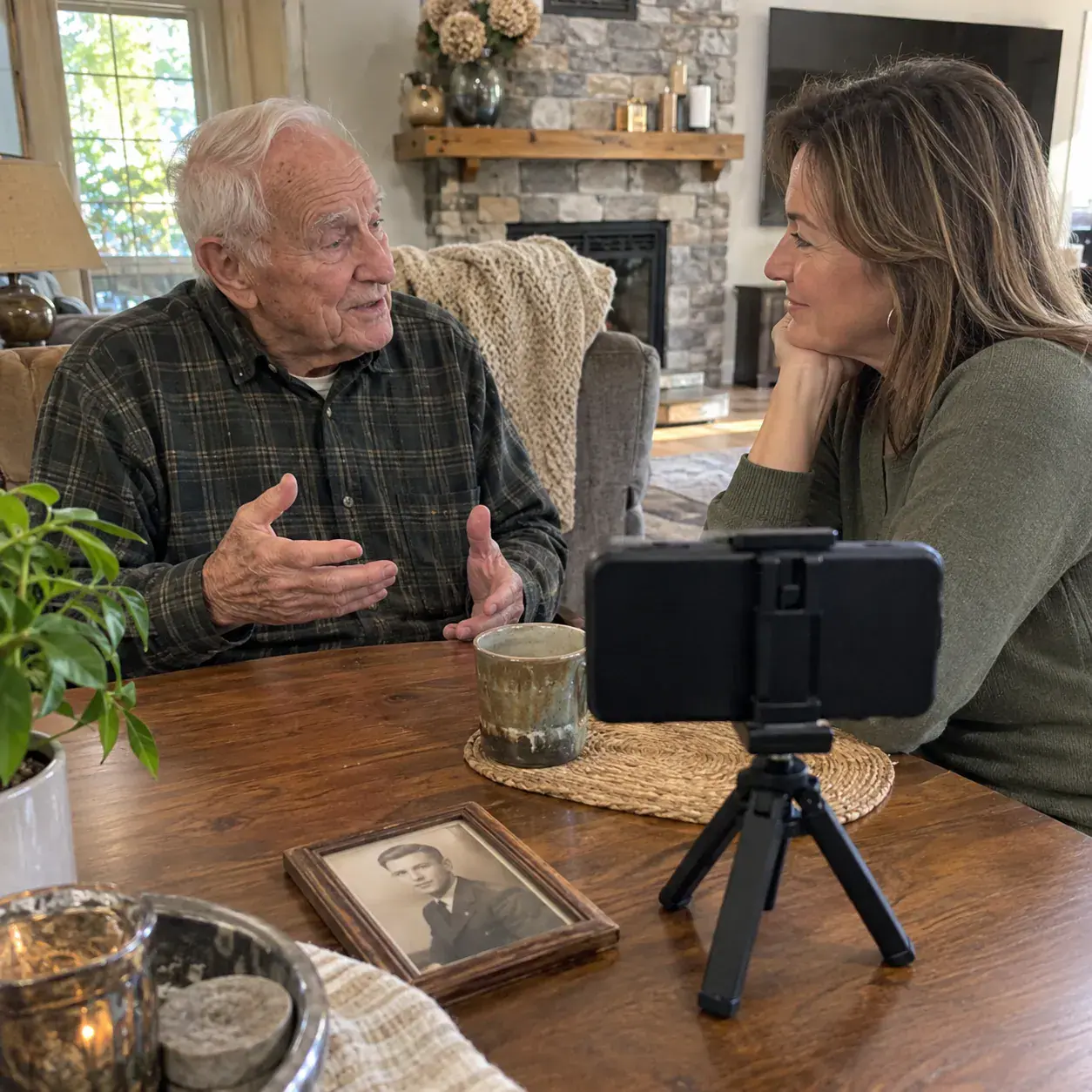
If a veteran in your family is still living, this is the item that depends on them. VHP accepts interviews of at least 30 minutes, unedited, submitted with the release and biographical forms. Any family member can conduct one.
Thirty minutes is a low bar. Ask where they served, who they served with and what they did the day they got home. Let the recording run without cuts, because VHP wants it unedited. Keep a copy for the family before you send anything.
10. Write a tribute on their Veterans Legacy Memorial page
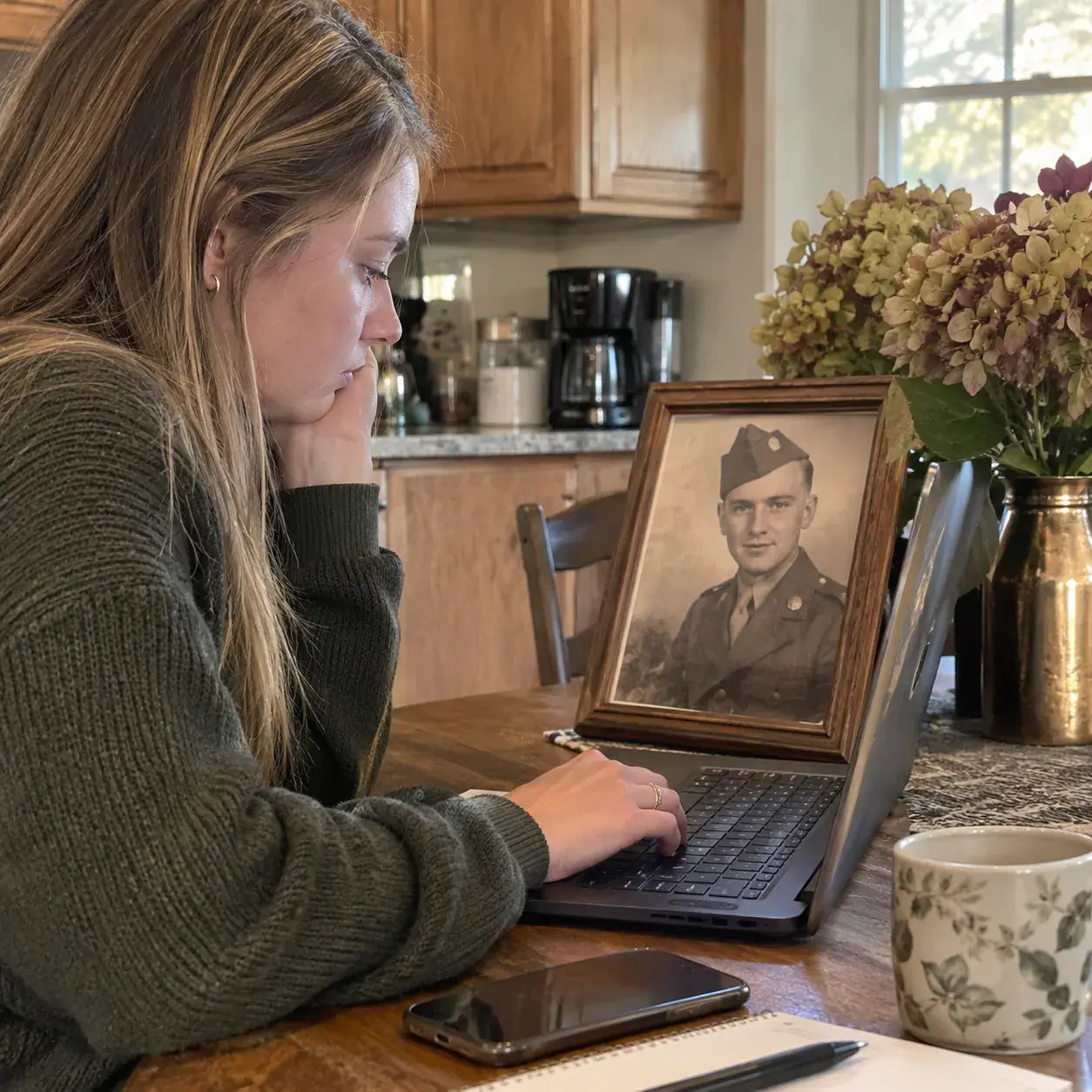
Veterans Legacy Memorial (VLM) is the VA’s online memorial, at vlm.cem.va.gov. You can search by name, branch, year of death, state and cemetery. Families can post tributes and upload photos and documents.
Private-cemetery coverage includes veterans who received a VA-provided headstone, marker or medallion since 1996. Once you find your relative’s page, you can add a family photo, a document or a remembrance.
One gap: a veteran buried privately before 1996 without a VA marker may not have a page. A marker from item 3 or item 4 may eventually lead to one, though that is not guaranteed.
11. Put a face to a name on the Vietnam Wall of Faces
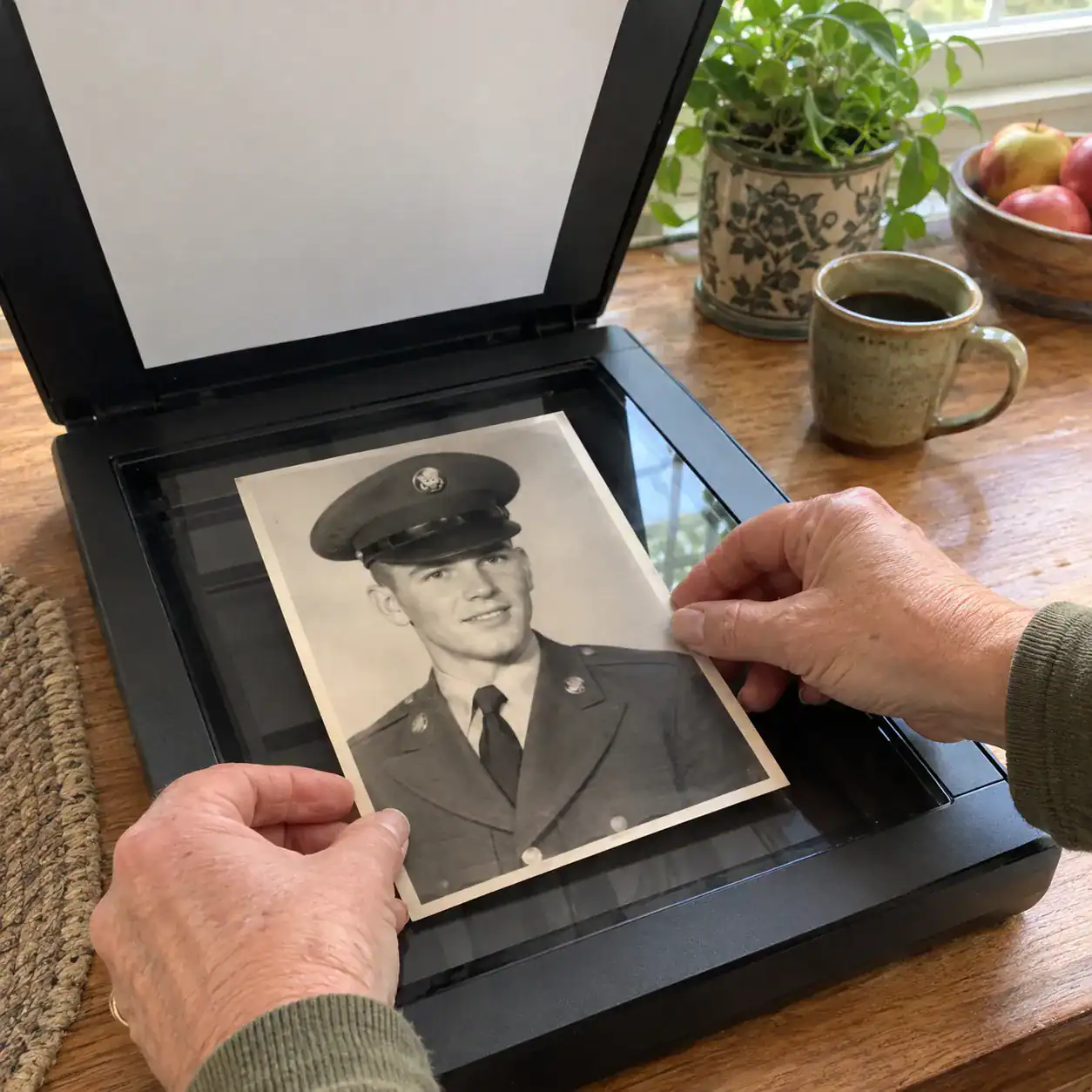
The Vietnam Veterans Memorial Fund (VVMF) runs a virtual Wall of Faces with a page for each of the 58,281 people whose names are on the Wall. As of August 15, 2022, every one of them has at least one photo.
So the project is no longer hunting for missing faces. What it still accepts is more: a clearer portrait, a family snapshot, a remembrance from someone who knew the person.
Search the name on the Wall of Faces, then use “Submit Photos.” Files must be .gif, .jpeg or .jpg. VVMF asks you to try to keep them under 5 MB. If you mail prints, send copies only, because originals are not returned: VVMF, Attn: The Wall of Faces, 1235 South Clark Street, Suite 910, Arlington, VA 22202.
12. Add a World War II veteran to the WWII Memorial Registry
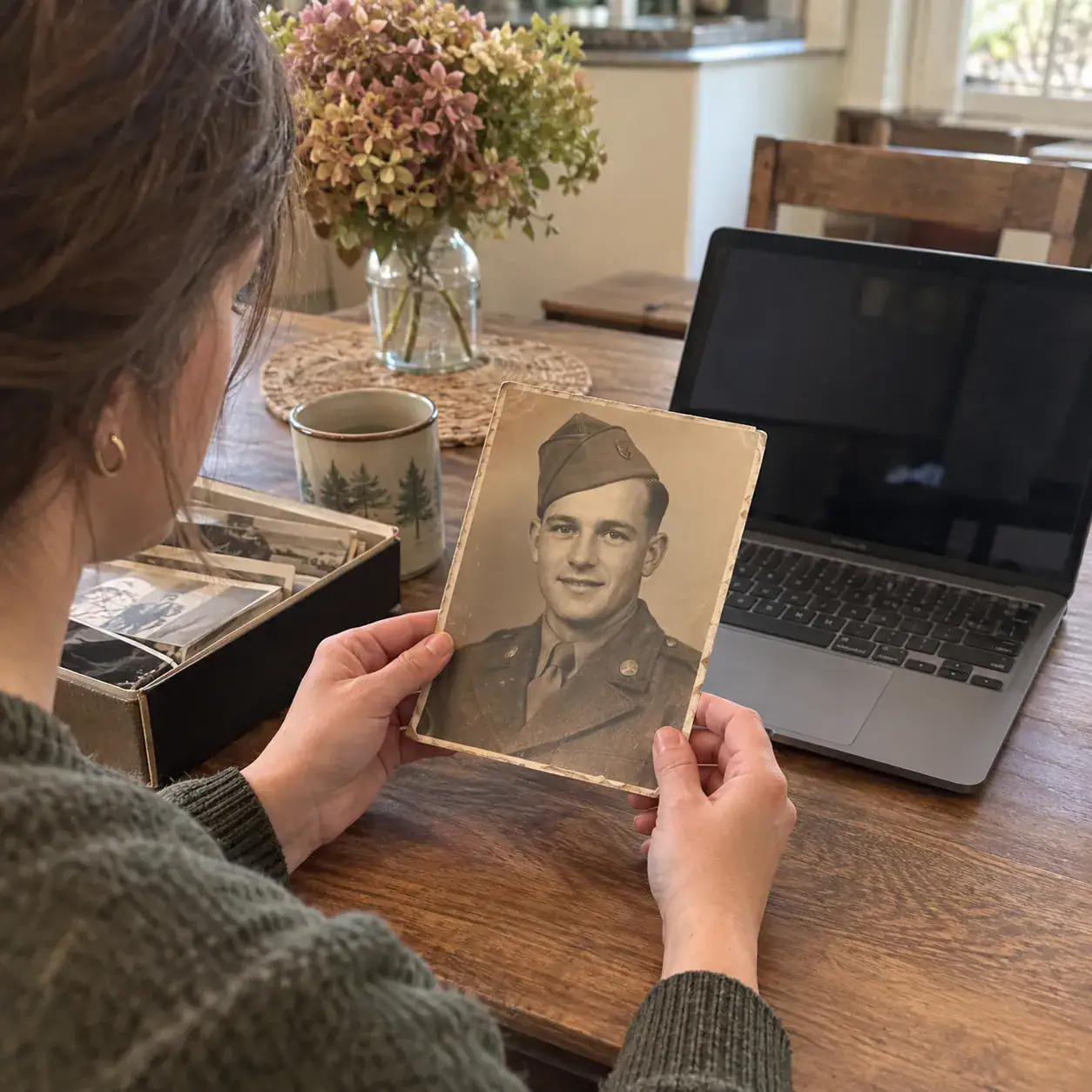
The WWII Registry (wwiiregistry.abmc.gov), run by the American Battle Monuments Commission (ABMC), honors the 16 million who served in the US armed forces, the more than 400,000 who died and all who supported the war effort from home. It combines an official database of names from War and Navy Department Killed in Service rosters with a compilation of names submitted by the public.
A genealogical society’s guide says anyone who served in the armed forces during World War II, and any American who helped on the home front, can be registered. You can Register an Honoree online or by mail, and the phone line is 1-800-639-4992.
Know what you are getting. Registered names are not carved on the memorial. The registry is a separate database.
13. Trace an ancestor buried or memorialized overseas through ABMC
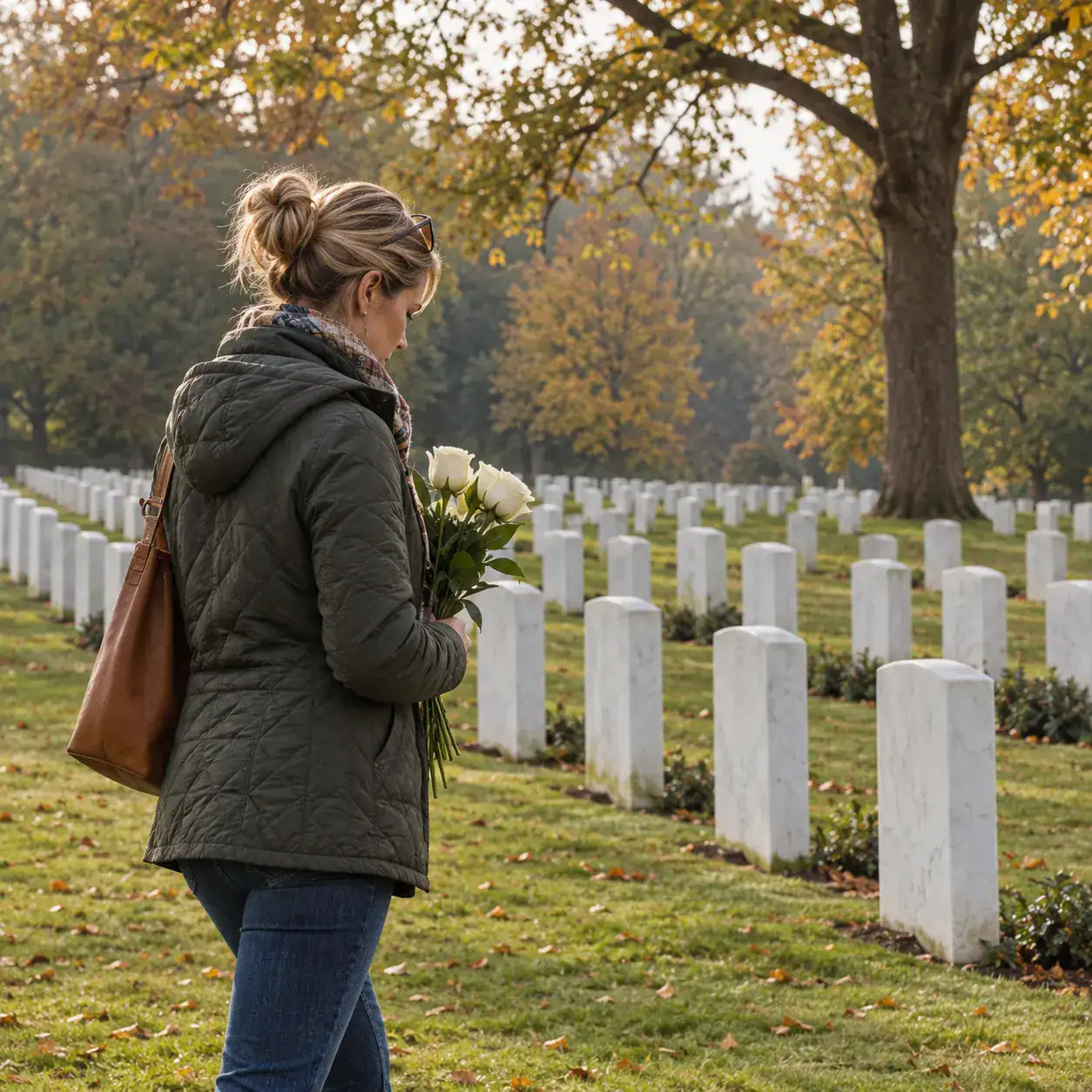
ABMC runs 26 permanent American military cemeteries in 10 countries and honors more than 200,000 fallen service members. Its burial search is at weremember.abmc.gov.
Direct next of kin (parents, spouse, siblings and children) can request a photo of a headstone or of a name on a Tablet of the Missing, the walls that list service members with no known grave. Families can also order flowers for a grave, with an optional graveside photo. ABMC staff will escort visitors to a grave, and immediate family traveling to the grave can get a fee-free passport letter.
The headstone photo is limited to direct next of kin, which leaves out grandchildren and great-nieces. ABMC’s services page does not list costs, so ask before ordering flowers.
14. Walk where they served on a fee-free national park day
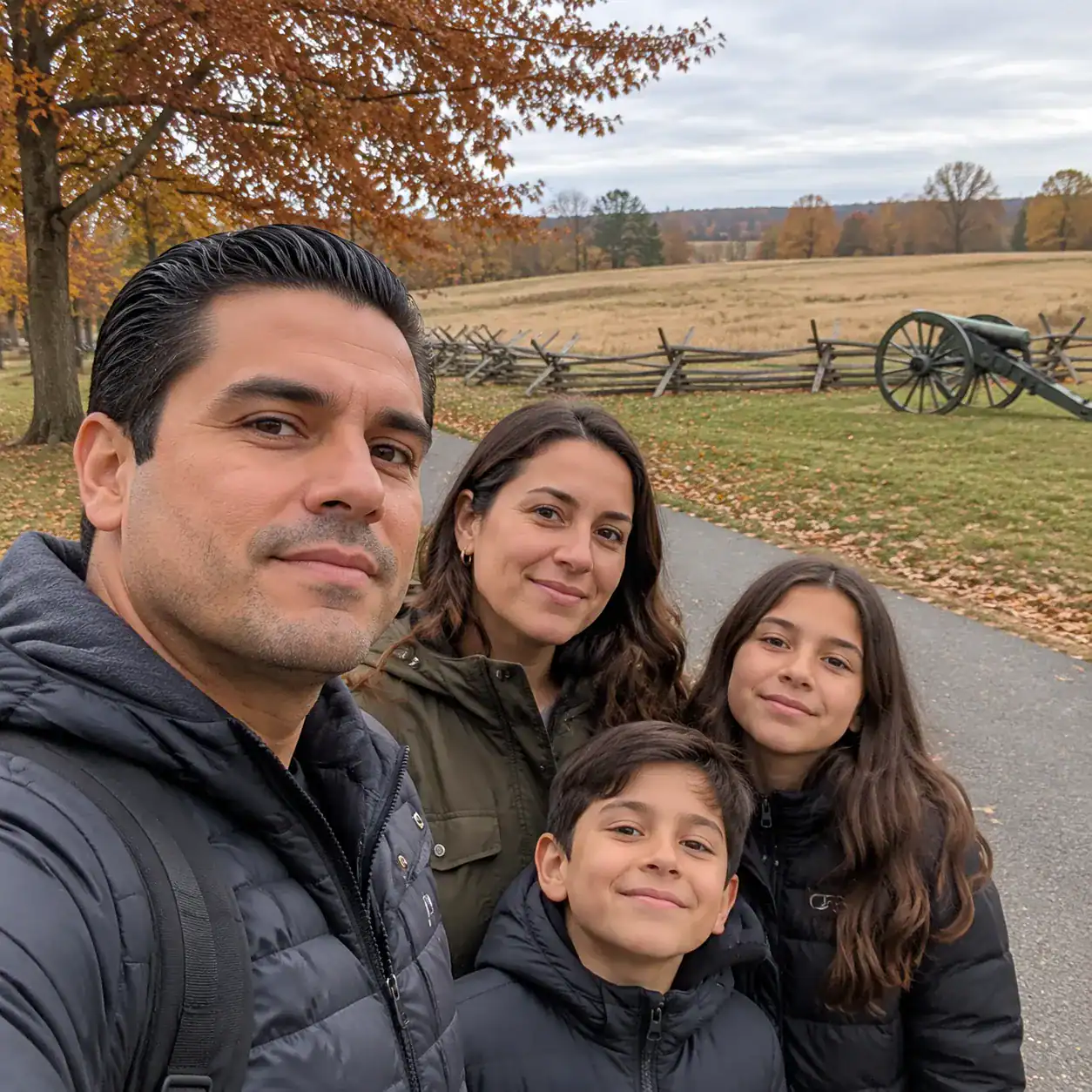
Veterans Day, Wednesday, November 11, 2026, is a fee-free entrance day at National Park Service sites this year. Beginning in 2026, free entrance on those days is for US citizens and residents only. Camping and reservation fees still apply.
Many park units are battlefields or other military sites. If your veteran’s story ties to one, Veterans Day lets you stand on that ground without an entrance fee.
The Park Service also offers a free Military Lifetime Pass to veterans and Gold Star Family members.
15. Sponsor or lay a wreath on December 19
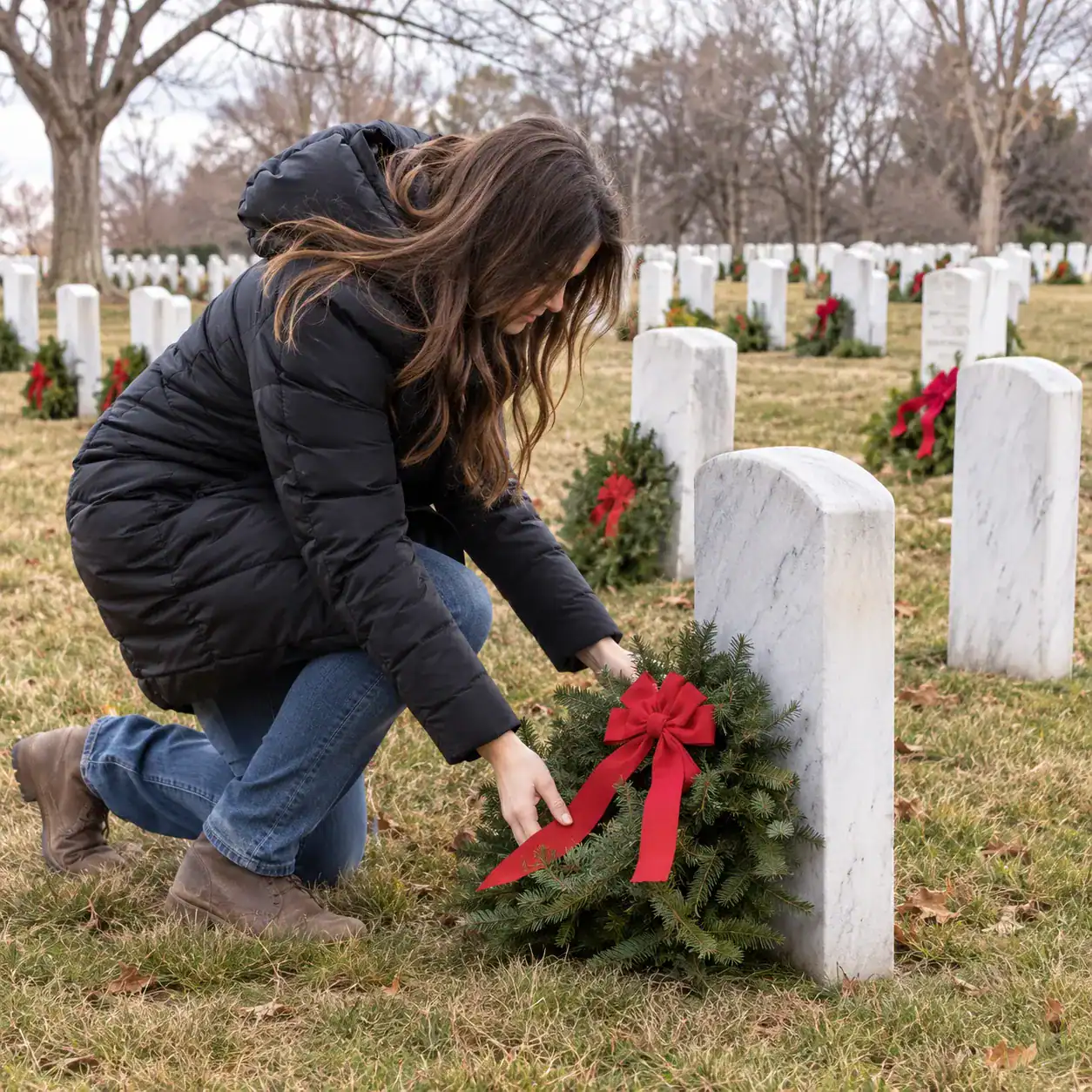
National Wreaths Across America Day 2026 is Saturday, December 19. You can sponsor a wreath through wreathsacrossamerica.org, or look for a participating cemetery near you and help lay them.
It falls after Veterans Day, which makes it a second date to mark. Check the current wreath price and sponsorship deadline on the site before you plan around them.
Start with their service file
Pick one veteran and start with item 1. Confirm whether you count as next of kin or whether the file has passed the 62-year mark, then send the request. Several of the other honors depend on their dates of service and type of discharge, and the file is where those are written down.
If a veteran in your family is still living, or a relative remembers one who is not, the questions matter as much as the recording in item 9. Generational Journeys is an e-book of 170 interview questions to ask relatives, a place to start before you press record.