

You can find a possible ancestor on a US arrival passenger list, read every word on their line, and still miss a reported birthplace.
By 1907, US immigration manifests had a field for it on a second page. The index image may never show it to you.
Start with the year of arrival so you know which form you’re reading.
Which list you find depends on the year your ancestor sailed
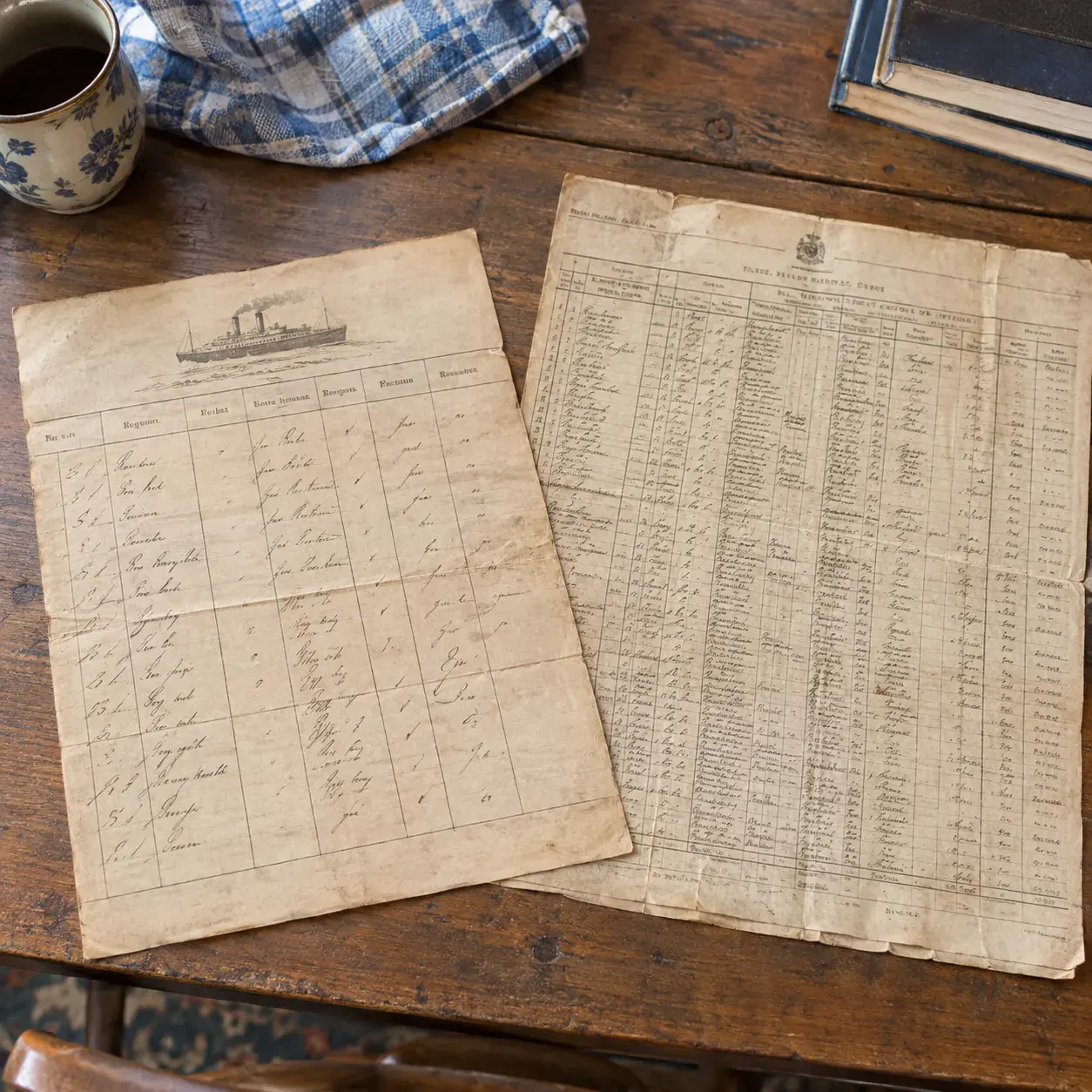
US passenger lists come in two broad types, and the arrival year decides which one you get.
Customs lists came first. A federal law of 1819, often called the Steerage Act, required them from January 1, 1820. They are short: name, age, marital status, gender, occupation and place of origin.
That last column is slippery. “Place of origin” can mean the passenger’s actual nationality, an assumed nationality or simply the flag of the ship.
Names can be slippery too: the New York Genealogical and Biographical Society (NYG&B) notes that clerks often abbreviated them, so a James Wiseman “might be recorded as J. Wiseman, Jas. Wiseman, or Mr. Wiseman.”
Immigration lists came next. In the 1890s, federal law took over inspection and expanded the questions ships had to answer, and the forms kept growing. NYG&B’s breakdown for the Port of New York:
- 1897–1902: name, last legal residence, occupation, gender, final destination, previous travel to the US and relatives in the US
- 1903–1905: race added
- 1906: birthplace and a personal description added
- 1907–1924: contact details for the nearest relative added
FamilySearch’s summary adds that immigration lists asked who paid for the passage and how much money the passenger carried.
The dividing line is fuzzy. FamilySearch puts the end of customs lists at 1891, while NYG&B’s New York material runs them to 1897. That gap has a cause, covered two sections down. The safe way to think about it: customs lists from 1820 into the 1890s, immigration lists after that.
The National Archives (NARA) holds arrival records from about 1820 to December 1982, with gaps. Before 1820 it has lists only for New Orleans (1813–1819) and Philadelphia (1800–1819). Records are restricted for 75 years, though you can request them under the Freedom of Information Act, and arrival documentation from December 1982 onward is held by US Citizenship and Immigration Services (USCIS).
So pin down the year before you search. It tells you whether you are hunting for a name in a short customs entry or on a full immigration manifest.
The 1907 manifest is two pages wide, and the second page holds the birthplace
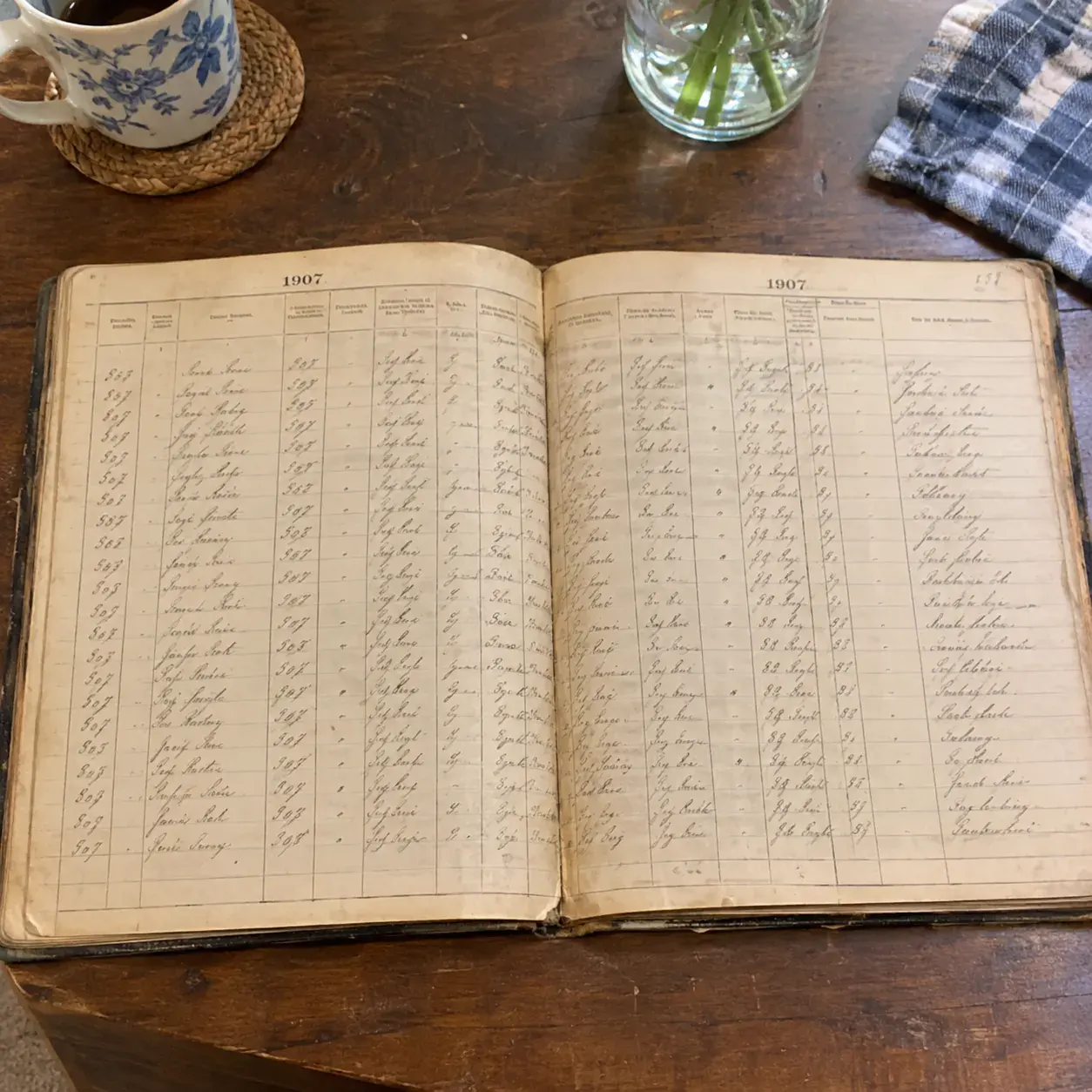
By 1907, the manifest was a 29-column form printed across two pages. NARA’s blank copy shows the layout, and its title tells you how official the process had become: “List or Manifest of Alien Passengers for the United States … under Act of Congress approved February 20, 1907.”
Page one, columns 1 to 12, holds what most people expect. It lists the number on the list, family and given name, age in years and months, sex, married or single, occupation, whether the passenger could read and write, nationality, “race or people,” last permanent residence, the nearest relative or friend back home with a full address, and final destination.
Page two, columns 13 to 29, is where a lot of the answers you are after sit:
- whether they had a ticket to their final destination
- who paid for the passage
- whether they carried $50, and if not, how much
- whether they had been in the US before, and when and where
- whether they were joining a relative or friend, with that person’s name and complete address
- condition of health, height, complexion, hair and eye color, and marks of identification
- place of birth, by country and city or town
The same page asked about prison, almshouse or institution stays, polygamy, anarchism and offers of work.
Here is the trap. An index entry, or the single image it links to, can show you page one and stop there. Birthplace, often down to the town, and the relative being joined in the US are both on page two.
The line number sits in column 1 on both pages, so use it to find your person’s row. The second page may be a separate image, so look at the images on either side of the one you found.
One caution: every answer is what the passenger or an agent gave. An age on the list is the age reported. Treat it as evidence to weigh, not a fact to copy straight into your tree.
A matching name can still belong to someone else. Annie Moore arrived from Cobh, County Cork, on the SS Nevada on January 1, 1892, aged 17½, with her brothers Anthony and Philip. For decades, her story was attached to a Texas woman of the same name. Genealogist Megan Smolenyak found that the Texas woman’s 1880, 1900, 1910 and 1920 census records all listed Illinois as her birthplace, and she was already in Texas by 1880, before the immigrant arrived.
Before accepting a passenger as your ancestor, compare the reported age and origin with census and other family records. Where the list gives a destination or relatives, check whether those places and people fit too. In the Annie Moore case, the Illinois birthplace and earlier presence in Texas ruled out the match. Finding an entry gives you a candidate, but connecting it to your family takes corroborating evidence.
Nobody at Ellis Island changed your ancestor’s name
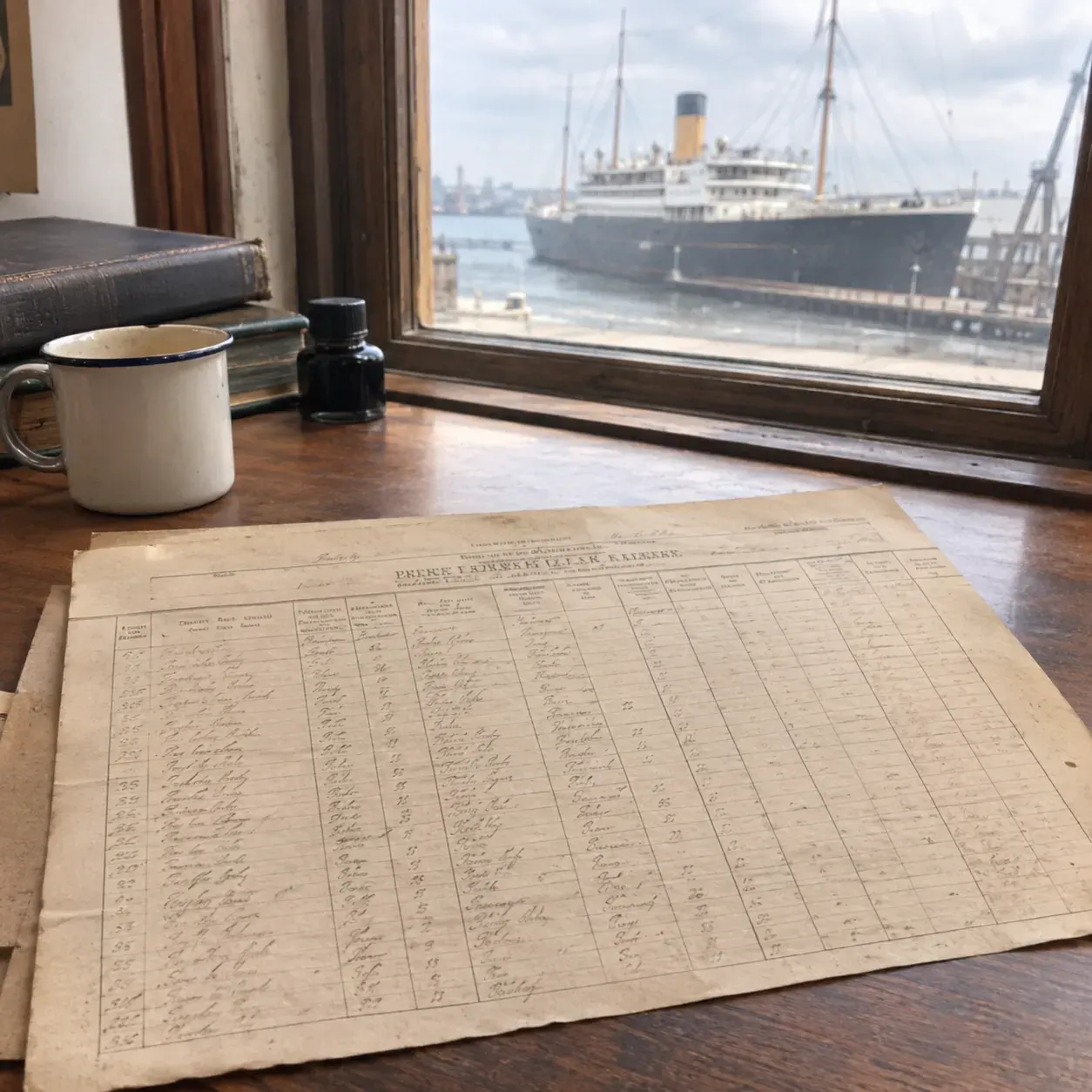
Manifests were put together before the ship left. NYG&B states it plainly: “Lists were created at the place of departure, not upon arrival.” Ellis Island inspectors checked whether passengers met entry requirements, but they did not rename them.
For your search, look for the name the person used in Europe, rather than only the American name in later records. Clerks sometimes corrected a name on the manifest later, as the margin section explains. Correcting a record is different from renaming a person.
For more background, see Was Your Family Name REALLY Changed At Ellis Island?.
Why New York lists from the 1890s are thinner than you’d expect
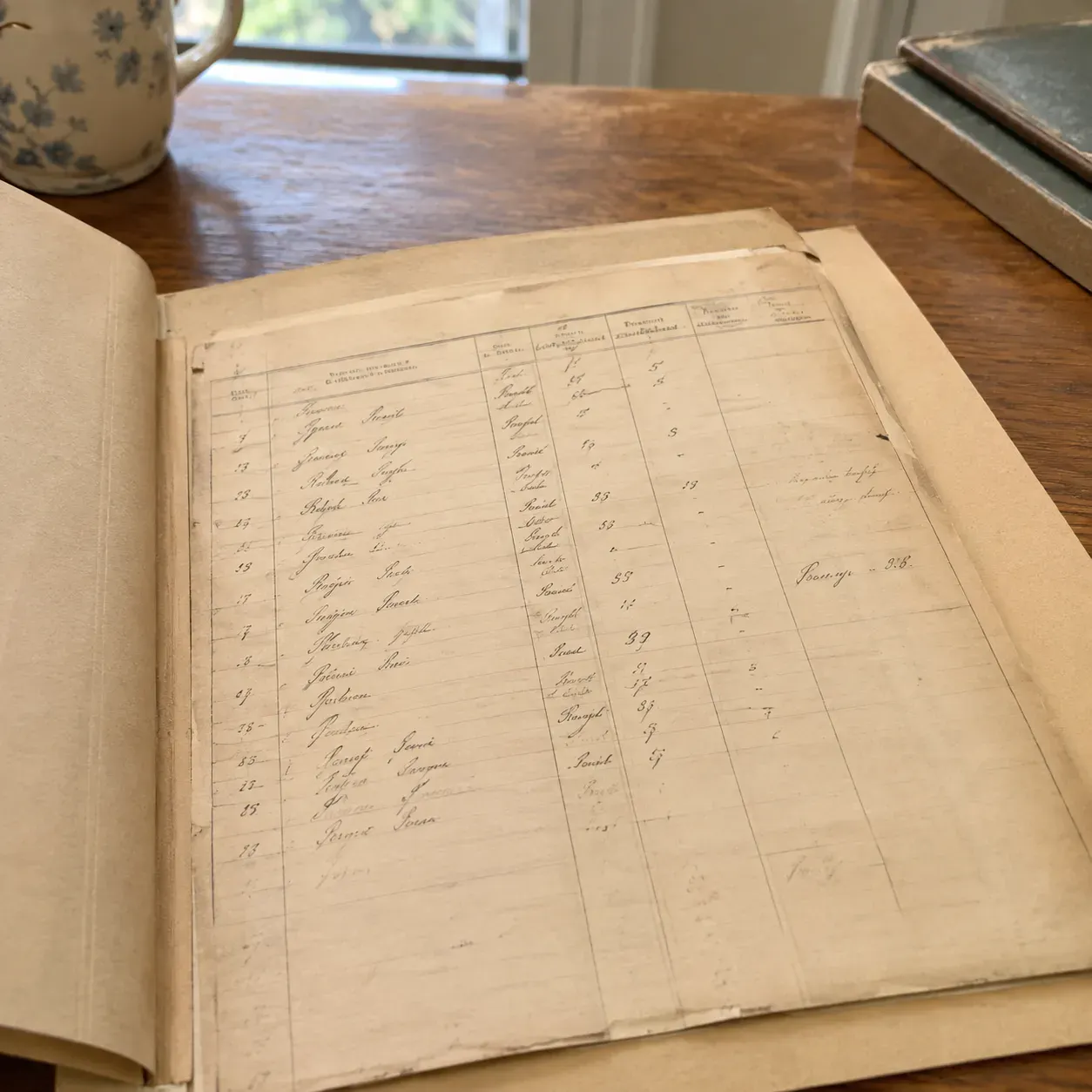
If your family arrived in New York in the 1890s, the list you find may be far sparser than you expected. There is a reason.
From 1820 through 1896, two sets of lists were kept for the Port of New York: passenger lists and customs lists. Only the customs lists survived, including those for arrivals through Castle Garden from 1855 through 1890.
NYG&B reports that the state’s passenger lists, along with the federal lists from 1891 to 1897, “were destroyed in an 1897 fire at Ellis Island.” That fire took all New York State and federal passenger lists for the port in existence at the time. Federal passenger lists for New York survive from 1897 onward.
The practical result: for a New York arrival between 1892 and mid-1897, expect the thinner customs-list format, not the fuller immigration manifest. Annie Moore’s January 1892 arrival falls inside that window. FamilySearch’s “New York Passenger Arrival Lists (Ellis Island), 1892–1924” collection includes customs lists for 1892–1896, which is why that stretch is covered at all.
Keep this to New York. The losses described here are for the Port of New York only, so don’t assume the same gap at other ports.
What do the marks in the margin mean?
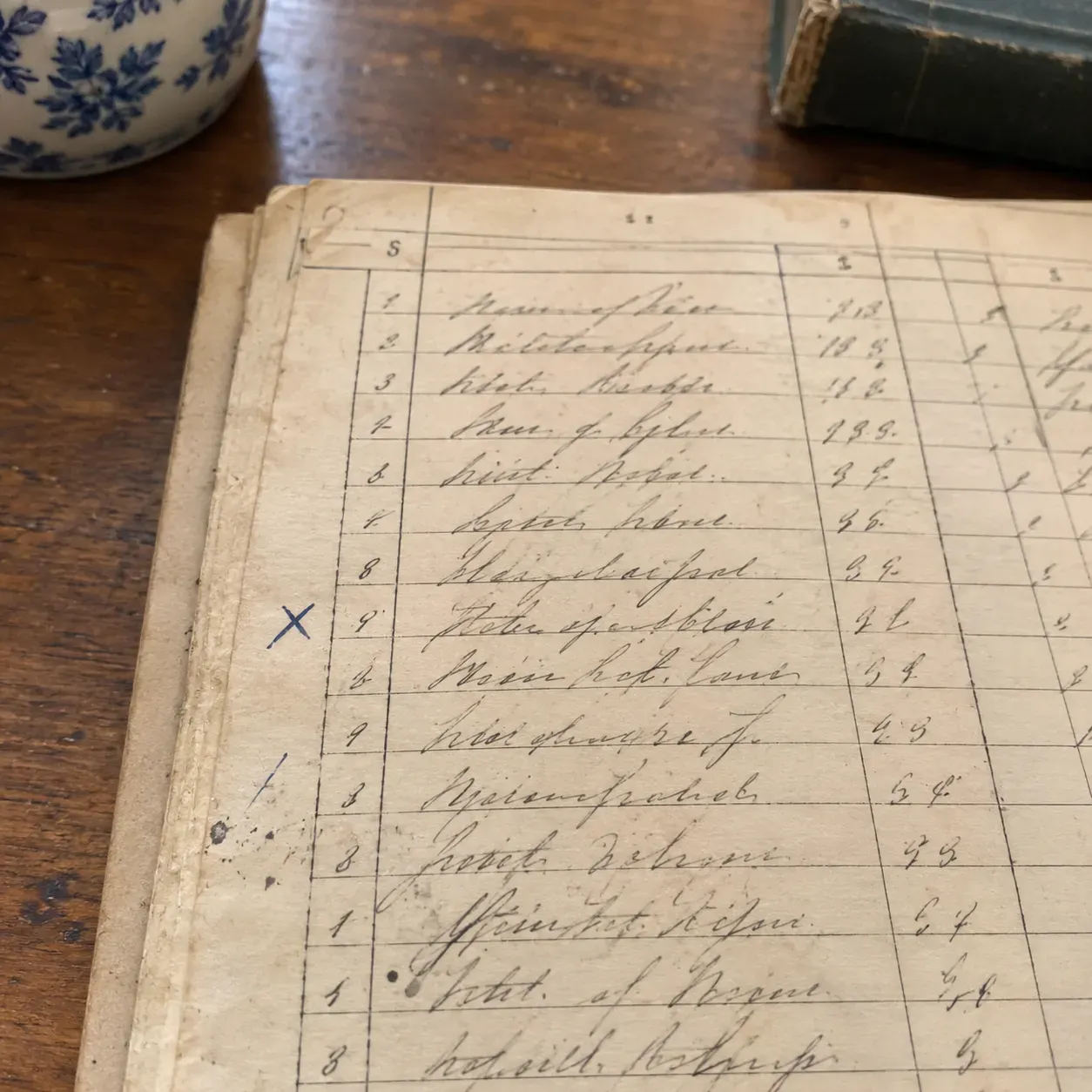
The handwritten letters, numbers and crossed-out lines on a manifest were added by officials, some at arrival and some years later. Marian L. Smith, a historian with the US Immigration and Naturalization Service, wrote a guide to them for JewishGen covering lists dated after 1892. Here is what to look for.
Left margin: detention and hearings. “The letters ‘X,’ ‘D,’ and the word ‘Held’ can mean either that the immigrant went to temporary detention or had a Special Inquiry hearing.”
The more specific “S.I.” (Special Inquiry) and “B.S.I.” (Board of Special Inquiry) mean the person was held for a hearing before a panel of three inspectors who decided whether to admit or exclude a passenger.
“Admitted” or “Deported” sometimes appears, but not on every record.
Struck-through lines. “Not Shipped,” “N.O.B.” (Not On Board) or “Did Not Sail,” with the whole line crossed out, means the person booked passage and did not sail. The line records a booking, not an arrival.
Small numbers. These may be steamship contract-ticket numbers, especially on ships from England, or head-tax receipt numbers on earlier lists.
Citizenship marks. NYG&B lists USB or US Born (born in the US), USC (US citizen), Nat (naturalized, meaning granted US citizenship through the naturalization process) and Non-im alien (an alien not intending to immigrate). V or V/L means the landing was verified, and “No C/A” means no certificate of arrival was issued.
The occupation column. Starting in 1926, verification clerks wrote notes about naturalization, the process of becoming a US citizen, here. The 1906 naturalization law required immigrants who arrived after June 29, 1906, to have their arrival record located and certified. The note also kept that same record from being used for someone else’s naturalization.
A typical note combines a district number, application number, verification date and the document issued, for example “District 2, Application 666954, dated 1/21/40, Form 505 issued.” Codes include C/A (Certificate of Arrival), Form 505 and No C/A.
Read these carefully. A mark like this is a clue that the person started naturalization sometime between 1926 and the early 1940s. It is not proof they finished.
The application number alone won’t locate the naturalization file, and district numbers changed over time. The lists were microfilmed in 1942–43, so most annotations added after that are not on the film.
The name column. A name crossed out with another written in is an official correction. For arrivals after June 29, 1906, whose recorded name didn’t match their true name, “a government clerk was authorized to officially correct the record,” sometimes adding a date or file number. This formal correction happened on paper after arrival.
Other names were clarified by shipping clerks before departure, by the purser during the voyage or by inspectors during inspection. Those edits did not rename the passenger.
Nearby, V/L with a number is a Verification of Landing (usually before 1924, though later examples exist), and “P” or “Permit” with a number is a reentry permit (after July 1924).
A detained passenger leaves a second record
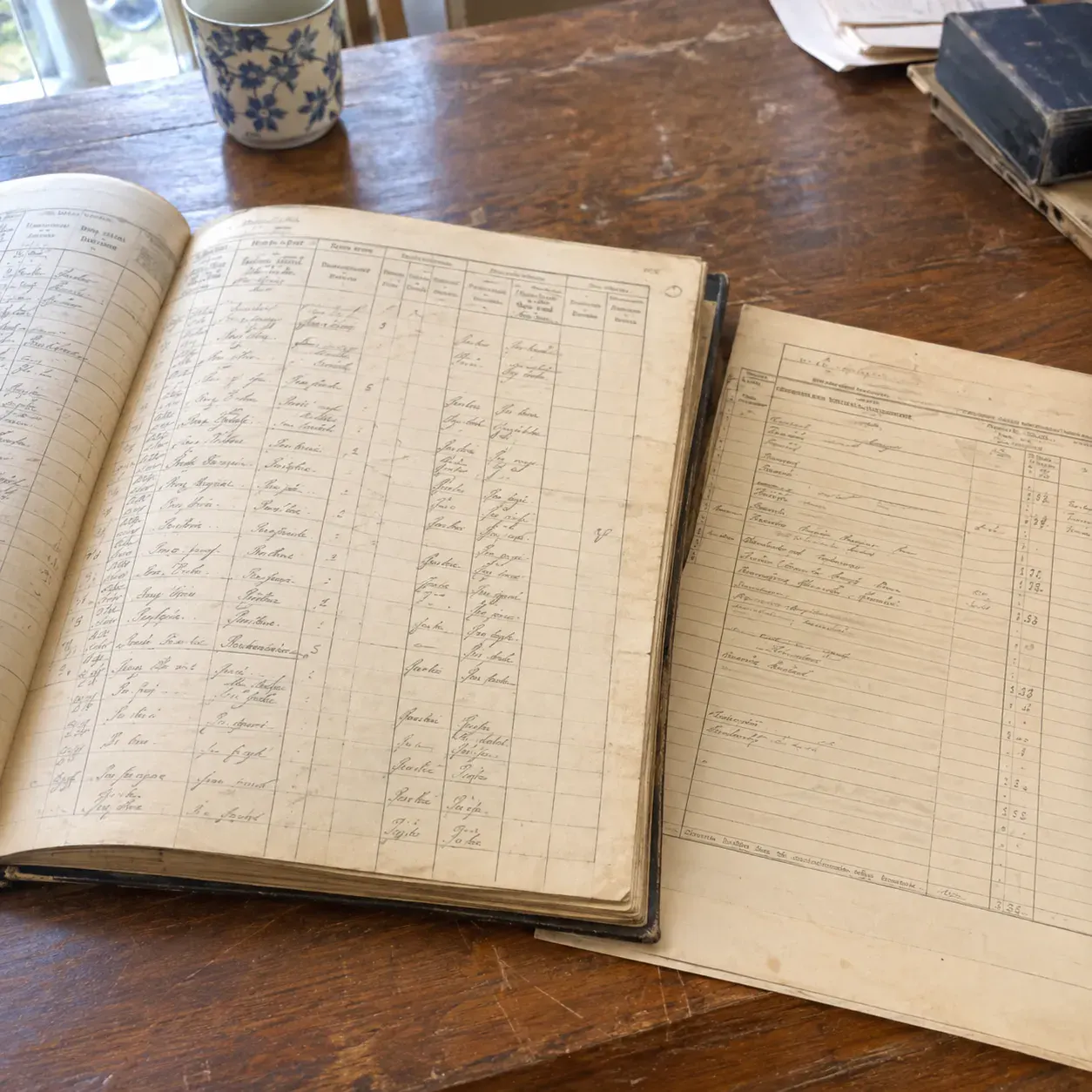
If you see S.I., B.S.I., X or Held on your ancestor’s line, don’t stop at the manifest. There may be another record in the same volume.
At Ellis Island, starting in 1903, a “Record of Detained Aliens” was filed with the manifests and bound into the manifest volumes. Its columns point back to the passenger’s line on the list and record the cause of detention and how it was resolved, the releasing inspector, the date and time of discharge, and the meals eaten in detention. Some passengers were released to relatives or to aid societies.
A separate set, the “Lists of Aliens Held for Special Inquiry,” works as an index to the hearing records. Most underlying hearing records were destroyed. Surviving appeal files cover only a small fraction of cases. These lists appear on New York passenger-list microfilm from 1903.
They record age, sex, name, the cause, the board’s action and meals. Causes were written in shorthand, such as “LPC” for Likely Public Charge. Hearings were not rare: in the 1892–1924 era, “ten percent or more of arriving immigrants” were sent for one.
The process could take weeks. One family arrived on the SS Nieuw Amsterdam on September 11, 1906. They were excluded on September 13, appealed on September 18 and were admitted on September 29, “eighteen days after their arrival.” A manifest line alone cannot hold that story.
Smith’s guide notes that further detention information survives for New York from 1903 and for Philadelphia from 1882 to about 1909.
When the index can’t find them, search around the name
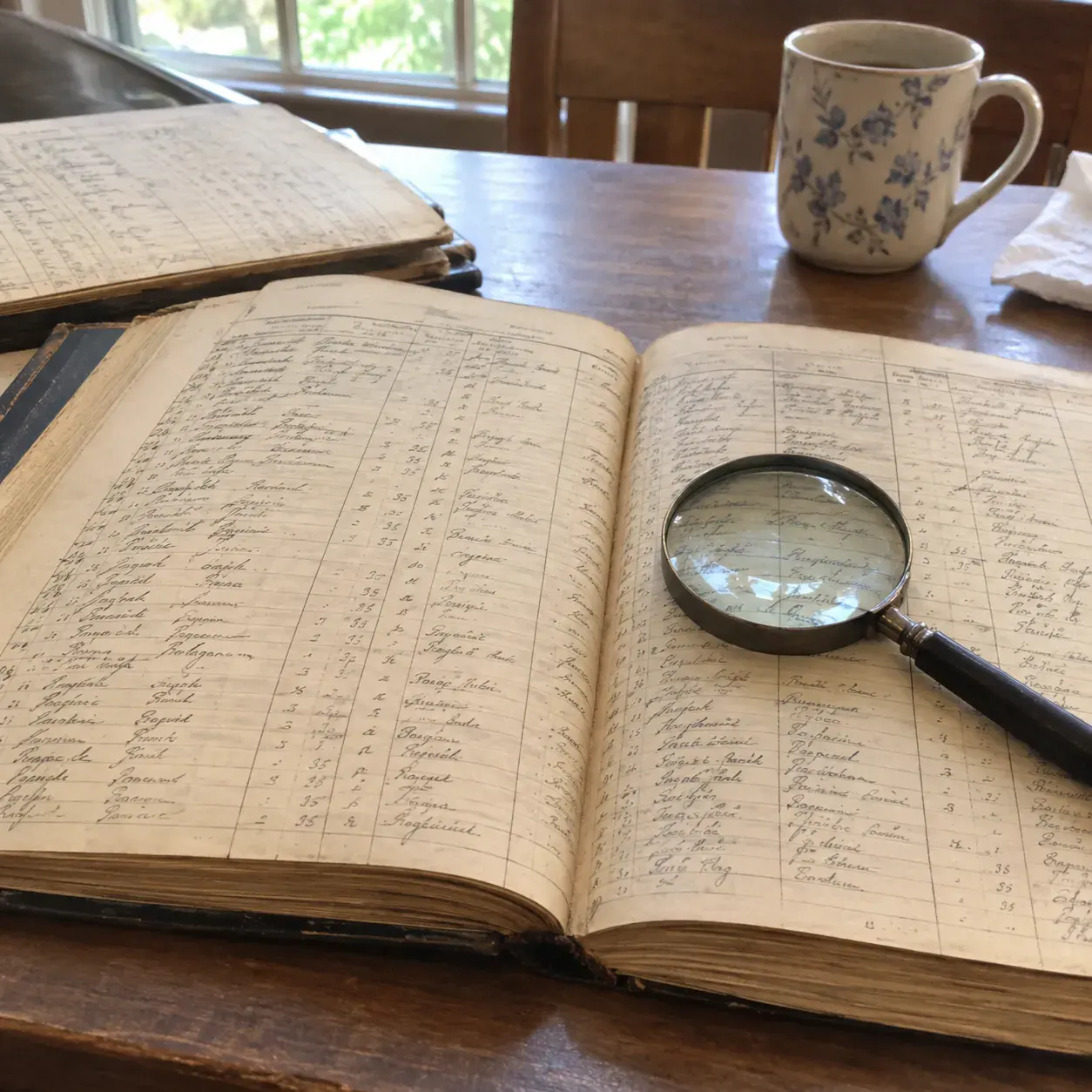
An index is someone’s reading of a handwritten list. The FAQ for Stephen P. Morse’s search tools calls the original volunteer transcription of the Ellis Island data “full of errors.”
If a name search comes up empty, your person may still be on the page. Work through these:
1. Search initials, abbreviations and similar names, the way James Wiseman became “Jas.”
2. Start broad, then widen the arrival year and the birth year.
3. Use wildcards (* and ?) to cover spelling variants.
4. Search other fields: destination, last residence, nearest relative or ship.
5. Search every family member, since each entry can give different details.
6. Search both Ancestry and FamilySearch, because as NYG&B puts it, “differences in indexes do occur.”
7. Browse the images by date or ship.
8. Check other ports: Boston, Philadelphia, San Francisco, Baltimore and New Orleans, or arrival through Canada, “as passage to Canada was often less expensive.”
Also keep in mind that places of origin may be generalized across a whole list, so a vague country entry does not rule your person out.
Morse’s One-Step search forms search the Ellis Island data in more flexible ways: by town of origin, by first-name and surname initials, by age range (useful because “some ages were recorded as years and months”), by sounds-like matching, and line by line through a manifest when you know the ship and date. His All-New-York form covers arrivals from 1820 to 1957, and his Ellis Island form covers 1892 to 1924.
Where to search, as of November 2026: the Statue of Liberty-Ellis Island Foundation offers its arrival records free online, covering Ellis Island and New York plus other states, including Massachusetts, Florida, Hawaii and California. FamilySearch is free. Ancestry and Fold3 need a subscription but are free to use at NARA facilities.
NYG&B points to Ancestry collection 7488 (New York, 1820–1957) and FamilySearch collections 1849782 (New York Passenger Lists, 1820–1891) and 1368704 (Ellis Island, 1892–1924). Coverage changes, so check what each site currently holds.
None of this guarantees a hit. It does give a badly transcribed or misremembered entry a fair chance to turn up.
If the arrival list is thin, try the departure side
A customs-era arrival list may give you a country and little else. A list made at the European port of departure can sometimes tell you more.
Hamburg. Hamburg’s passenger lists survive in the Hamburg State Archive for 1850–1934, with gaps, including the First World War years. They record names, ages, “place of birth or last known residence,” occupation and destination. A 2011 FamilySearch guide said they represent about one-third of Central and Eastern European emigrants.
The lists come in two series, “direct” and “indirect,” so check both. They are indexed online through Ancestry.
Bremen. Most Bremen lists don’t survive. If your family sailed from Bremen, don’t count on the departure side.
The UK. The National Archives at Kew holds BT 27, outward passenger lists from 1890 to 1960, and BT 26, inward lists from 1878 to 1960. These series cover voyages to or from ports outside Europe and the Mediterranean, rather than all travel through UK ports. The majority survive.
BT 27 is searchable on Findmypast and Ancestry, and BT 26 on Ancestry. No lists are held after 1960.
A departure list can record a residence or birthplace when the US arrival list does not, which matters most for customs-era arrivals. It also gives you a second record, made by different clerks at a different port, to test your match against.
Open the full page, not the index entry
Pick one ancestor whose manifest you have already found and go back to the original image. If the list is from 1907 or later, find the second page by matching the line number. Then read everything on that line: the left margin, the occupation column and any crossed-out name.
If there is an S.I. or B.S.I. mark, look for the detained or special-inquiry list bound into the same volume. You may find nothing new, or you may find a birthplace, a relative’s address or a hearing nobody in the family ever mentioned.