In Mapperton, Dorset, the register records Mathew Knight buried “in Woolen” in 1680. In 1737, the same register records Richard Brodrepp, Esq., buried “in Linnen” in the church chancel, with the £5 penalty paid.
One burial followed the law. The other came with a bill.
For more than a century, English law told families what their dead could wear. Wool was required and linen was banned.
An entry reading “in linen” usually means the family broke the law and a £5 penalty was due. The paperwork behind those small marks can also name people the burial entry leaves out, such as the person who swore the oath, the official who took it and two witnesses.
Why did Parliament care what the dead were wearing?
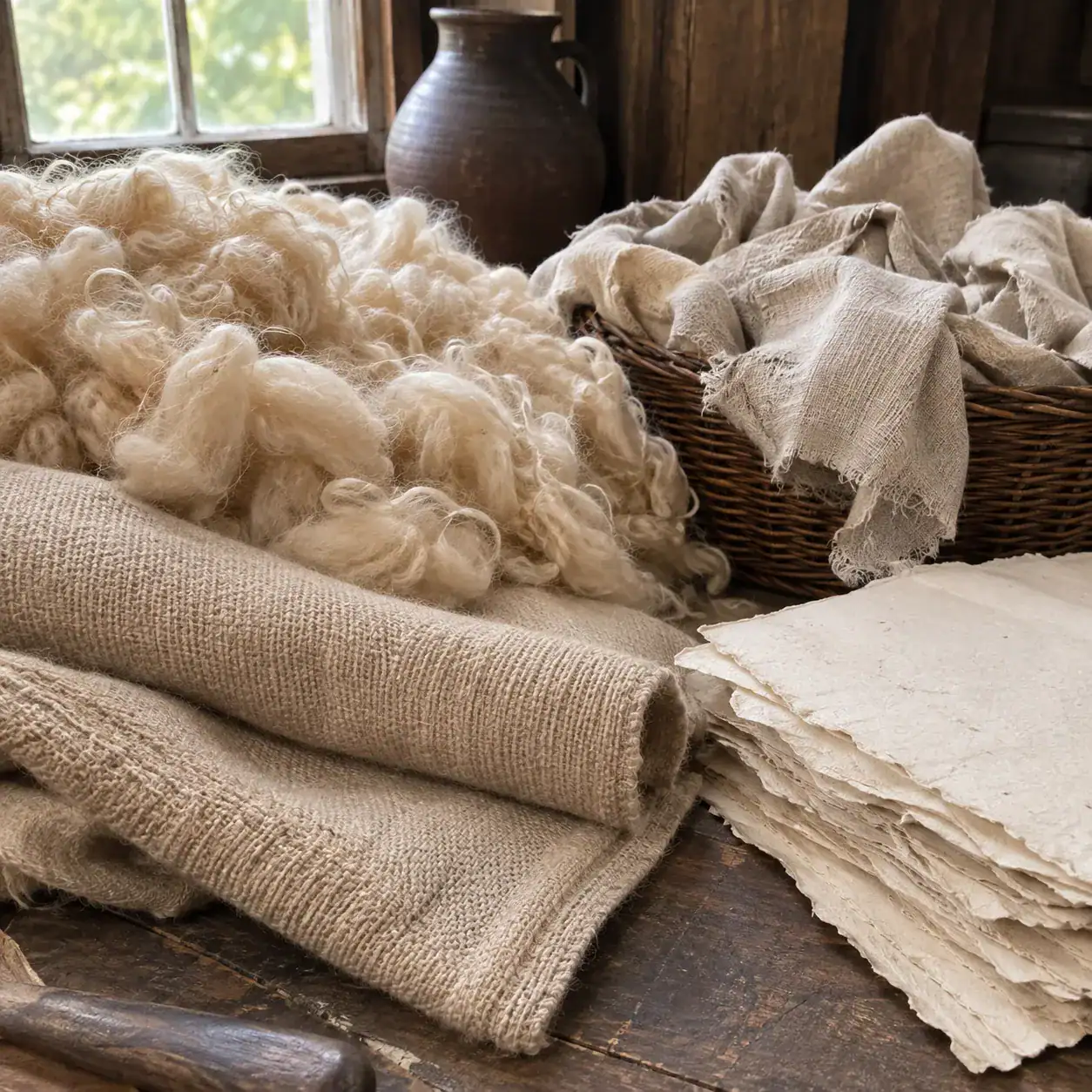
Because of sheep, and paper.
In the late seventeenth century, Parliament wanted to revive what the historian William Kellaway called “a declining woollen industry.” Requiring woollen shrouds would create demand for wool.
The paper trade had its own problem. Paper was made from old linen rags, and there was, in Kellaway’s words, a “chronic shortage of rag.” Burial in woollen promised to fix both. It would “create a demand for wool and, through the implicit ban on linen shrouds, prevent the waste of rags, without which a struggling paper industry could not hope to make its way.”
The first attempt came in 1666. Its preamble spoke of “the Encouragement of the Woollen Manufactures of this Kingdom and prevention of the Exportation of the Moneyes thereof for the buying and importing of Linnen.” It applied from March 1667, set a £5 forfeit payable to the poor of the parish and exempted plague deaths.
It went almost nowhere. The Act gave no instructions to parish ministers, so, as Kellaway found, “the parish registers for the period immediately following 1667 contain no reference whatever to burials in woollen.” He checked the churchwardens’ accounts and vestry minutes of 20 London parishes and found no warrants issued under it.
The 1678 Act addressed that failure. Its preamble admitted the first one had given “not a sufficient Remedy … for the discovery and prosecution of offences.” This time Parliament built the machinery to enforce it, and that machinery is what shows up in your ancestors’ registers.
What the 1678 Act actually required
The 1678 Act came into force on 1 August 1678. Its rules were specific.
The materials. No corpse was to be buried “in any Shirt Shift Sheete or Shroud or any thing whatsoever made or mingled with Flax Hempe Silke Haire Gold or Silver.” Flax is what linen is made from. The coffin could be lined with “Sheeps Wooll onely.”
The affidavit. An affidavit is a written statement sworn under oath. Within eight days of the burial, a relative or another credible person had to bring one sworn before a magistrate, who charged no fee. Two or more credible witnesses had to sign and seal it.
The penalty. £5. Half went to the poor of the parish and half to the informer, the person who reported the offence.
The register. The minister had to record all burials and the affidavits received in a book paid for by the parish.
The one exemption. No penalty applied to someone who died of plague. That was the only exemption in the statute. Poverty, age and religion were not on the list.
Publicity. The Act was to be read out publicly once a year for seven years. Kellaway says this was done on the first Sunday after St Bartholomew’s day.
The enforcement path ran through the parish. If no affidavit arrived within eight days, the minister told the churchwardens (the lay officers who managed the parish’s money and property) and the overseers of the poor (the officers responsible for poor relief).
A magistrate then issued a warrant “for the distress and sale of the deceased’s goods to the value of five pounds.” Distress, or distraint, means seizing someone’s goods to cover a debt. Officials who failed to act could be fined £5 themselves.
A further Act in 1680 made the oath easier to take. Parsons, vicars or curates could now swear people, “but not the vicar of the parish where the burial had taken place.” Kellaway says this power was widely used, even in London. That matters for you: the person who took the oath in your ancestor’s affidavit may be a clergyman from another parish rather than a justice of the peace.
What those notes in the burial register mean
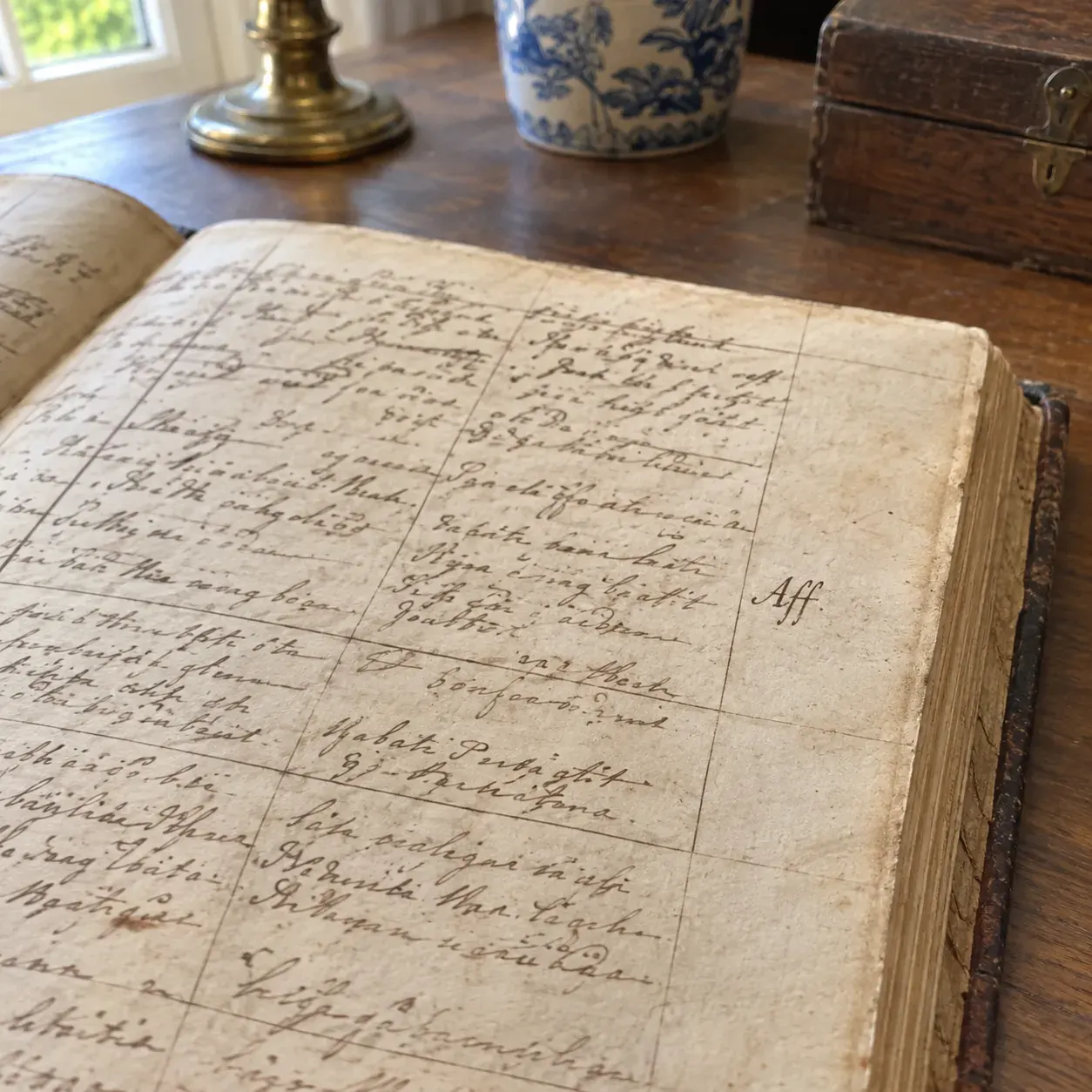
Many parishes, small ones in particular, didn’t bother with a separate book. They used the ordinary burial register and added a mark next to the entry once the affidavit came in. Kellaway lists the variations: “affidavit brought,” “affid fil’d,” “in woollen,” “Aff,” “avid,” or simply “A.” Occasionally the date the affidavit was received appears too.
So an “A” beside a burial in, say, 1690 is most likely the clerk’s note that the paperwork arrived. It isn’t a grade, a status or a cause of death.
When the law was broken, the usual entry was short. Kellaway: “The usual entry where the law had been broken was merely ‘in linen’, sometimes adding that the sum of £2 10s. had been paid to the churchwarden … and occasionally giving the name of the informer.”
Parishes that kept the separate register the Act called for sometimes recorded much more. At St Peter Paul’s Wharf in London, entries could hold the burial date, the name of the deceased, the date of the affidavit, the person who swore it, the magistrate and the two witnesses.
Some entries record failures. At St Ethelburga in 1679, the minister wrote that “John Bleachley was buryed November the 26 but noe Affidavitt was brought to me … Which neglect I certified to the church wardens … the 9th day of December 1679.” At St Stephen Walbrook on 21 June 1679, the rector certified a default for “John Moyer infans,” noting he was “not dyeing of the Plague.” A baby’s burial came under the same law as an adult’s, and the parish recorded the missing oath in the same way.
The poorest burials produced their own entries. The woollen register of St Bartholomew the Great records: “Noe affid. made he being poor.” On 11 August 1678, just after the Act took effect, another entry reads: “Noe affidivat made he beinge buried in Herbs.”
Another person was “Covered with sweet Herbs.” Kellaway’s comment: “Thus could the poor escape the strictures of the act.” That was parish practice. The statute itself made no allowance for poverty.
Does “buried in linen” mean the family was rich?
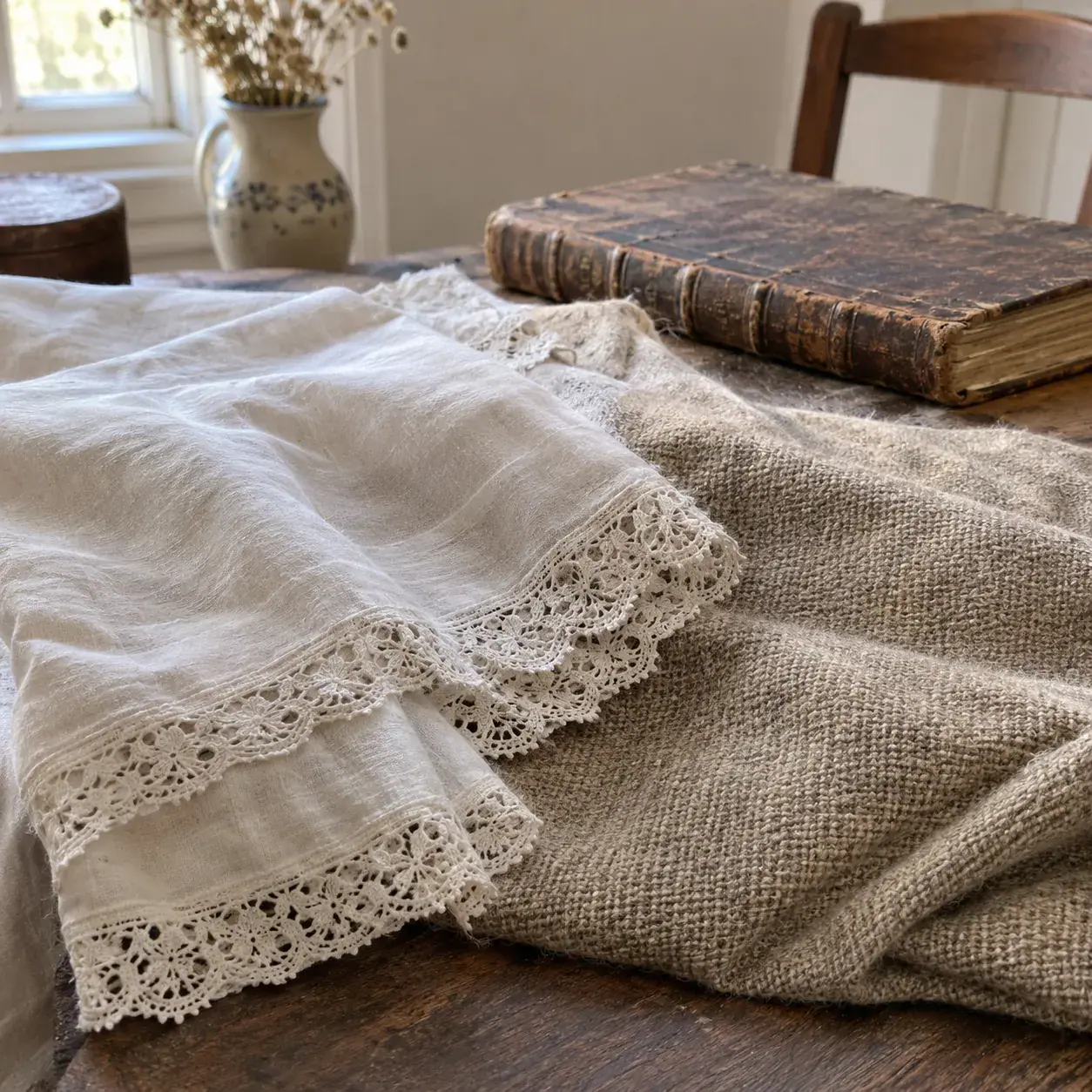
Often, at least in London. But the entry records a choice and a penalty, not a bank balance.
Kellaway’s study of London parish records found that “the man who was buried in linen was generally well-to-do, as can usually be ascertained, either from his title, or from the gifts he made to the parish.” Anderson’s Origin of Commerce, quoted by Kellaway, put it more bluntly: “such still is the vanity of many of the rich and great, that they continue to pay the penalty, rather than not adorn their deceased friends’ bodies with fine linen, lace, etc.”
At All Hallows Barking between August and December 1678, Kellaway counted “amongst some fifty burials in woollen, five burials in linen,” and noted that “the vicar’s wife was one of the five.” Some families made it a habit. Kellaway found the Whiting family at St Bartholomew the Great and the Houblon family at St Benet Paul’s Wharf buried their dead in linen as a family tradition.
Back in Mapperton, the Brodrepps appear again and again. In 1713, “Mrs Elizabeth BRODREPP wife of Richard BRODREPP Esqr” was buried “in Linnen,” with no penalty note in the transcription. In 1737, Richard Brodrepp, Esq., was buried in linen in the chancel, and the £5 was paid.
In 1739, George Brodrepp, Esquire, was buried the same way, with “An Affidavit made thereof, and a Warrant issued out for the payment of the Penalty.” In 1722, an affidavit that “Hester the Daughter of Mr Thomas BRODREPP” was buried in woollen was sworn “Before Ric: BRODREPP Esqr,” so the family was also taking affidavits.
Here’s the line between record and conclusion. The register states “Esqr,” burial in the chancel and the penalty. Reading the Brodrepps as the leading local family is a reasonable inference, but the transcription doesn’t say so.
It also doesn’t say how these Brodrepps were related to each other, or whether the Richard who took the 1722 oath was the Richard buried in 1737. Keep those questions open in your own notes.
London had a famous linen burial of its own. Anne Oldfield, the actress, died on 23 October 1730. Westminster Abbey records that she was “buried in fine Brussels lace, a Holland shift, wearing new kid gloves and wrapped in a winding sheet.”
Alexander Pope’s line “Odious! in woollen! ‘twould a Saint provoke” is spoken by a dying woman he calls Narcissa, and it’s traditionally linked to Oldfield. The Abbey’s record doesn’t say whether anyone paid a fine for her.
Why some fines were £2 10s, not £5
You’ll see £2 10s in some records, half the £5 penalty. One historian, W. E. Tate, suggested that “it was usual for a member of a family to act as informer, and so in effect reduce the penalty from £5 to £2 10s,” since the informer’s half came back to the family.
Kellaway found it “difficult to find any trace of this collusive arrangement in London parishes,” though he notes Tate gives a Yorkshire example. Kellaway offers a simpler explanation: if nobody informed, only the poor’s half was collected.
The half-share caused at least one quarrel. At the Middlesex Sessions in 1678, Elizabeth Jackson of Edmonton had paid 50 shillings (£2 10s) for burying her husband in linen. The minister, “being desirous to gaine fifty shillings to himself,” had her goods distrained for the full £5. The justices ordered the churchwarden, Thomas Martin, to give the £5 back.
What a linen entry can’t tell you
A linen entry means a penalty was due. It doesn’t prove one was paid. One St Bartholomew the Great entry reads: “A warrant issued … but no distresse cold be made.” The reverse holds too: Kellaway warns that a missing fine entry doesn’t prove a woollen burial.
Fines can turn up in the churchwardens’ accounts, the parish’s own account books. At St Benet Paul’s Wharf: “Dec. 1731 By burying Eliz Watson in Linen £2 10s.” If your ancestor’s burial says “in linen,” that’s the next place to look.
The affidavit can name people the burial entry doesn’t
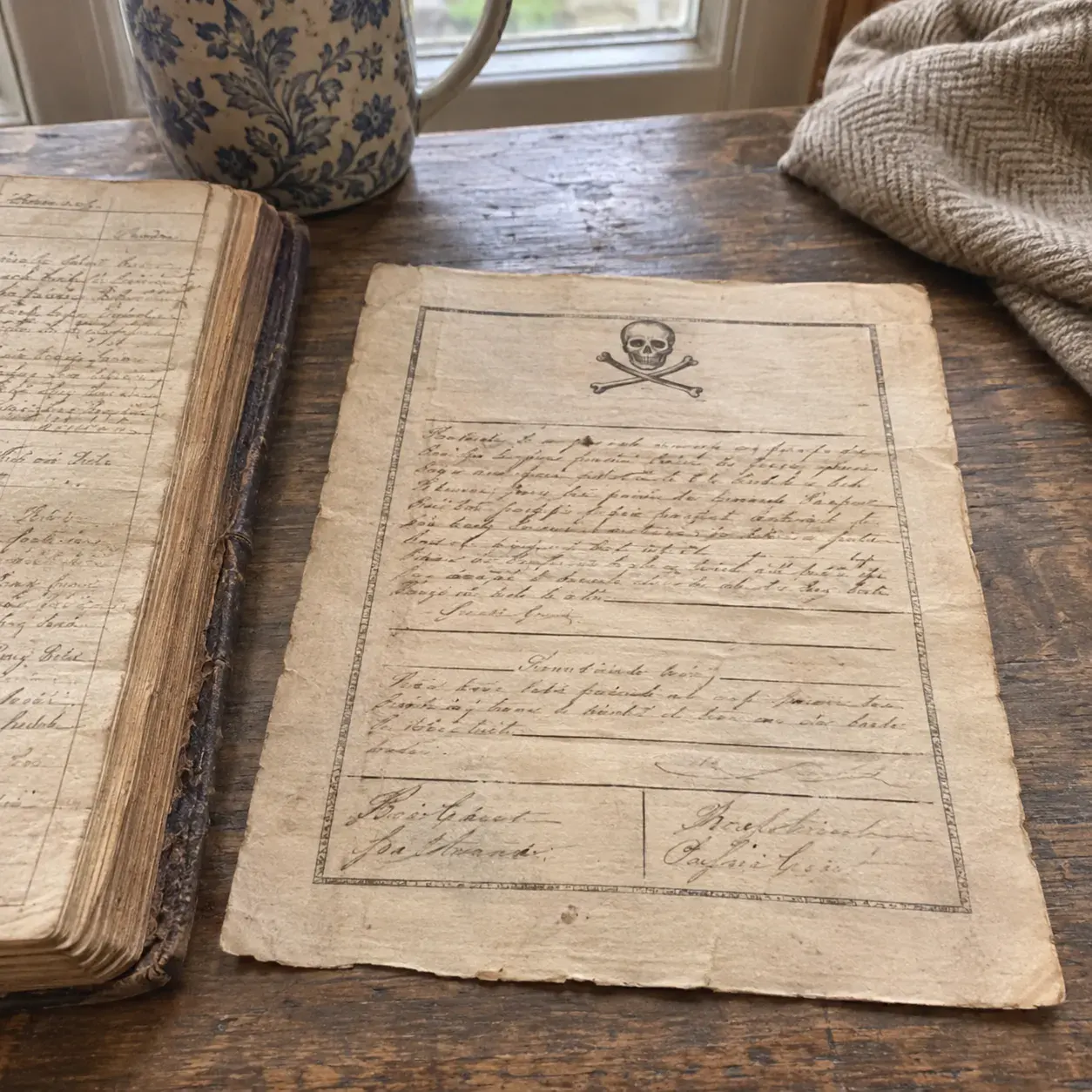
A burial entry gives you a name and a date. An affidavit can give you a small cast of people around the death.
Here is one from 1742, which Kellaway quotes from the London manuscripts he worked with: “Thomas Dean of the parish of St Andrew Undershaft London makes oath that the body of Mr. Abraham Korten late of the parish of St. Dunstan which was buried at the Dutch Church in Austen friers on Thursday ye 28 of October was wraped up in no dress nor put into any coffin that was lined or faced with any material but what was made of sheeps wool only Sworn ye 4th November 1742 Before me: John James … Witness: Thomas Arbuthnot … Mary Newman.”
That single sheet names the deponent (the person who swore the oath), his parish, the dead man’s parish, the church where he was buried, the magistrate and two witnesses. It also shows the requirement reaching a burial in a foreign congregation’s church. The document doesn’t say whether Thomas Dean was family. The law allowed a relative “or other credible person,” so don’t assume either way.
Affidavits can also cross parish lines. A Mapperton entry from 1735 records an affidavit “That Thomas LEGG of Meith in this Parish, was Buryed at Netherbury, in Woollen.” His home parish recorded the oath for a burial elsewhere, so if you can’t find a burial where you expected it, the parish where your ancestor lived can hold a clue.
Many affidavits were printed forms with blanks to fill in. Kellaway says they were “generally headed with the skull and cross-bones,” sometimes with a woodcut of a shrouded corpse or cherubs. “But few of these affidavits have survived.”
Printed forms carry a trap. Heather Wolfe of the Folger Shakespeare Library examined two Bristol affidavits, from June 1729 for Linsey Winne and June 1736 for John Winne, both on forms with “Jane Doe” already printed as a witness. She suggests Jane Doe “might be not only anonymous but non-existent… one of the many legal fictions deployed in the name of bureaucratic compliance.” Don’t assume a witness on a printed affidavit was a real person, let alone a relative.
Quaker families can turn up too. In 1678 the London Six Weeks Meeting agreed “that the Complyance therewith as to burying in wollen is a civill matter, & fit to be done.”
The Journal of the Friends Historical Society reproduced a 1706 certificate of burial in woollen from the Southwark Monthly Meeting papers. Its endorsement records An Colens, who signed with her mark, giving in a child aged three whose death it puts down to convulsions in the bowels. Records like that can survive in Quaker meeting papers, not only in parish chests.
Why you may find nothing at all

Survival is poor. In a random sample of sixty London parish archives, Kellaway found “only six registers of burial in woollen.” Many separate registers were “probably … later discarded as waste books.” Some that survive carry the note “this appears to be a duplicate of the vellum register,” a reminder that parishes often kept two sets of books and didn’t always keep both.
Some registers have bigger holes. At St Alphage London Wall, burial entries stop in August 1678 and don’t restart until 1699.
The habit also faded. Kellaway found that “by 1700, many London parishes had altogether dispensed with the business of entering the receipt of affidavits in either register.” By 1750, “the provisions of the act were generally ignored in London parishes,” with occasional fines after that and “a very occasional example” up to 1814.
People had simply got used to wool. Mandeville wrote in 1723: “Burying in Linen being almost forgot, it is the general opinion that nothing could be more decent than Woollen.”
Country parishes were more diligent. In Essex, 25 parishes were still recording affidavits after the middle of the 18th century, ten of them in the Tendring Hundred. The Acts were repealed in 1814, but Rivenhall kept making entries until 1821.
So when you search for these marks, expect them most in the decades just after 1678. In London they may vanish well before 1750. In some rural parishes they may run much later.
Scottish ancestors? The rule ran the other way
Scotland’s Parliament went the opposite way in 1686, ordering burial in Scottish-made linen to protect its own linen trade. With a different material required by law, the English explanation of woollen and linen entries doesn’t apply to Scottish registers.
One ancestor, one register, a few lines either side
Pick one ancestor who was buried in England between roughly 1678 and 1750. Find their burial entry, and read the lines around it as well as the entry itself. Look for an “A,” an “Aff,” “affid,” “in woollen” or “in linen,” and for a date of receipt written in the margin.
If you find a mark, ask whether that parish’s surviving records include a separate burial-in-woollen register, loose affidavits or churchwardens’ accounts for the same years. Those are the places a witness, a deponent or a fine might be written down. If you’d like to see what a surviving set looks like before you go hunting, the Dorset OPC transcriptions for Mapperton and Wyke Regis are online, and the Mapperton set runs from Katherine Brodrepp’s affidavit in 1679 to George Brodrepp’s linen burial in 1739.