Christmas used to be illegal in America.
In 1659, the General Court of Massachusetts made any observance of December 25 a penal offense. People were fined for hanging decorations.
So where did the tree, Santa and the big Christmas Eve dinner come from? They arrived with families who carried them from somewhere else and refused to let go.
The stranger customs came along too, and those are the best clues to where your family started. One of them whipped children. One lived in the bathtub.
1. The Christmas Tree (Germany)
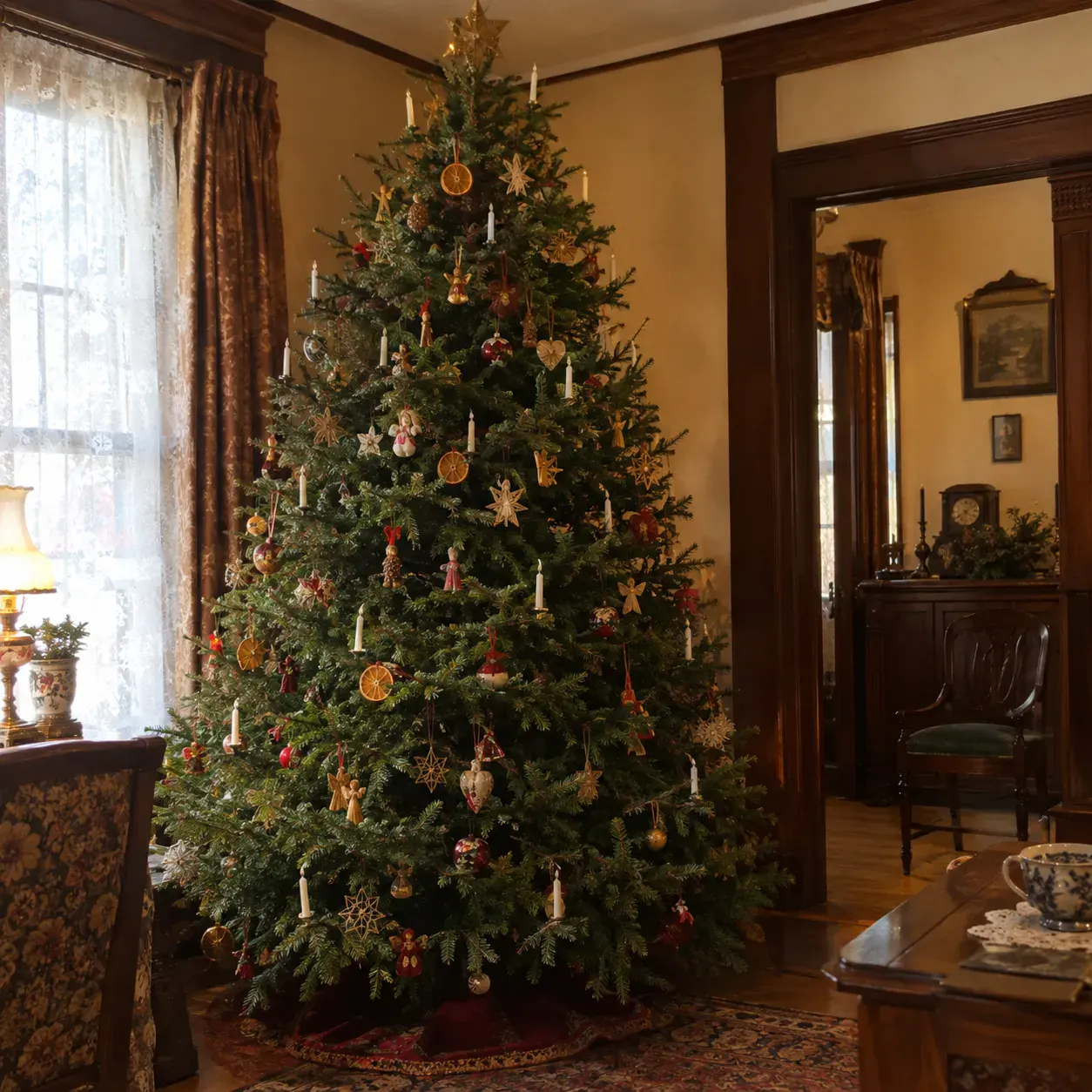
By the 16th century, devout Christians in Germany were bringing decorated trees indoors. Pennsylvania Germans were cutting them for display by the 1820s or 1830s.
They weren’t even the first here to try it. As early as 1747, Moravian Germans in eastern Pennsylvania built a community tree in the form of a wooden pyramid decorated with candles.
The idea needed a nudge to go mainstream, and it got one in 1846, when Queen Victoria and her German-born husband Albert were sketched in the Illustrated London News standing with their children around a Christmas tree.
Suddenly it wasn’t a strange pagan import. It was fashionable.
Europeans kept theirs about 4 feet tall. Americans wanted floor to ceiling.
If you grew up with a tree that scraped the ceiling and dropped needles into March, you now know exactly which side of the Atlantic that habit came from.
2. Santa Claus and the Shoe by the Fireplace (Netherlands)
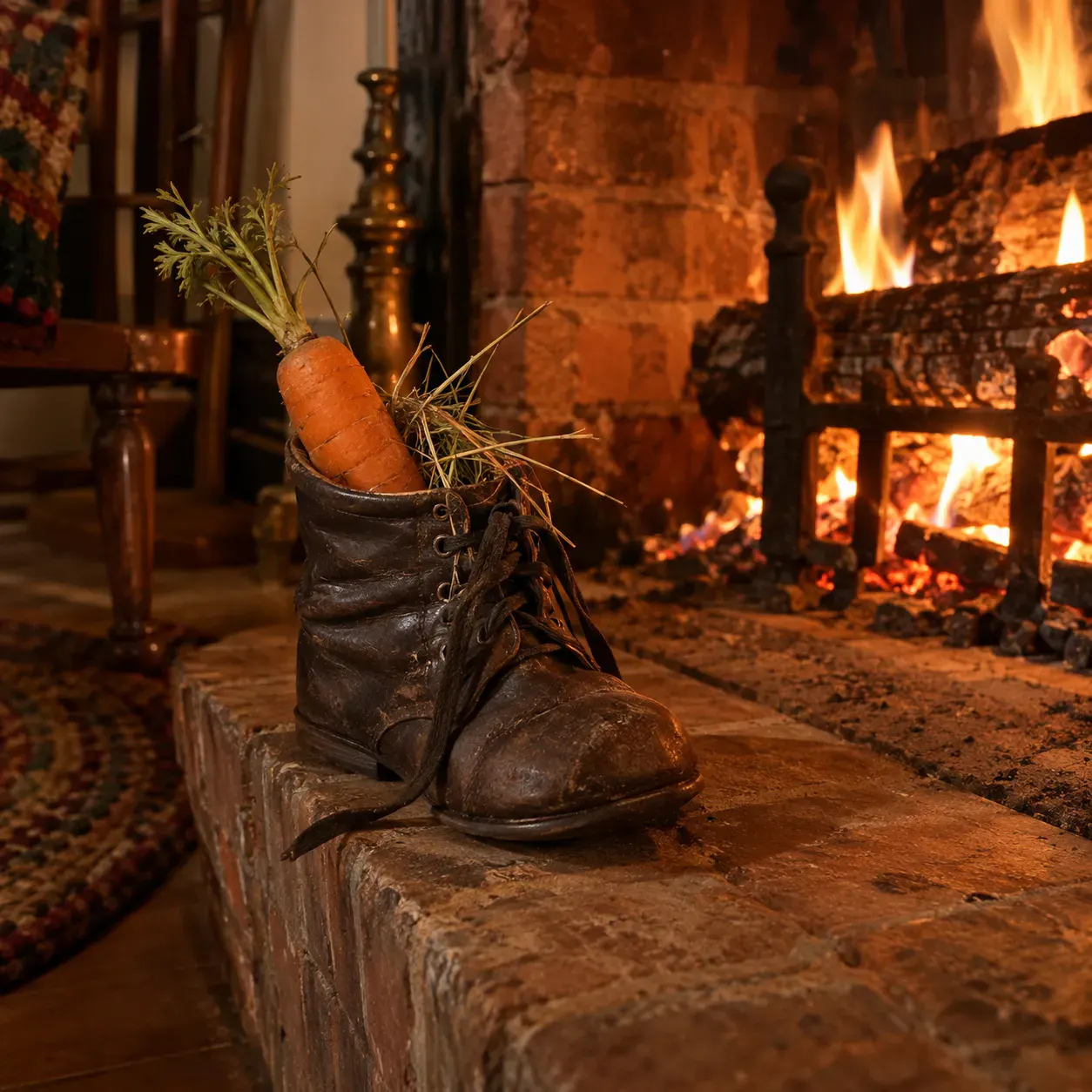
Santa Claus started as a Dutch nickname: Sinter Klaas, short for Sint Nikolaas. In December 1773, a New York newspaper reported Dutch families gathering to honor him.
Dutch children set a shoe by the fireplace with a carrot or hay for his horse, and maybe a saucer of water too.
In the morning they found chocolate coins, a chocolate letter for the first initial of their name, candy and pepernoten, the little spiced biscuits.
Notice the swap your own family probably made along the way.
One shoe by the hearth became a whole mantel lined with stockings. The carrot for a horse became cookies and milk for a man in a sleigh.
Same impulse, new props.
3. Belsnickel, the Santa Who Carried a Switch (German Palatinate)
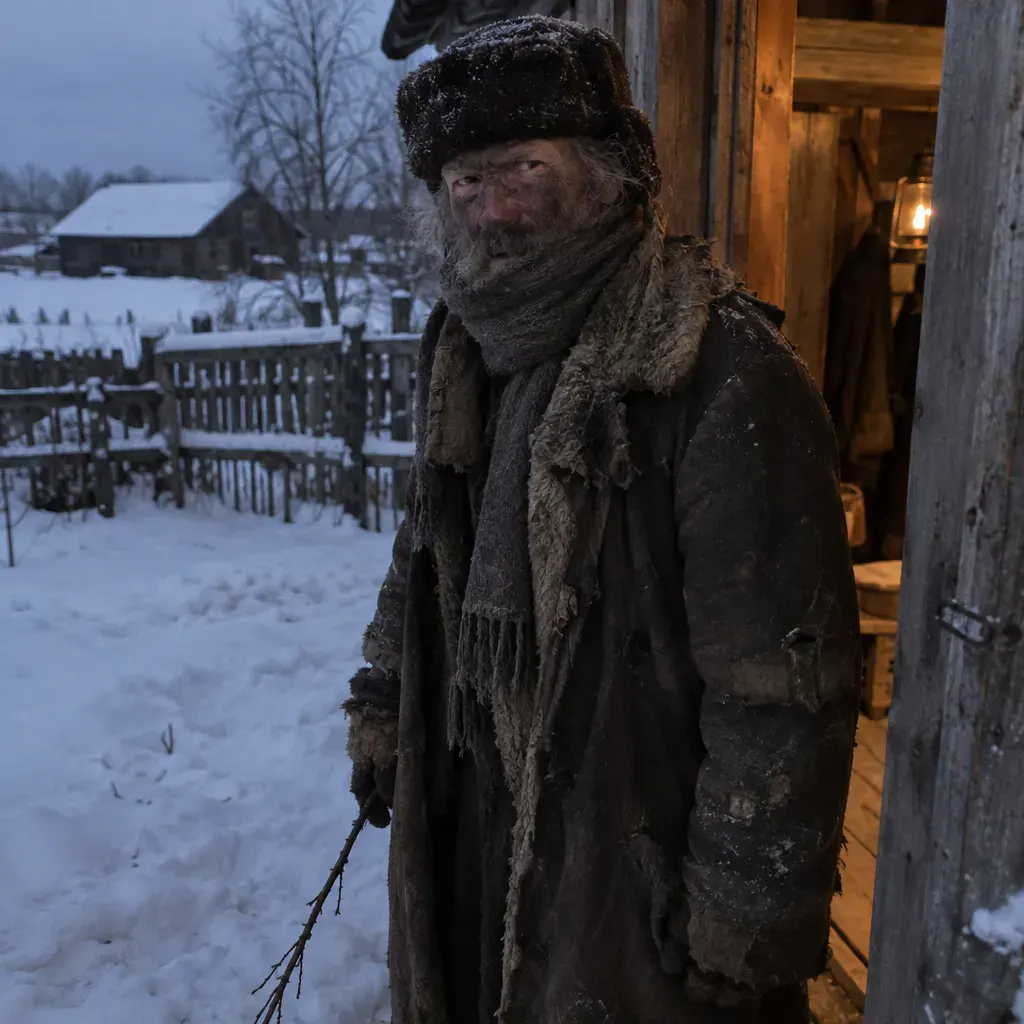
Belsnickel came from southwestern Germany, a crotchety old man in dirty clothes and furs with his face disguised. Children who grabbed presents without permission got walloped with his switch.
Even the name warns you. “Pelz” is German for fur and “Nickel” ties back to Nicholas, so he is, roughly, “Nicholas in furs.”
One man recalling 1830s Maryland put the experience plainly: children “not only saw the mysterious person, but felt him, or rather his stripes upon their backs with his switch.” This was Santa with a performance review.
Two world wars made all things German the enemy, and he all but disappeared. Which is a shame, honestly.
A gift-giver who also kept you honest is a more useful houseguest than a jolly one who hands out presents no matter how the year went.
4. The Putz and the Lovefeast (Moravians)
On Christmas Eve 1741, Moravian settlers in Pennsylvania followed their leader, Count Nicolas Ludwig von Zinzendorf, into a stable and sang a hymn. He named the settlement Bethlehem.
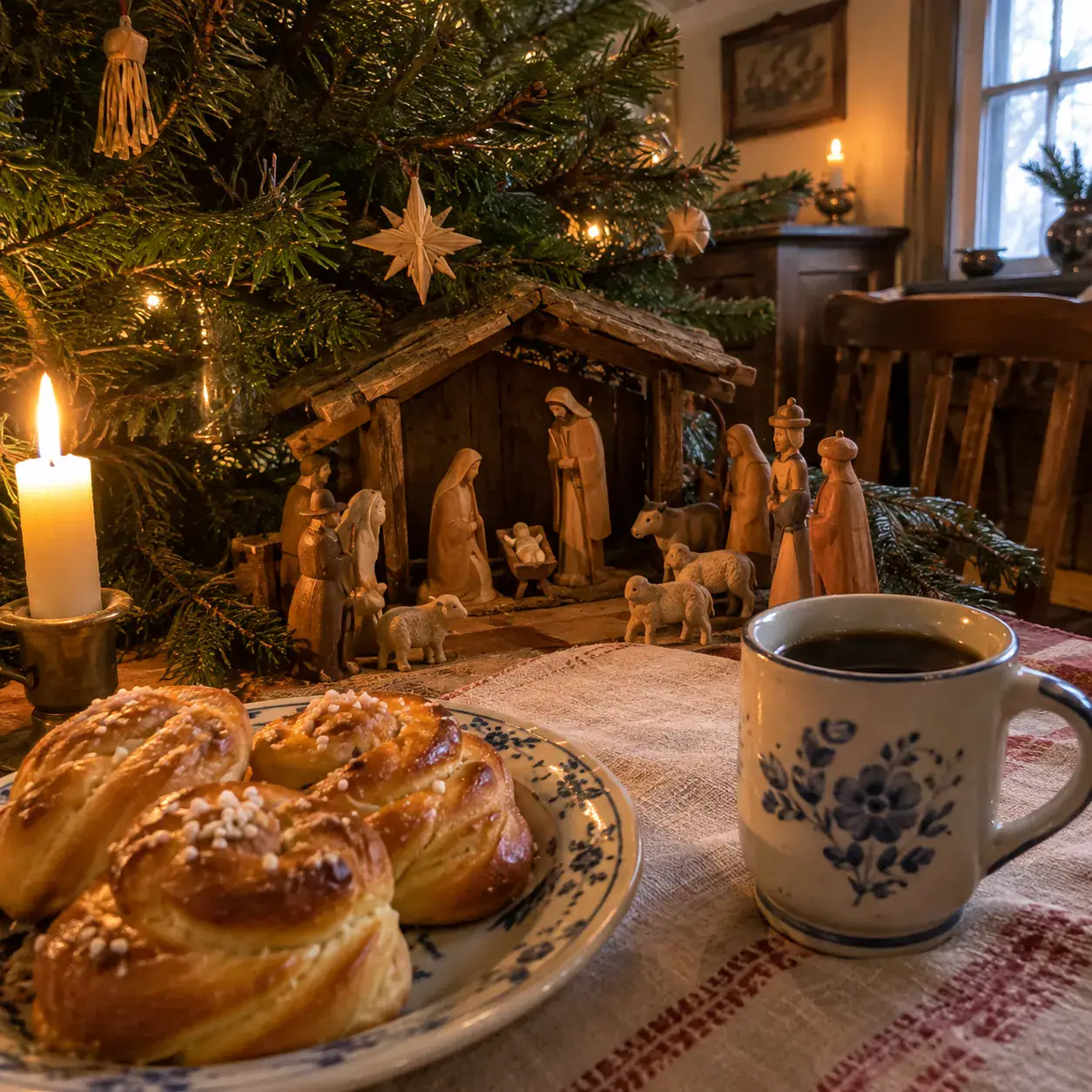
Bethlehem still builds the putz, a Gospel story in miniature wooden figures that walks you from Mary’s annunciation to the visit of the wise men. The name comes from the German putzen, to clean or decorate.
At the lovefeast, a simple song service, worshippers share sweet buns and coffee right in the pews, while thousands of handmade beeswax candles burn.
Think about what that means for a family tree. A town in Pennsylvania got its name on a single night in 1741, and the people who sang that hymn left descendants who are still lighting those candles.
If your line runs through Bethlehem, your Christmas story has a founding date.
5. The Advent Wreath and Calendar (Germany)
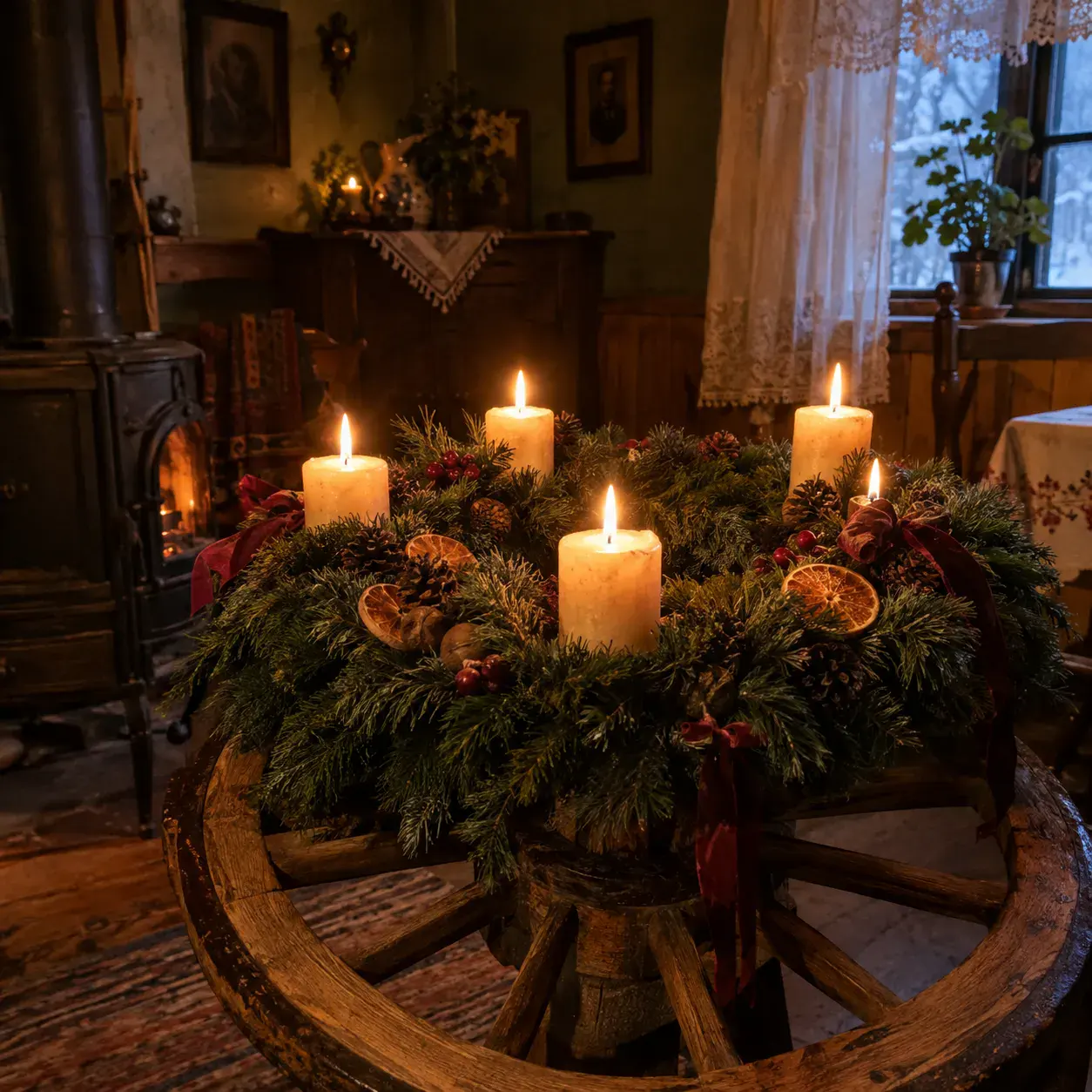
The wreath began in Hamburg in 1839, when Johann Hinrich Wichern set candles on an old cartwheel, small red ones for the weekdays and four large white ones for the Sundays.
This one is a latecomer. It didn’t reach the United States until the 1930s, even among German Lutheran immigrants.
The Advent calendar started with German Lutherans too: Gerhard Lang printed the first commercial one in 1908, and the whole country seemed to want one after Newsweek ran a photo of President Eisenhower’s grandson with an Advent calendar in December 1953.
So here’s the gentle caution for your family history. If your great-grandparents arrived in the 1880s, they almost certainly did not bring the wreath or the calendar with them.
Those came later, through church and through magazines. Not every “old” tradition is as old as it feels.
6. The Feast of the Seven Fishes (Southern Italy)
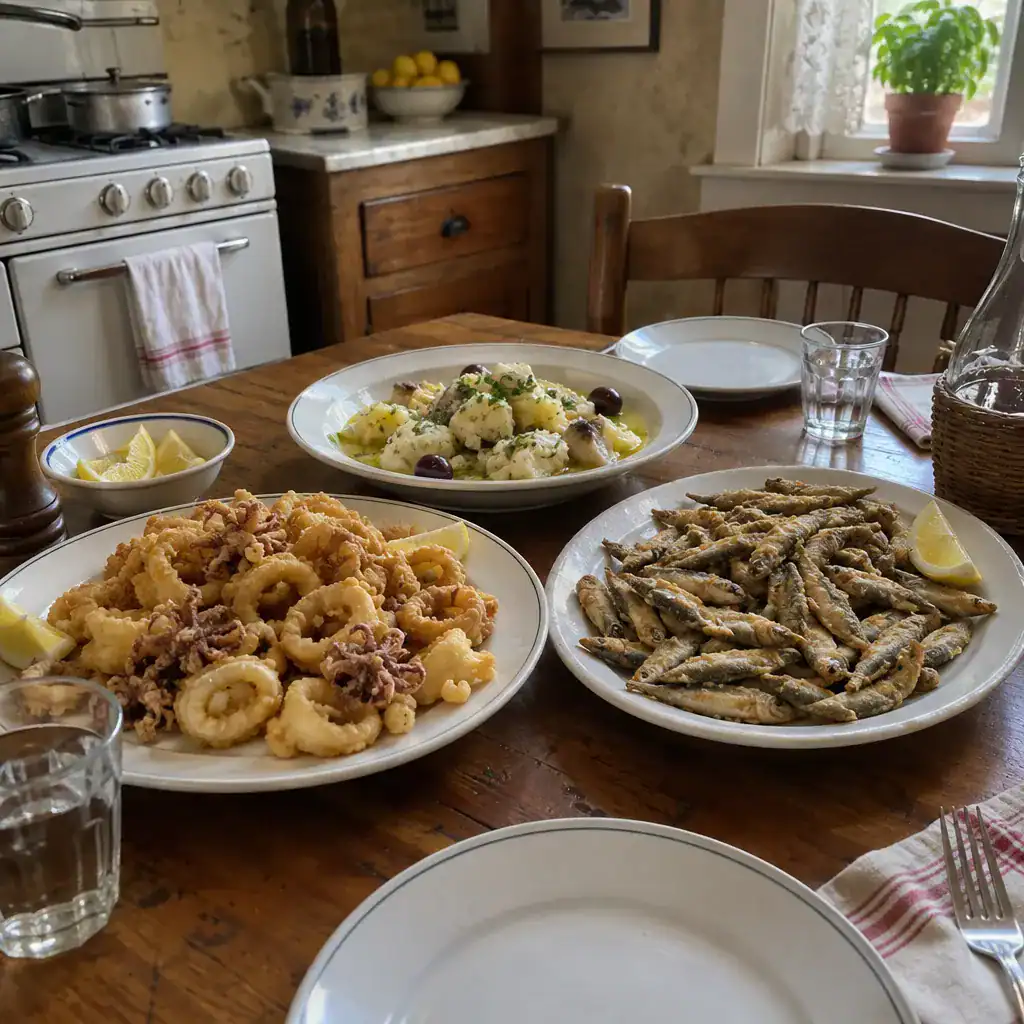
In Italy it’s simply la vigilia, “the eve.”
December 24 was a day to fast and abstain, so the evening table filled with salt cod, fried calamari and smelts.
The reason was religious, not culinary. Catholics fasted and abstained from meat on Christmas Eve, so fish filled the gap, and once you were frying calamari you may as well add scungilli and stuffed clams and every other thing from the sea.
The “seven” is the mystery. Nobody actually knows where the number came from. One popular guess ties it to the seven sacraments.
Here’s the twist that always gets me. The famous name is Italian American, and it doesn’t show up in print until 1983.
The grandmothers who cooked this feast for decades never once called it the Feast of the Seven Fishes. They just called it Christmas Eve.
7. Breaking the Opłatek (Poland)
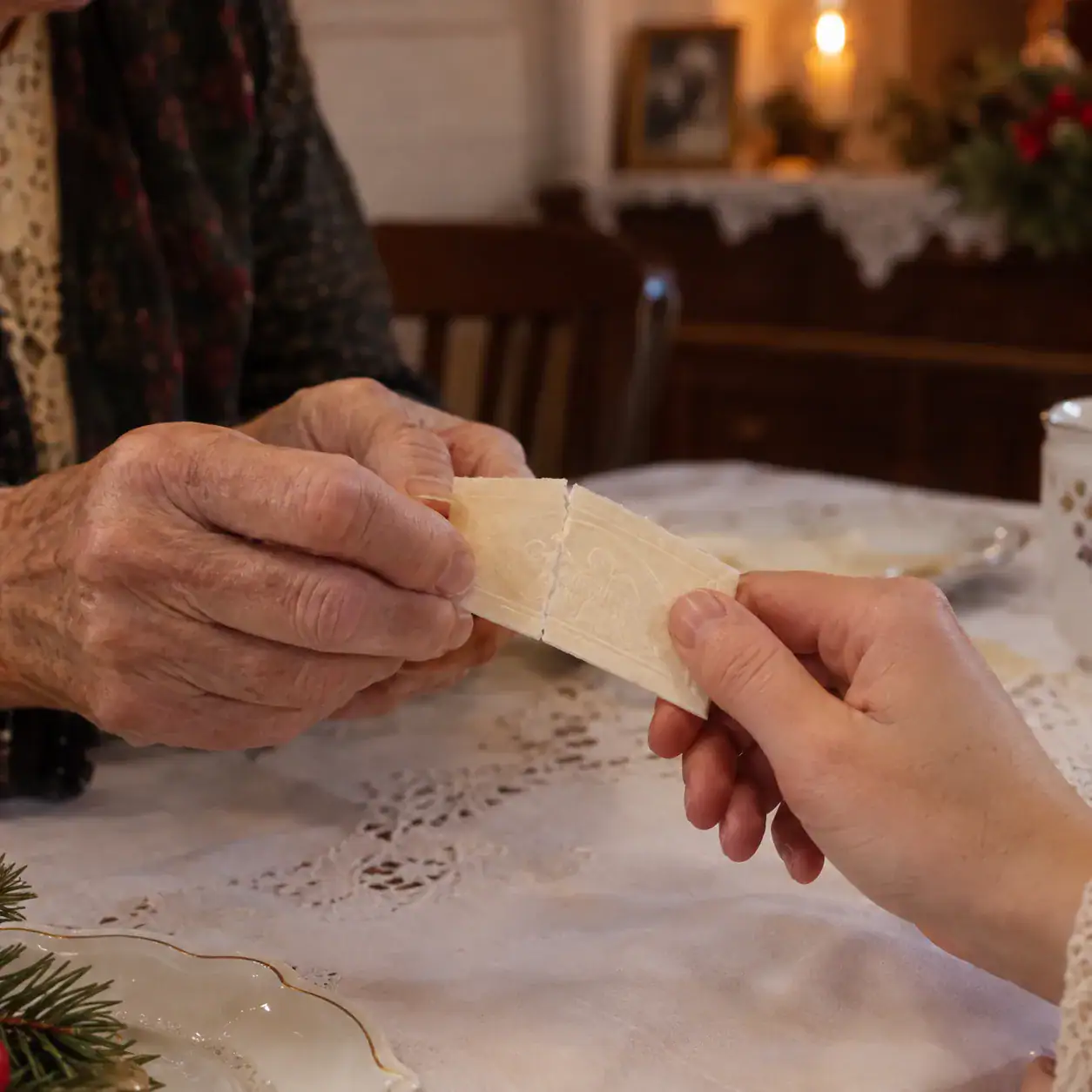
At Wigilia, the Polish Christmas Eve supper, the eldest person breaks a thin wafer embossed with a Christmas scene. In a 2023 poll, 97% of Poles said they share it.
The wafer is flavourless and blessed by a priest, and the ritual is centuries old.
Each person breaks off a piece from someone else’s and offers a wish for the year ahead, going around the whole table until everyone has shared with everyone. People of Polish ancestry keep it up all over the world.
And here is the detail that belongs in a genealogy story. Families mailed pieces of the wafer to loved ones far from home, tucked into a letter crossing the ocean.
A thin, breakable scrap of bread was how you kept a seat at the table for someone you might never see again.
8. The Empty Chair and the Hay Under the Tablecloth (Poland)
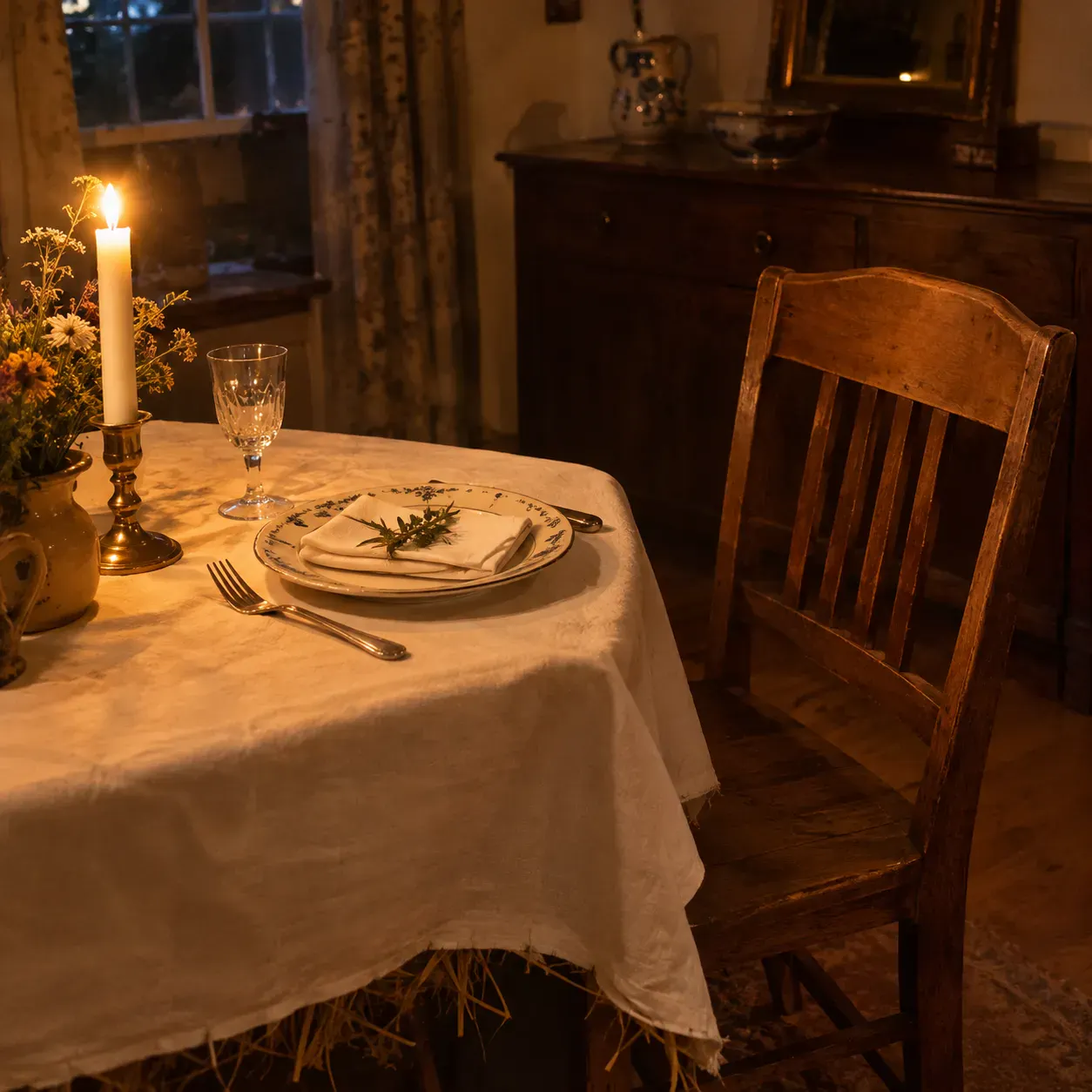
The same poll found 83% of Poles still set a place nobody sits in. It’s for a wanderer, or for someone you’ve lost.
Hay under the tablecloth recalls the manger. Draw a long, healthy stalk and good fortune is coming. Pull a broken one and tradition says watch your health.
The whole supper waits for the first star to appear, and the animals, the old stories say, are given the power to speak around midnight.
Of all the customs on this list, the empty chair is the one I’d want to keep. It does two quiet things at once: it tells a stranger there’s room, and it tells your own dead they’re still expected.
You don’t need to be Polish to feel the weight of a set place that no living person will fill.
9. Twelve Dishes and the First Star (Ukraine)
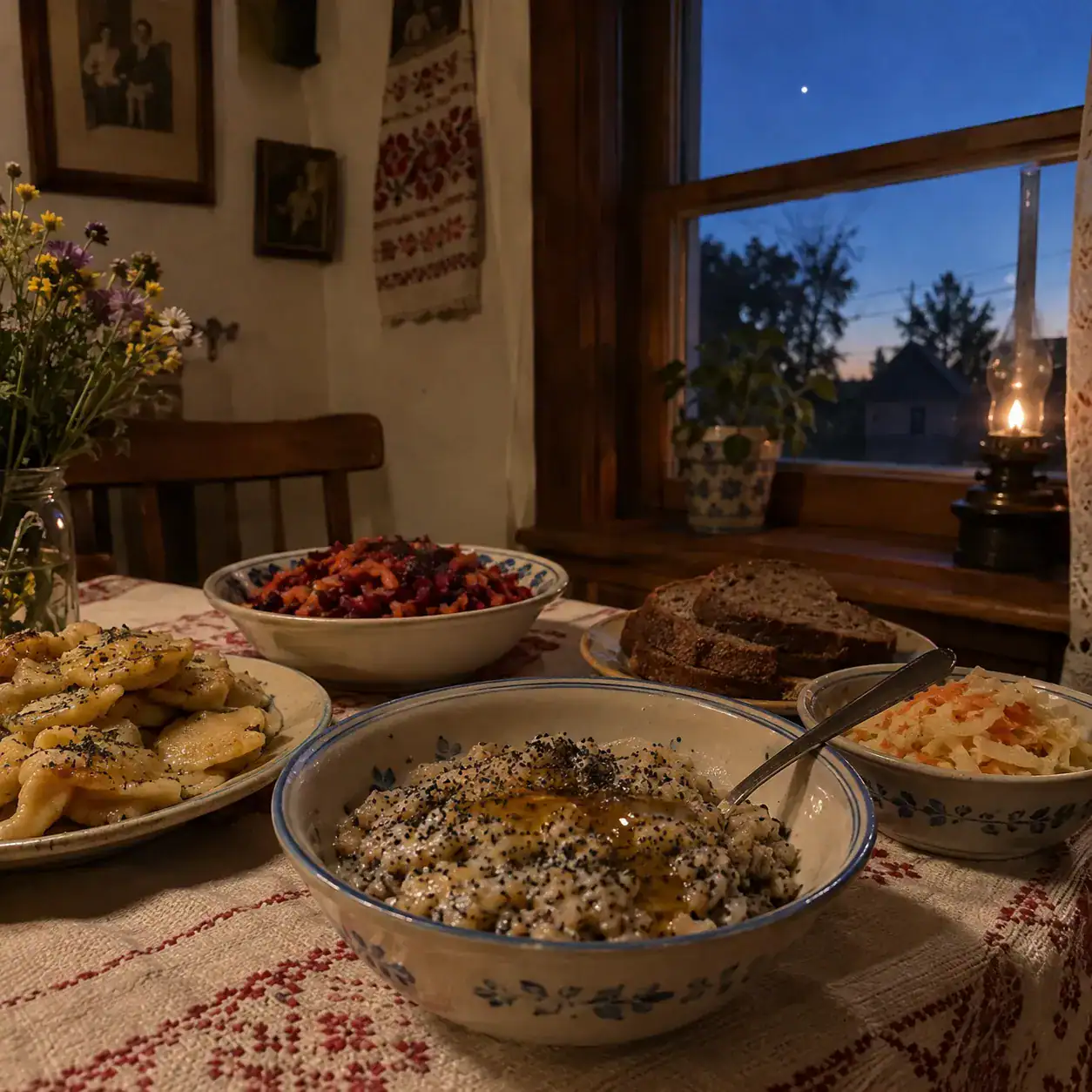
Ukrainian Christmas Eve begins when the first star appears in the eastern sky. Then come twelve dishes, for the apostles or the months of the year, with no meat or dairy.
The meatless table is no accident. The meal falls inside the fast leading up to Christmas, so the cook has to coax twelve distinct dishes out of grain, mushrooms, fish, fruit and vegetables.
One is kutya, a sweet porridge of wheat berries with poppy seeds and honey. A sheaf of wheat called the didukh often stands in the corner or on the table as a nod to the harvest and to the family that came before.
Twelve courses, every one of them without meat or butter, and nobody lifts a fork until a child spots the first star. Try explaining that level of patience to a modern dinner table.
It’s a meal built to make you wait, and the waiting is half the point.
10. The Carp in the Bathtub and the Scale in Your Wallet (Slovakia, Czech lands)

Back home, the Christmas carp swam in the family bathtub for a day or two before dinner. After the meal, everyone checked under their plate for a scale and carried it in a wallet all year for luck.
The bathtub carp wasn’t only a Slovak thing. The same custom turned up across Poland, the Czech Republic, Austria, Germany and Croatia, which tells you how far one strange habit can travel.
On the Slovak-American table around Pittsburgh, a thin wafer called oplatky was broken, dipped in honey and passed around.
Here’s the part that actually crossed the ocean: around Pittsburgh, the head of a Slovak household dipped a thumb in honey and made a cross on each forehead.
The live fish mostly stayed behind in Europe, which the plumbing of American apartments probably appreciated. The scale in the wallet and the honey cross are the pieces that made the trip.
11. Julebukking, or “Christmas Fooling” (Norway)
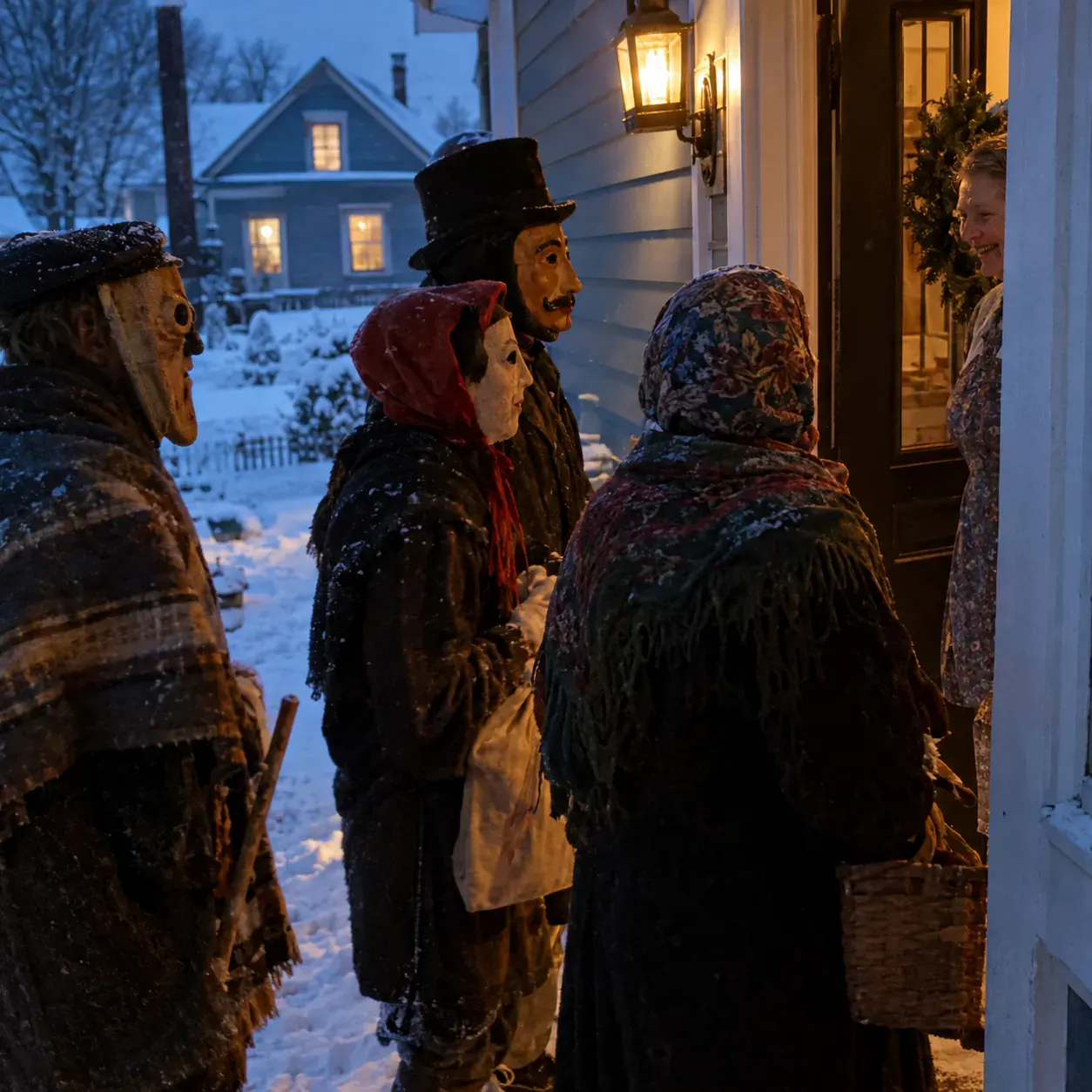
Norwegians dressed in disguise and went house to house with friends. The hosts had to guess which neighbors were hiding under the costumes.
The name means “Christmas goats,” and traditionally a figure in a goat skin and mask led the group from door to door in the days between Christmas and New Year.
Norwegians carried the whole game to Iowa, Minnesota and Wisconsin, where for a few generations your neighbors might show up at the window in masks waiting to be identified.
It ended in the 1930s and 1940s, as neighborhoods mixed and people grew suspicious of strangers.
That’s a small, sad milestone when you think about it: a tradition that only works when everyone already knows everyone else, quietly killed off the first time a knock at the door stopped being a friend.
12. Lutefisk (Norway)
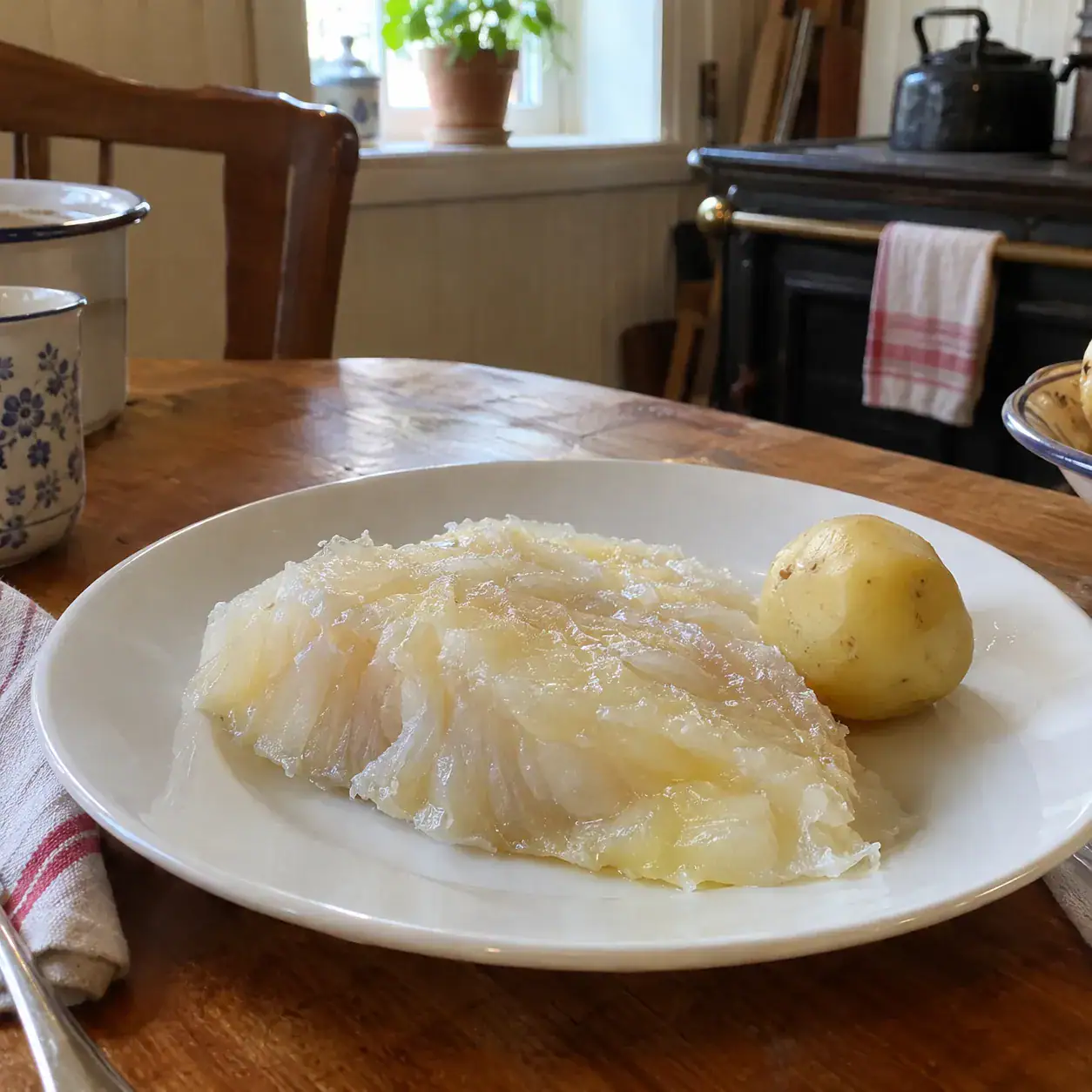
This is dried cod cured in lye until it turns gelatinous. It’s said that more of it gets eaten in America than in Scandinavia.
In the upper Midwest it became a church-basement institution, served up in Lutheran halls and lodges every December.
Madison, Minnesota leaned all the way in and dubbed itself the “lutefisk capital of the world,” complete with a fiberglass cod named Lou T. Fisk. A food that almost no one claims to love became a fixed point on the community calendar.
Would Norway even argue? In a 2005 survey, only 3% of Norwegians would consider it for Christmas dinner.
Which makes lutefisk the perfect emigrant dish: the old country mostly moved on, and the descendants abroad kept eating it out of sheer stubborn loyalty to a grandparent.
13. St. Lucia’s Crown of Candles (Sweden)
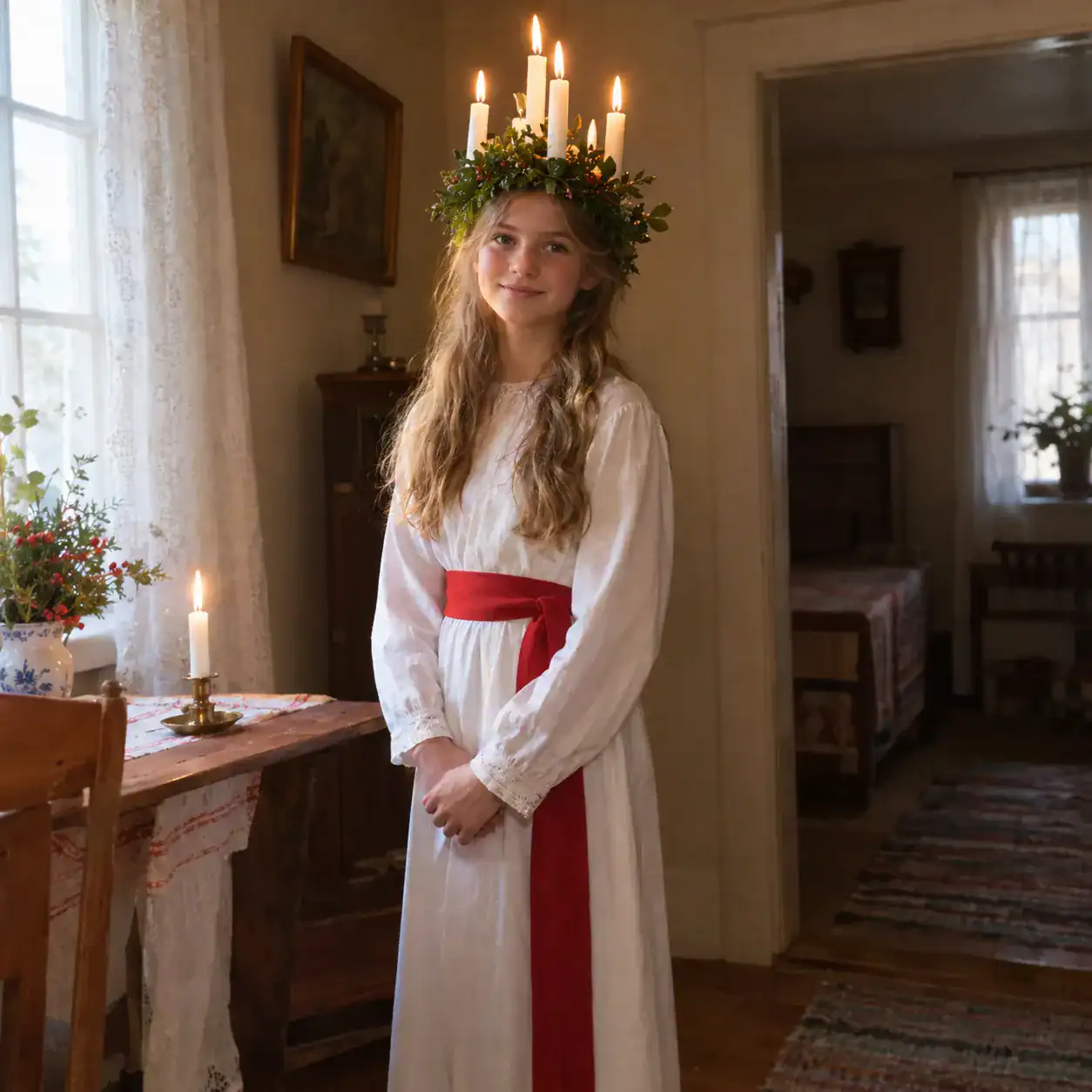
On December 13, a girl in a white gown and red sash wears a crown of candles. Under the old calendar, that was the longest night of the year.
The oldest known record of a white-clad Lucia visiting people in the morning dates to 1764, at an upper-class estate in western Sweden, so this is a genuinely old custom.
The saffron buns, lussekatter, are younger. Saffron only came into the baking at the end of the 19th century.
It started as a quiet household thing before it ever became a public event.
Families carried the home custom over. The public pageants came later, and Philadelphia’s American Swedish Historical Museum has hosted one since 1939, while Gustavus Adolphus College in Minnesota has marked the day since 1941.
So if your family did Lucia at the kitchen table, that’s the piece that actually crossed with the immigrants. The big processions you see today grew up on this side of the ocean.
14. The Almond in the Rice Pudding (Denmark)
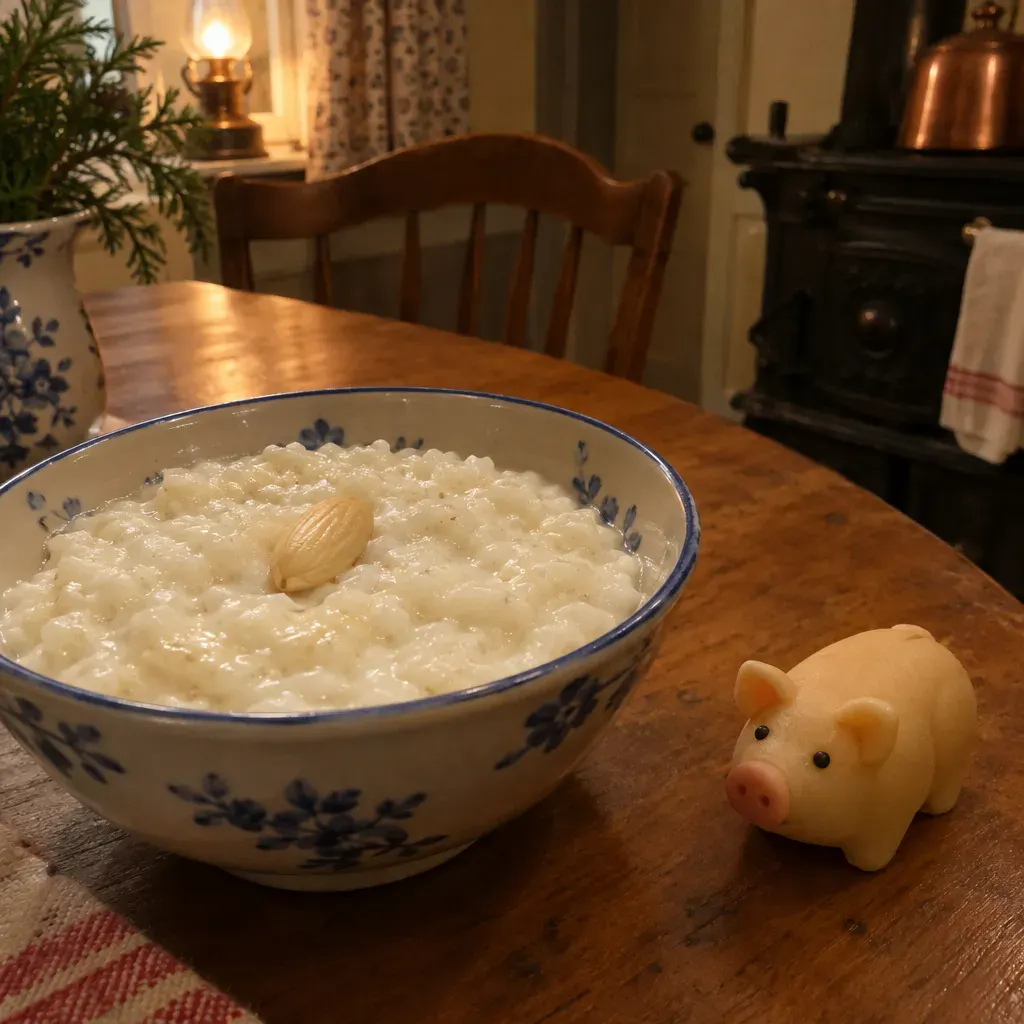
One whole almond goes into the Christmas Eve rice pudding. Find it and you win a small prize, like a marzipan pig, a chocolate heart or a small board game.
The real game is keeping quiet about it as long as possible, so everyone else has to finish the entire dish.
In Sweden the stakes rise: whoever finds the almond is said to be due to marry before the next Christmas. Norway plays the same trick with its own cream-and-rice dessert, riskrem.
Danish-American families still run the whole scheme after the Christmas Eve duck.
It’s a small, devious little piece of theater, and it’s exactly the kind of thing that survives emigration: it costs nothing, it needs no church and no special calendar, and it makes a room full of relatives conspire against each other in the best possible way.
15. The Christmas Eve Sauna (Finland)
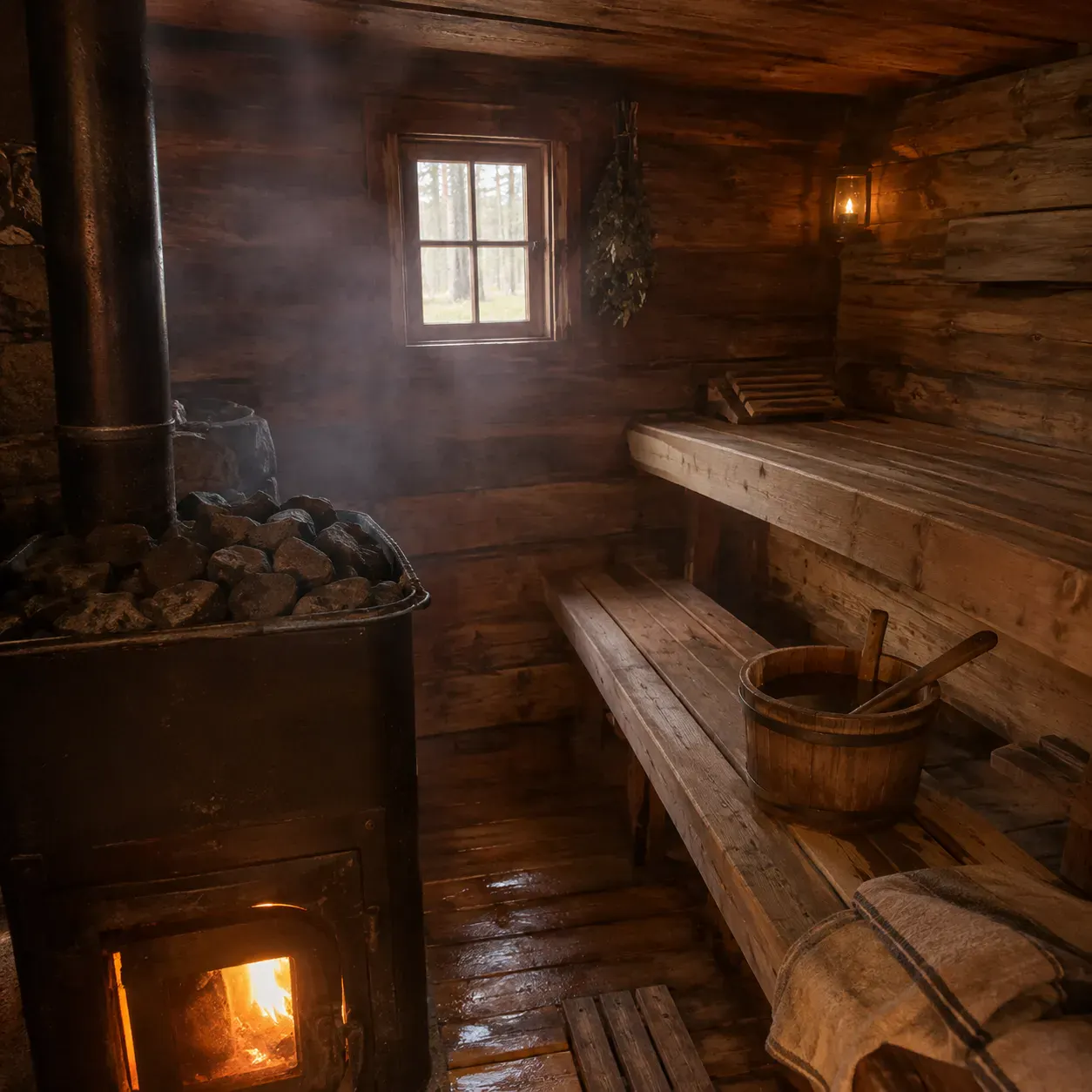
In Finland, the whole family takes a sauna on Christmas Eve afternoon.
It’s held to be one of the oldest Christmas customs in the country, and tradition even gives each sauna its own resident spirit, the saunatonttu, who expects to be treated with respect.
Finns starting a farm here built the sauna first, then the outhouse, then the home. In Waldoboro, Maine, descendants of the state’s earliest Finnish settlers have kept the sauna before the Christmas Eve service.
That building order says everything. Shelter for the body could wait. The sauna could not.
The habit ran so deep that parts of Michigan’s Keweenaw Peninsula are still called the “sauna belt.” If your Finnish ancestors seemed to care more about the steam than the roof, this is why.
16. The Candle in the Window (Ireland)
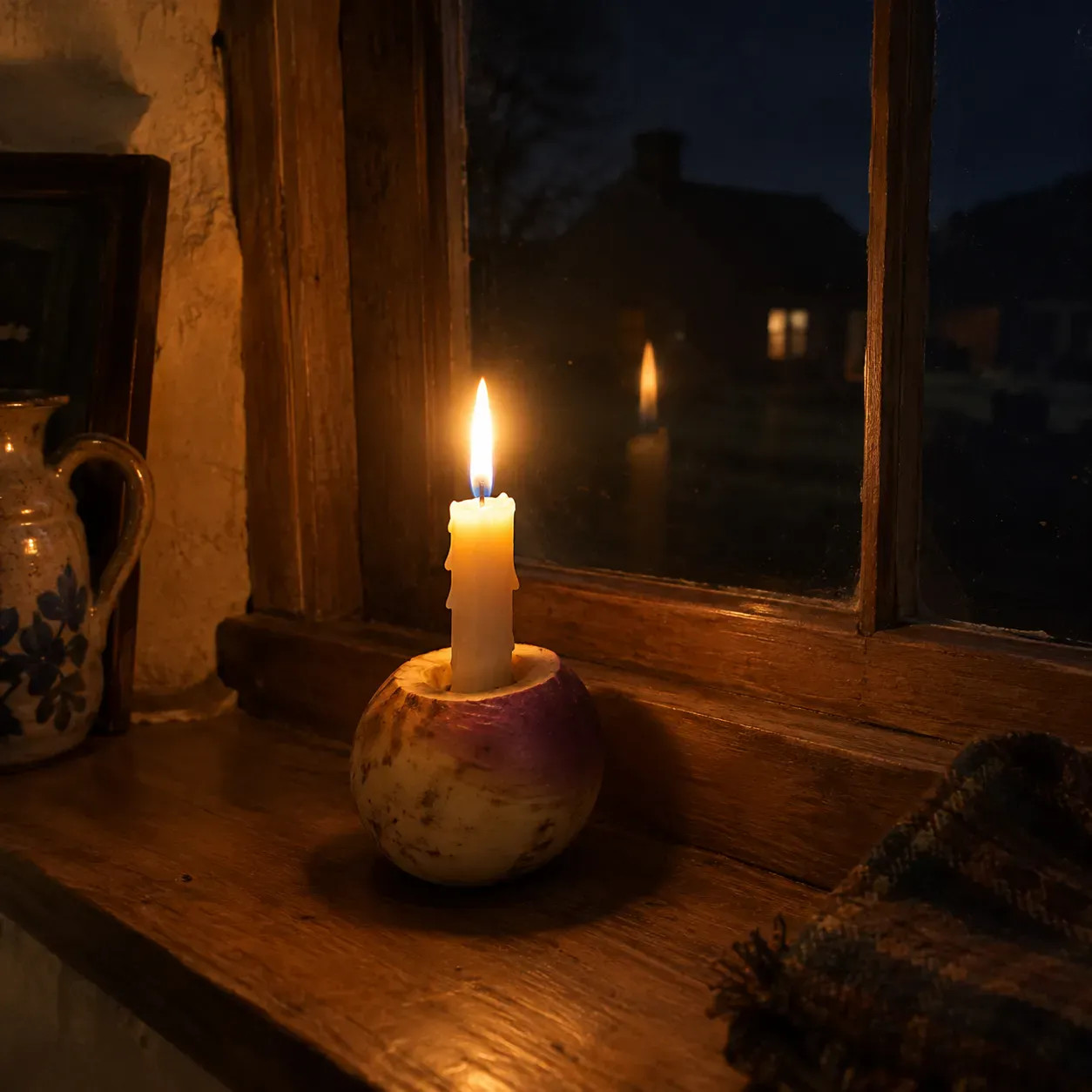
Folklore collected in County Cork in the 1930s explains the candle. It burned all night to show the Holy Family the way, should they happen to be passing by.
It stood in a hollowed turnip or a jam crock packed with meal, dressed up with coloured paper and holly.
The door stayed unlocked and the table was left set, in case travelers really did come. By tradition a daughter named Mary, or the youngest girl in the house, was the one who lit it.
As Irish families left for America, the candle came with them.
It’s a small thing to pack, a single light in a front window, but think about what it meant for a people who had just emigrated: a sign that this house keeps the door open and a place ready for whoever is still out there in the dark.
17. Réveillon, the Feast After Midnight Mass (France, Creole New Orleans)
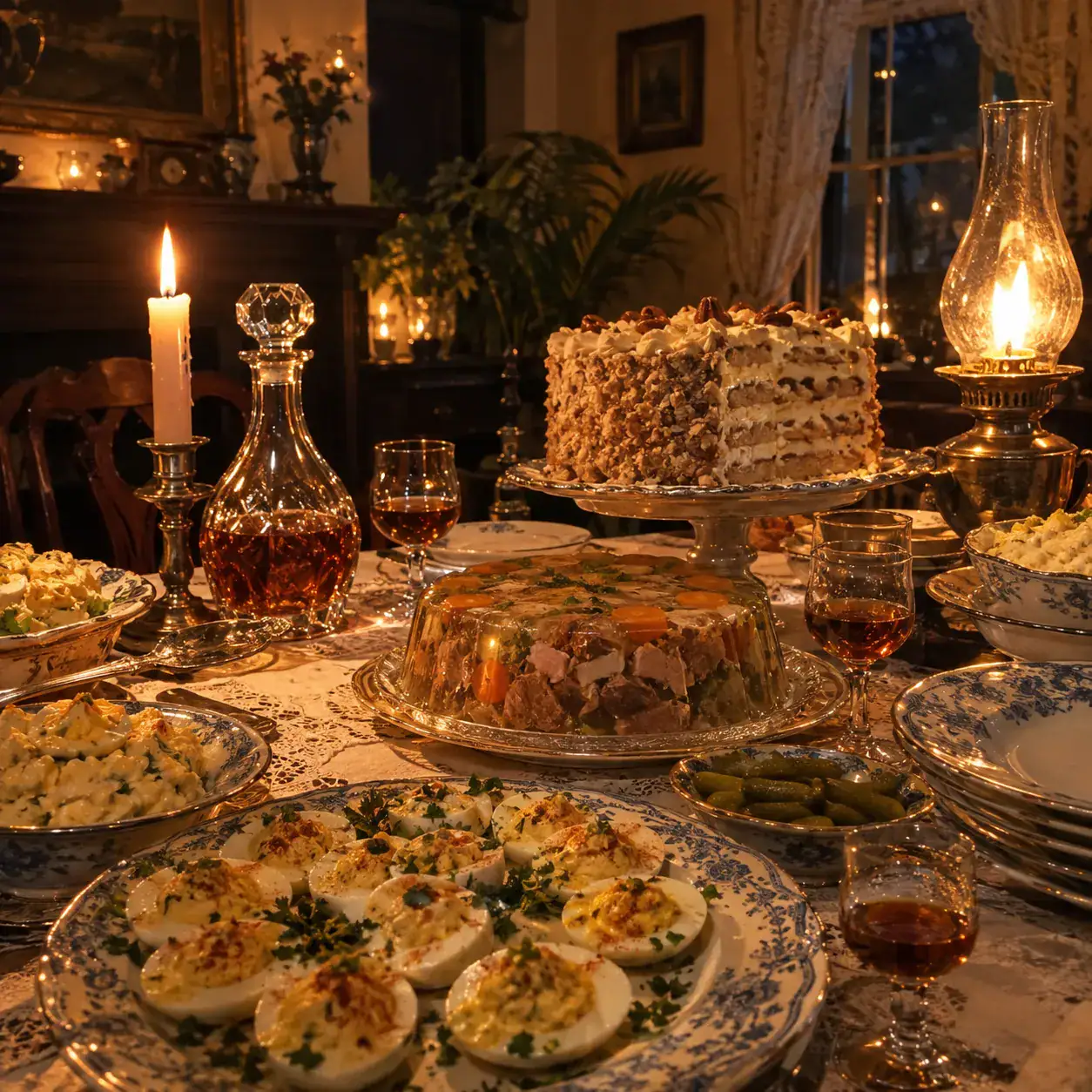
Catholic families in 19th-century New Orleans fasted all day on Christmas Eve and went to Midnight Mass. Then they broke the fast in the small hours with egg dishes, jellied meat, towering cakes and brandy.
The word itself means “revive” or “wake up,” which is a fair description of eating a daube glacé and a tower of cakes somewhere around one in the morning.
You’d starved all day and sat through Mass. Now the whole family was awake, lamplit and finally allowed to feast. It’s hard to imagine a more dramatic reward for patience.
By the 1980s few locals knew what it was. Restaurants began reviving it in 1986, and today more than 30 take part.
A family custom nearly vanished, got rescued by the city’s kitchens, and now lives on a menu. That’s one way to keep a tradition breathing, even if your own great-grandmother would have been baffled to pay for it.
18. Las Posadas (Mexico)
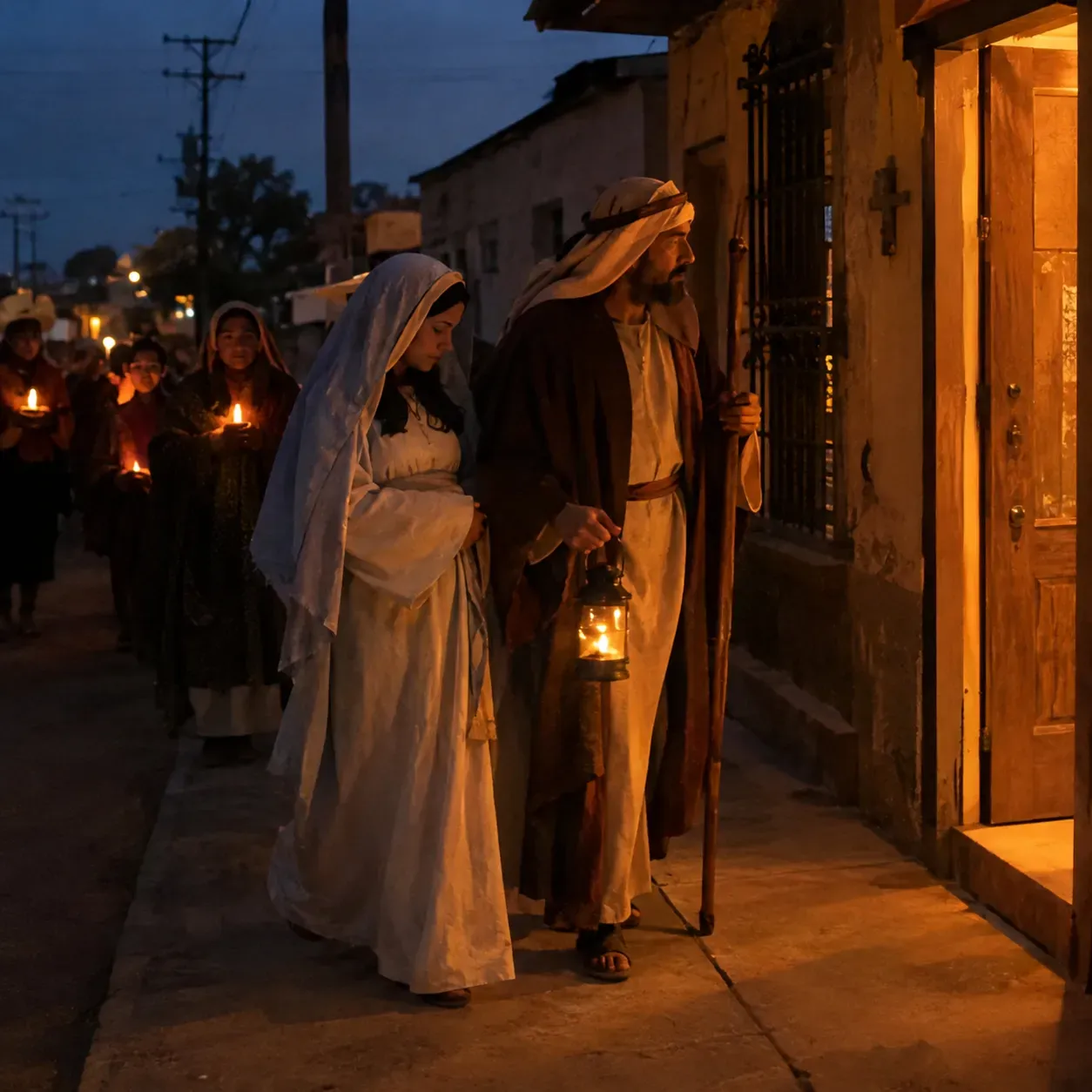
For nine nights, December 16 to 24, two people playing Mary and Joseph go house to house. Those inside sing a refusal, then welcome them in.
The nine nights stand for the nine months of Mary’s pregnancy, and the custom is old.
In 1586, Friar Diego de Soria got permission from Pope Sixtus V to hold special Christmas Masses across those days, which is where the shape of the thing comes from. In the United States, San Antonio has run a River Walk procession since 1966.
Parts of the Southwest were Mexico before they were the United States, so not every family that keeps this one brought it from anywhere. For them the border moved, not the family.
It’s a useful reminder that “the old country” isn’t always across an ocean. Sometimes it’s the same ground under a different flag.
19. The Tamalada (Mexico)
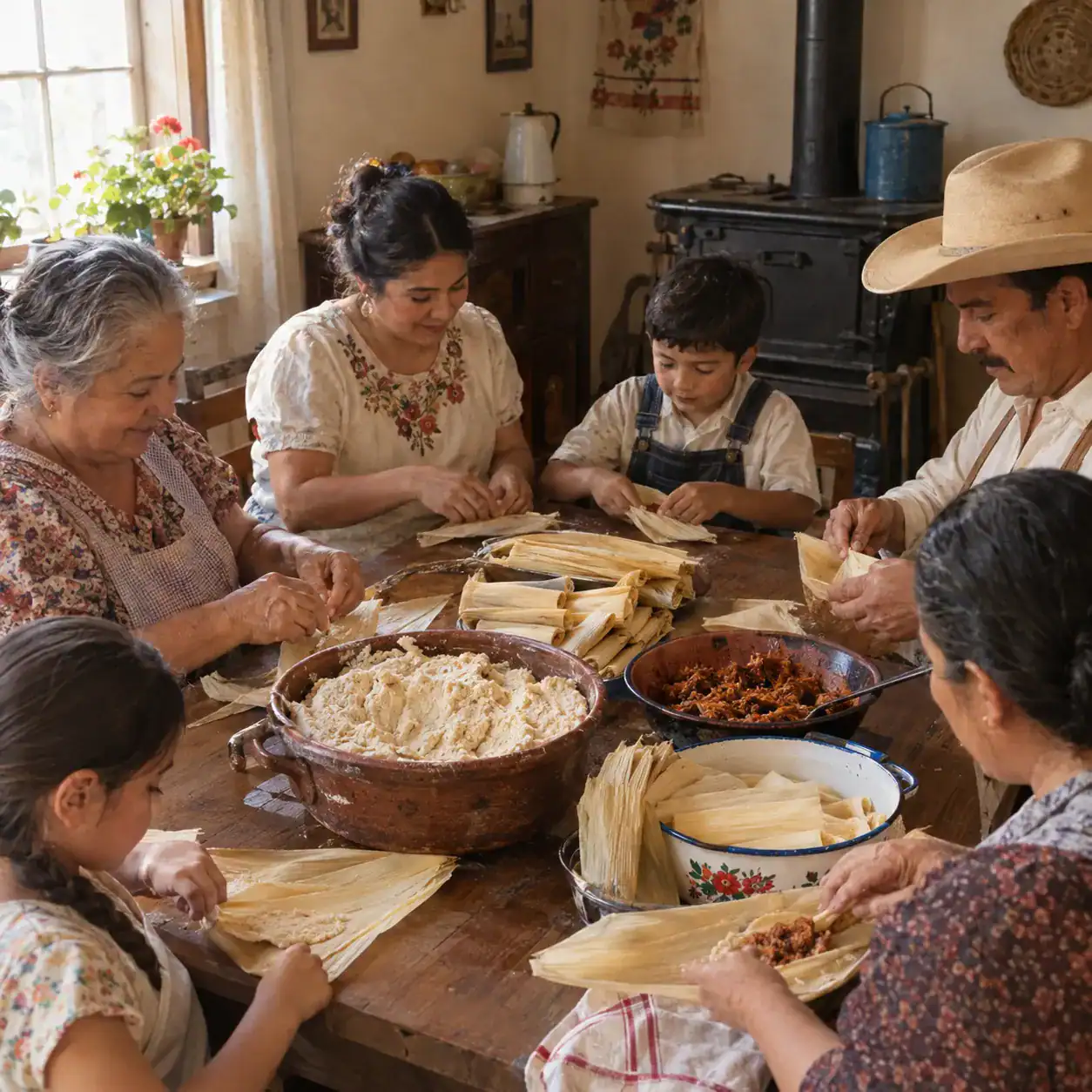
Tamales belong to the native cultures of Mesoamerica, made long before the Spanish ever arrived, and they take so much work that everyone gets drafted. That’s the point.
The job splits naturally across a crowded kitchen: someone spreads the masa, someone fills, someone folds and ties, someone minds the pot.
Commercial holiday tamales were being sold in San Antonio and El Paso as far back as the 1920s, but the home tamalada is the version that matters, because it’s less about the food than the assembly line of relatives making it.
As Dr. Pilar Zazueta told the Austin Chronicle, tamale-making is how many people keep a connection “with the past, their ancestors, and with family members in other countries.”
That’s the whole list, really, in one sentence. A dish too much work for one person is a dish that forces a family into the same room once a year.
20. Mummers on Second Day Christmas (Sweden, Finland, England, Ireland)
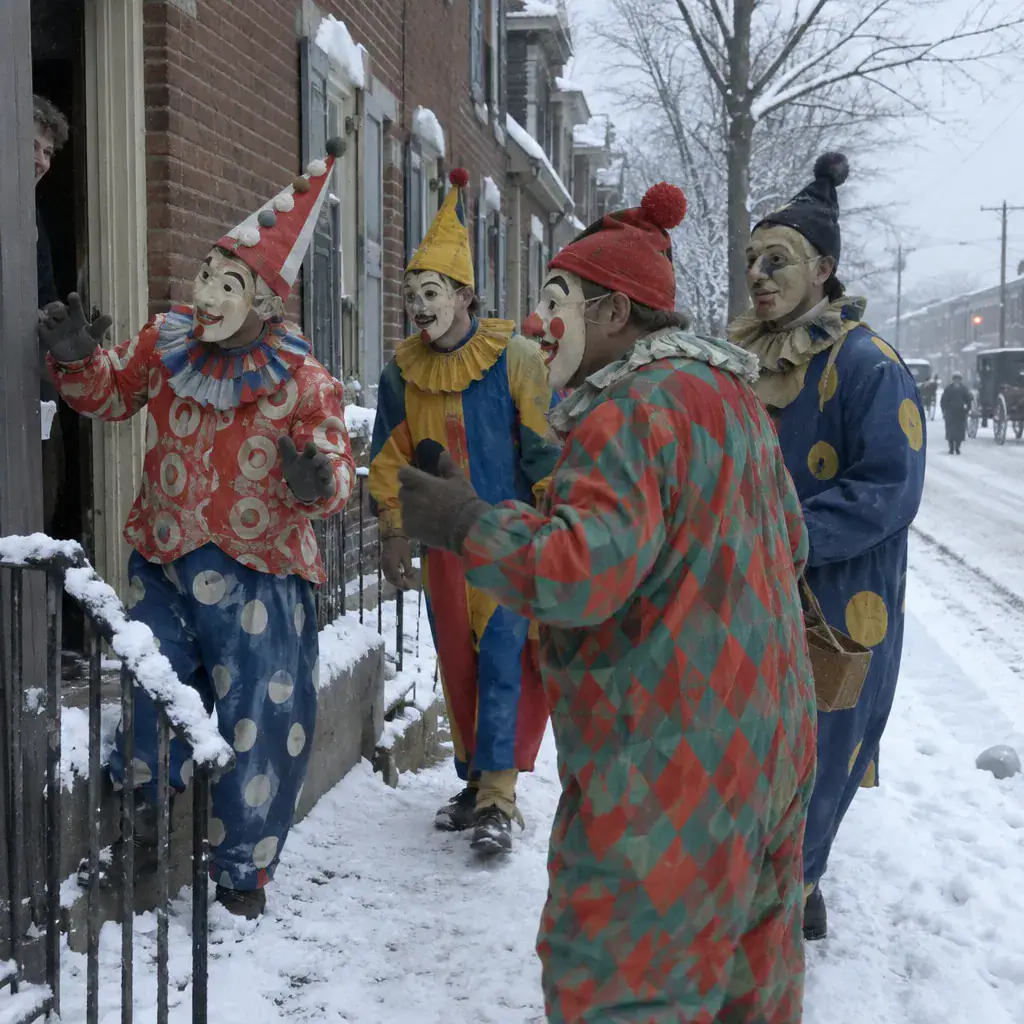
Swedes and Finns who settled near Philadelphia visited neighbors on December 26, “Second Day Christmas.” An 1839 account describes men disguised as clowns, shooting guns.
Authorities were not charmed. An 1808 law branded “masquerades” a common nuisance. It was apparently never enforced and was finally repealed in 1859.
English and Irish mumming plays fed into the mix too, until the costumed visiting slowly turned into something organized. The first official parade was held January 1, 1901.
And here’s the echo worth sitting with. It’s the same masked visiting as julebukking, out of a different trunk.
Norwegians, Swedes, Finns, English and Irish all had some version of strangers in disguise turning up at your door at Christmas.
The costumes change from country to country. The instinct to knock, hide your face and be let in is older than any of them.
Ask Before the Stories Are Gone
This Christmas, ask the oldest person in your family what happened on Christmas Eve when they were small. What was on the table? When did supper start? What were the rules?
The answers point to a country, and sometimes to a region. Then pick one tradition and bring it back. (Maybe not the switch.)