The tree had real candles burning on it. The best doll in the room could melt if you left it too close to the fire.
And on the lowest branches, where nobody would have to reach, hung gloves for the servants.
That was Christmas 1880 in a comfortable Victorian home.
Your great-great-grandparents, give or take a generation, were the children standing in that doorway, waiting to be told they could go in.
Some of what they found you’d recognize in a second: an orange, a cracker with a joke in it, a stack of cards from the post.
Some of it would stop you cold.
So what was actually under that tree, and how much of it is still under yours?
1. Presents Hanging in the Branches
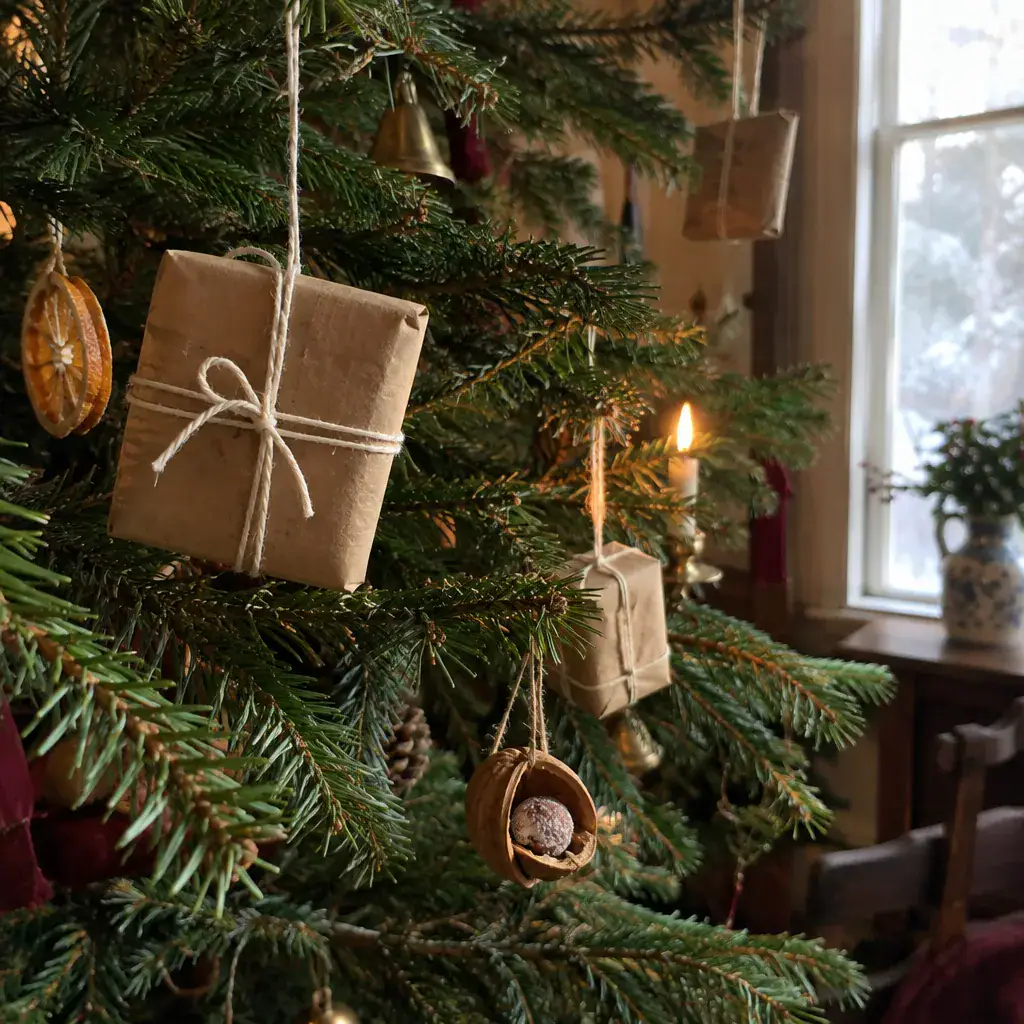
A lot of presents weren’t under the tree at all.
York Castle Museum describes families placing small presents “on and around” the tree, revealing it on Christmas Eve “with its candles alight,” and handing children their gifts straight from the branches.
Some of those gifts came in packaging that grew on trees.
The V&A notes that a walnut shell would sometimes be emptied, filled with “a small gift or sweet,” and hung on a branch.
Plenty of presents did sit under the tree. Plenty more hung in it.
2. Real Candles, Burning Indoors
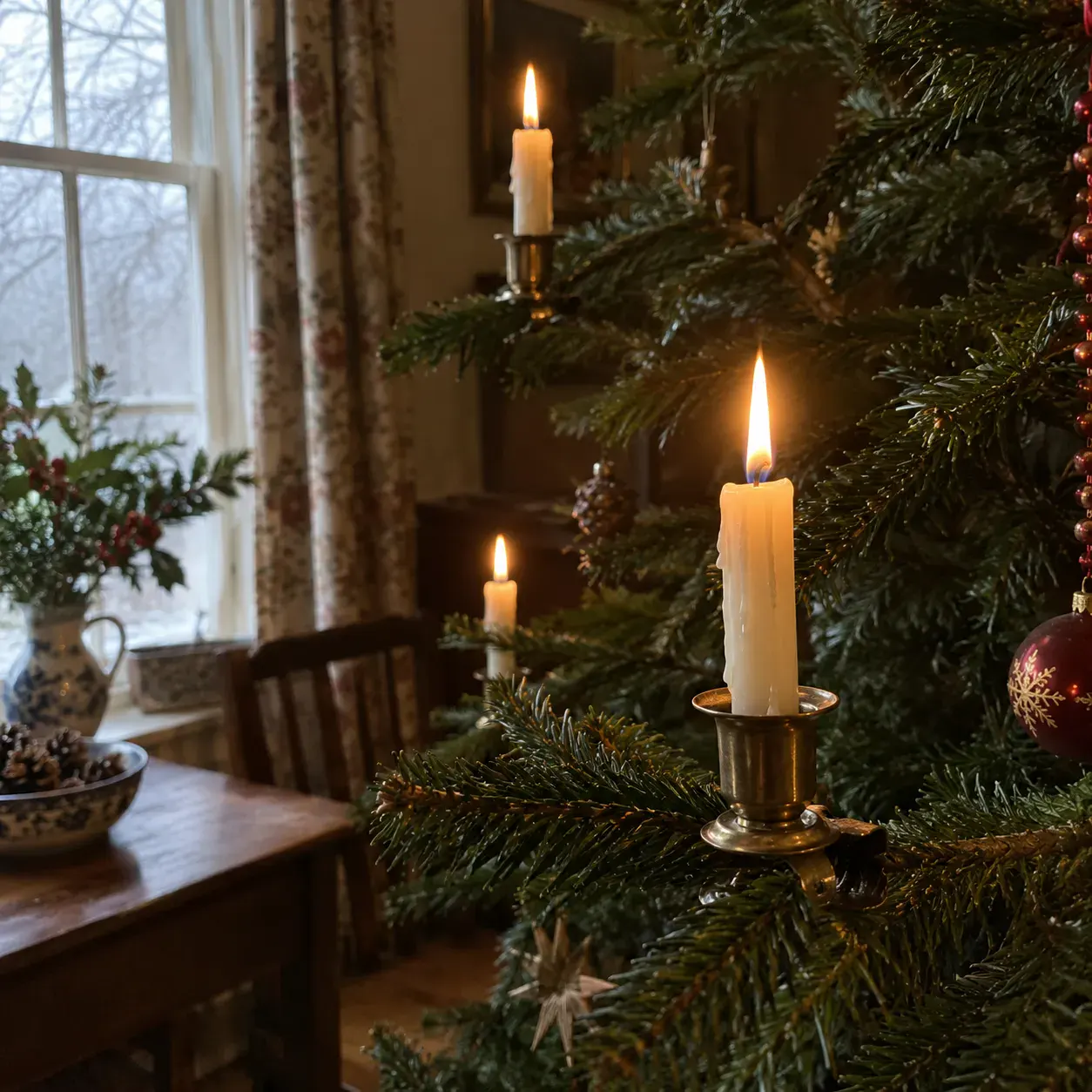
The glow came from candles. Real flames, on a cut evergreen, indoors.
Electric tree lights didn’t exist yet.
The first set was put together by Edward H. Johnson, an associate of Thomas Edison, at his home in New York City on 22 December 1882. That’s two years after this tree.
His had 80 bulbs in red, white and blue, and the whole tree revolved.
Back in 1880, the only light on the branches was open flame, and candles on a tree were a genuine fire hazard.
3. Ornaments You Could Eat
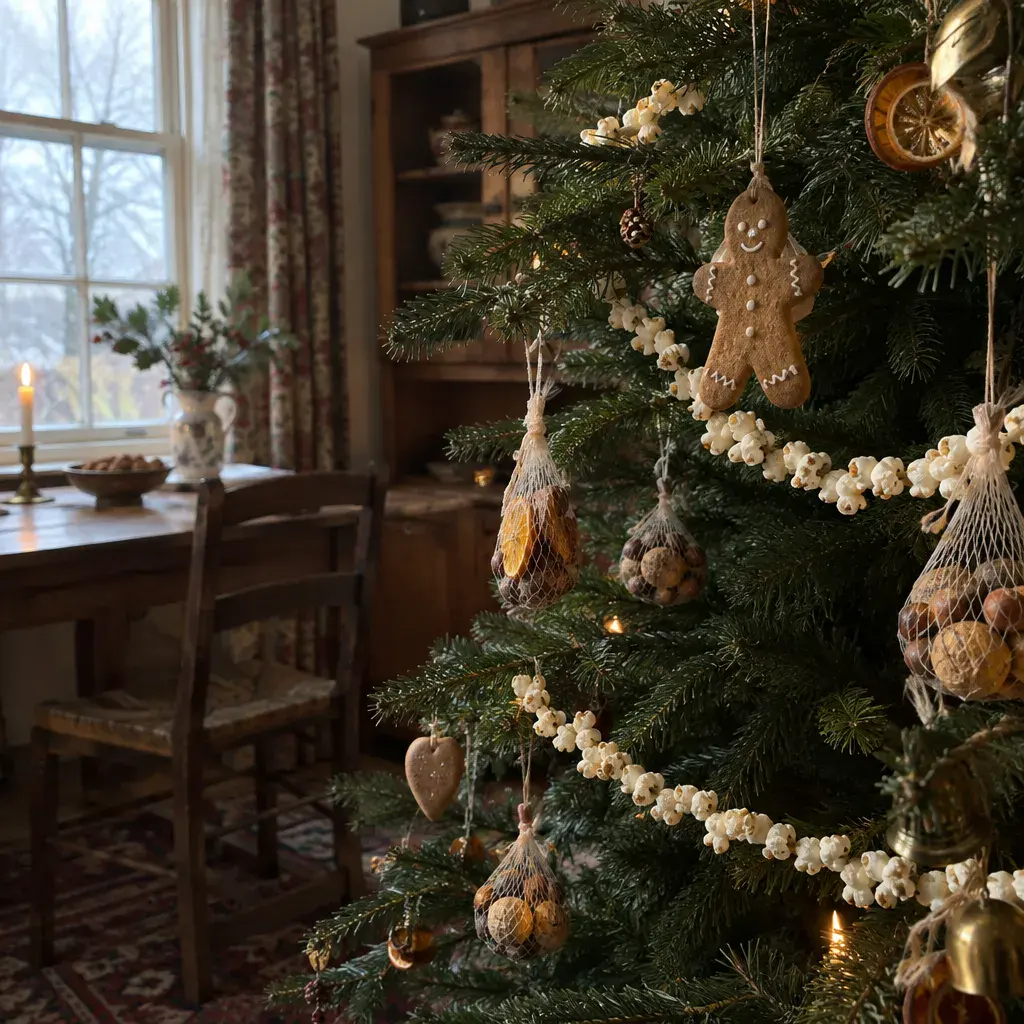
Before decorations came from shops, people hung food.
Ruth Slatter, writing in the Journal of Victorian Culture Online, describes early trees dressed with “paper decorations, popcorn wreaths, gingerbread men, nuts and dried fruit hung from the tree in little nets.”
She dates that homemade, edible style to roughly 1860 to 1880.
Shop-bought pieces, such as miniature figurines and national flags, grew more common from about 1870 to 1900.
That puts a tree in 1880 right at the overlap. A gingerbread man could easily hang beside a little paper flag from a shop.
4. Glass Baubles From a German Glassmaking Town
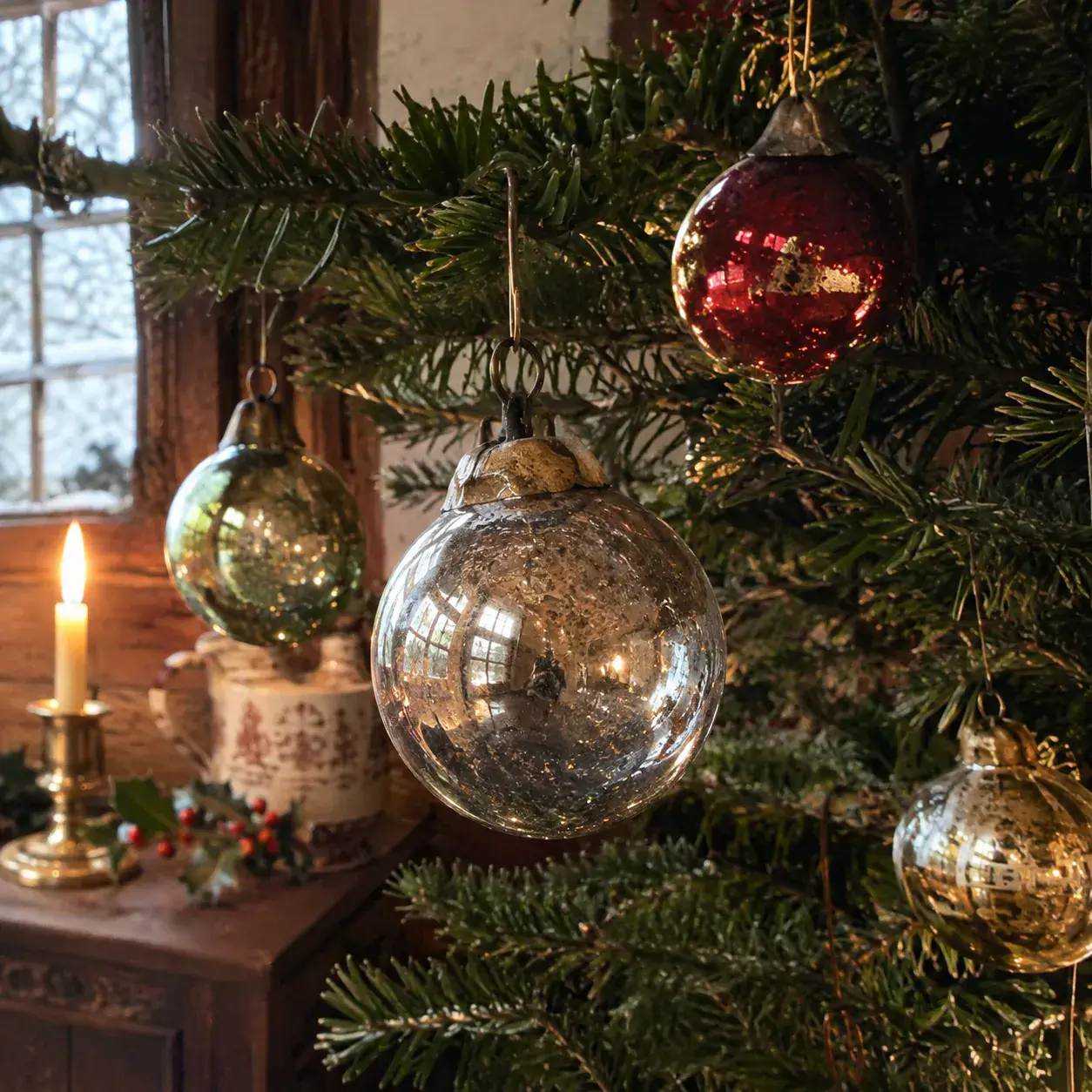
In 1854, the art historian Sir George Scharf wrote a letter describing a Christmas tree he had seen.
He picked out “one of the many glass balls of silver and various colours which reflect light brilliantly.”
The V&A traces those balls to Lauscha, a glassmaking town in Germany.
The museum also dates the first advertisements for tree ornaments to 1853.
So shiny glass was already hanging on the tree Scharf described more than a quarter-century before 1880.
5. One Case of 144 Ornaments in Pennsylvania
If your family was in America, this item happened in exactly the right year.
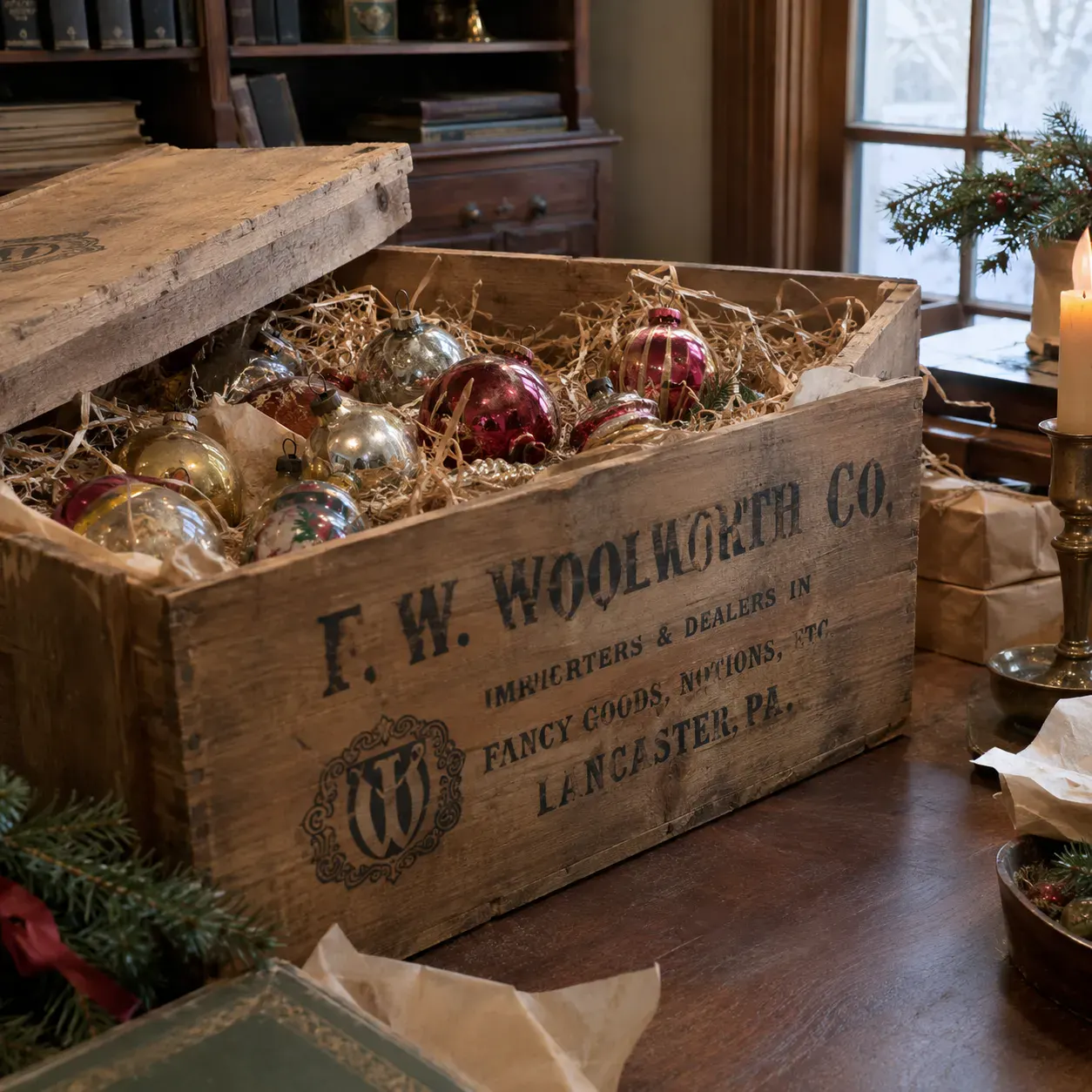
In the autumn of 1880, a traveling salesman offered German glass ornaments to Frank Woolworth at his store in Lancaster, Pennsylvania.
Woolworth didn’t think Americans would buy decorations that didn’t “do” anything.
He took a single case of 144 on sale-or-return terms, meaning he could send back whatever didn’t sell.
They sold out in under a day. His total profit was $4.32, three cents a piece, per the Woolworths Museum. The next year he doubled the order and sold out again.
6. Paper Chains and Cardboard Angels
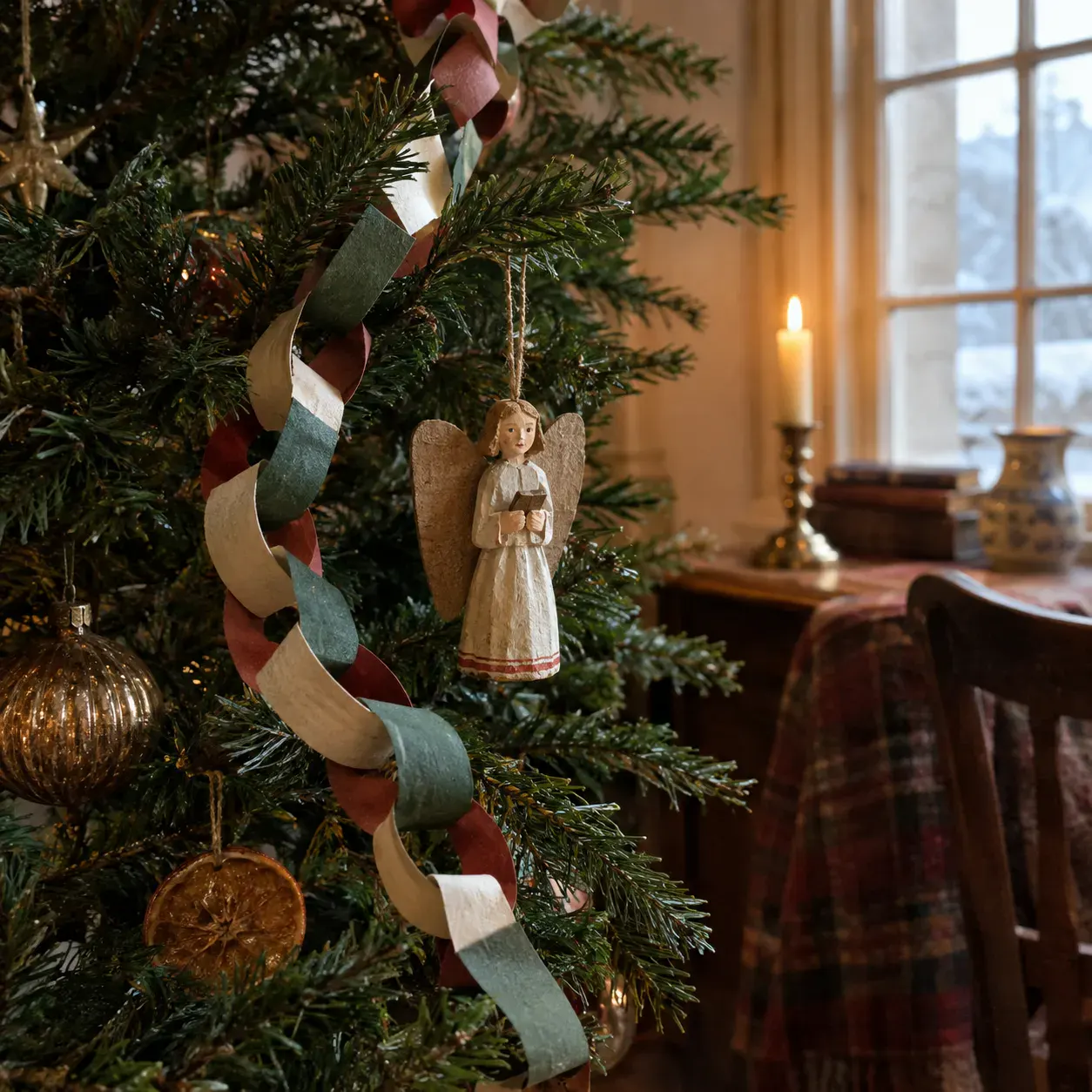
York Castle Museum says crepe paper twists and glued paper chains became popular in late Victorian times.
Slatter adds that patterns for paper decorations turned up regularly in magazines aimed at middle-class women.
Paper put decorating within reach of almost any household: scissors, paste and a long winter evening were enough.
Not everything was paper.
The Museum of London holds angel decorations from around 1870 with “bodies made out of carved and painted wood, dressed in cotton,” cardboard wings on their backs and a loop of cord for hanging.
7. Gloves for the Servants on the Lowest Branches
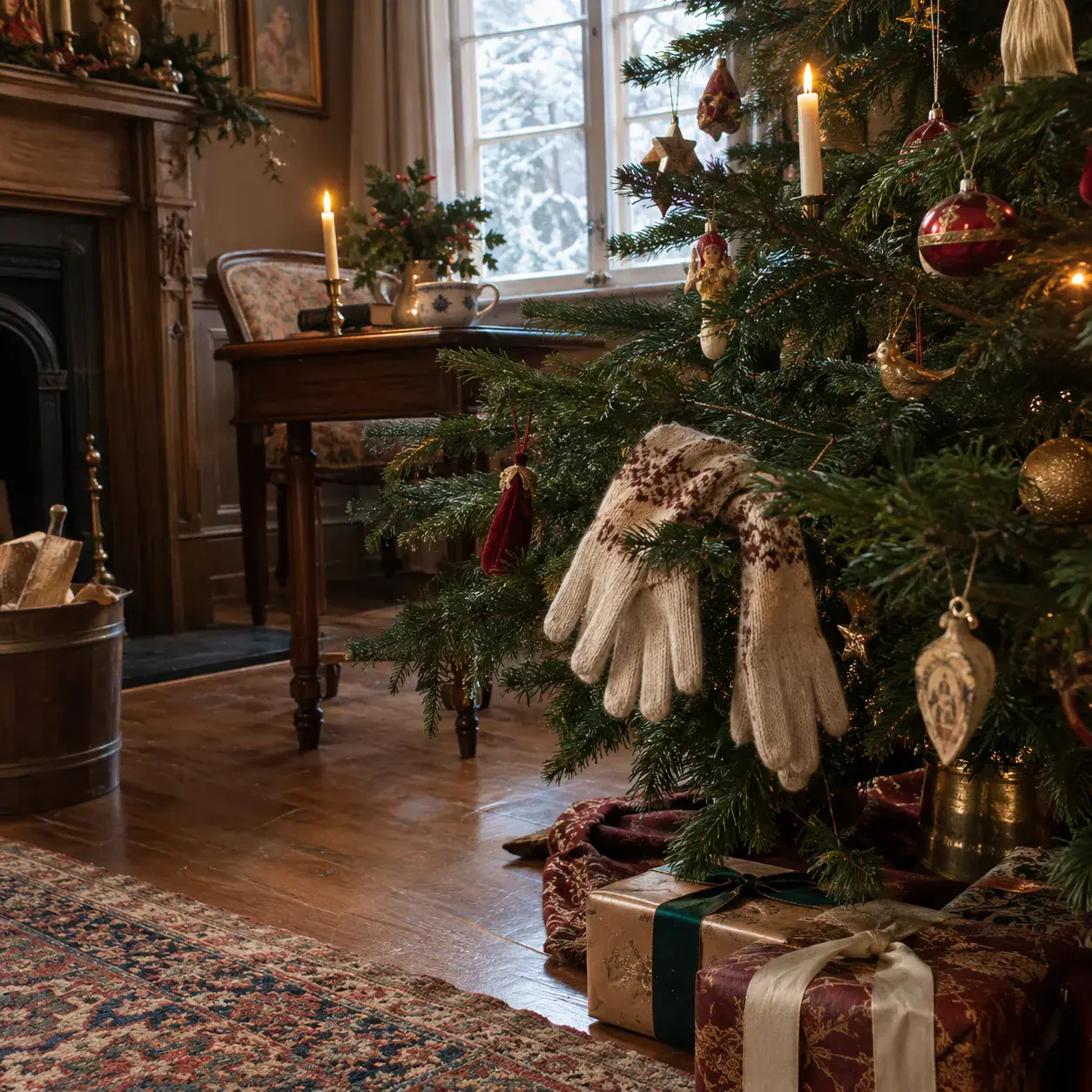
Scharf’s 1854 letter holds a quieter detail.
On that tree, servants’ gloves were draped over the bottom branches.
The V&A reads the gifts beneath the tree, along with those gloves, as “a reflection of the whole household.”
This is one documented household, not proof of a rule.
Still, in at least one well-to-do house, the servants had a place on the family tree.
8. An Orange
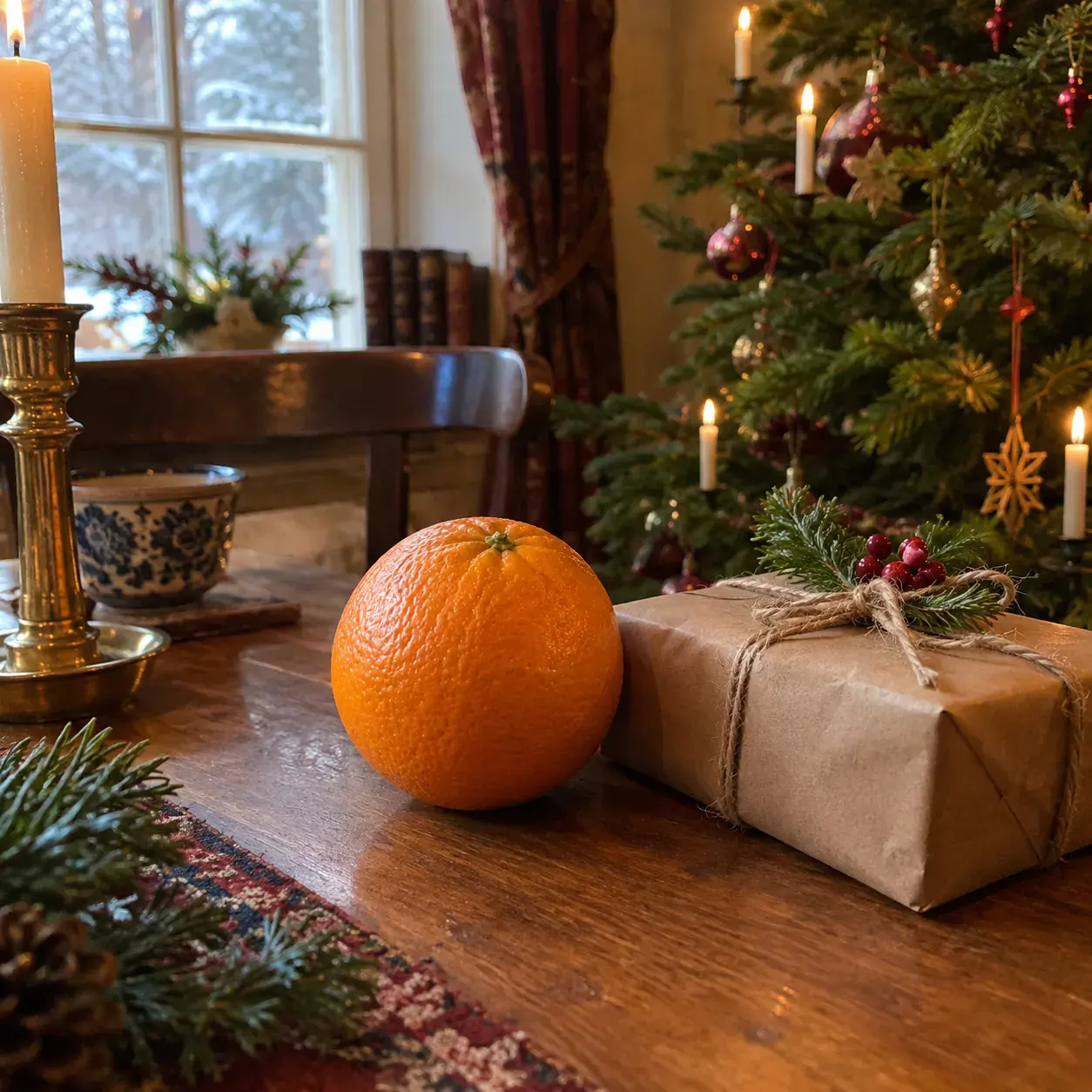
The orange became a traditional Victorian Christmas gift, and it had come a long way.
In 1854, Dickens’s weekly magazine Household Words reported that since a cut in import duty, oranges arriving in the United Kingdom were “computed” at no fewer than “three hundred millions in round numbers,” with about a third going to London.
That’s a figure for the whole year’s imports, not just Christmas.
Many came from Saint Michael, known today as São Miguel in the Azores. The magazine said “the fastest sailing clipper schooners” were hired for the first shipments of that crop.
It added one more detail from the island. A bride’s marriage portion there was said to be “not of money nor of jewels, but of a certain number of orange trees in full bearing.”
9. A Christmas Cracker
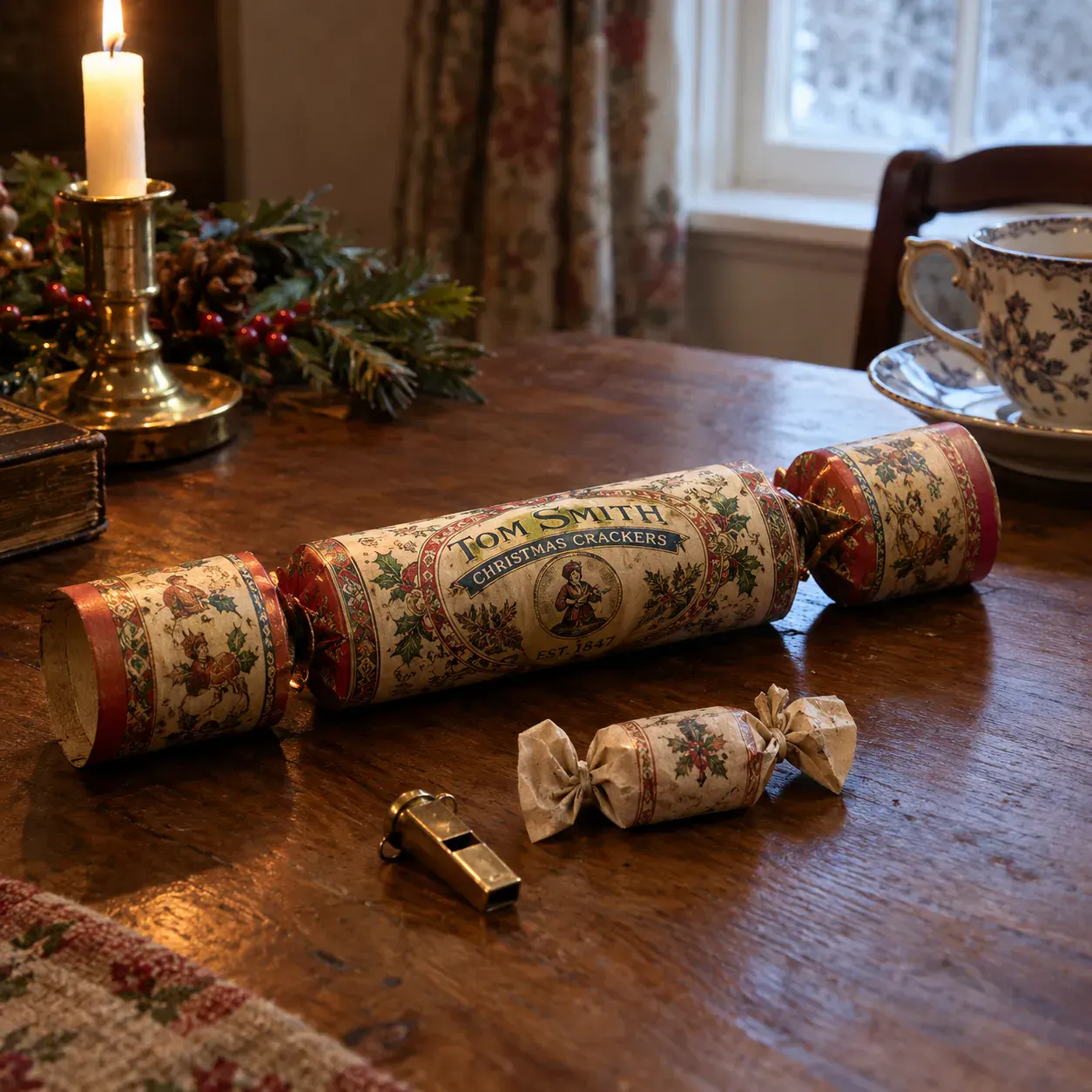
Tom Smith was a London confectioner who patented his cracker in 1847 and first tucked “a small love motto” inside the wrapper.
By the 1860s the bang had been perfected: a strip with silver fulminate painted on one side and an abrasive surface on the other.
Along with a joke, the gifts inside ranged from whistles and miniature dolls up to jewelry, the V&A says.
Smith’s firm had catalogues dating back to 1877.
His son Walter later added the fancy paper hats and sourced novelties from Europe, America and Japan. By the 1890s the company employed 2,000 people.
10. A Pile of Christmas Cards, and the First “Post Early”
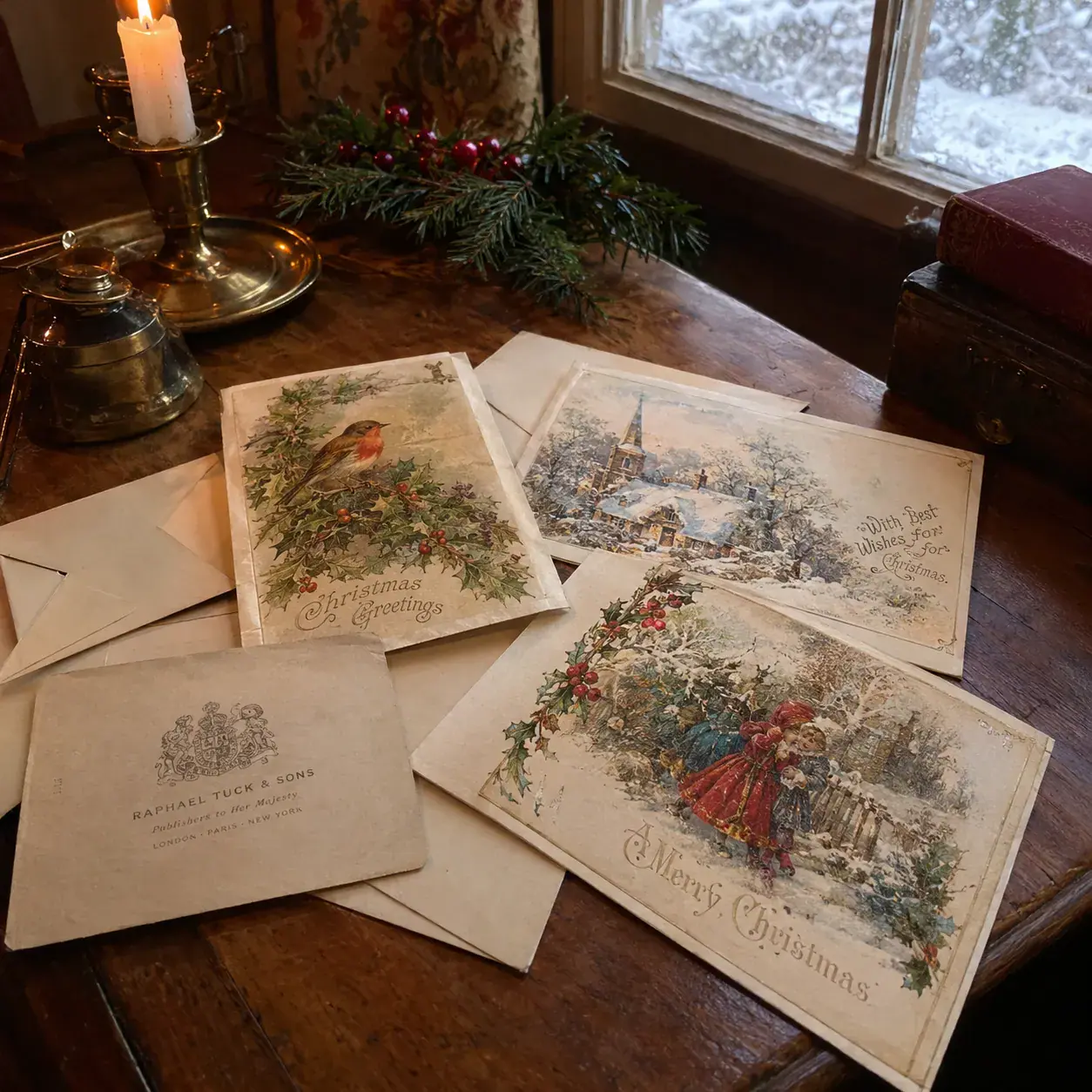
Christmas cards became popular from the 1860s.
By 1880, York Castle Museum notes, the Post Office had to ask people to post early for Christmas for the first time.
That same year, the publisher Raphael Tuck & Sons ran a Christmas card design competition.
More than five thousand paintings were said to have been entered, and the entries went on show at the Dudley Gallery in London.
It had all started small. In 1843 Henry Cole commissioned J.C. Horsley to design a card and had 1,000 printed.
11. A Noah’s Ark You Could Only Play With on Sundays
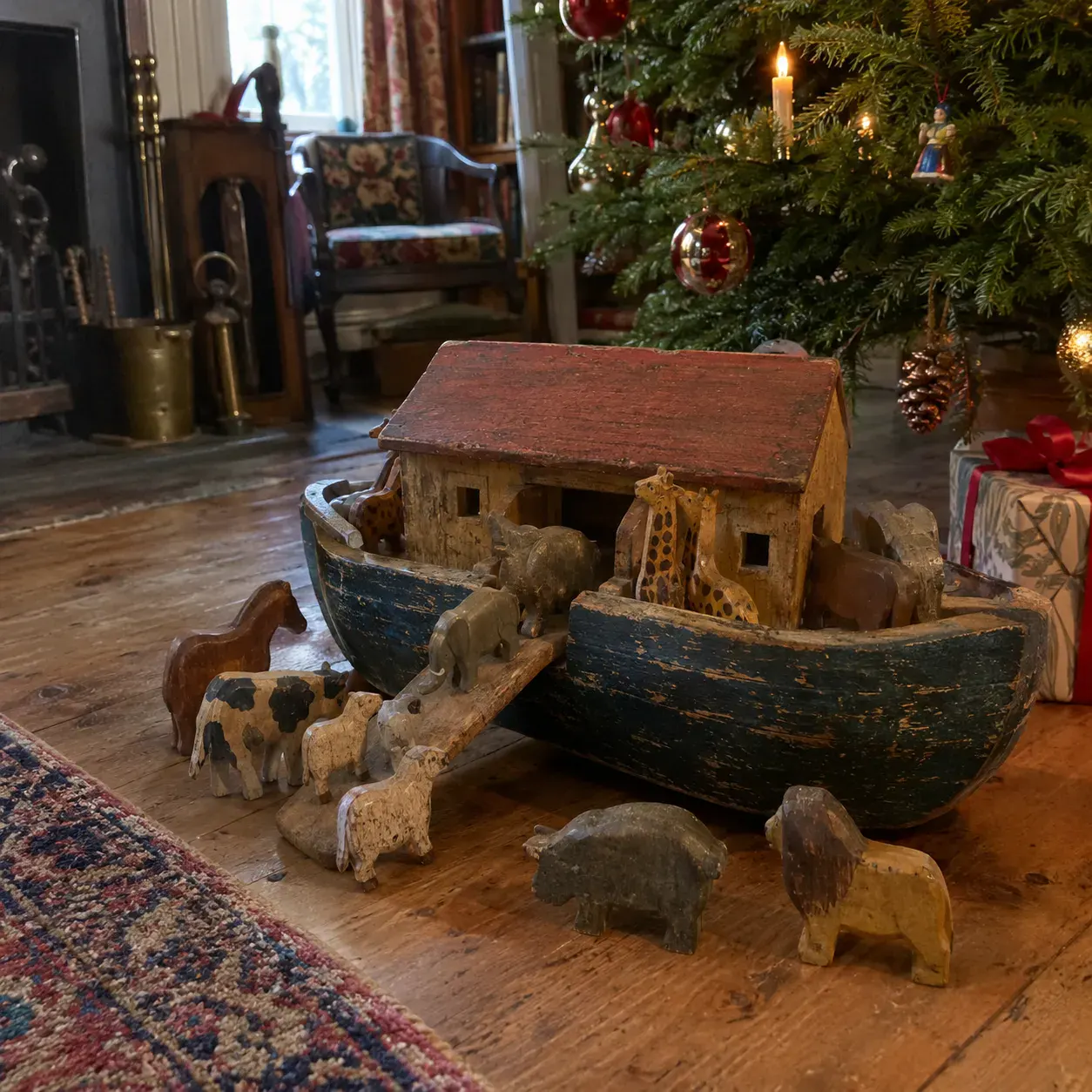
Toy Noah’s Arks were Bible toys, and in many homes that meant rules. Winterbourne House in Birmingham notes that these sets “would usually be used only on Sundays, the same day as church services.”
Winterbourne has an ark probably played with by John Sutton Nettlefold during his childhood in the 1870s.
It shows the wear of a well-loved toy, with some animals missing a partner and tufts of fur fallen off.
The sets were made by families working at home in Germany. The makers called them “misery beasts” because of how much of the work had to be done by hand.
A comic piece in Fun magazine in 1866 claimed the animals’ legs broke so often that they ended up replaced with pins.
12. A Wax Doll
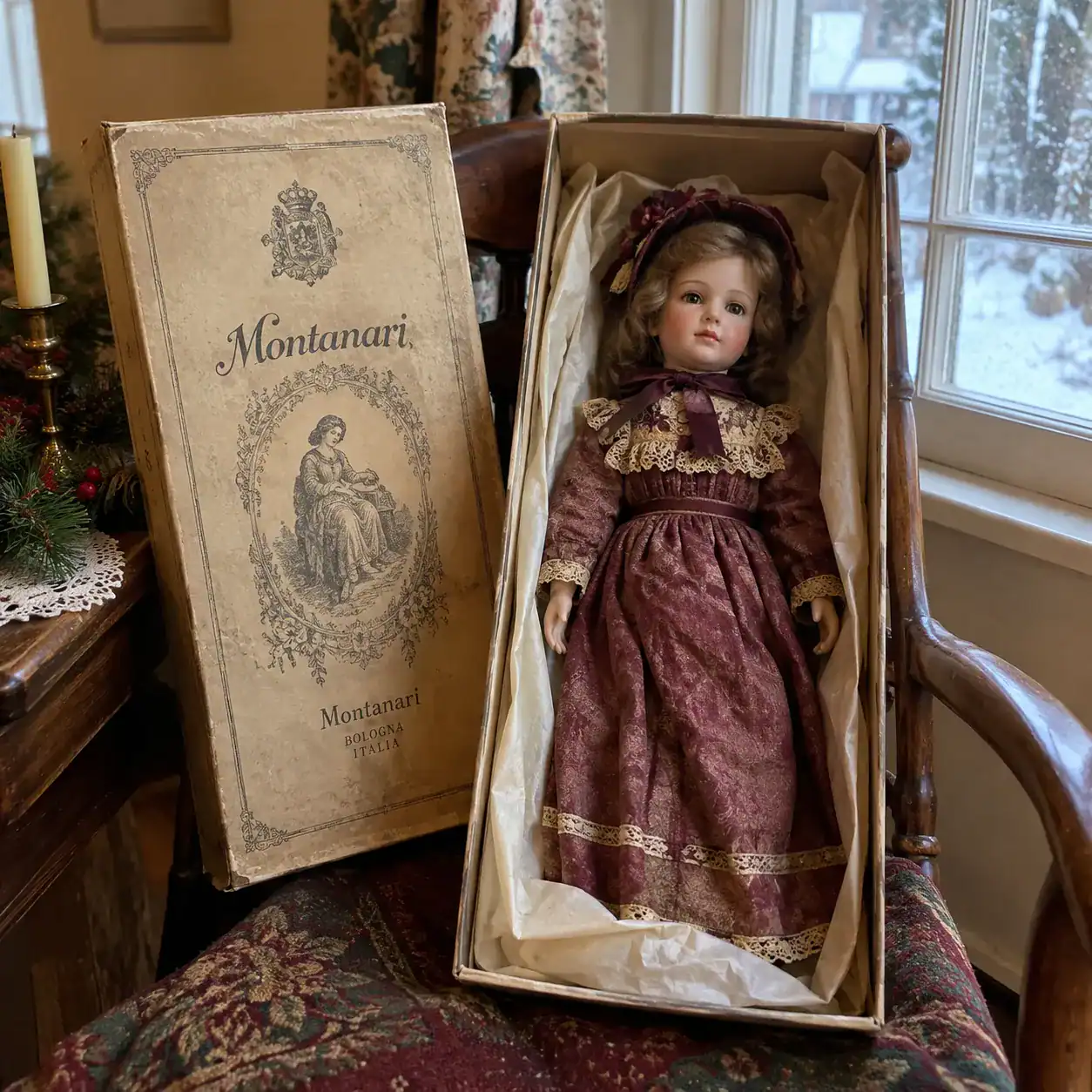
At the luxury end, a wax doll might come from the Montanari family in London.
The V&A calls them “among Victorian England’s premier wax doll producers,” and holds a Montanari doll of Princess Louise from 1850 to 1853.
Napoleon and Augusta Montanari were the biggest names in London’s luxury doll business in the second half of the nineteenth century. Their high prices drew frequent criticism.
Wax had a practical advantage. It didn’t shatter like ceramic when dropped.
It did scratch easily, and sudden changes in temperature could crack or warp it, so this was not a doll to leave by the fire.
13. A Haul From the Lowther Arcade
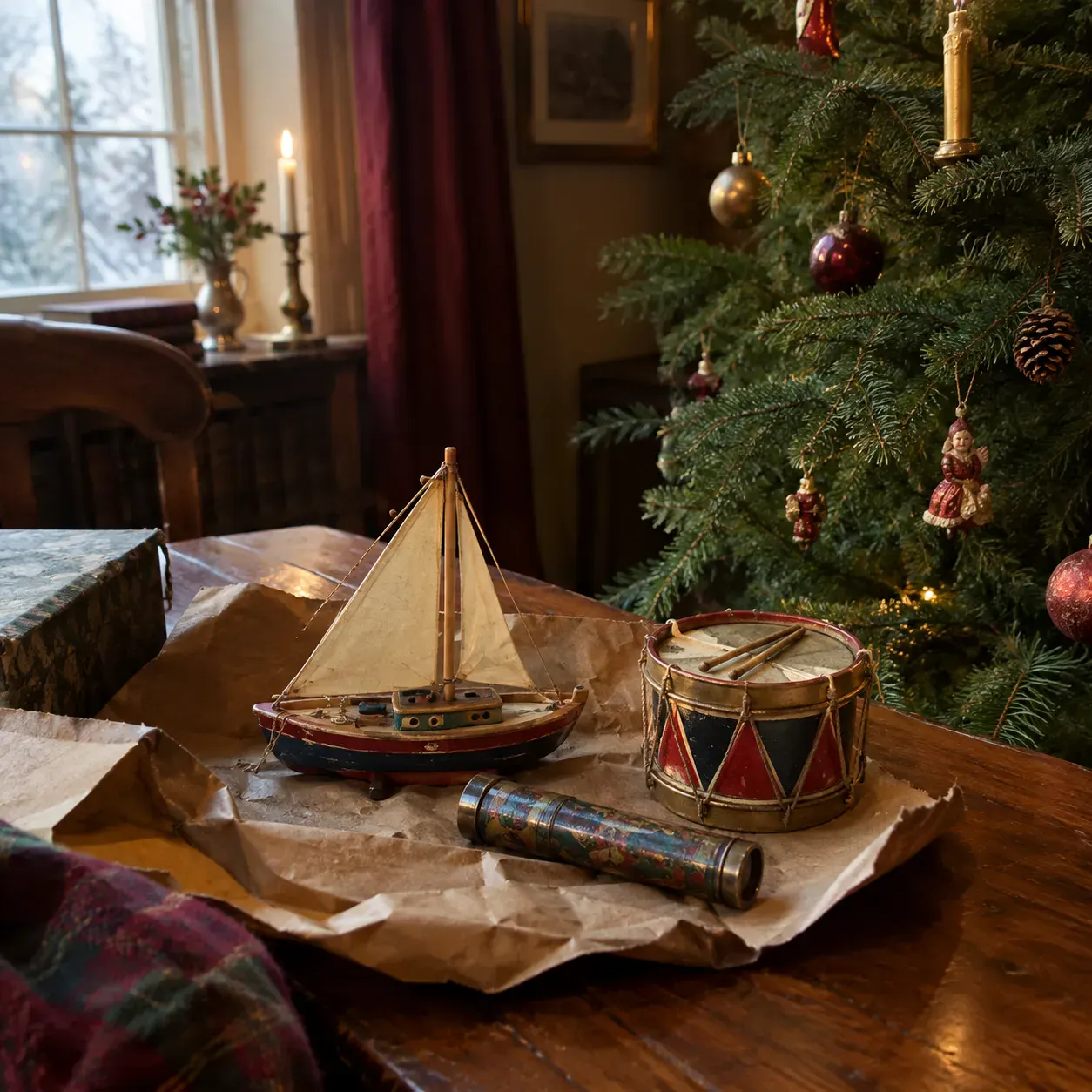
London’s Lowther Arcade on the Strand was built in 1830.
By the mid-19th century its shops were nearly all toy shops, and it was a favorite stop at Christmas.
Fun magazine described its stock in 1866, well before our tree. Glass peacocks, wax dolls, drums and trumpets.
Dolls that squeaked, jack-in-the-boxes, toy boats and tin soldiers. Kaleidoscopes, which the writer said looked “like a spyglass that don’t pull out.”
The arcade itself was demolished in 1904.
14. A Toy Theatre, “Penny Plain, Twopence Coloured”
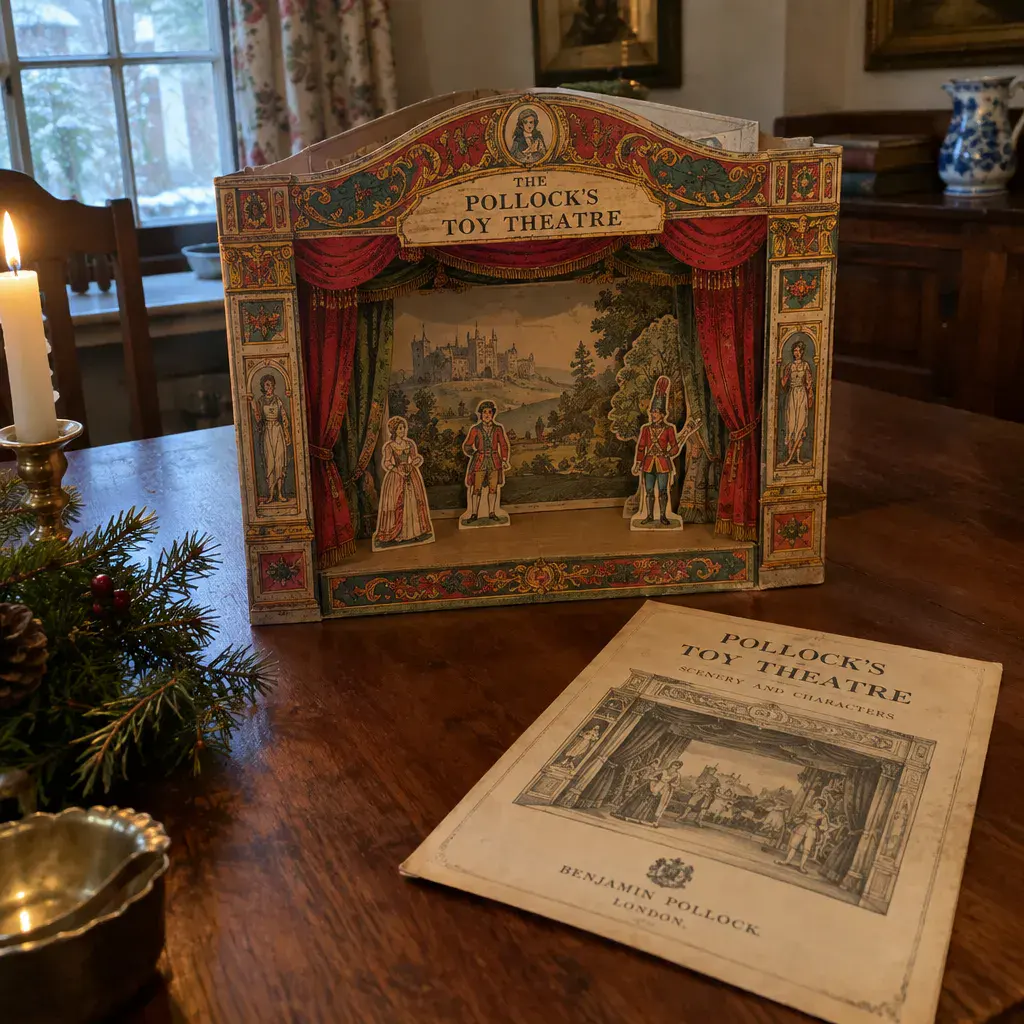
A toy theatre came as printed sheets of characters and scenery to cut out, paste on card and paint.
They sold as “a Penny Plain, or a Tuppence Coloured.” The earliest surviving sheets date to 1811.
By 1880 this was already an old-fashioned gift.
In 1876 Redington’s toy theatre shop passed to his daughter Eliza. She married Benjamin Pollock, a young furrier, who left the fur trade for a business that was already in severe decline.
By the 1880s just two toy theatre publishers were left in London: Pollock in Hoxton and Webb in Finsbury. In 1884 Robert Louis Stevenson wrote an essay called “A Penny Plain and Twopence Coloured.”
15. A Magic Lantern Slide of a Man Swallowing Rats
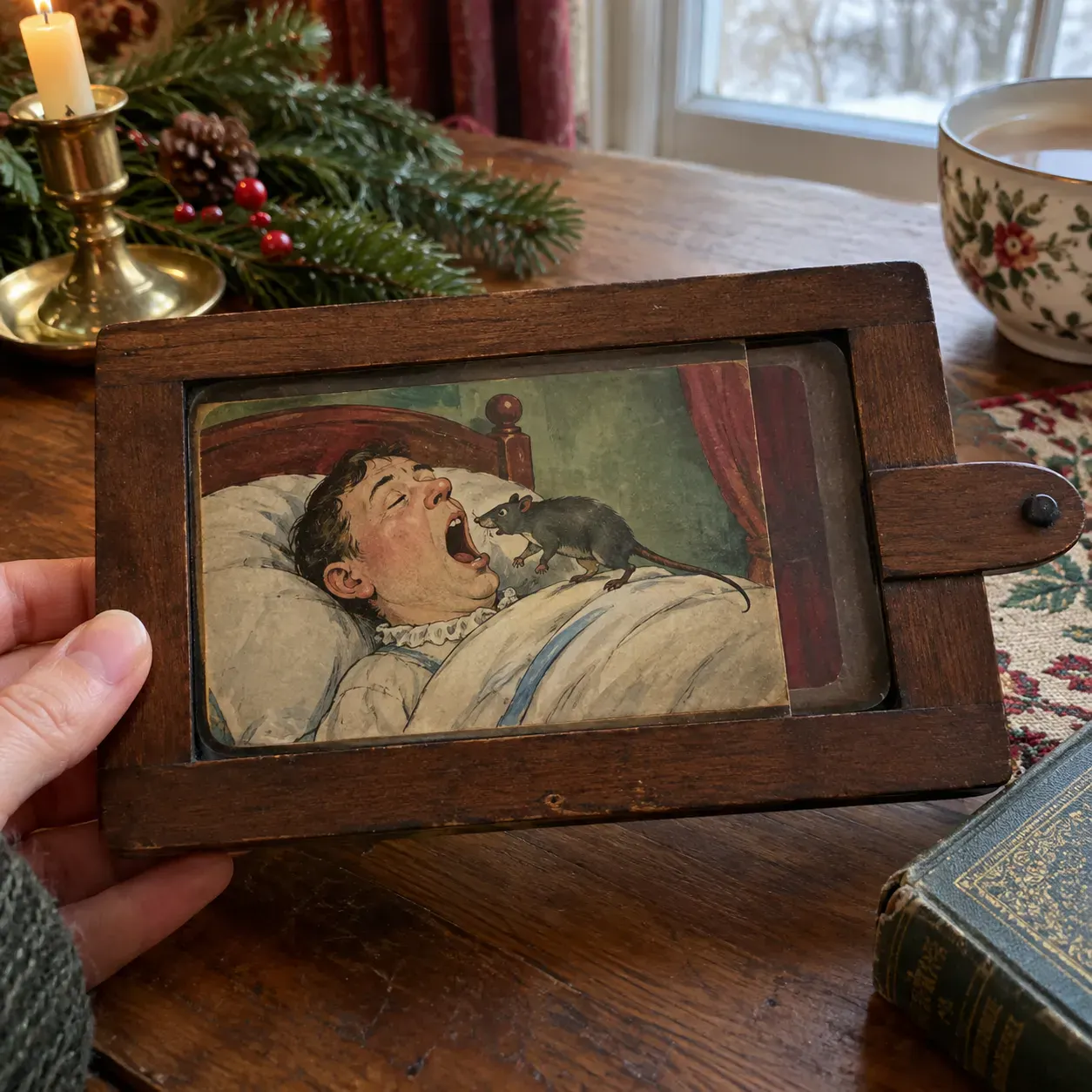
A magic lantern projected painted glass slides onto a wall, and for most of its history it was mainly owned by affluent families.
One slide stayed on sale for decades. The “Man Eating Rats” slide used three layers of glass, one moving a sleeping man’s jaw and another drawing a rat across and into his mouth.
The Science and Media Museum says it was sold by several makers from at least the 1850s until the 1900s. One account says it “caused a stomping and a shouting.”
Six years after our tree, at Christmas 1886, a boy named Roy Sambourne watched a lantern show in the drawing room of 18 Stafford Terrace in Kensington. His father was the Punch illustrator Linley Sambourne.
Roy remembered “different cathedrals which Papa had bought, then some comic pictures, a man in bed swallowing rats at a great rate, a woman whose nose grew to an inordinate length, beside many more which I have almost forgotten.”
16. A New Optical Toy, the Praxinoscope
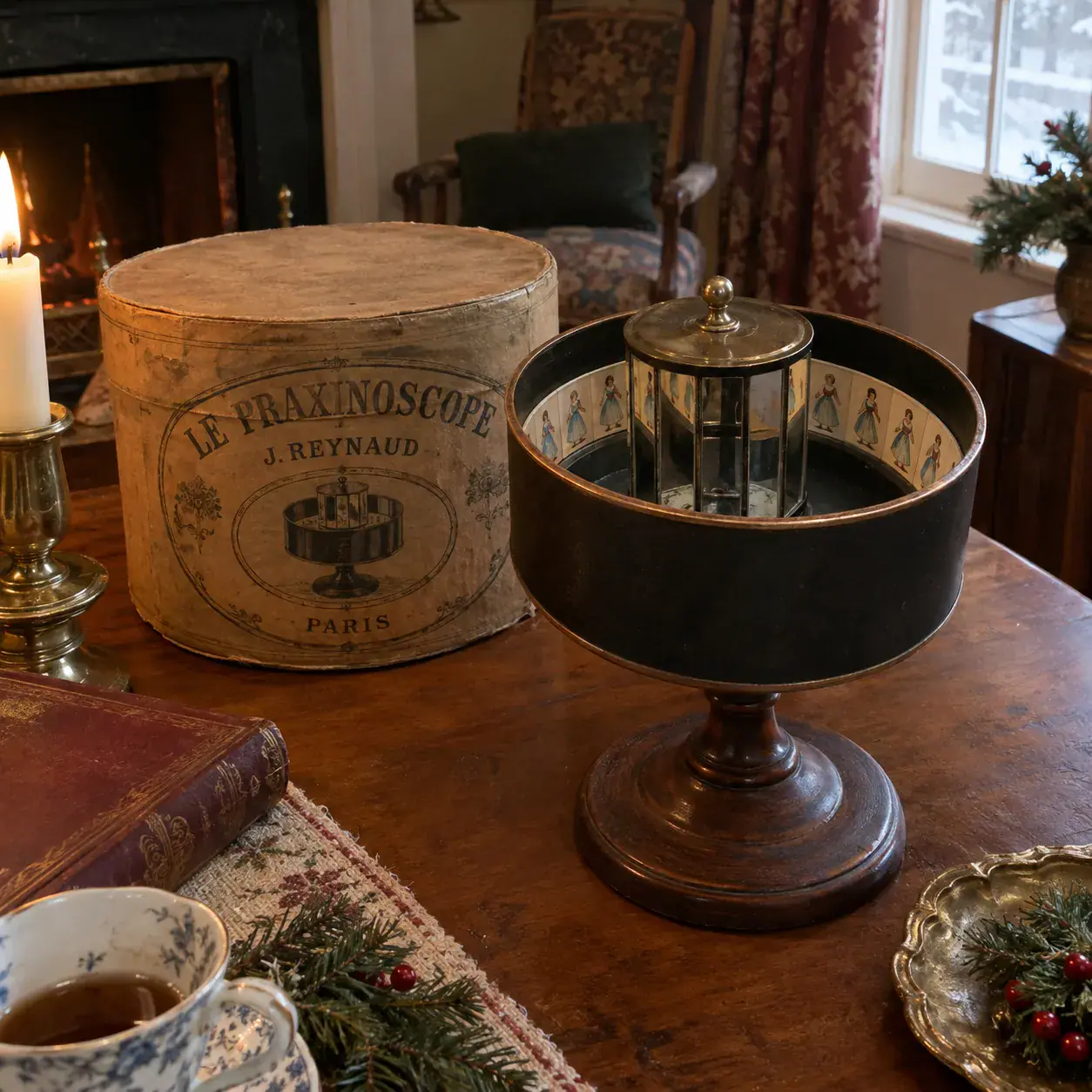
Charles-Émile Reynaud invented the praxinoscope in France in 1877.
It improved on the zoetrope, the spinning drum with a strip of pictures inside.
Instead of peering through slits, you watched the pictures in a ring of mirrors at the center.
The moving image came out brighter and less distorted.
In 1880 it was still a novelty. That made it a cutting-edge present, not a common one.
17. Flat Soldiers From Nuremberg
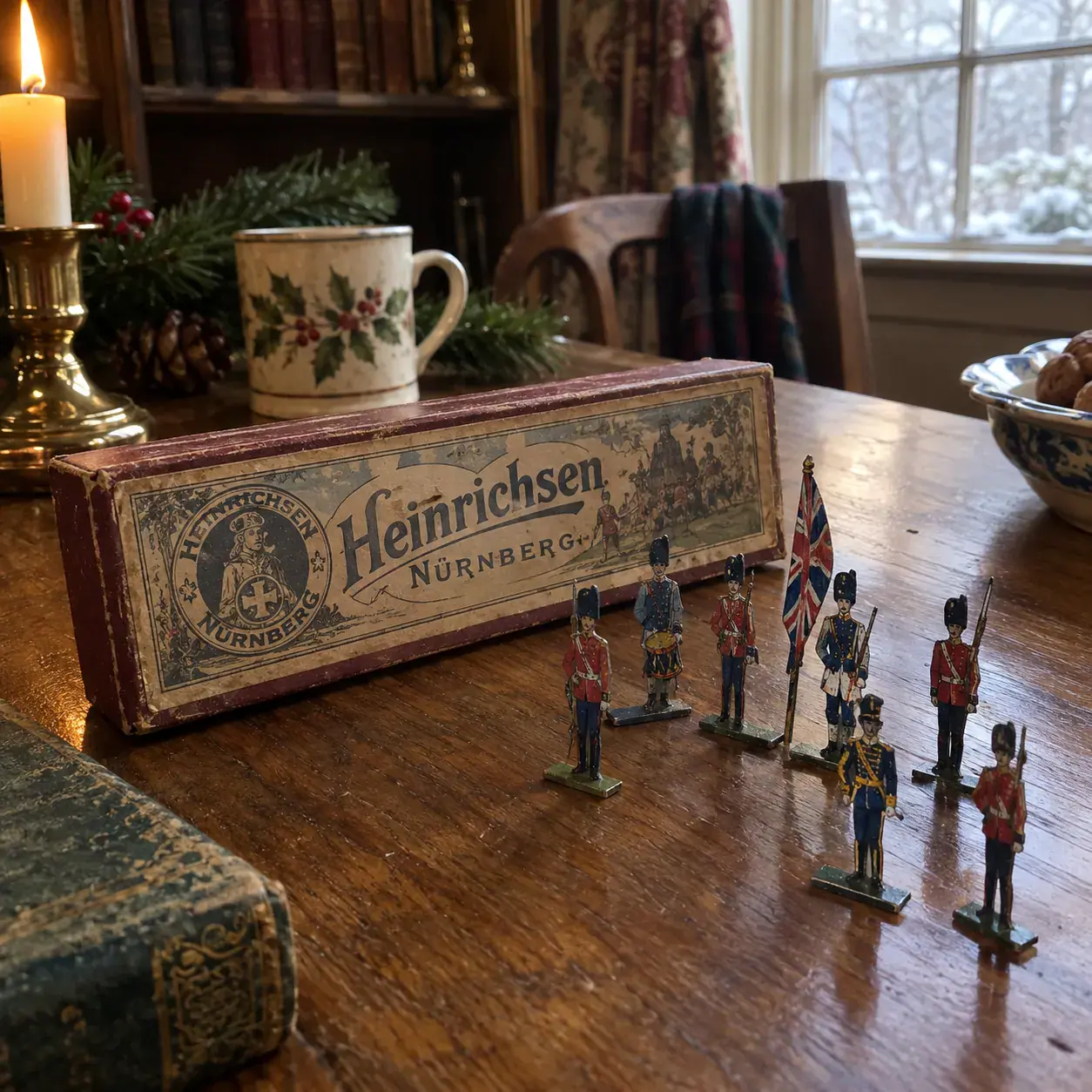
The soldiers in an 1880 toy box were often flat, and often German.
Heinrichsen of Nuremberg was the main maker of flat lead figures, known as “flats,” and specialized in sets of historic battles.
Heinrichsen set the “Nuremberg scale” at about 28 mm tall.
The rounder British soldiers many people picture came later.
William Britain’s hollow-cast method dates to 1893, and his first model was a mounted Life Guard.
18. Kate Greenaway’s Under the Window
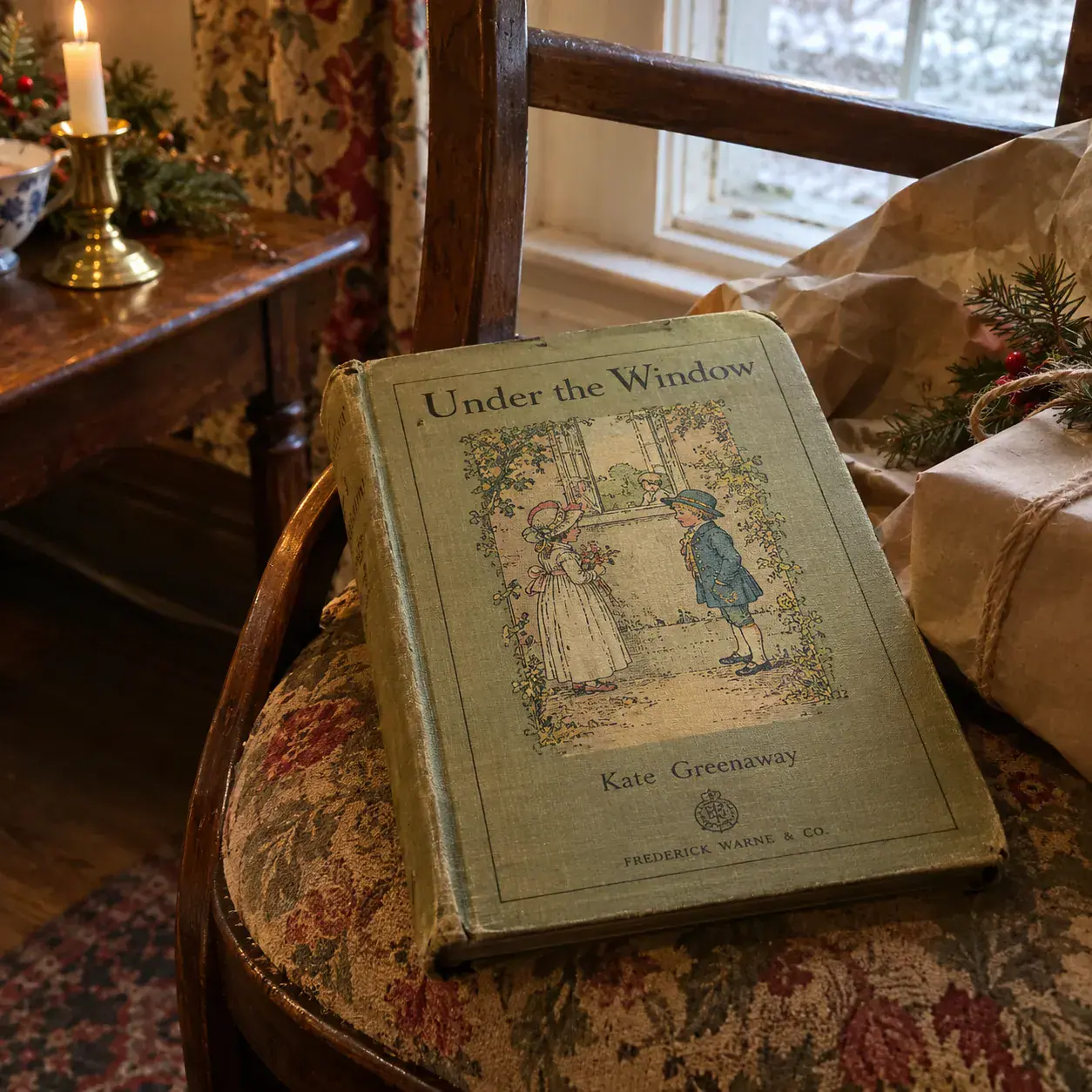
Under the Window reached shops in October 1879, in time for Christmas, priced at six shillings.
The printer Edmund Evans ran a first edition of 20,000 copies, which the publishers thought was a big risk.
It sold out. Booksellers ended up getting 10 shillings each for copies.
Eventually it sold 70,000 in England and about 100,000 counting French and German editions.
Christmas 1880 was its second Christmas. Greenaway’s children in make-believe 18th-century dress started a fashion of their own.
19. The Boy’s Own Paper
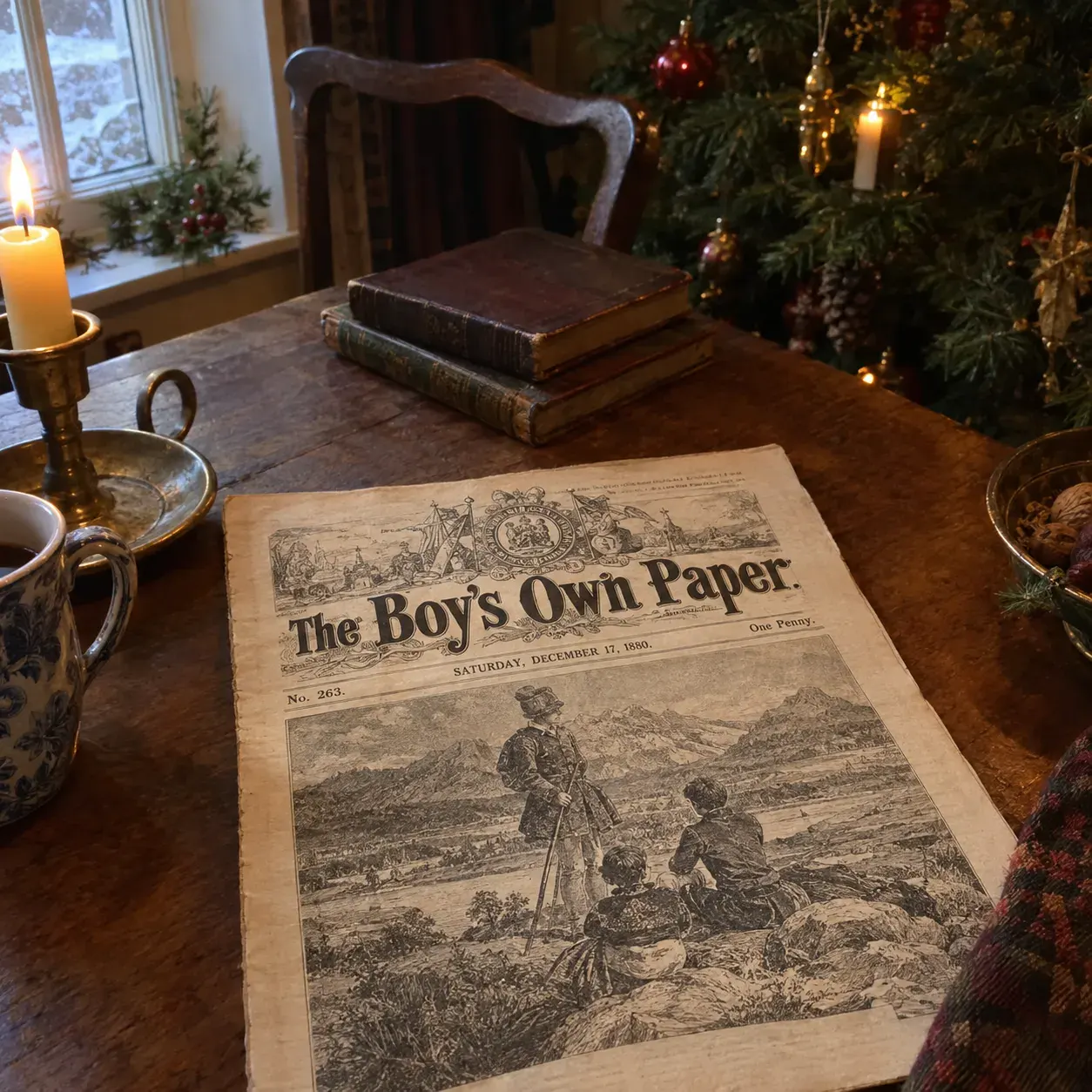
The first issue came out on 18 January 1879. It cost one penny and ran to 16 pages.
The Religious Tract Society published it to get boys reading and to teach Christian morals.
By Christmas 1880 it wasn’t even two years old, and its readership was growing.
Within five years the readership topped a quarter of a million.
The issue nearest Christmas was often enlarged.
20. Presents at the Foot of the Bed
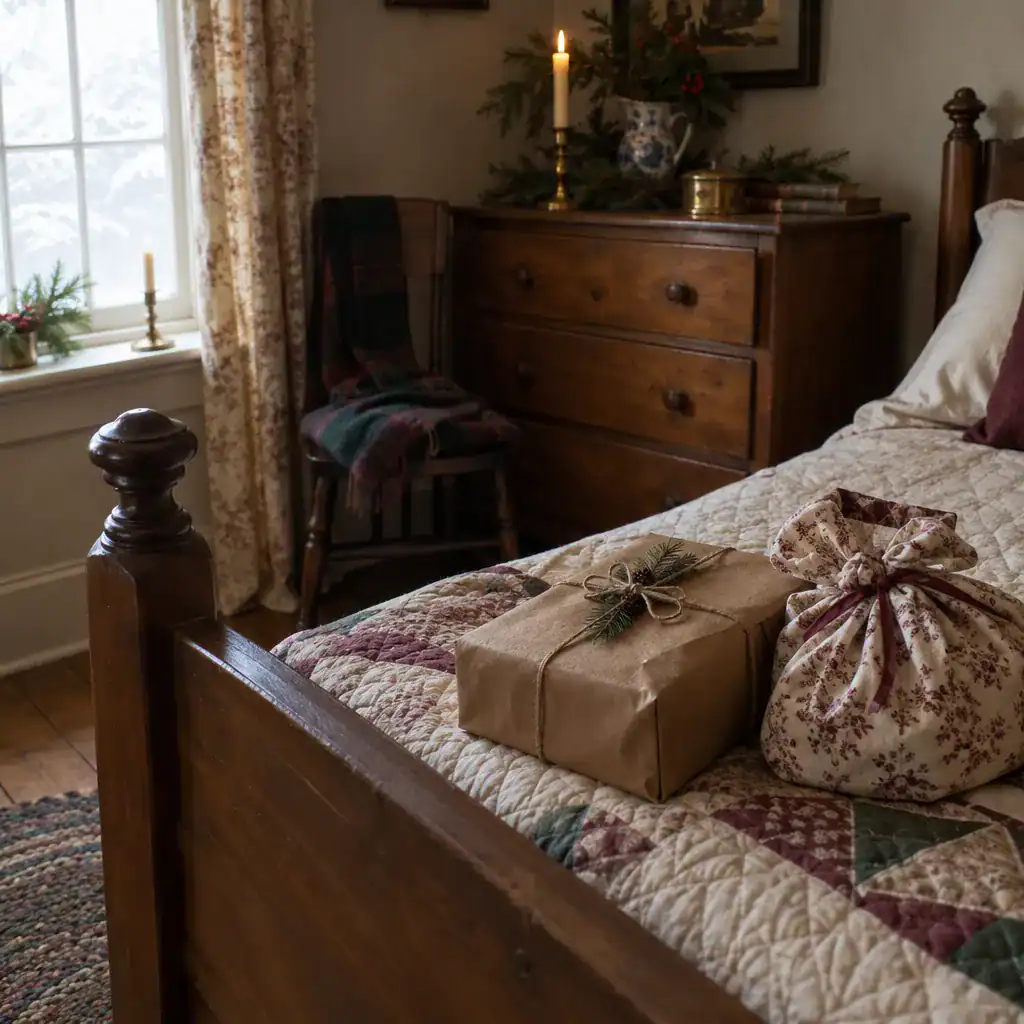
York Castle Museum says presents were given on Christmas Eve from the 1860s onwards.
At first they were simply placed at the bottom of the child’s bed. Some were wrapped in cloth or brown paper.
Stockings came later, toward the end of the 19th century.
So in 1880 the stocking was still catching on.
A child might wake on Christmas morning to find a parcel in brown paper at their feet, with no stocking in sight.
The Small Things Lasted
Some of this world didn’t last. The toy theatre publishers dwindled to two, and the Lowther Arcade came down.
The small things stayed. A paper chain, an orange, a cracker with a joke inside, a card in the post. Some of what your family does each December may be older than anyone at the table realizes. If an orange still turns up at the bottom of someone’s stocking, that small, ordinary gift may tie them to a child standing in a candlelit doorway, a long time ago.