Two Emory University psychologists built a family quiz, and one of its questions asks whether you have a relative whose face “froze” in a grumpy position because they did not smile enough. That cannot happen. No face works that way. And yet 15% of the children they asked said yes, they knew exactly who that was.
I do family history for a living, and that number is the whole reason I love this quiz. It is called “Do You Know?” Marshall Duke and Robyn Fivush wrote it, 20 questions, each answered yes or no, each about something that happened before a kid was old enough to see it for themselves.
No scoring key. You just count the yeses.
Here are all 20, in the researchers’ own words and order. Take it yourself first. Then hand it to a kid or a grandkid at the table. I will tell you what each question looks like from my chair, because every one of them is a door into the exact work I do all day.
1. How your parents met
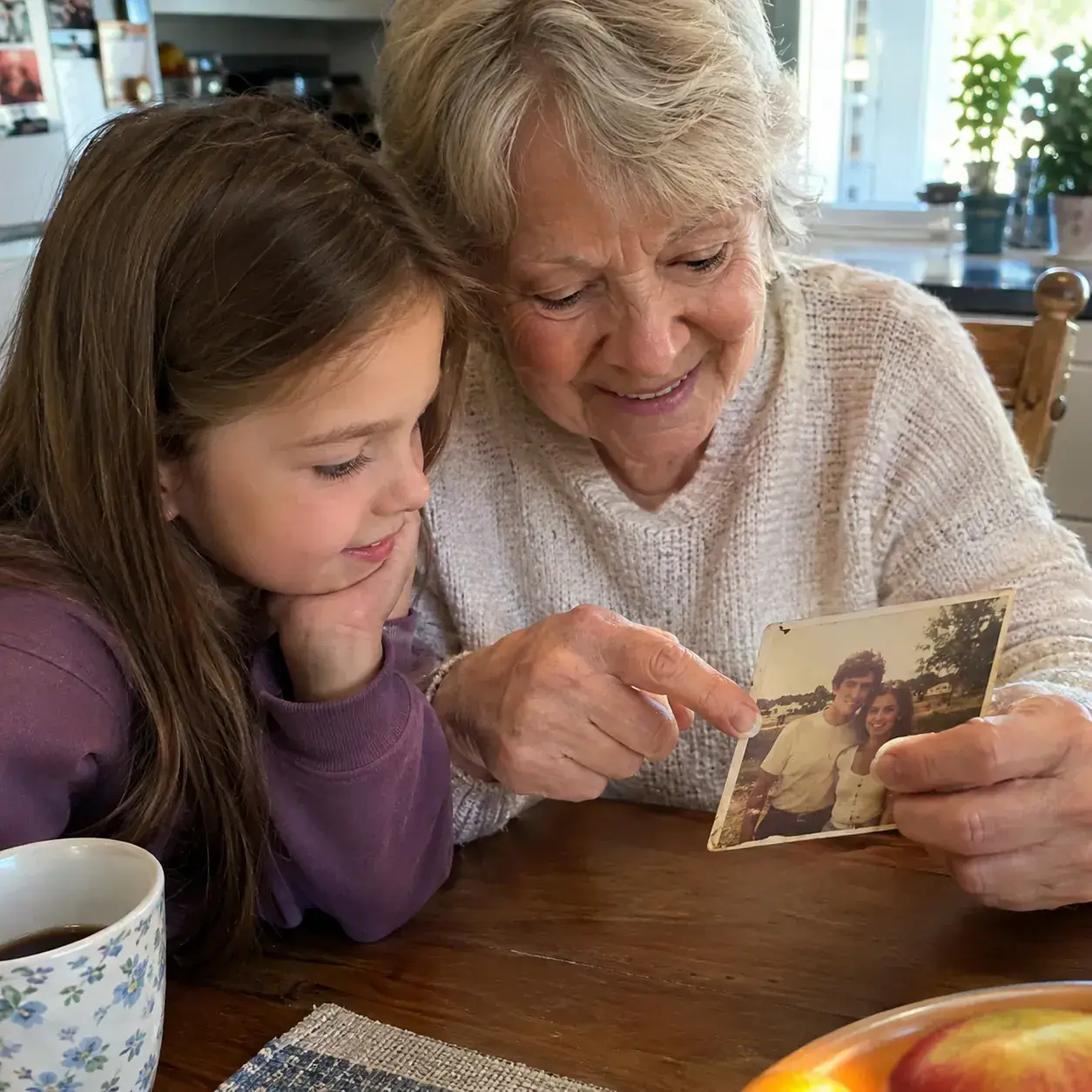
“Do you know how your parents met?”
This is the question I open almost every interview with, and it is not an accident that the researchers put it first.
No child was in the room when their parents met. So there is only one way to know the answer. Somebody told you.
That is the rule behind the whole quiz, and it is also the rule behind family history itself. Everything older than you arrives secondhand, passed mouth to mouth until somebody writes it down.
Ask a relative how they met their partner and watch what happens. The answer is never a date and a place. It is a bad setup, a borrowed car, a wrong phone number that turned out right.
That is the stuff that never lands on a birth certificate, and once the last person who remembers it is gone, it is gone.
2. Where your mother grew up
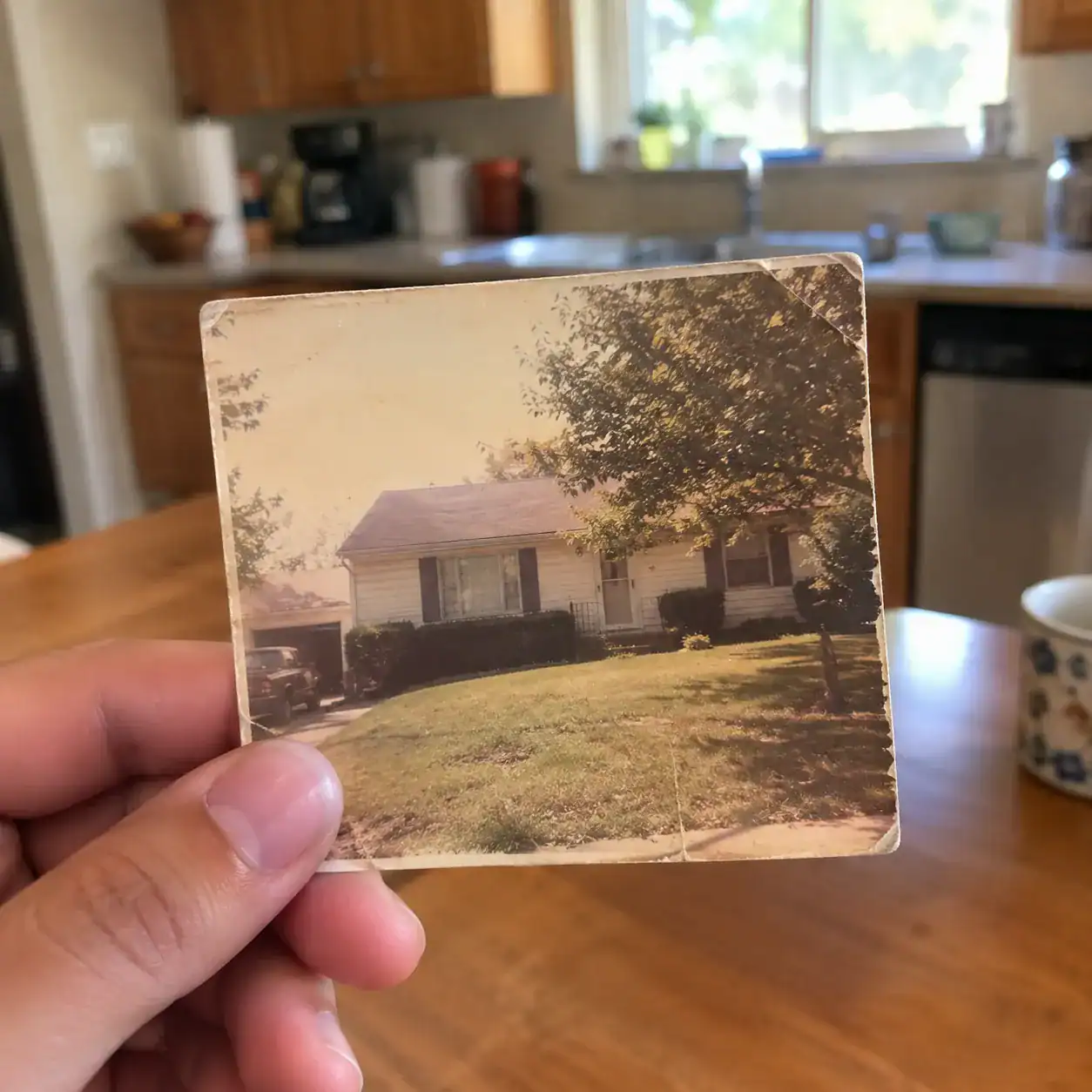
“Do you know where your mother grew up?”
A place is worth more than it looks. In my work, a town is where everything starts.
Give me where someone grew up and I can go find their census records, their school, their neighbors, the church down the street.
But the question is really asking for the house, the street, who shared a bedroom with whom. That part lives only in people’s heads.
The wording assumes a mother and a father, so if your family is built another way, aim the question at whoever did the raising.
3. Where your father grew up
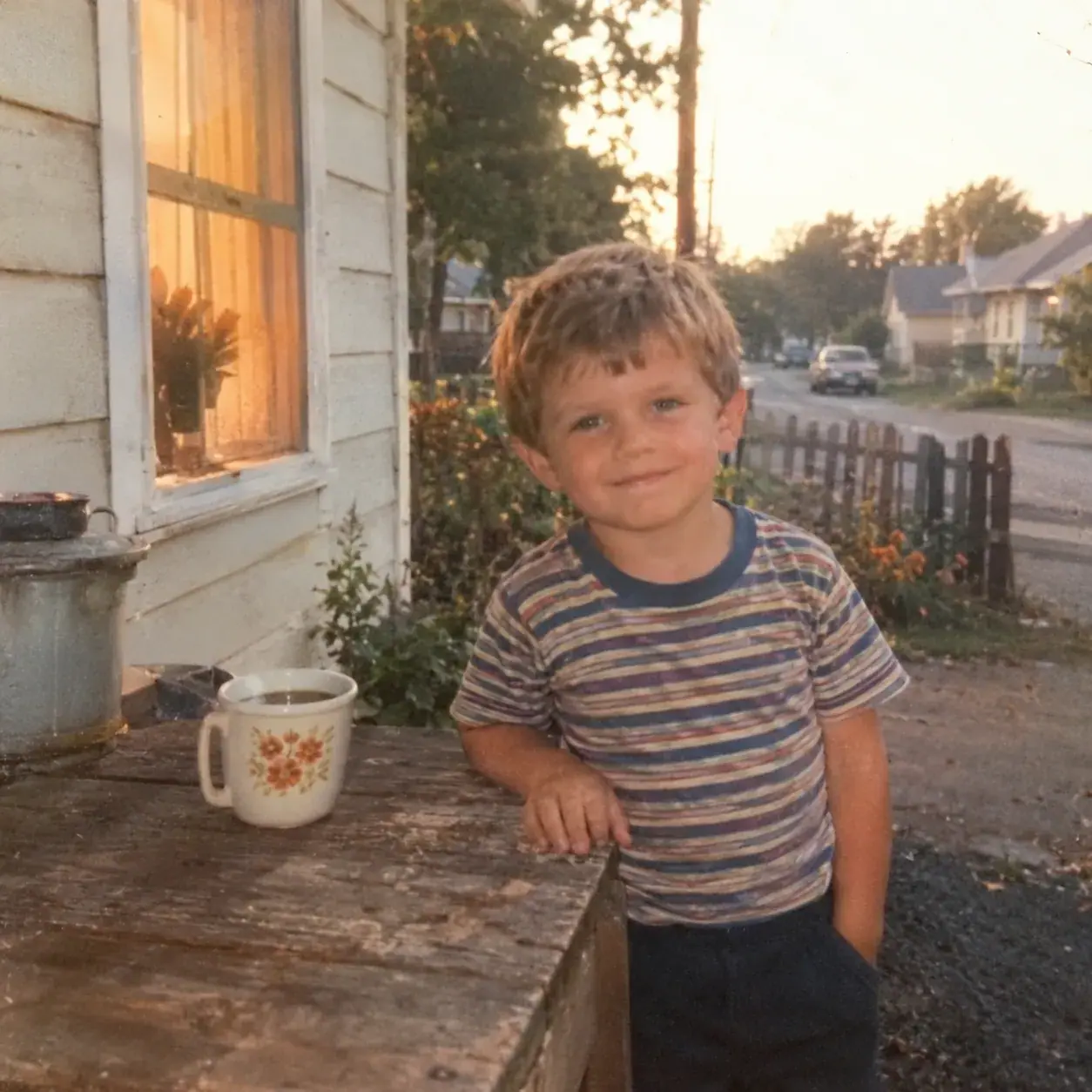
“Do you know where your father grew up?”
Same question, other parent. I would not skip it just because it mirrors the last one.
Half the brick walls I hit come from a family that tracked one side closely and let the other side fade.
The quiet grandparent whose hometown nobody can name is usually the exact person whose trail went cold.
Two towns means two sets of records. Write both down.
4. Where some of your grandparents grew up
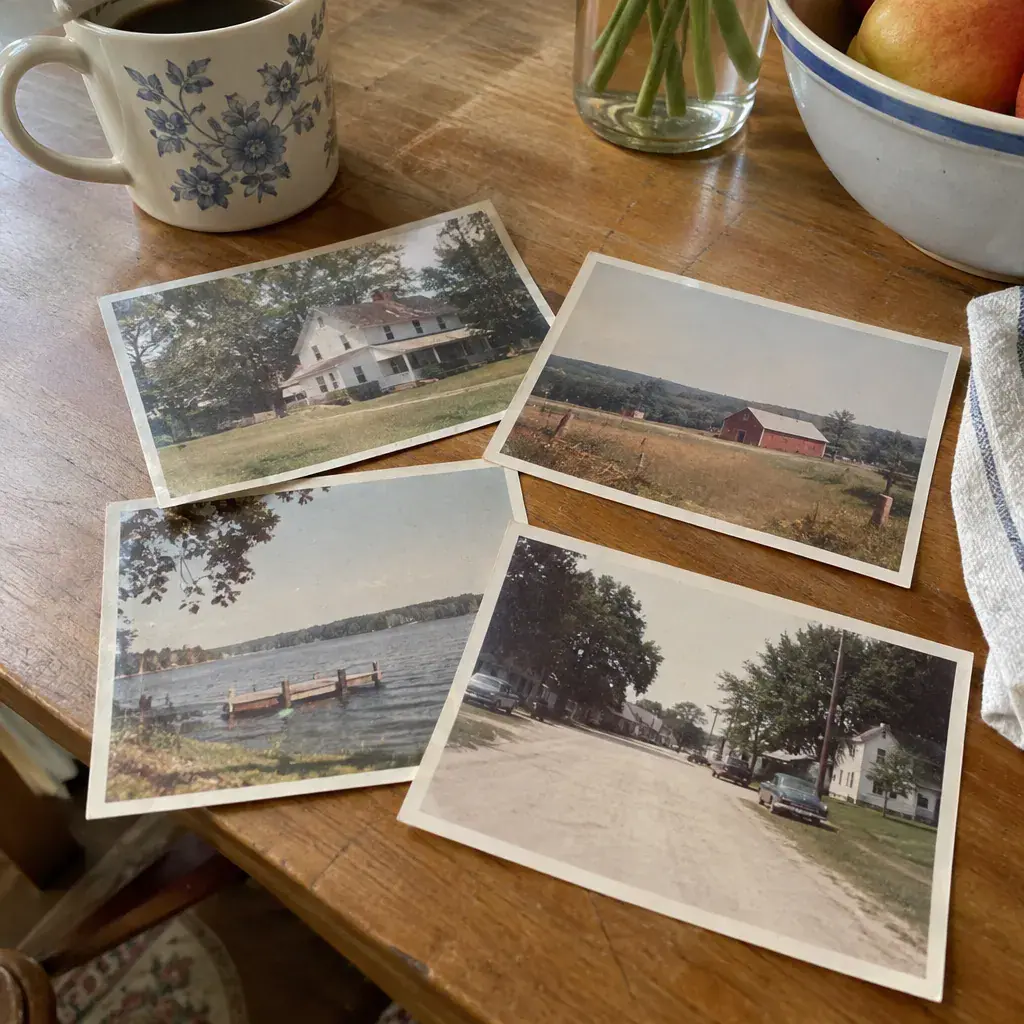
“Do you know where some of your grandparents grew up?”
Read the words “some of.” A kid does not need all four grandparents to say yes. The researchers set the bar low on purpose, and I would set it the same way at your table.
This is the generation where a tree either opens up or stalls.
Grandparents are usually the oldest people a kid has actually met, which makes them the last living bridge to anyone older.
A grandparent’s hometown is often the place an immigrant ship or a county courthouse points back to. Lose that town and you lose the next three generations behind it.
5. Where some of your grandparents met
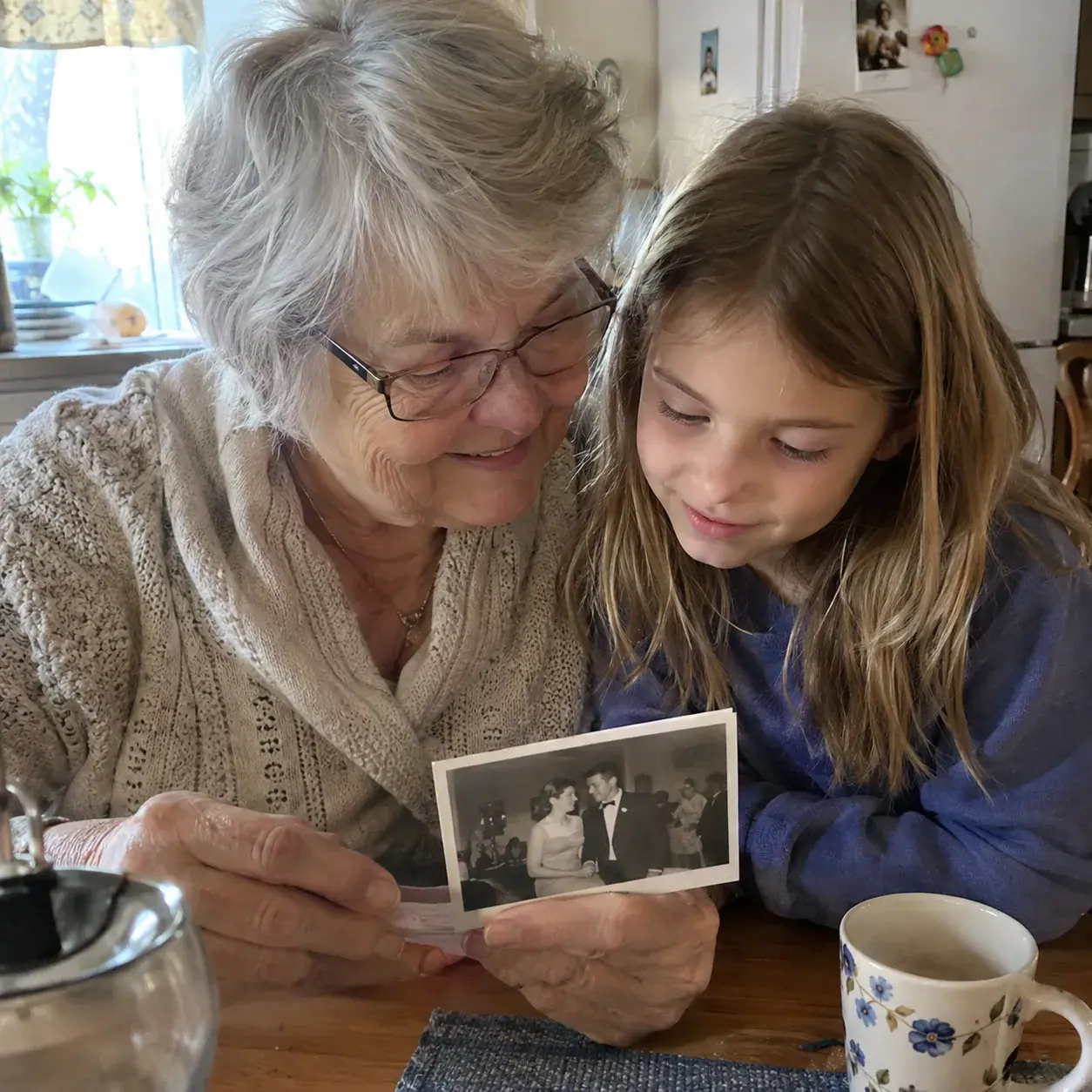
“Do you know where some of your grandparents met?”
Now you are reaching back to a meeting that happened before your own parents existed. A courtship from a world that is mostly gone.
Duke noticed something about who carries stories like this.
Family stories, he wrote, “seem to be transferred by mothers and grandmothers more often than not,” usually at the dinner table, on vacations, and over family holidays. That matches what I see.
When I need a courtship story, I call the grandmother, the great-aunt, the one who remembers who danced with whom. Go to her first.
6. Where your parents were married
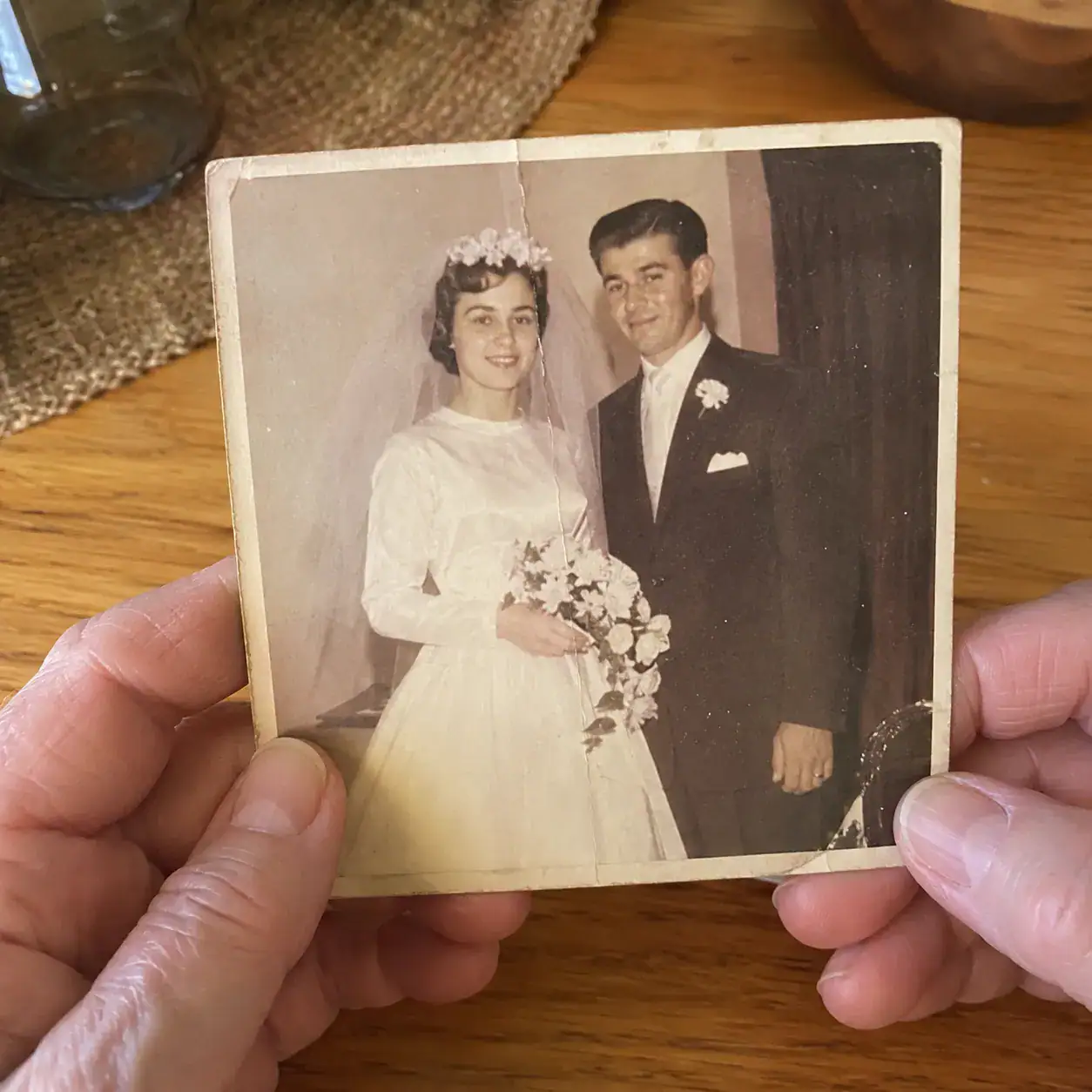
“Do you know where your parents were married?”
Here is where the quiz and my job line up almost perfectly. A marriage is one of the few family events that leaves a paper record you can actually pull, and a marriage record is one of the first things I chase for any couple.
So this question works two ways at once. The kid gets a story, and you get a lead.
If nobody at the table knows the place, that is not a dead end.
That is the exact gap a county clerk’s office was built to fill.
Not every reader’s parents married, so take the question as the researchers wrote it and skip it if it does not fit.
7. What went on when you were being born
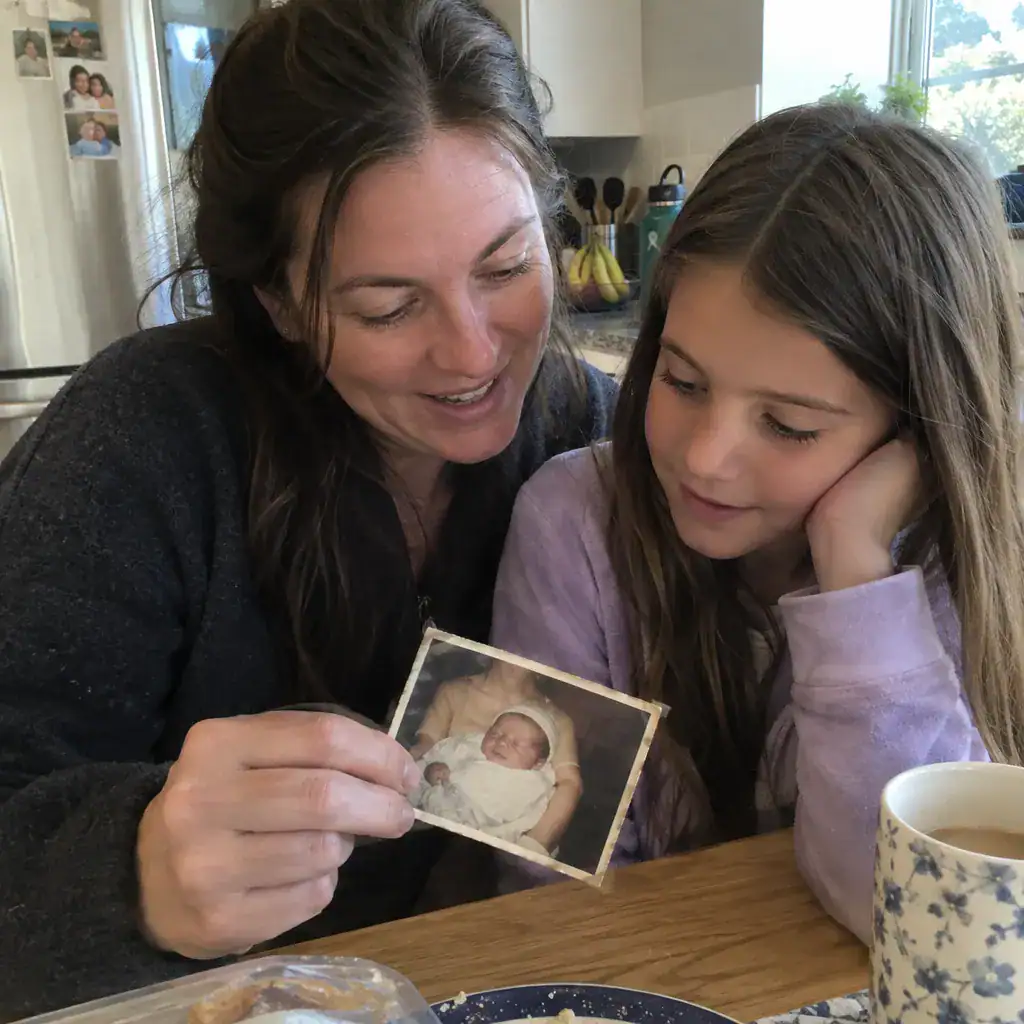
“Do you know what went on when you were being born?”
Feiler’s shorter version of this was simply “Do you know the story of your birth?”
I love it because it is the one story where the kid is the star and remembers none of it.
Every detail a child can give about that day came from somebody else. The snowstorm, the long drive, the name that almost got picked instead.
A birth certificate gives you a date and a weight. The story gives you everything around it, and the story only survives if someone keeps telling it.
8. The source of your name
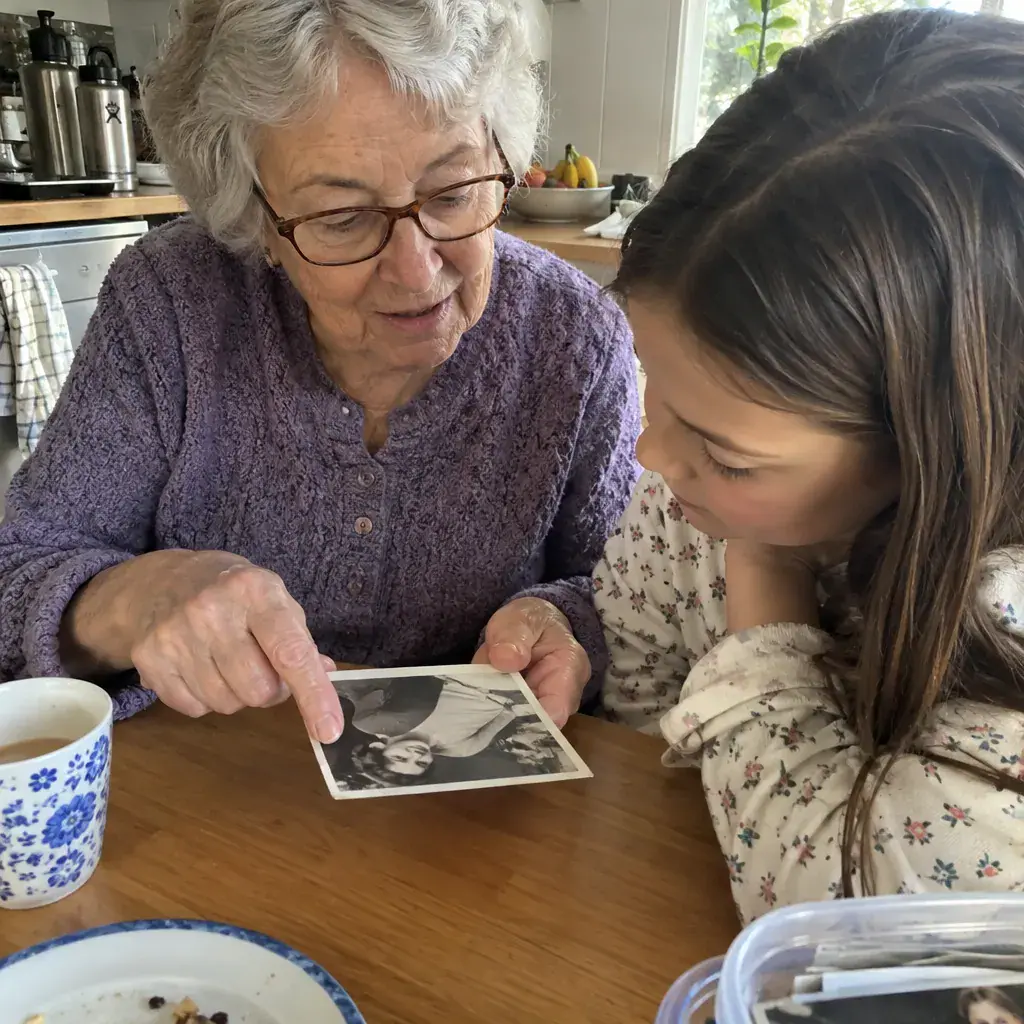
“Do you know the source of your name?”
This is my favorite question on the whole list, and I think most genealogists would say the same.
Somebody picked that name. The question is whether the kid has ever heard who, and why. When a child answers “I’m named after my great-grandmother,” they just handed you a person to go find.
A repeated name across generations is one of the oldest clues in the business for linking one generation to the next.
Names travel down families on purpose, and tracing where yours came from can walk you back a hundred years.
9. When your brothers or sisters were being born
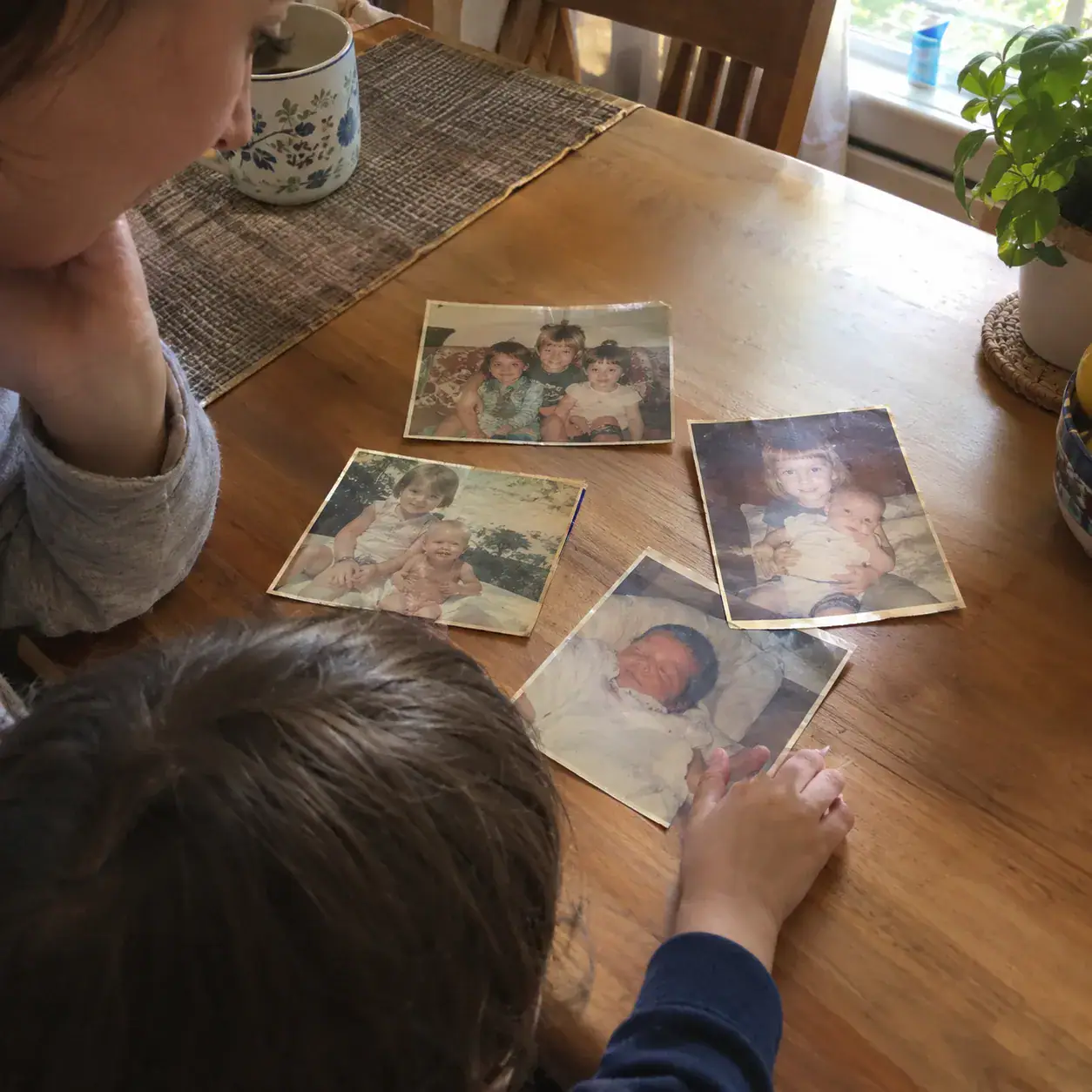
“Do you know some things about what happened when your brothers or sisters were being born?”
Only counts if you have brothers or sisters. Skip it if you do not.
Notice it asks for “some things,” which is a low bar. A scrap of the story earns a yes. I would not wave it off as filler either.
Siblings are how a lot of trees stay honest. The brother who moved away, the sister who died young, the child nobody talks about.
Those are the people who quietly fall off a family tree, and a kid who knows “some things” about each birth is keeping count of everyone.
10. Which person in your family you look most like
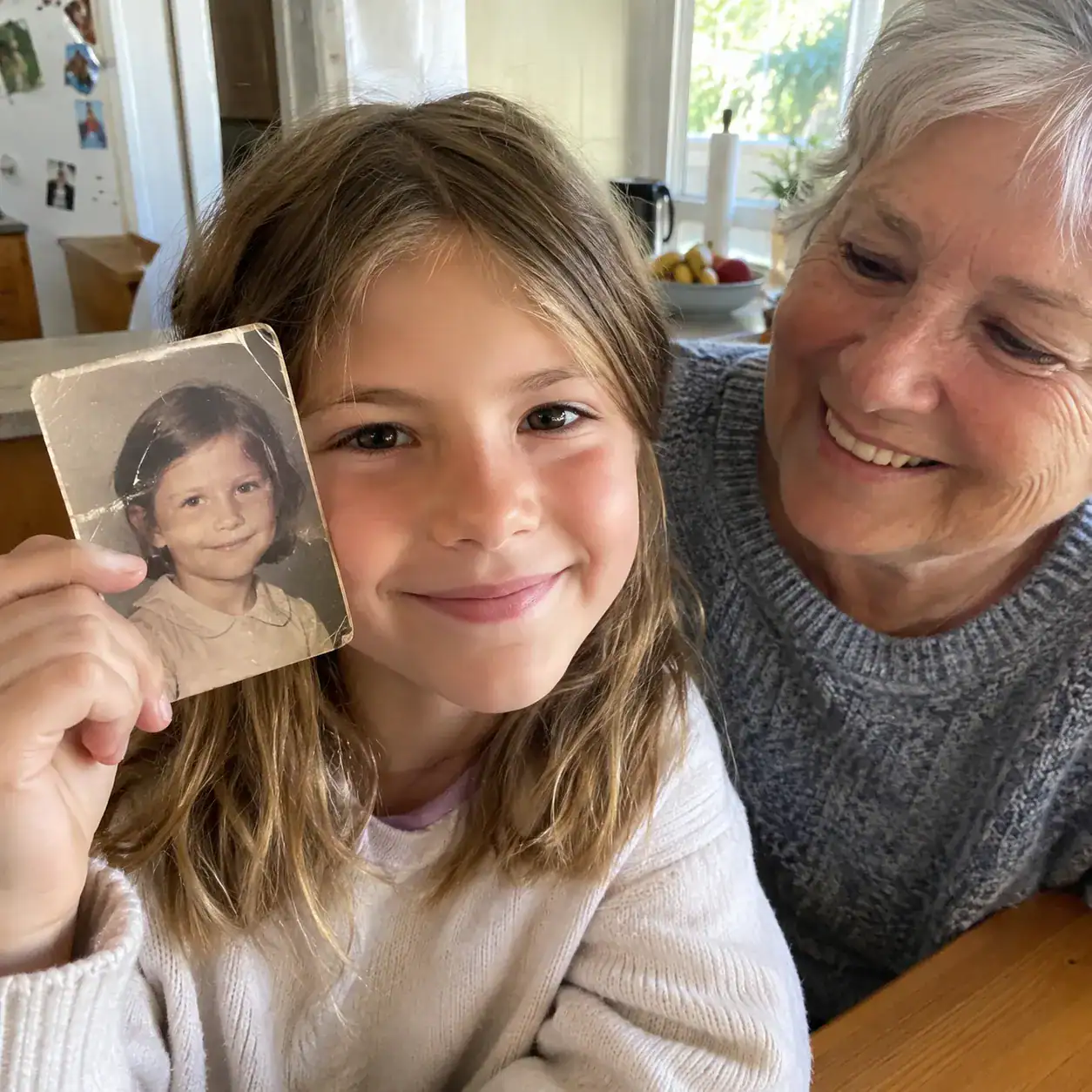
“Do you know which person in your family you look most like?”
Most of the list points backward. This question and the next one turn and point at the kid as they are right now.
Even so, no kid answers it alone. Somebody older has to say it first, usually while holding an old photo and squinting. That is a trick I use constantly.
Hand someone a picture of a stranger from 1920 and ask who it reminds them of, and a name you could not get any other way falls right out.
A face is a record too, if you know who to compare it to.
11. Which person in the family you act most like

“Do you know which person in the family you act most like?”
Same deal.
A kid only finds out they have a great-uncle’s temper or a grandmother’s laugh when a relative who knew both of them says so out loud.
I like this one because it keeps a long-dead relative in the present tense.
“You stubborn just like your grandpa” is how a person who died before you were born stays a real character in the house instead of a date on a chart.
12. Illnesses and injuries your parents had

“Do you know some of the illnesses and injuries that your parents experienced when they were younger?”
The quiz asks about the hard stuff on purpose. Feiler’s example was blunter: “Do you know an illness or something really terrible that happened in your family?”
A family medical history is a real thing, and it starts with exactly this question.
I treat it carefully, because it is the kind of detail that actually matters to a living person, not just a tree.
The broken arm from falling out of a tree is a fun story. The pattern of who got sick young and why can be worth knowing. Ask it plainly, without drama, and write down what you hear.
13. Lessons your parents learned

“Do you know some of the lessons that your parents learned from good or bad experiences?”
Read the phrase “good or bad.” The question wants both, and that is the whole trick to a family story worth keeping.
Duke told the Times that families tell their story in one of three shapes, and the healthiest one is what he called the oscillating narrative, a story of ups and downs.
I see it from the other side. The families that only brag about the judge and bury the one who went to prison end up with half a tree.
The honest ones, the ups and the downs, give me a real family to work with.
14. What happened to your mom or dad in school

“Do you know some things that happened to your mom or dad when they were in school?”
School is the one place a kid and a parent actually overlap.
A kid stuck in a classroom can picture a parent stuck in one too, which makes this an easy story to pull loose.
It is also a lead I would chase. A school means a yearbook, and a yearbook is a photo, a club, a nickname, and a list of everyone who sat in that room.
Get the story, then go find the picture that goes with it.
15. The national background of your family

“Do you know the national background of your family (such as English, German, Russian, etc.)?”
Those examples in the parentheses are the researchers’ own.
And this is the single most common question I get asked at a party. “Where are we actually from?”
Families differ a lot here. Some have one tidy answer, plenty have four or five, and some honestly do not know. All of those are fine.
A kid who can say “it’s complicated, and here’s what we’ve been told” has still been told something, and that something is usually the thread I start pulling on.
16. Jobs your parents had when they were young

“Do you know some of the jobs that your parents had when they were young?”
Not what they do now. The early jobs, the paper route and the summer at the cannery, the ones that came before the career.
Occupation is a column I read on almost every old census page, and it tells you more about a life than almost anything else on the sheet.
Where someone worked usually tells you where they lived, who they married, and whether they stayed put or moved for the work.
A first job is where a whole story usually begins.
17. Awards your parents received when they were young

“Do you know some awards that your parents received when they were young?”
A ribbon, a trophy, a certificate, a name on a plaque.
The question does not care how big it was, only whether the kid ever heard about it.
I have cracked more than one dead end with an award, because an award leaves a trail.
A spelling bee or a county fair blue ribbon means a local newspaper printed a name, and a printed name is a date and a place I can take to the next record.
18. The names of the schools your mom went to

“Do you know the names of the schools that your mom went to?”
About as plain as the quiz gets. Feiler’s version covered both parents at once: “Do you know where your mom and dad went to high school?”
It looks like pure trivia, and Fivush has said the trivia is not the point.
“It is the process of families sharing stories about their lives that is important,” she wrote.
I would still grab the school name, though. It unlocks real records. But she is right that the gold is the conversation you had getting it.
19. The names of the schools your dad went to

“Do you know the names of the schools that your dad went to?”
Same question, other parent, and a good place to pass on the only advice Duke gives parents.
He puts it in three words. “Talk. A lot.”
That is the whole method, his and mine. I have never recorded a good family story by being efficient about it.
You talk, a lot, and the school names and the real stuff come out together.
20. The relative whose face “froze”

“Do you know about a relative whose face ‘froze’ in a grumpy position because he or she did not smile enough?”
Here is the trick I promised you at the top. There is no such relative. It cannot happen.
And yet, as Duke put it, “Fifteen percent of our sample actually answered ‘Yes!’ This is because the stories that families tell are not always ‘true.'”
Every genealogist learns this one the hard way. The Cherokee princess. The three brothers who got off the boat and split up. The spelling of the name that supposedly changed at Ellis Island.
Families tell stories to teach a lesson or soften a hurt, Duke wrote, and they get edited as needed. The accuracy, he said, “is not really critical” to the family.
It is pretty critical to me, though, and that is the one place my job and this quiz split. My work is to sort the froze-face stories from the real ones.
But I would never throw the froze-face story out. A story that is not true still tells you what a family wanted to believe about itself, and that is worth keeping too.
The Score Is a Count of Conversations
A low score is not a verdict on your family. All the number really tracks is how much talking has already happened, which is why I would not treat this as a test at all. Treat it as a reason to start.
That is the part I wish more people got before they come to me. By the time a family hires a genealogist, the person who knew all 20 answers is usually gone. You have the opposite problem right now. The answers are still sitting at your table, in somebody who would love to be asked.
So pick the question nobody can answer, find the person who can, and ask while you have the chance. If you blow through all 20 before the stories run out, Generational Journeys is an e-book of 170 interview questions to ask your relatives.