

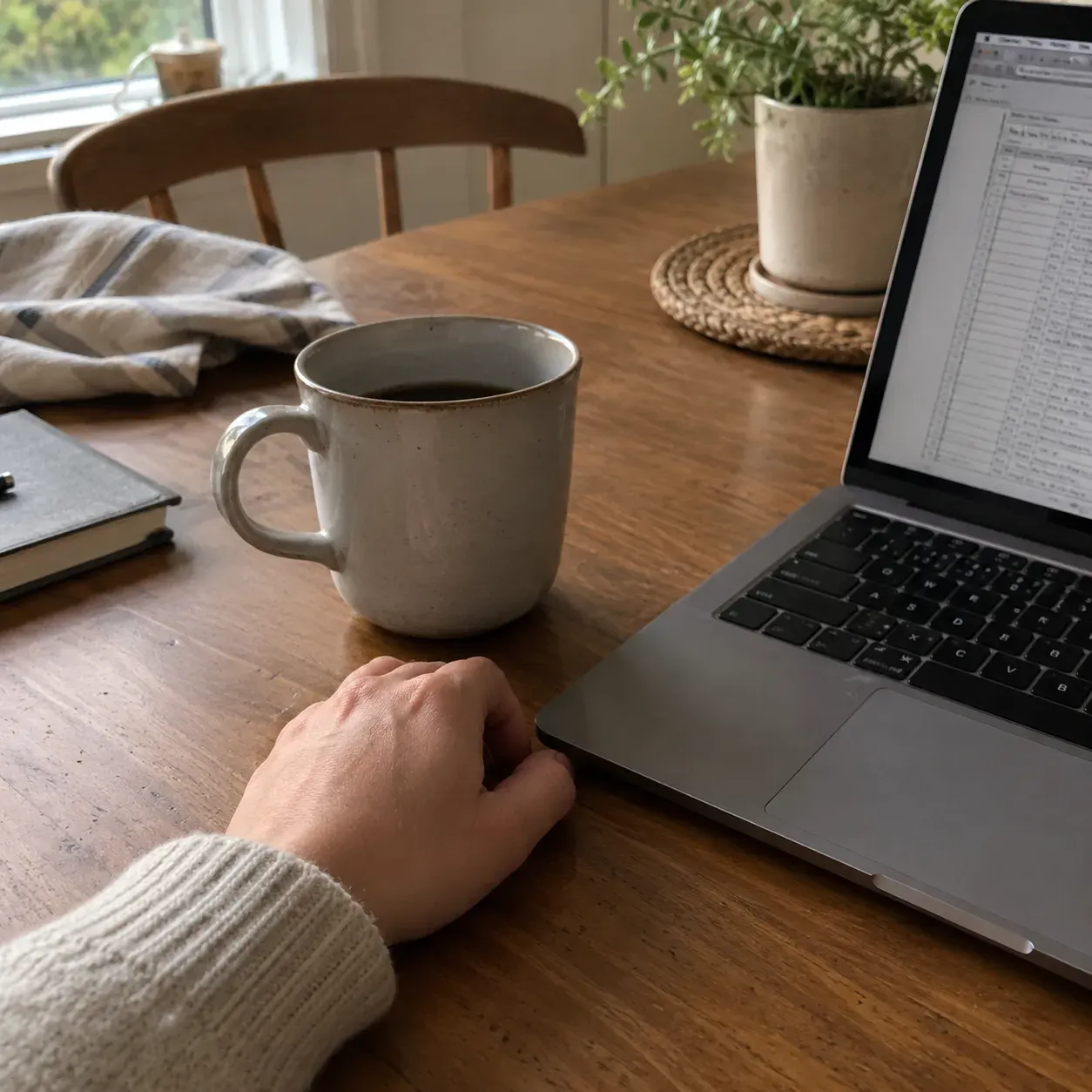
The kitchen is dark except for the laptop. My tea went cold an hour ago, and I keep sipping it anyway, because getting up would mean losing my place.
On the screen is a census page, scanned in shades of gray. Ruled columns. Handwriting that leans hard to the right, like the pen was in a hurry to get to the next house.
My finger finds the row. Teague, Arlis, thirty-four, with Ora below him.
Below her are three children. The smallest is my grandmother, a little girl on this page and also, somehow, the woman who taught me to shell peas.
I slide back up to his name and follow it all the way across, past columns I can’t make sense of yet. Out to the far side of the sheet, where somebody wrote down what he did all day.
Duffer.
That’s what I read, anyway.
I laugh out loud in an empty kitchen, then put a hand over my mouth like someone might hear.
A Word in His Column
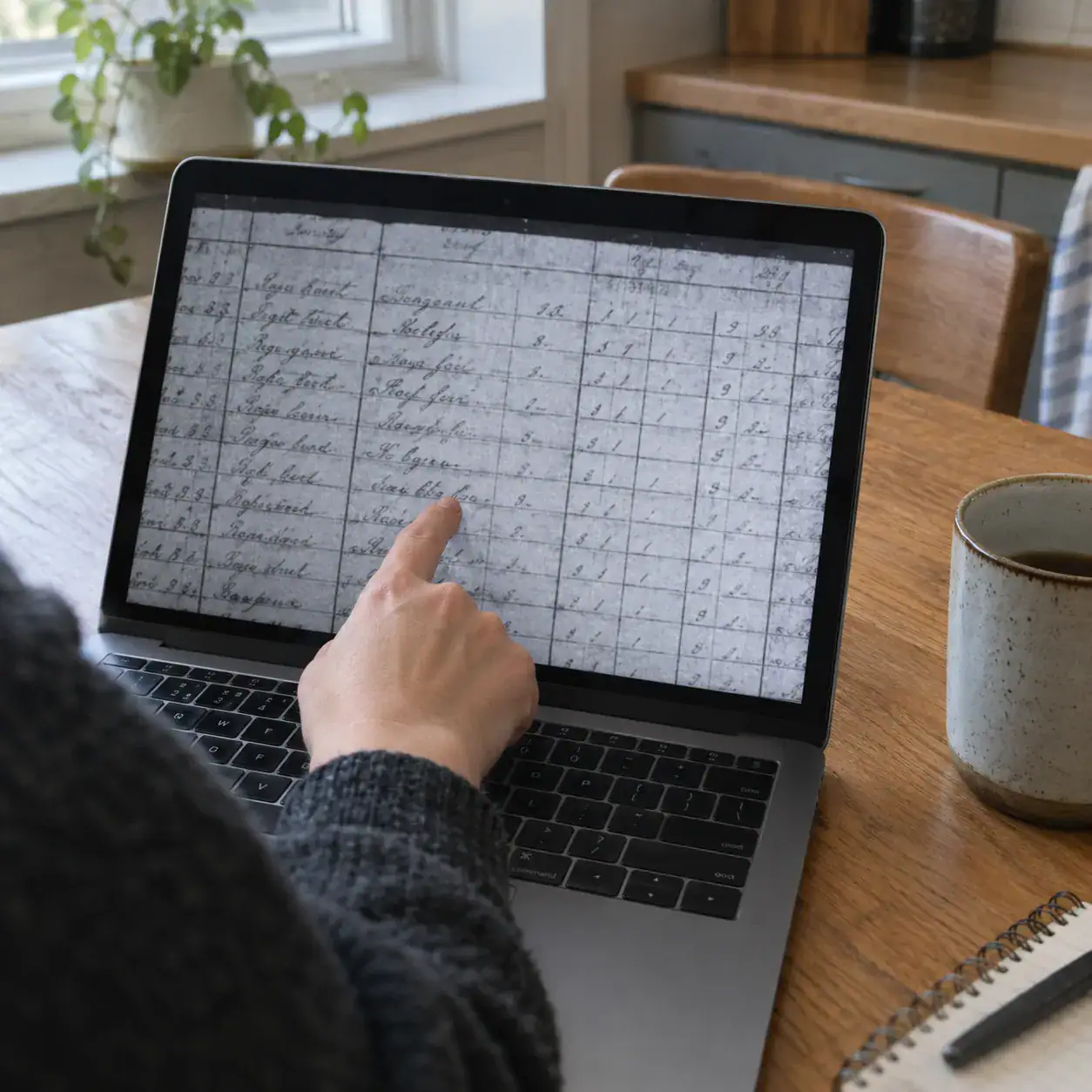
My first thought is that it’s a misspelling. My second is that the census taker had a sense of humor. My third, the one I like best, is that “Duffer” was a family nickname, and he wore it the way other men wore “Red” or “Slim.”
I’ve been tracing this family for years, and I don’t know the word. There’s a small, hot embarrassment in that, even alone at my own table.
Then I look one column over. It says “Cotton mill.”
I look again. Doffer, with an o. It isn’t a nickname: it’s a job.
I learn later that census takers in 1940 were asked to get a specific occupation.
The person who answered is marked on the page. Beside Ora’s name is a small X with a circle drawn around it. In 1940, that was how the census taker showed who gave the answers, and it’s the only census that marks it.
So it was her. She stood at the door, or sat at a kitchen table not so different from this one, and told a stranger about her family one name at a time. The page holds what she said, which isn’t always the same as what was true.
But “Doffer” was her word for his work.
She named it for him.
I wonder how she said it. Proudly, or tiredly, or as plain as the weather, a fact of the house nobody needed to explain.
Dolpher, Dolphin, Dauphin
I look it up. Of course I look it up.
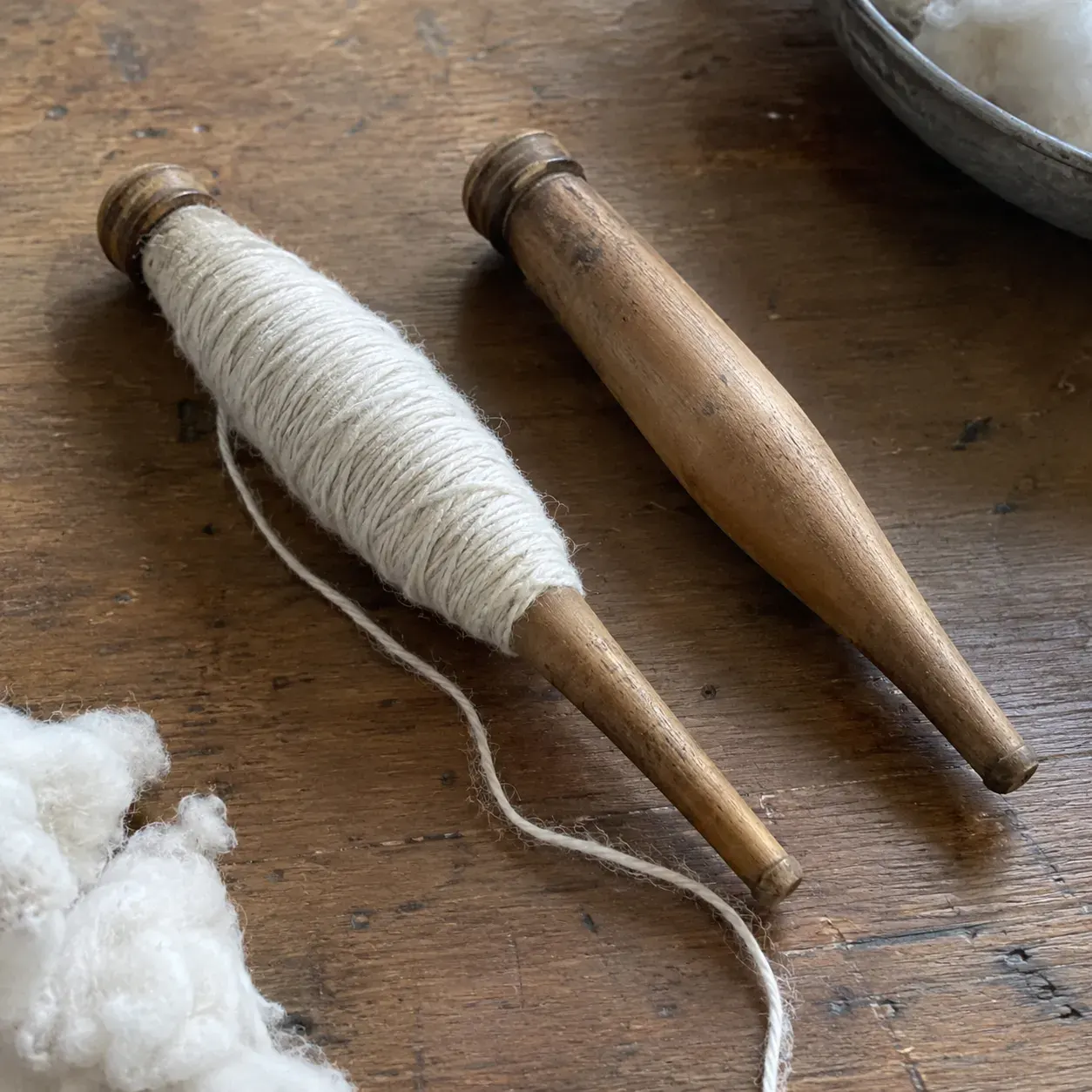
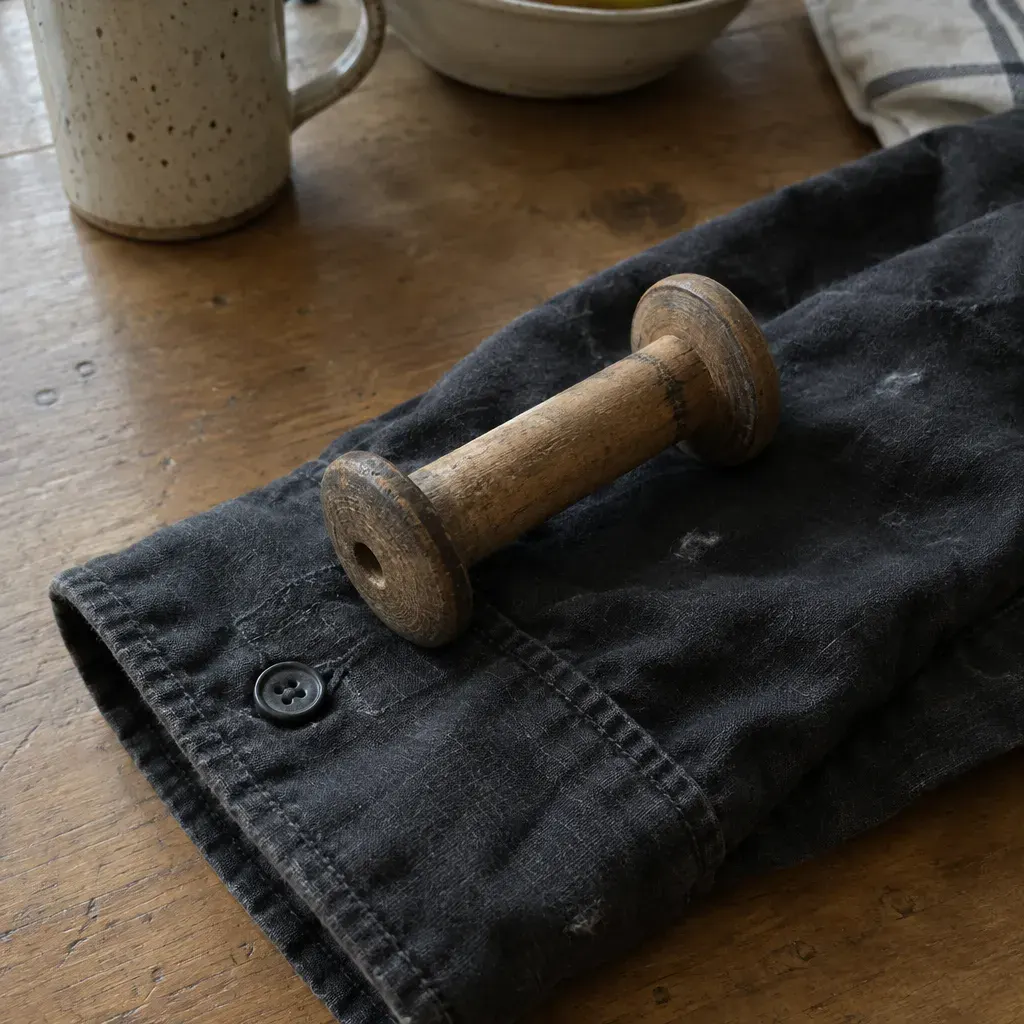
A doffer, it turns out, was a worker who swapped full bobbins for empty ones on spinning frames. The bobbins were the spools the spun cotton wound onto. The word comes from “doff,” to take off, the way a man doffs his hat.
He took things off machines. That was the job, right there in the name.
In modern mills, machines do the doffing now. Work that once took people now belongs to a machine, which might be why the word slid out of everyday talk before it ever reached me.
Then I go one step further and find something that makes me laugh again, differently this time.
In 1937 the Census Bureau put out its own index of job titles. It lists “Doffer” under textile mills and calls it semiskilled work. It also lists “dolphin,” “dolpher” and even “dauphin” as other ways the word turned up, each one pointing back to doffer.
Dolphin. Dauphin, like a French prince.
Somebody heard this word and wrote down a sea creature. Somebody else wrote down royalty.
I wasn’t the first to get it wrong. Other ears missed it, and other pens slipped.
There’s a comfort in that I didn’t expect.
And the joke is gone now. The guess is gone. In its place is a man with a job title strangers once had to sound out.
When the Frames Go Quiet
Here’s what I can piece together of his day, as far as the descriptions go.
In the spinning room, machines called spinning frames wind spun cotton onto bobbins. When the bobbins are full, the machinery stops.
That’s the doffer’s moment.
The doffers swarm in and change all the bobbins as fast as they can. Full ones off, empty ones on. Then the frames start up again, and the doffers wait for the next round.
The work took speed and quick hands more than strength.
I keep picturing the stopping. A room built for motion, suddenly still, and a handful of people hurrying through the stillness before it ends.
Then again. And again.
My mother remembers one thing about him, and she’s careful to say it’s barely a memory. Her mother told her he worked “in the spinning room.” And his clothes always had lint on them.
That’s all she has. A room and some lint. She isn’t sure of more, and I don’t push.
I can’t know the rest. I picture it anyway. A man coming home with cotton on his sleeves, and a little girl reaching up to pick it off.
Lint travels. It rides home on a cuff and a collar and drifts onto the kitchen floor. I like to think a little of the spinning room came home with him at night.
Work for Small Hands
Then I read the sentence that changes the whole page.
The job was often done by children.
I sit with that for a while. The tea is long past cold.
Quick work. Small, fast motions. For a long time, a lot of the hands doing it were small.
By 1933, a federal code had ended child labor in the cotton mills. When Roosevelt approved it, he said it in one plain sentence: “Child labor in this industry is hereby abolished.”
In this industry. Not everywhere. But in the cotton mills, that was the line.
So in 1940, the doffer on my page was a grown man of thirty-four, doing a job that children once did.
And then there’s the family story. It isn’t much of one. Somewhere along the way, somebody said he “started at the mill as a boy.”
Nobody can tell me when. Nobody can tell me what he did there, or whether it’s even true.
I used to hear that line as color. A hard worker, an early start, the kind of thing people say about the old folks.
Now I hear it differently. I don’t know how old he was, and I won’t guess. But I know what work those rooms once handed to children, and I know the word his wife gave the census taker in 1940.
I can’t make those two things meet. I can’t stop them from leaning toward each other, either.
Every Line a Working Day
You have eight great-grandparents. So do I. Arlis is one of mine.
On a lot of their lines, depending on the year and the record, there’s a word for what they did with their days. Some of those words you’ll know right away.
Farmer. Teacher. Laborer.
Some you won’t.
He was never a duffer.
He was a doffer.
I say it out loud in the dark kitchen. Then I say his name.
Next week I’m going to ask my mother what else she remembers, starting with that spinning room. If someone in your family carries a detail like that lint, Generational Journeys is an e-book of 170 interview questions for relatives, and a good place to begin while you can still ask.