Aaron Holt, an archivist at the National Archives, once put it bluntly: it only takes three generations to lose a piece of oral family history.
Three.
A story your great-grandmother told at her own kitchen table may already be gone.
Thanksgiving is the one day the people who hold your family’s stories are all in the same room. Here are 15 questions to ask before the pie comes out.
One of them comes straight from a psychology study, and it’s about a grumpy relative’s face.
1. What Were Your Grandparents’ Full Names?
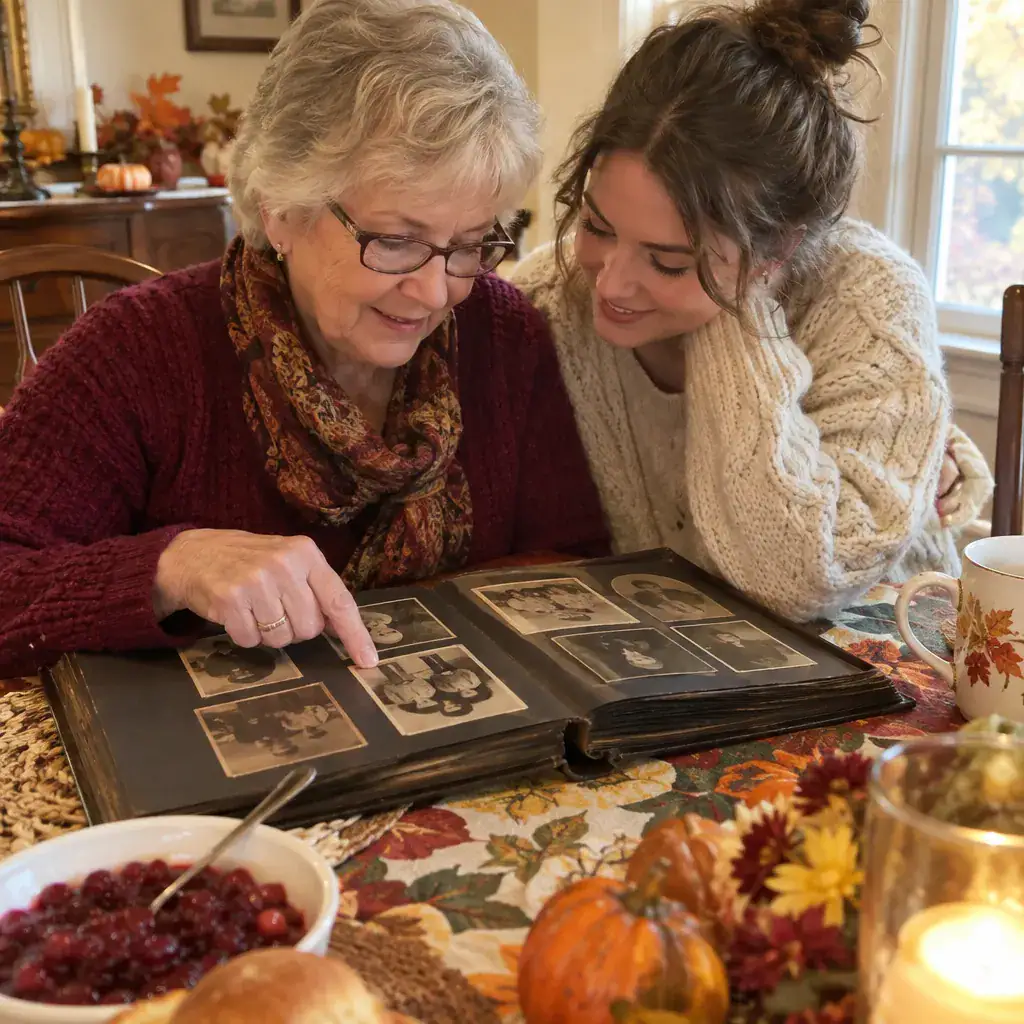
An Ancestry survey in 2022 found that more than half of Americans (53%) can’t name all four grandparents.
So start with the easy one. In that same survey, 51% said they want stories about what life was like when their ancestors were young, and the names are how you get there.
Here’s the tip: write them down as you go, and get the whole name. Full given names, maiden names, the nicknames nobody uses on paper.
Those are the exact terms every census, draft card and marriage record is filed under, so a name you catch tonight is a door you can open later.
2. How Did You Two Meet?

This is the first question on a list of 20 that Emory University psychologists Marshall Duke and Robyn Fivush put to about four dozen families in 2001. They called it the “Do You Know?” scale.
Kids who knew more of the answers tended to have higher self-esteem. It was a small study, and it found a link, not a guarantee. Still, not bad for one story.
Don’t settle for “at a dance.” Ask who spoke first, who almost didn’t go out that night, who disapproved. The bare fact of how they met is on no record anywhere. The details are what make it a story worth passing down.
3. What Was Going On the Day I Was Born?
Also on the Emory list: “Do you know what went on when you were being born?”
You were there, and you remember none of it. Somebody at that table may remember the weather, the drive and who was pacing the hallway.
Go for the small stuff: the time of day, who got the phone call first, what song was on, what the drive to the hospital was like. Ask the same about your siblings and your parents, and you’ll start to hear the pattern of a whole family’s arrivals.
4. Where Did My Name Come From?
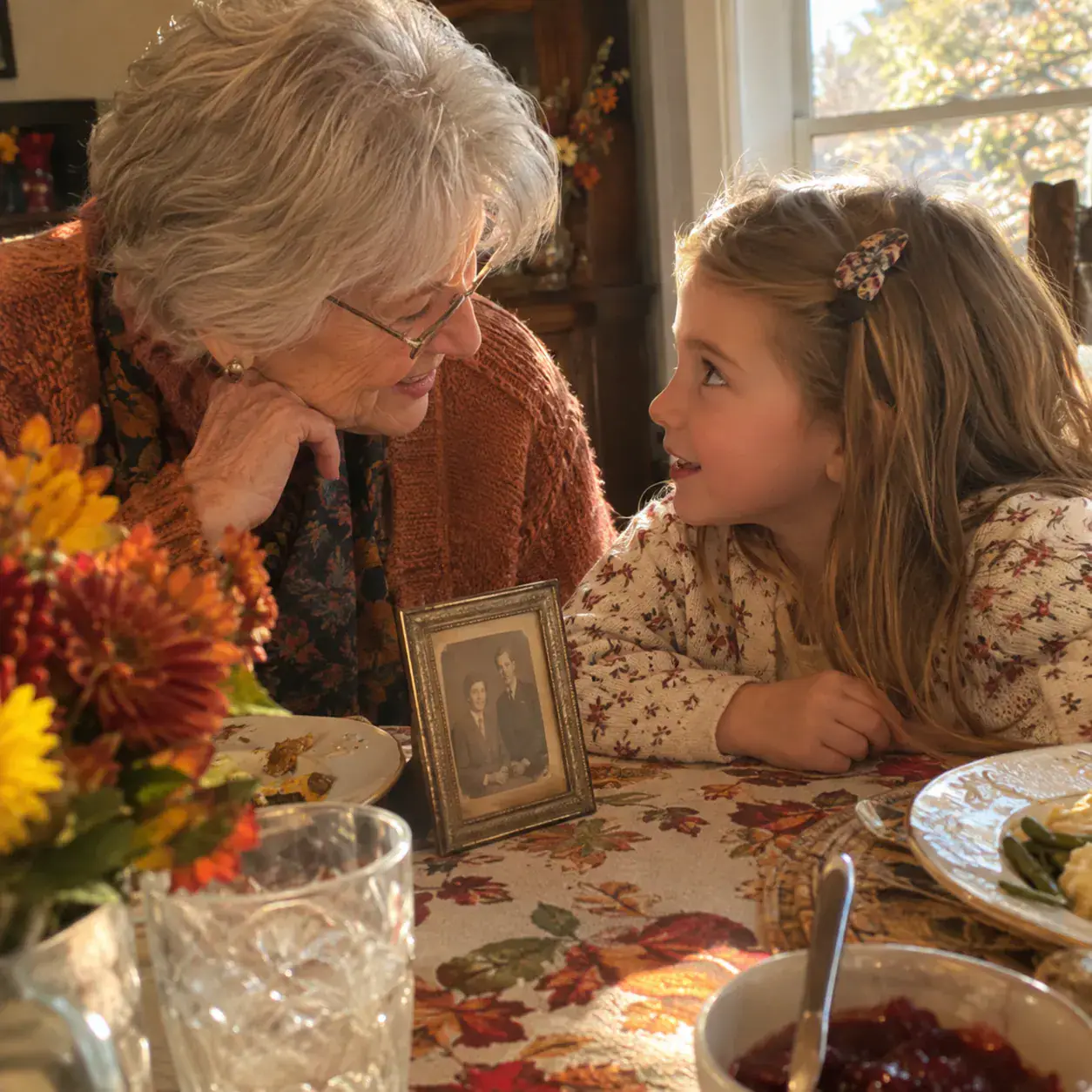
Want more than 15? Generational Journeys: 170 Interview Questions to Unlock Your Family’s Past gives you a question for every branch of the family tree.
The scale asks this one too. Do you know the source of your name?
Your birth certificate has the name. It doesn’t have the reason. Were you named for a great-aunt, a ballplayer, a song on the radio? The people who picked it are the ones who know.
Then ask the better question: what names did they consider and throw out? The runner-up is often where the real story hides, the aunt they didn’t want to offend, the name that felt too old-fashioned, the one your grandmother vetoed on the spot.
5. Was Our Last Name Always Spelled This Way?
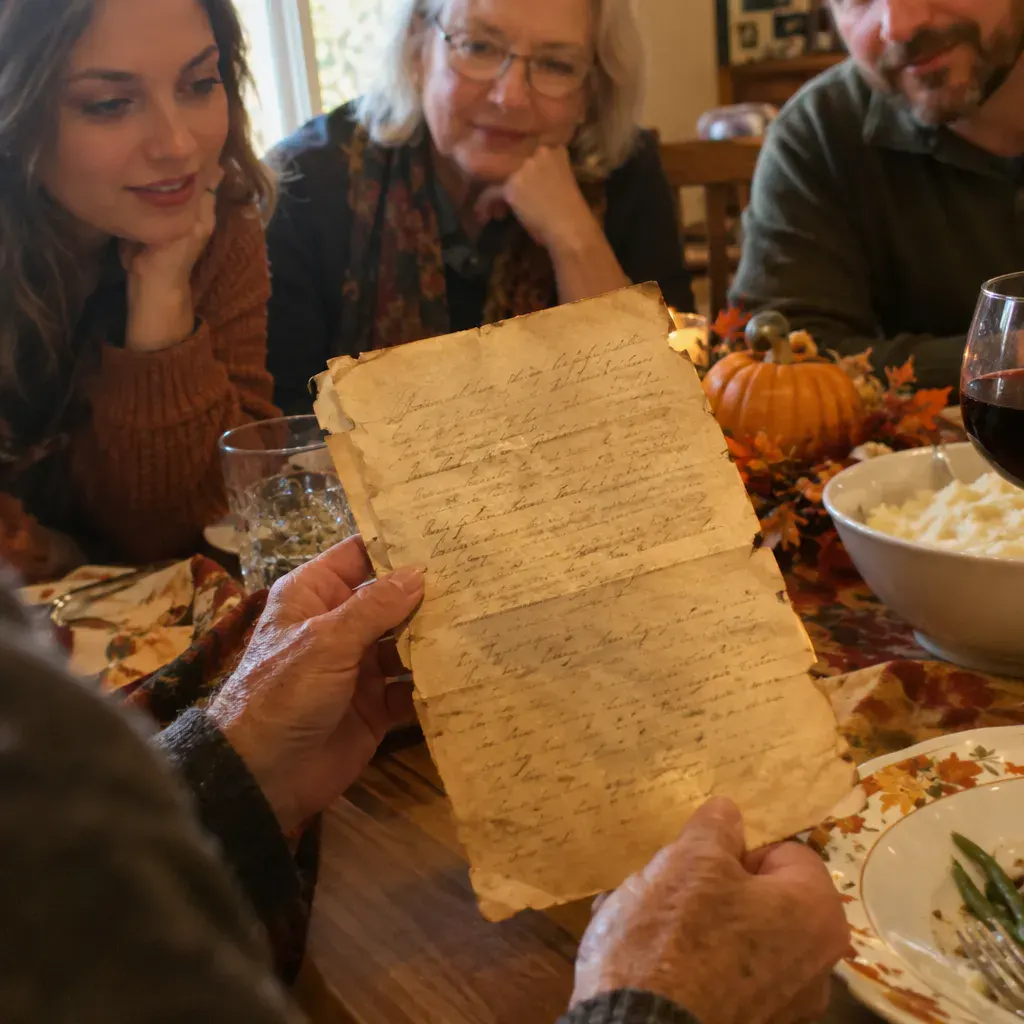
Plenty of families have a legend that somebody changed the name at Ellis Island. The records almost never show that.
U.S. Citizenship and Immigration Services says one-third of Ellis Island’s inspectors were foreign-born themselves, and they spoke an average of three languages. Their rules said not to change a name unless the immigrant asked or the original was wrong.
The spelling usually shifted later, often by the family’s own choice.
So hunt for the oldest piece of paper in the house, a naturalization certificate, a yellowed envelope, the front page of a family Bible. Name changes in naturalization have only been documented since 1906, so a record from before then can show a spelling you’ve never seen. Photograph whatever you find before it goes back in the drawer.
6. How Did Our Family End Up Here?
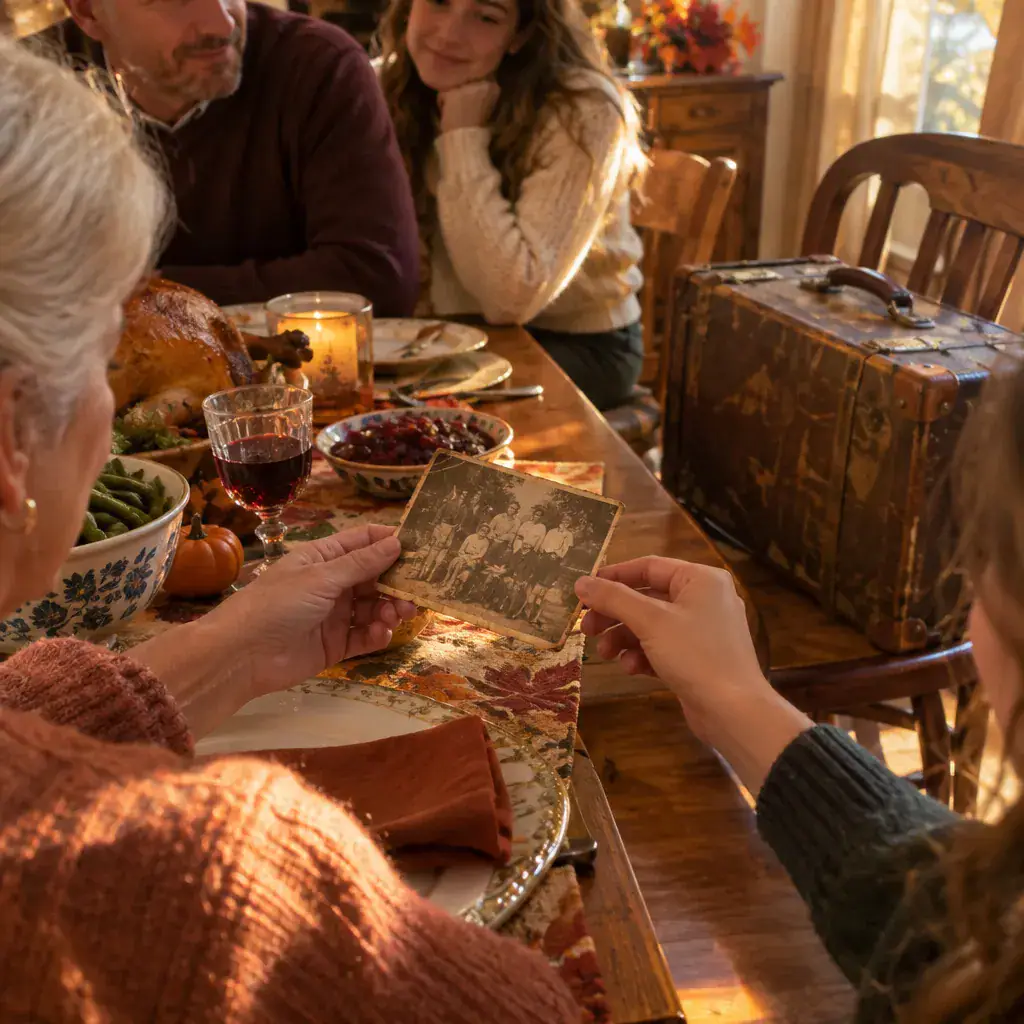
If the answer is “Ellis Island,” ask for more. USCIS notes that many immigrants, recalling the trip decades later, used those two words for the whole experience. The passenger list wasn’t even written there.
Not every family came by ship, or by choice. Whatever the route, someone at dinner may hold a piece of it.
Work backward from whatever you’re given. That manifest was filled out abroad, often back near the town where your ancestor bought the ticket, so the two facts to pin down are the port they sailed from and the year. With those, the list that does exist becomes findable. And if your family’s road here didn’t run through any port at all, ask where it did begin.
7. Where Were You Living in 1950?
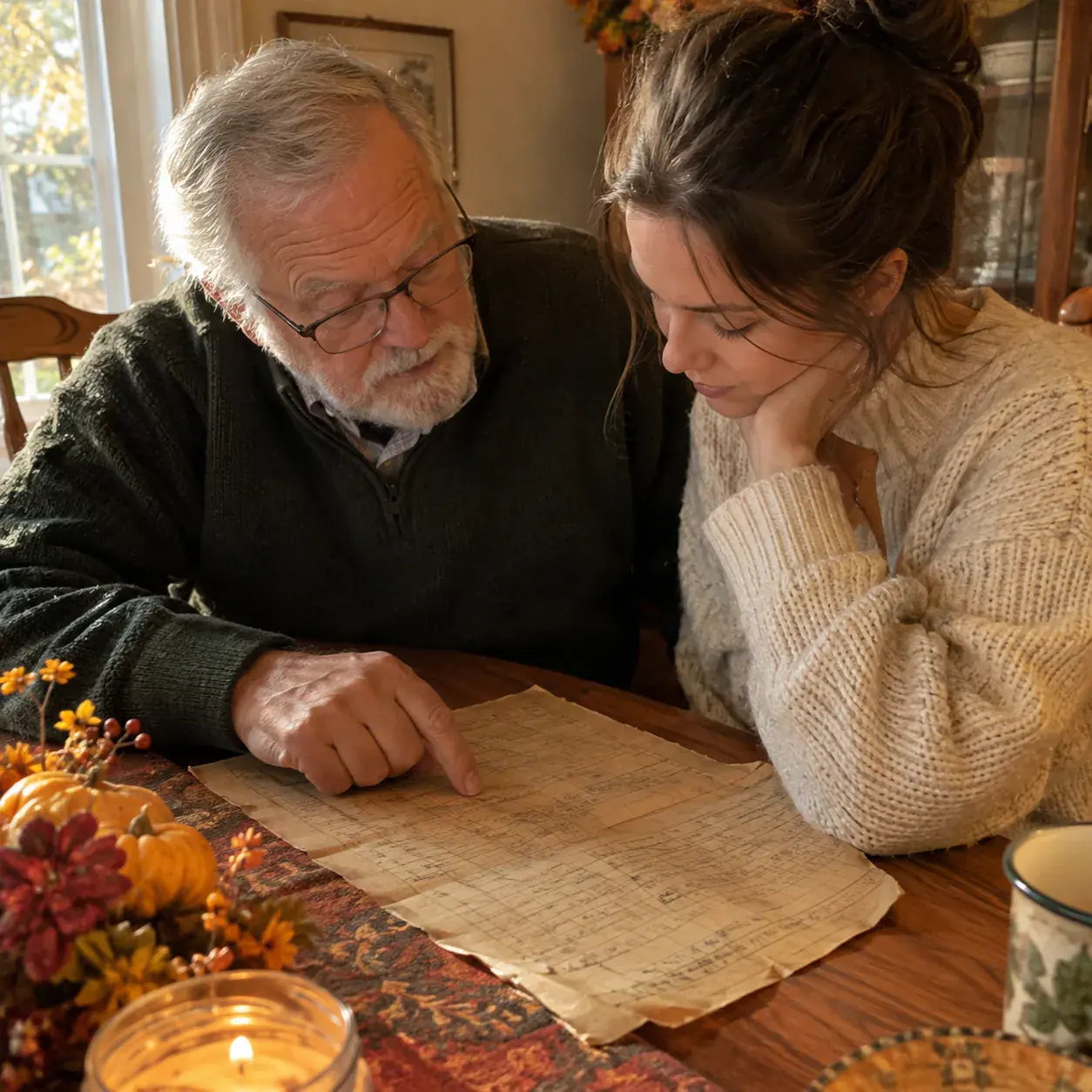
Census records stay sealed for 72 years. The 1950 census opened on April 1, 2022, with about 151 million people in it. The 1960 census stays locked until 2032.
Anyone at your table born before April 1950 should have been counted. The name index was built by computers reading handwriting, so it has gaps. A street or town from Grandma is what makes her findable.
You can search the 1950 census free by name and place through the National Archives. So write down the exact address and town your relative gives you tonight, cross streets and all. That one detail is what turns a shaky name match into a certain one.
8. What Was Your First Job, and What Did It Pay?
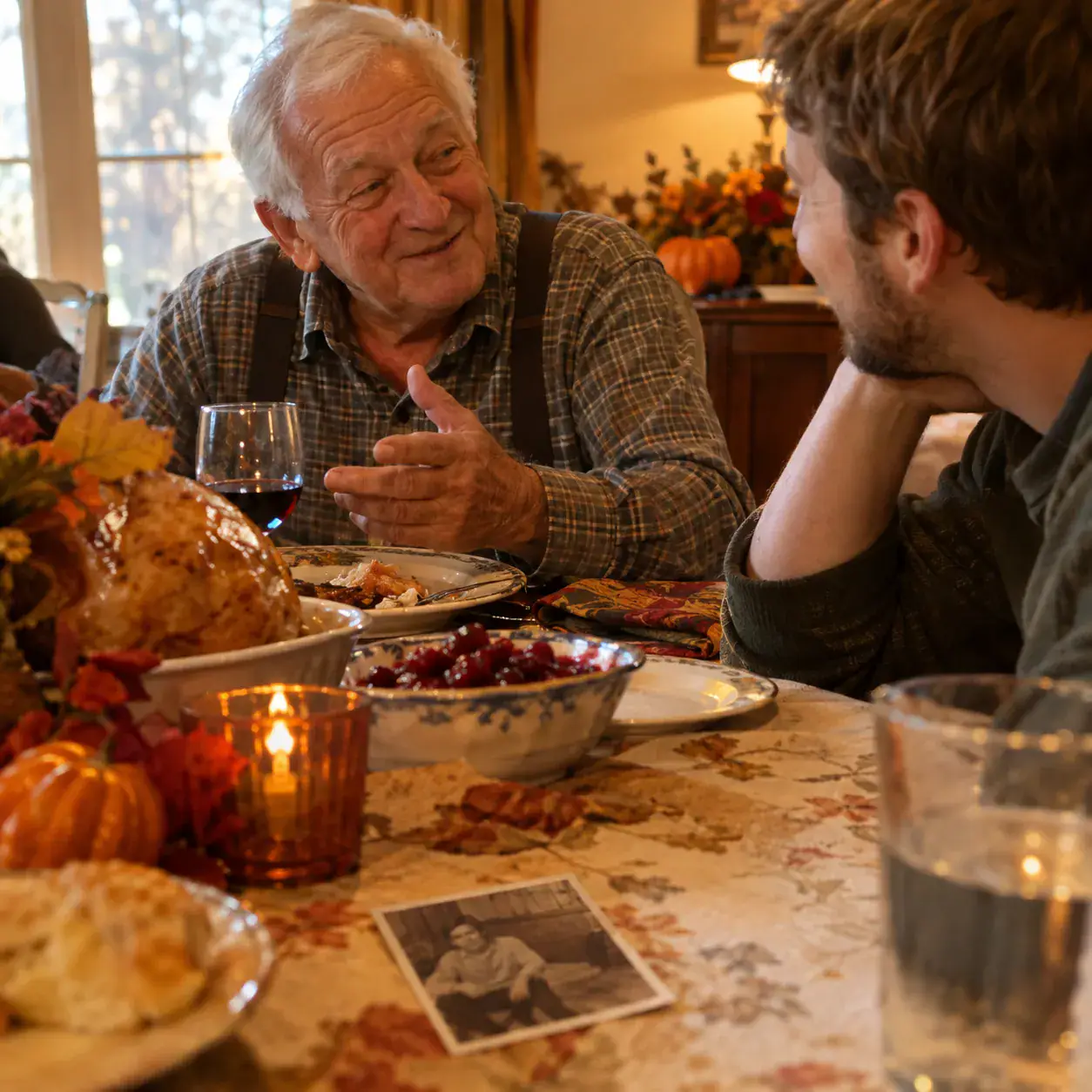
The federal minimum wage rose to $0.75 an hour in January 1950. It didn’t hit a dollar until 1956.
Farm and household jobs weren’t covered in the early decades, so Grandpa’s “I made less than that” may be perfectly true. Ask what he bought with the first paycheck.
For a sense of scale, the federal floor was just $0.25 when it began in 1938, $0.40 by 1945, and didn’t reach $1.25 until 1963. Numbers alone go in one ear, so ask what the money actually bought: a tank of gas, a week of groceries, the down payment on a first car. That’s the answer you’ll still be repeating in twenty years.
9. Who in the Family Served?
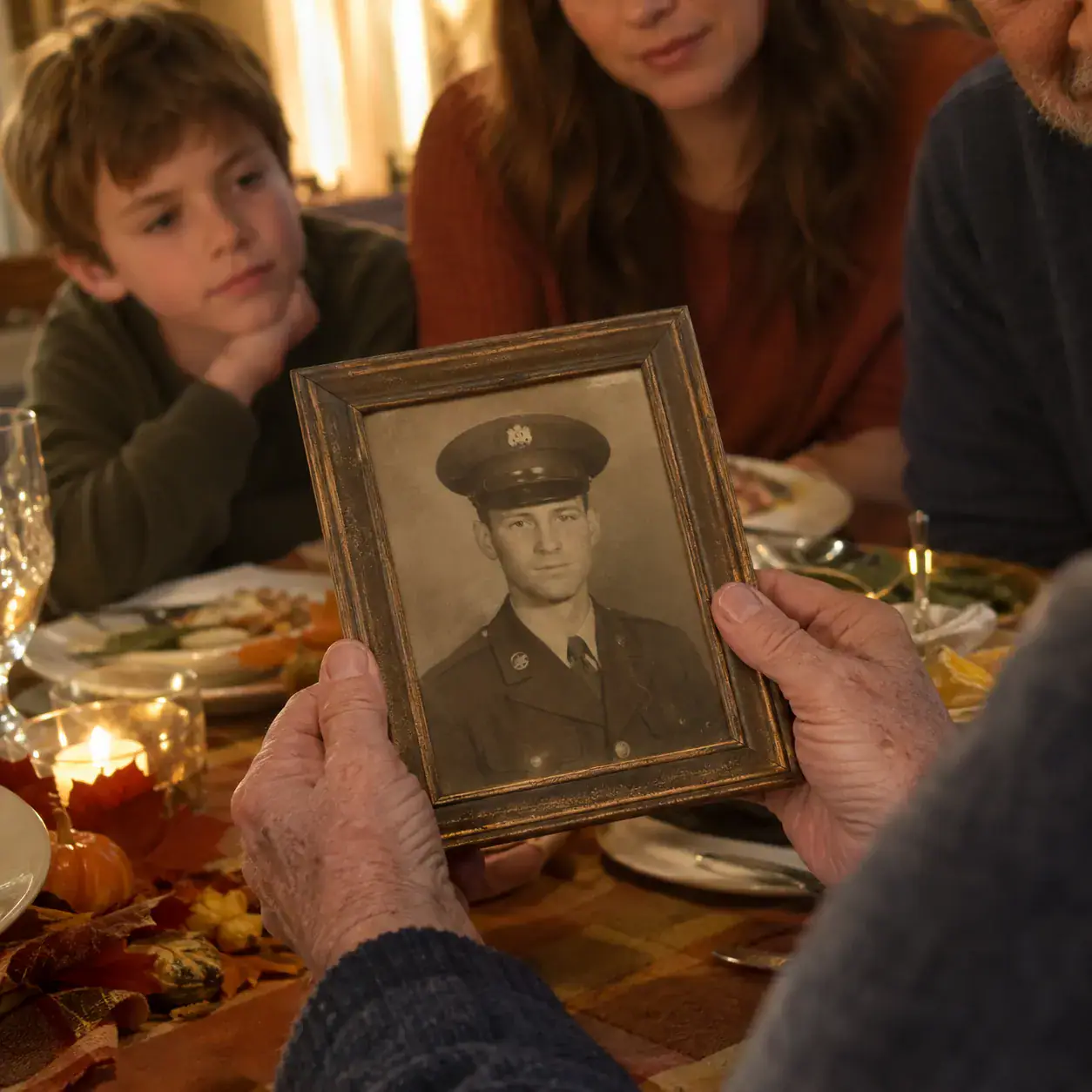
On July 12, 1973, a fire at the National Personnel Records Center in St. Louis destroyed 16 to 18 million military personnel files. An estimated 80% of the files for Army personnel discharged between 1912 and 1960 were lost. No duplicate copies existed.
Archivists can often rebuild the basics from other records. But the stories told at your table may be the only detailed account your family ever gets.
Of the 16.4 million Americans who served in World War II, about 30,000 were still living as of 2026, less than 0.2%. If one of them is at your table, don’t only ask about the big days. Ask about the food, the friends, the boredom, the letters home. Those are the parts that survive nowhere else once the voice is gone.
10. What Was on the Thanksgiving Table When You Were a Kid?
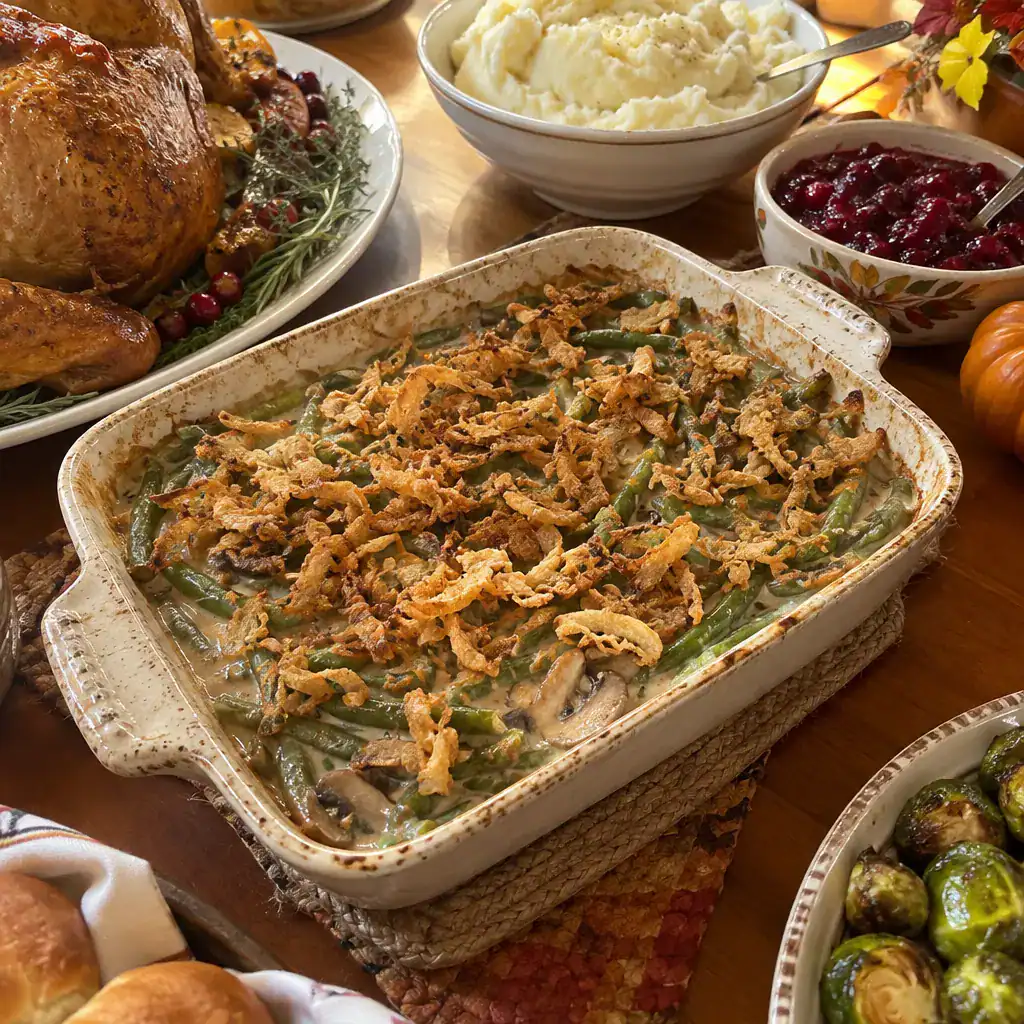
Green bean casserole feels like it came over on the Mayflower. It dates to 1955, when Dorcas Reilly of Campbell’s home economics department created it as “Green Bean Bake.”
Anyone old enough to remember a Thanksgiving before 1955 ate one without it. So what was there instead?
Reilly’s original recipe card now sits in the National Inventors Hall of Fame, and Campbell’s estimates the dish reaches more than 20 million households every Thanksgiving. So turn the question into a tour of your own table: which dishes have quietly disappeared, which one nobody is allowed to skip, whose recipe is it really. The menu is its own kind of family tree, and someone there remembers how it grew.
11. Who Do I Look Like? Who Do I Act Like?
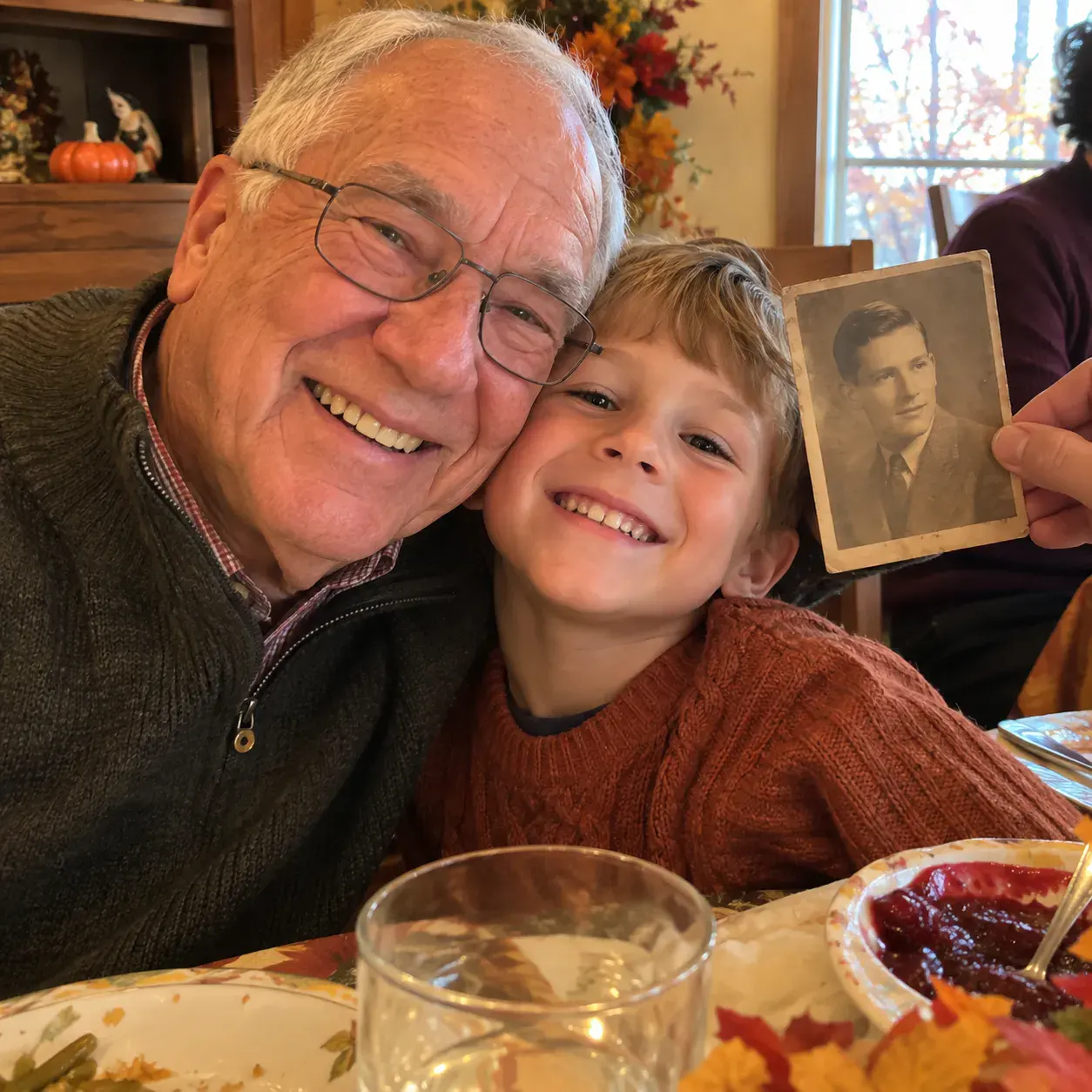
Two more from the Emory list, and fair warning, they can start an argument.
A photo can show that you got your grandfather’s chin. Only someone who knew him can tell you whether you got his stubborn streak too.
So put an old photo on the table before you ask. Nothing gets a room talking like a picture passed hand to hand, everyone claiming your nose, your laugh, your temper for a different branch of the family. Let the argument run, and record it. The debate is the answer.
12. What Runs in Our Family?
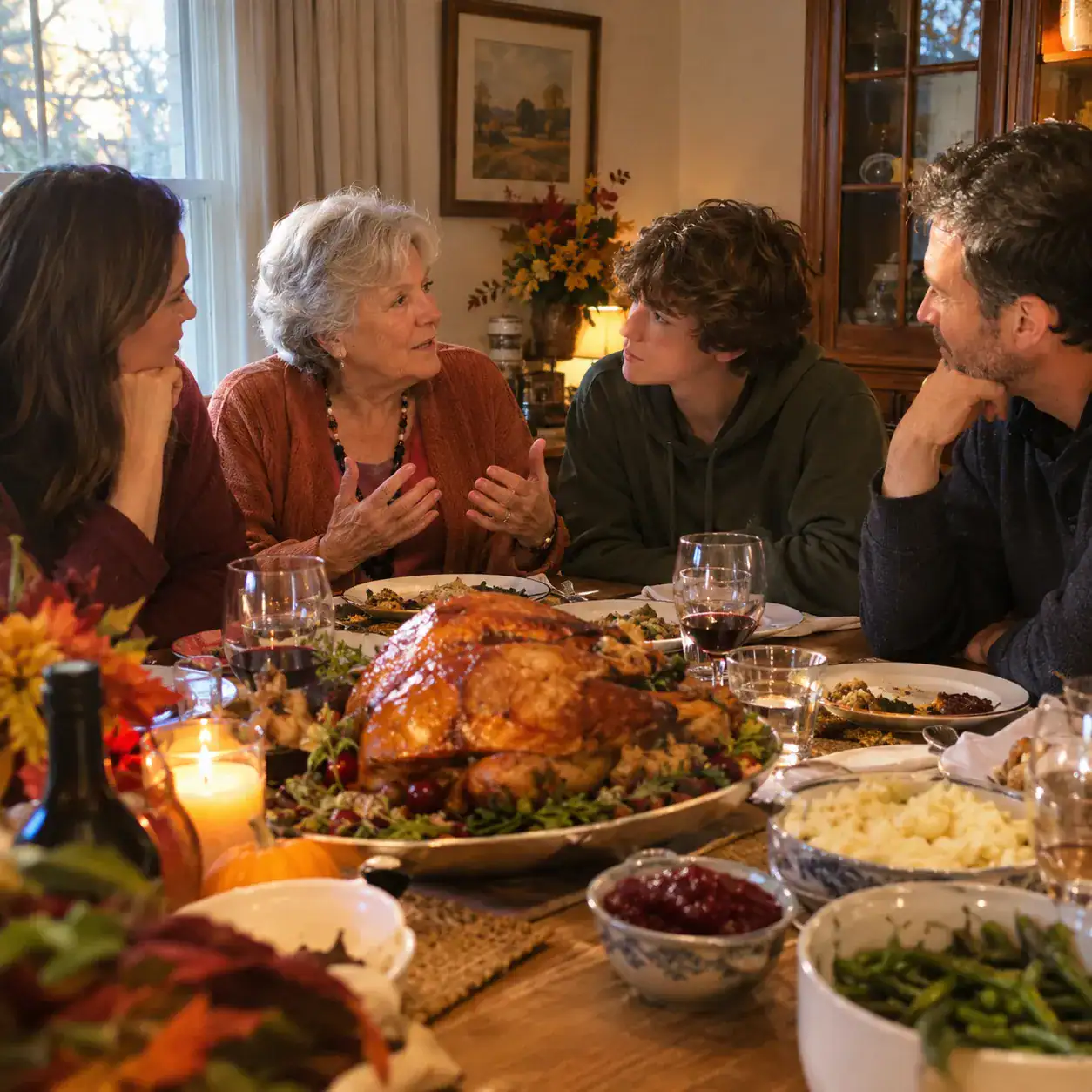
Thanksgiving has had a second official job since 2004. That’s when the U.S. Surgeon General declared it National Family History Day, to get families talking about their health.
A federal survey at the time found that 96% of Americans believed knowing their family health history was important. Only one third had ever tried to write it down.
Keep it light, but keep a list. Who had what, and roughly how old they were when it showed up. A napkin is fine. You’re not diagnosing anyone, just catching the pattern while the people who remember it are still here to ask.
Whatever you hear is worth sharing with your doctor.
13. What Was the Hardest Stretch This Family Got Through?
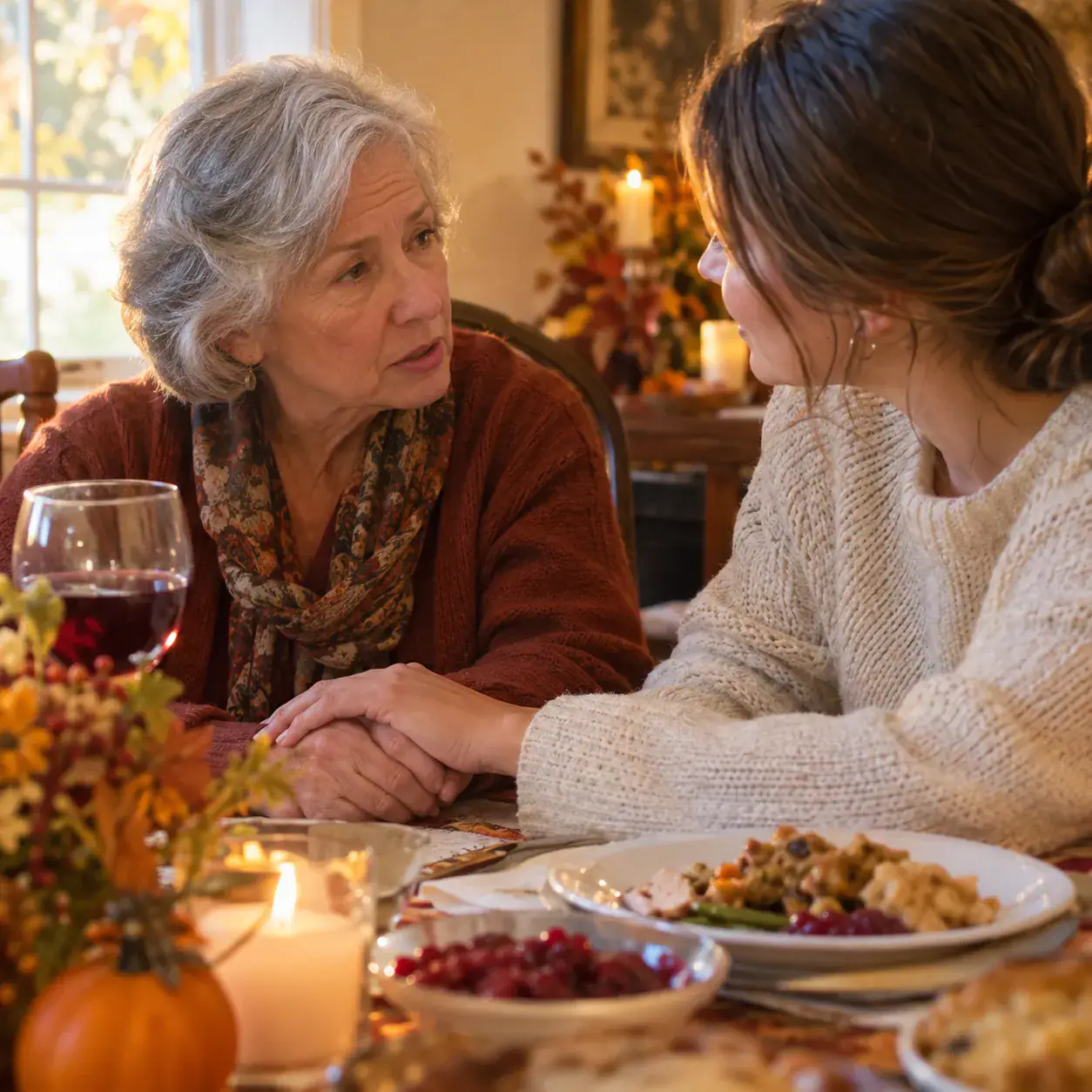
Ask this one gently, and let people pass.
Marshall Duke has described three kinds of family story. We came from nothing and rose. We had it all and lost it. Or we’ve had our ups and downs.
He considers that last kind the healthiest. The bad years belong in the telling.
So let whoever’s talking set the pace, and don’t rush to fill the silences. If the room goes quiet, that’s often the question working. And when the hard part comes with a “but we got through it,” that’s the whole point, the part Duke found in the families who told their stories most fully.
14. Which Family Story Has Nobody Ever Been Able to Prove?
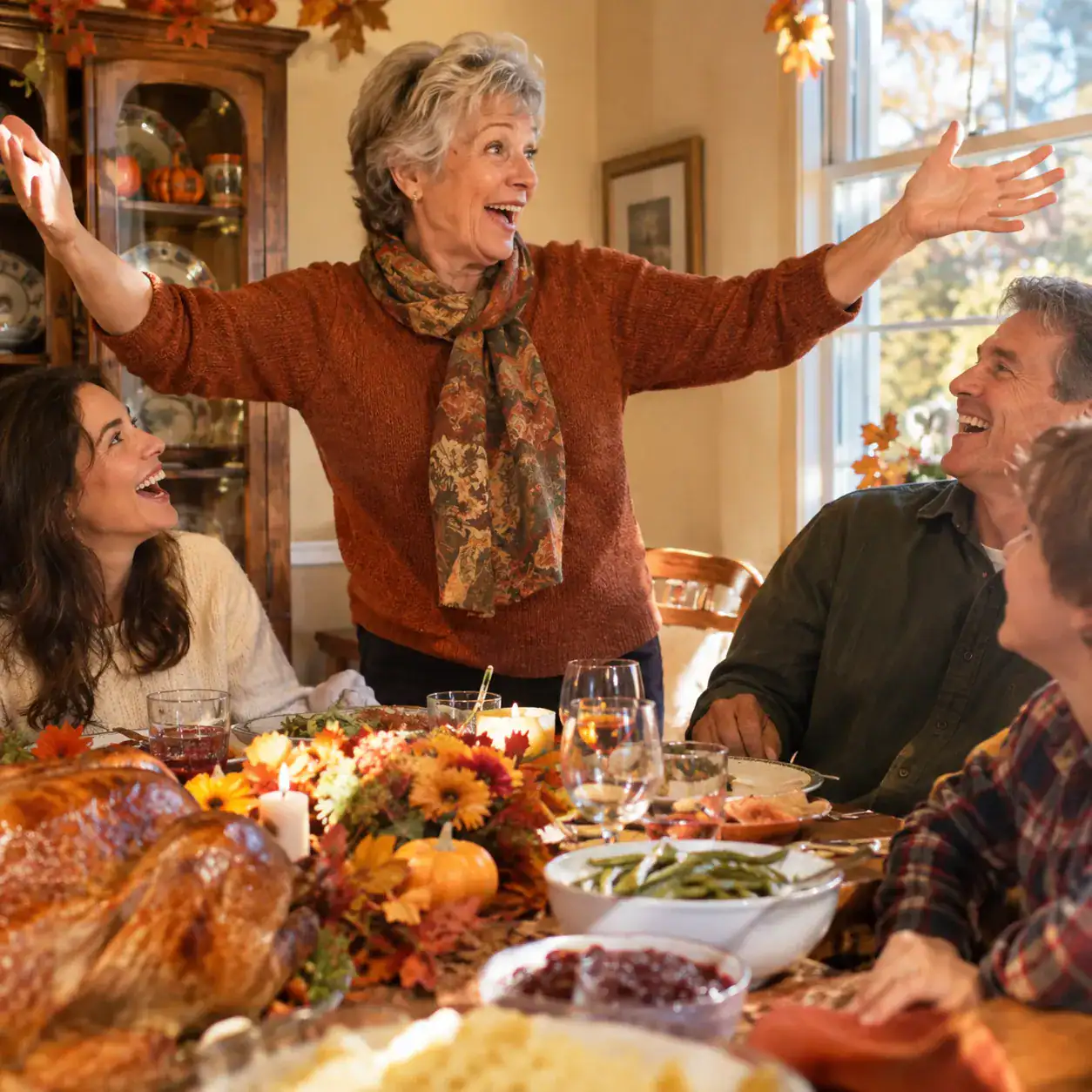
Here’s the one from the intro. The last question on the Emory list asks whether you know about a relative whose face “froze” in a grumpy position because he or she did not smile enough.
That is a real item on a real research scale. Tall tales are family history too.
Write the legend down exactly as it’s told, teller and all, before anyone “corrects” it. The version that survives is half the gift. And keep it on your list, because every so often a record turns up years later and proves the unprovable, which is the best kind of Thanksgiving follow-up there is.
15. What Do You Want the Family to Remember About You?
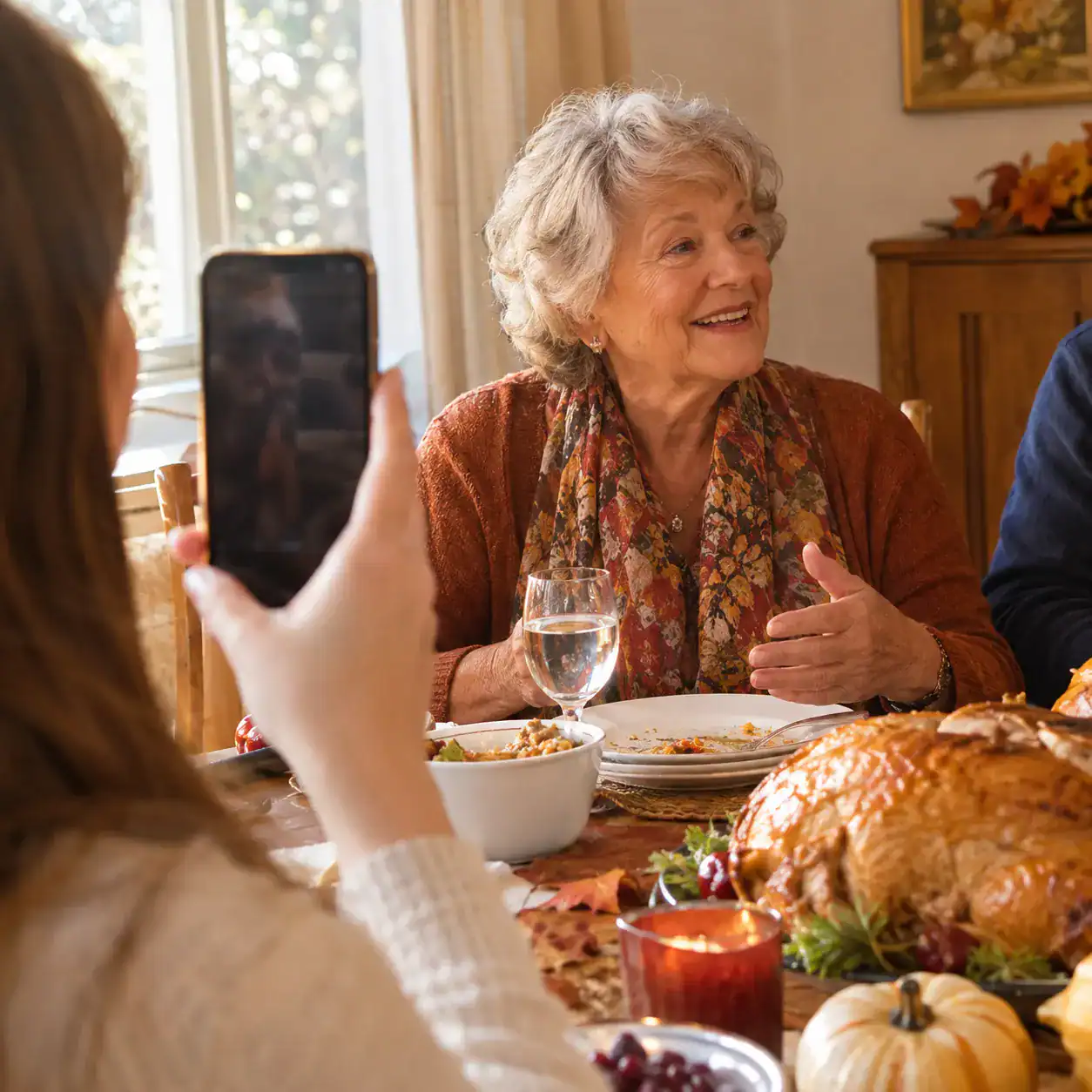
Since 2015, StoryCorps has run the Great Thanksgiving Listen, which invites people to record an interview with an elder over the holidays. The recordings are archived at the American Folklife Center at the Library of Congress.
So a conversation recorded at your table can end up in the Library of Congress.
StoryCorps breaks the Listen into a few simple steps: pick someone, prepare a handful of questions, find a quiet corner, hit record. A phone is all the equipment you need. And ask the youngest person at the table too, not just the oldest. Their answer will sound unrecognizable, and priceless, in fifty years.
Pass the Stories, Too
Don’t treat this as a quiz. Robyn Fivush is clear that the specific facts aren’t the important part. The sharing is.
So pick three questions. Put a phone on the table and hit record.
And if three questions turn into thirty, keep going. Our Generational Journeys e-book has 170 more interview questions for the next round, whether that’s dessert or Christmas.
Three generations is all it takes for a story to disappear, and one of those generations is sitting next to the mashed potatoes.