

If your family was living in the United States in the spring of 1960, picture someone in their household filling in the census form that arrived in the mail. Those answers became records you can’t see yet.
In 2011, a team of researchers described where the long-form film had ended up: shrink-wrapped on pallets in a 35°F cold room, inside a cave at a National Archives facility in Lenexa, Kansas. The names on that film stay sealed by law until April 2032.
But only one household in four supplied the detailed answers. Whether your family’s household was among them will shape what you can learn when the records open: a few basic facts, or details about where they were born, where they worked and how they got there.
Why 72 years? (It isn’t a lifespan)
The explanation you’ll hear most often is that 72 years was meant to be a human lifespan. The idea is that by then, the people named in the census would no longer be living. National Archives historian Jessie Kratz told NPR in 2022 that this is what everyone assumed: “Everyone just said, ‘You know, 72 years is a lifespan.'”
No document says so, and the numbers don’t line up neatly. NPR reported that average U.S. life expectancy was closer to 73 years when the rule became federal law, and noted that the latest figure in 2022 was about 77.
The best lead is precedent, and even that is a guess. The 1870 census records went to the National Archives in 1942, 72 years after that count. Kratz thinks the 1952 agreement most likely borrowed that gap. In her words: “That would be my biggest guess, although I have not seen a piece of paper that says that.”
So when someone tells you the rule is a lifespan formula, you can tell them the National Archives’ own historian has found no paper trail for it.
The rule started as a letter, and it was challenged once

The 72-year rule began as correspondence between two officials. On October 10, 1952, Census Director Roy V. Peel and Archivist of the United States Wayne Grover agreed by letter that population census records sent to the National Archives would close for 72 years. The letters said that “seventy-two years from the enumeration date of a decennial census, the National Archives and Records Service may disclose information contained in these records for use in legitimate historical, genealogical or other worth-while research.”
The National Archives worked under that agreement for two decades. It opened the 1880 census in 1952 and what survived of the 1890 census in 1962. A 1921 fire damaged or destroyed most of the 1890 census population schedules.
Then came 1972, with the 1900 census due to open. The Census Bureau took the position that the 1952 agreement was invalid because it conflicted with Title 13, Section 9 of the U.S. Code. The 1900 census didn’t open until late 1973.
Congress settled the question with Public Law 95-416, signed October 5, 1978. Here’s the part most people miss: the statute, 44 U.S.C. § 2108(b), doesn’t contain the words “72 years.” It ties release to “the specifications and agreements set forth in the exchange of correspondence on or about the date of October 10, 1952,” between the Census director and the Archivist, “together with all amendments thereto.”
That means the rule written into law is a 1952 letter, and the law allows the two offices to renegotiate it. NPR reported in February 2022 that there was no active discussion about changing it.
When does the 1960 census open, and what is the National Archives doing now?
The 1960 census is scheduled for public release on April 1, 2032. Census Day was April 1, 1960, so that’s 72 years to the day.
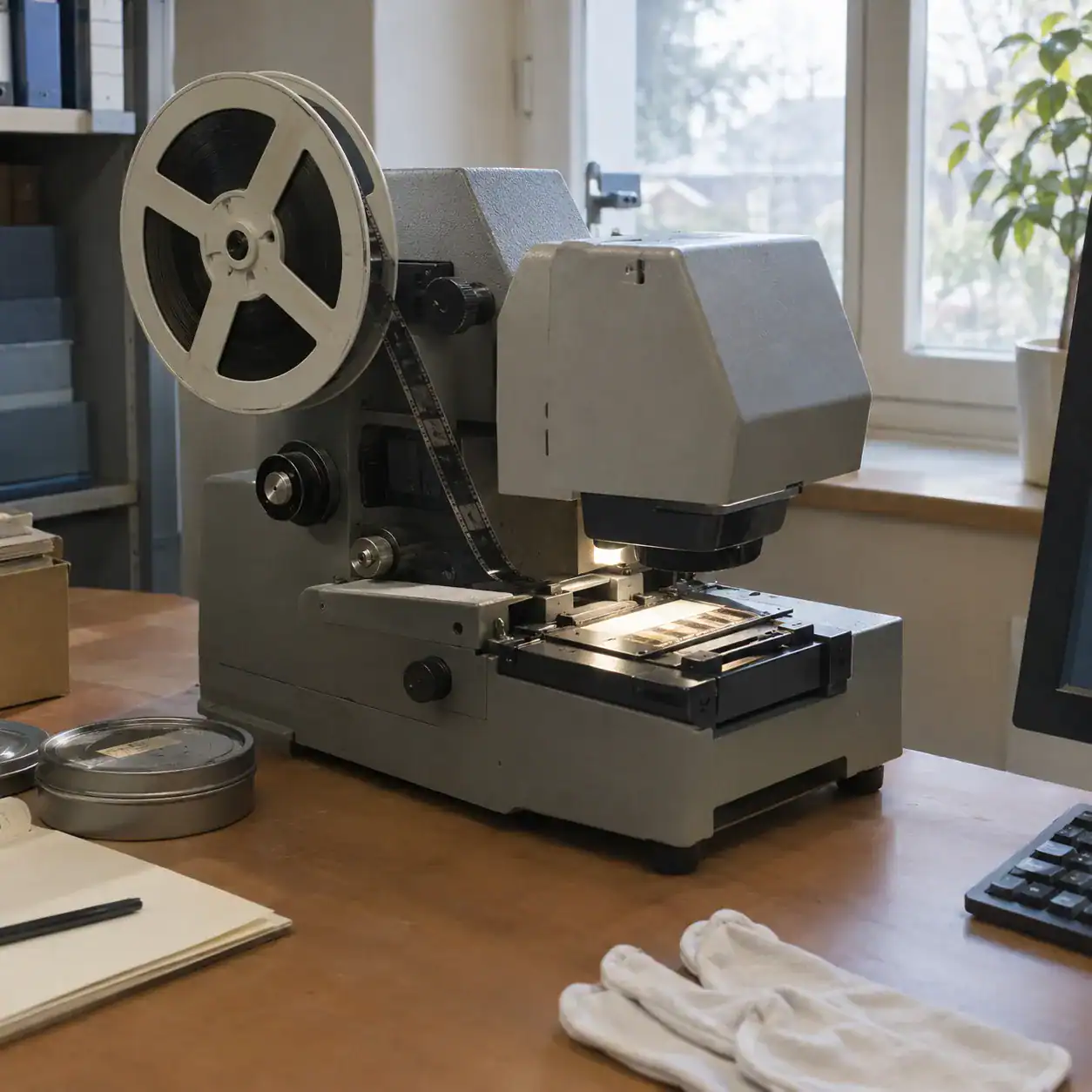
It will be a much bigger release than the last one. The 1960 census fills about 41,000 microfilm rolls, compared with 6,373 for the 1950 census. Claire Kluskens, a genealogy archivist at the National Archives, described it as more than six times as many rolls.
The National Archives began work in 2022 to digitize the schedules and related administrative records over the following decade. Summaries of a Kluskens update say staff are recording the state, county and enumeration district (ED) number for each roll as it’s scanned. An ED is the area one census taker covered.
For comparison, the 1950 census opened on April 1, 2022, with 7,816,000 population schedule pages scanned from those 6,373 rolls. It came with a name search on launch day, built with handwriting-recognition technology.
Don’t count on the same for 1960. No name index for 1960 has been announced, and the National Archives hasn’t said what searching it will look like.
The first census by mail, so the page you’ll see likely won’t be your family’s handwriting
The Census Bureau calls 1960 “the birth of the first mail-out census.” The post office delivered a questionnaire, called the Advance Census Report, to every occupied housing unit. It carried 6 population questions and 13 housing questions. Householders filled it in and held it for the enumerator, the census taker assigned to their area.
Enumerators marked every fourth household as a sample household and left a longer form: 28 more questions about each person and 33 about the housing. In cities, sample households mailed that long form back to the district office. Elsewhere, the enumerator collected it in person.
What happened next changes what you’ll see in 2032. Enumerators copied the answers onto special forms built for a machine called FOSDIC (Film Optical Sensing Device for Input to Computers), recording them as penciled-in circles.
The forms were photographed onto microfilm, and FOSDIC read the marks off the film and wrote the data to magnetic tape. The 1960 census was the first decennial count processed this way.
Put that together and the 1960 images will likely be enumerators’ transcriptions on machine-read forms, made up largely of filled-in circles. They likely won’t be your family’s handwriting, and they won’t look like the line-by-line ledger you know from 1950 and earlier. What the record shows is what one household member reported, as an enumerator copied it down. The sources available for this article don’t establish how names will appear on the public images, so wait to see the film before planning around it.
Everyone answered a few questions. One household in four answered dozens.
Every household was asked only a handful of questions: who lived there, how each person was related to the head, sex, race, age or date of birth and marital status. The address was recorded too. The Census Bureau describes the short form as “only five questions,” with the name recorded alongside them.
For most families, that’s all there will be. About three households in four got only those basic items.
The long form went much further. The 25% sample asked about:
- birthplace and parents’ birthplaces
- language spoken before coming to the U.S.
- when the person moved into the house, and where they lived on April 1, 1955
- schooling
- times married, and, for women, children ever born
- work, occupation, and the city and county where they worked last week
- “How did he get to work last week?”
- income in 1959
- military service: “Has he ever served in the Army, Navy, or other Armed Forces?”
Place of work and how people got there were new questions in 1960.
Sample households also answered housing questions about rooms, plumbing, the year the building went up, heating, telephone and the property’s value or rent. Some items went to even smaller groups.
A 20% sample was asked about the number of bathrooms. A 5% subsample was asked about fuels, television sets, radios, air conditioning, a washing machine, a clothes dryer and a separate freezer. If your family’s household fell in that 5% subsample, the form recorded how many TV sets they had. Most households won’t have that detail.
So go in with plain expectations. You can hope for a grandparent’s birthplace or a great-grandparent’s country of birth, but for any given family the odds favor the short list.
Where to look for your family in 1960
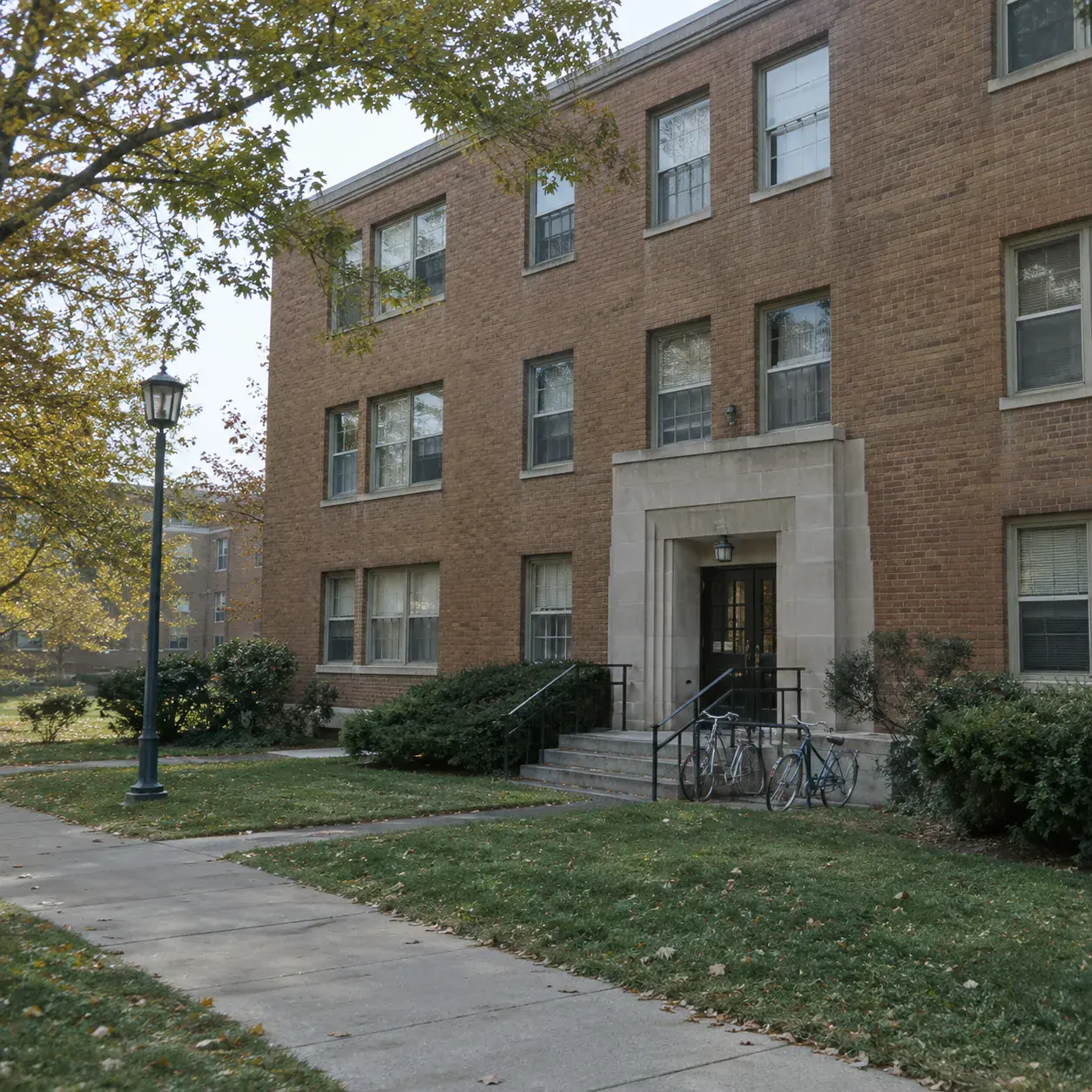
Finding a household on the film will depend on knowing where it was counted, and in 1960 that isn’t always where you’d expect.
Start with young adults. Since the 1950 census, college students have been counted at their “usual residence,” which usually meant the college address. Before 1950, census instructions implied counting them at their parents’ home.
A parent or aunt who was in college in 1960 may be listed where they were living at college rather than in their parents’ household. FamilySearch’s guide to the 1960 census also notes that college students and military personnel stationed elsewhere were left out of their family’s household listing. That most likely means they were counted where they were living, not left out of the census.
Another obstacle is geography. For earlier censuses, researchers lean on written ED descriptions that list the streets inside each boundary.
National Archives staff have said they couldn’t locate written ED descriptions for 1960, only maps. The 1960 Census Procedural History indicates boundary descriptions were dropped to cut costs. The maps are in the National Archives series “Enumeration District and Related Maps, 1880–1990.”
The film is organized by ED, so an exact street address will likely be your best way in, whatever search tools appear.
Wasn’t the 1960 census lost on old computer tapes?
You may have read that the 1960 census is gone. The story goes that by the mid-1970s, only two machines could read the 1960 census tapes, and “one was already in the Smithsonian. The other was in Japan!”
It’s a good story, and it doesn’t touch the records genealogists want. The National Archives’ Prologue magazine took it apart in 2000.
The tapes in question held statistical files, not the schedules with names. Of 642 tapes judged to have long-term value, the Census Bureau had copied 640 to newer formats by 1979. Two couldn’t be located.
The name-bearing schedules weren’t on those tapes. The Bureau microfilmed the transcribed forms and kept that film separately, and microfilm is what the National Archives is scanning for 2032. Census historian David G. Hendricks has put it plainly: the tape data had no names or street addresses and “no genealogy value.”
Can you see a 1960 record before 2032?
As of October 2026, the Census Bureau is accepting new Age Search requests again after a temporary pause. Check its Age Search page for current application instructions.
The service searches confidential census records from 1910 onward and issues an official transcript for a fee set by Congress. It’s available only to the named person, their heirs or their legal representatives.
Pin down the 1960 address now
Work out where each branch of your family was living on April 1, 1960, down to the street address and county.
Start with their entry in the 1950 census, which is open now on the National Archives’ 1950 census website. That gives you a 1950 address to work forward from. Then check family papers for anything dated around 1960 with an address on it.
And ask the relatives who were there. Someone who was a child in 1960 may remember the house, the street and who else lived under that roof, including anyone who was away at college.
If you’d like help getting that conversation going, Generational Journeys is an e-book of 170 interview questions to ask relatives.