Before World War II, Europe supplied 99% of the 50 to 80 million ornaments Americans bought each year. Then a light-bulb machine in Pennsylvania started turning out glass balls, eventually 1,000 a minute.
That box in your attic is a family record nobody labeled. Nearly everything in it traces back to a factory, a dime store or somebody’s kitchen table.
This list covers everything that went on the tree, tinsel, lights and toppers included. One of them exists because a catalog company phoned a textile mill.
1. Shiny Brite Glass Balls
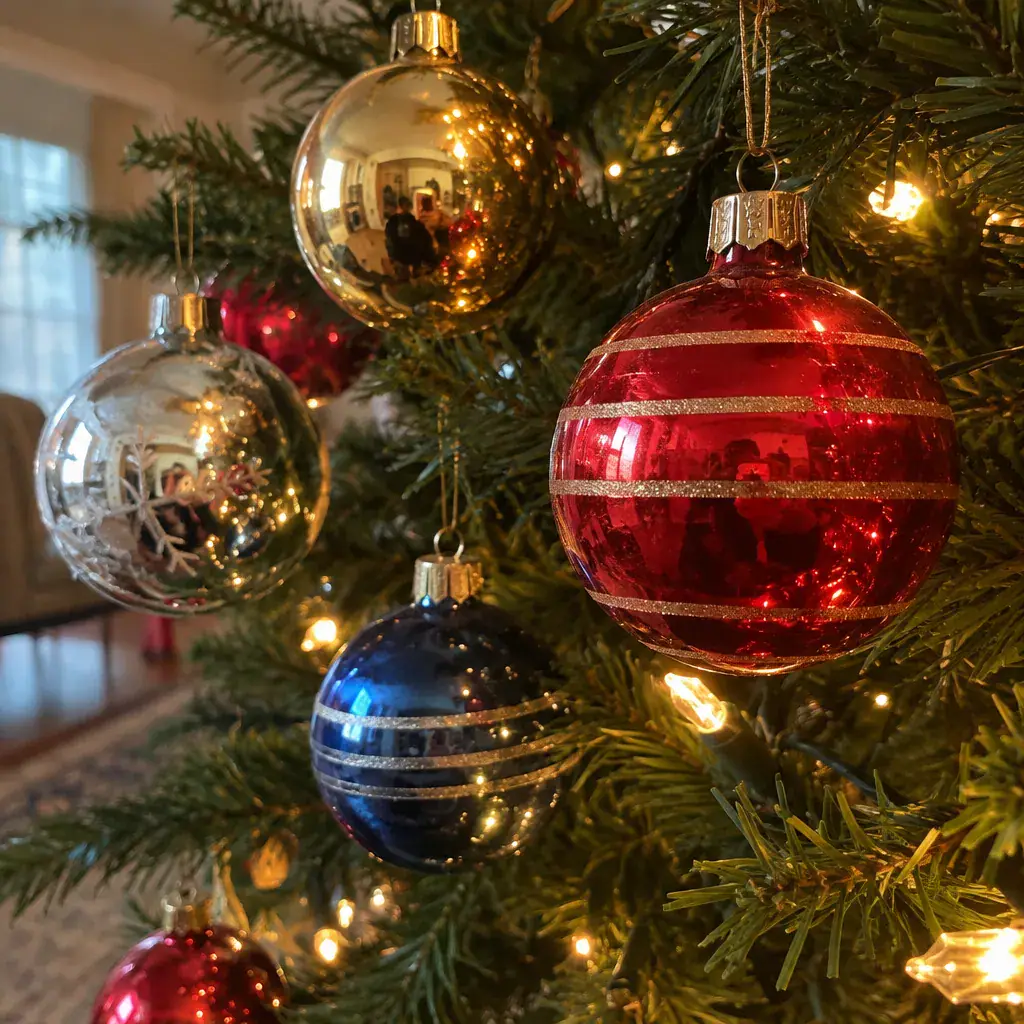
The Shiny Brite brand dates to 1937, and the first machine-made ornaments reached Woolworth’s in December 1939. They sold for a few cents each.
The man behind the name, Max Eckardt, was a German immigrant who began importing ornaments around 1907 and opened a factory in 1926.
The glass itself came out of a retrofitted light-bulb machine at Corning’s plant in Wellsboro, Pennsylvania.
The clear globes then rode to Eckardt’s New Jersey plants to be silvered inside and lacquered. Within months of starting, Corning was making more than half the Christmas decorations sold in the country.
If your family had a tree, a few of these were almost certainly on it.
2. The See-Through “War Ornaments”
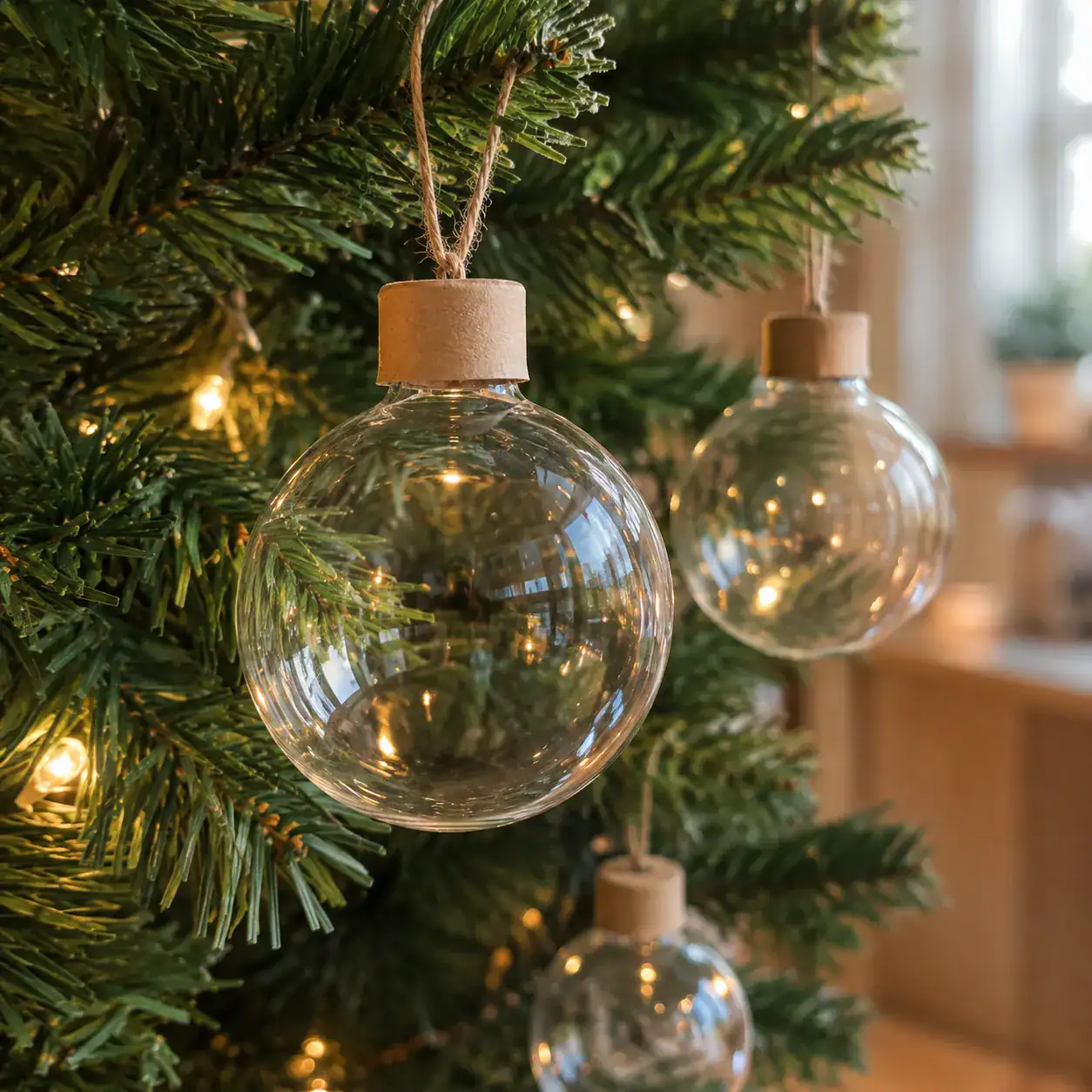
From 1942 to 1945, metallic lacquer was hard to come by.
So the balls came clear, with cardboard caps where the metal ones used to be.
Later even the hangers were just cardboard, string and glue.
Some boxes showed Santa shaking hands with Uncle Sam.
Silver lacquer and metal caps came back in 1946, but plenty of families were still hanging the clear ones a decade later.
3. Indents (Reflector Ornaments)
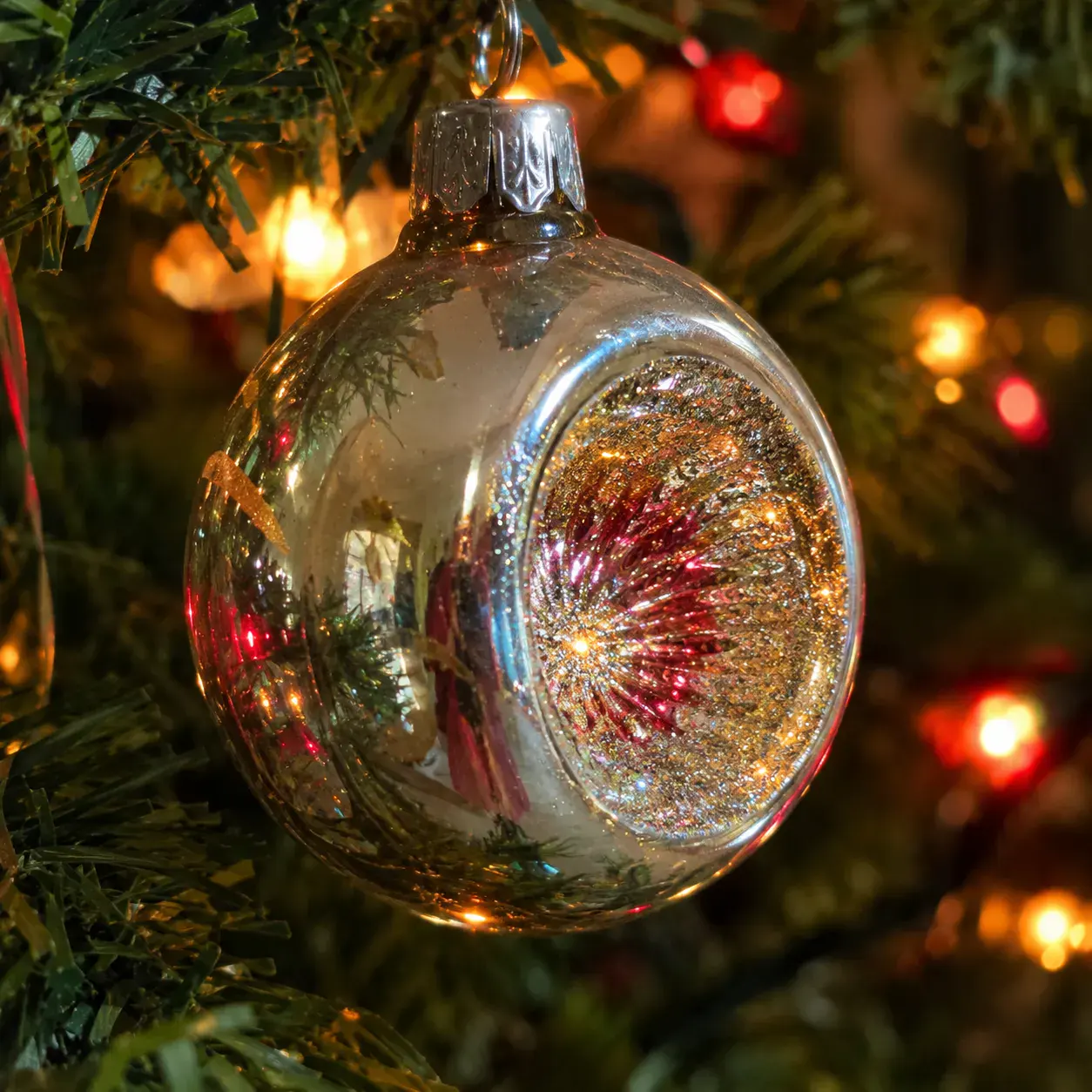
That dimple in the side, dusted with sparkle?
It’s a design left over from candle-lit trees, shaped to catch a flame and multiply it.
Shiny Brite made them as “reflectors,” the indentation often dusted with mica.
Long before electric lights, the shape earned its keep by turning one candle flame into a scatter of small reflections.
On a mid-century tree, the same dimple caught the colored bulbs instead.
4. Glass Bells, Teardrops and Lanterns
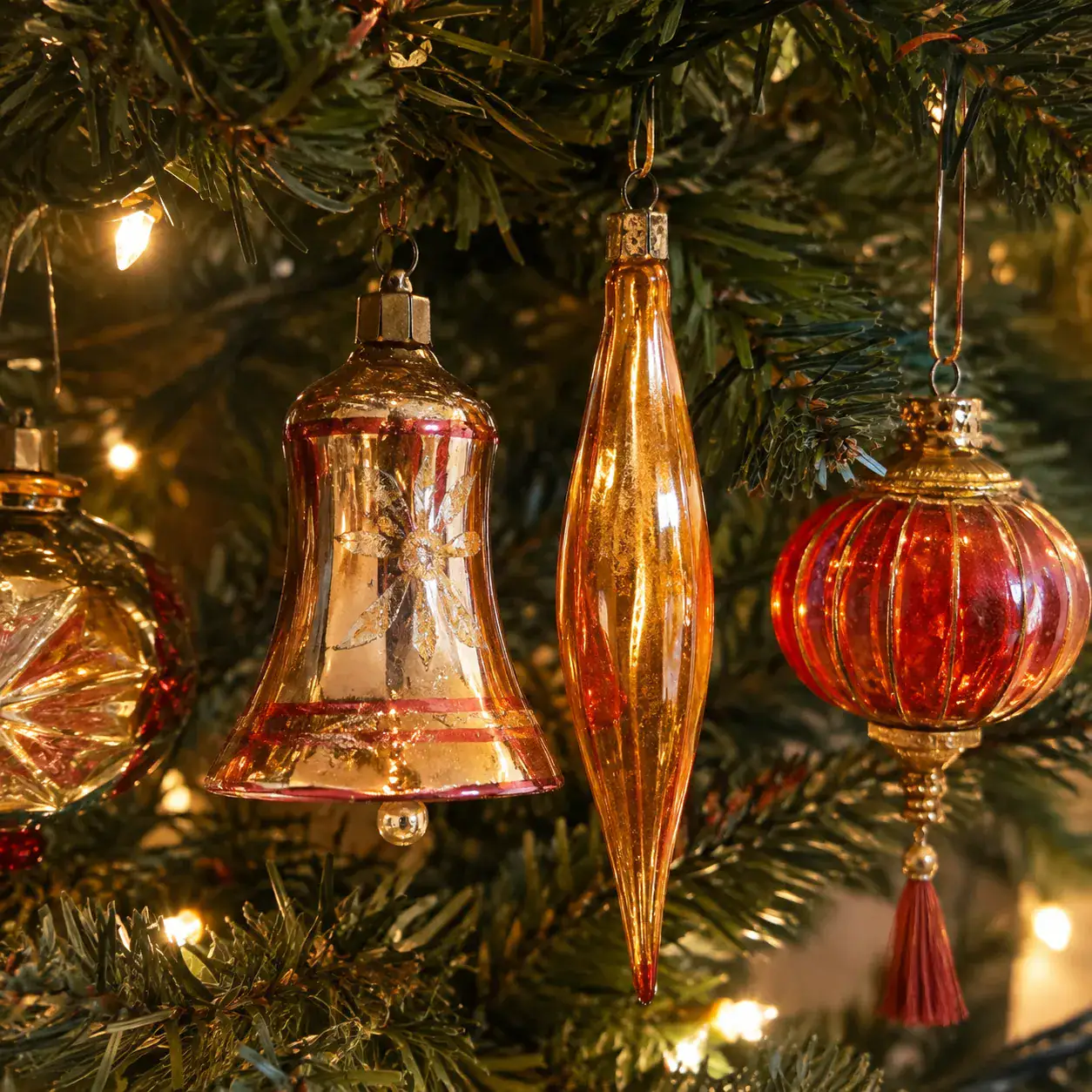
Shiny Brite didn’t stop at round.
The line ran to bells, icicles, teardrops and Japanese lanterns.
The full shape range went even further, from tops and finials to trees and pine cones.
A family box built up over a few Christmases could end up holding a little of everything.
Which one did you fight to hang?
5. The Pointed Glass Tree Top
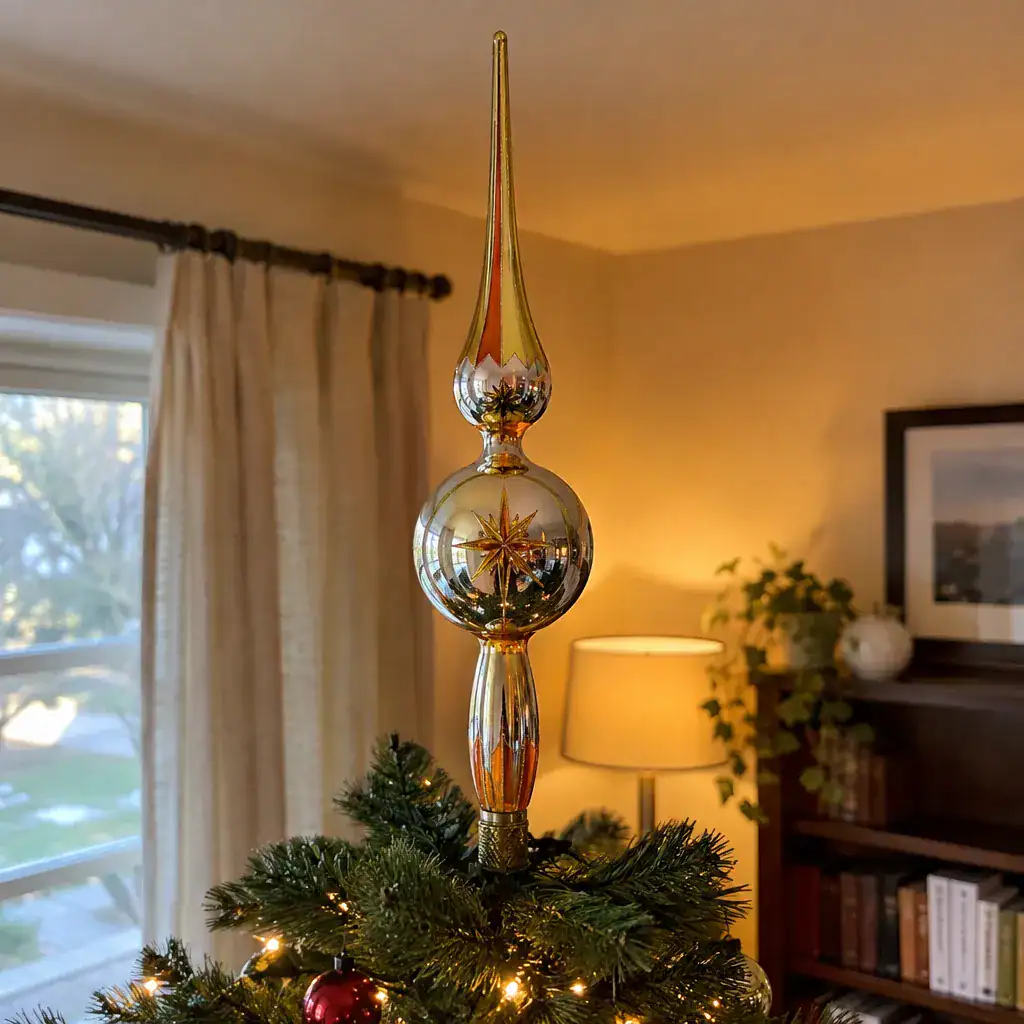
Shiny Brite made tree tops too.
The tall, pointed spire looked more Space Age than Bethlehem.
Finials and tree tops were part of the line right alongside the balls.
The pointy, Space Age-style topper crowned a lot of trees in this era.
Somebody in your family had the job of reaching up to put it on, and that’s a memory worth asking about.
6. Grandma’s German Glass Pine Cones
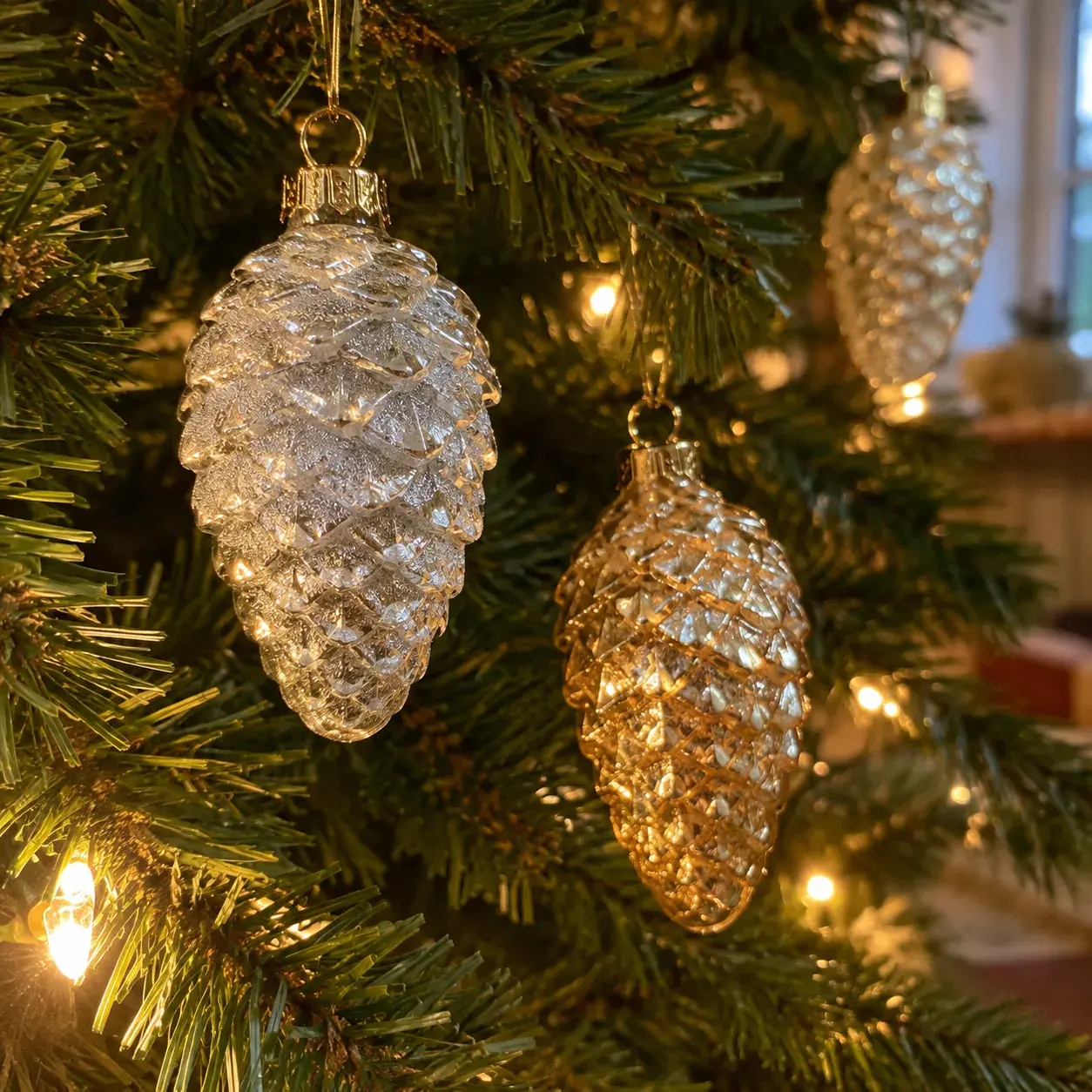
Blown-glass ornaments got their start in the German village of Lauscha in the 1840s, and molded shapes like pine cones go back to the 1800s.
In the 1890s, Lauscha glassblowers turned out 600 ornaments a day, all by hand.
By the 1920s and ’30s, European imports had grown to 99% of the 50 to 80 million ornaments sold in the United States each year.
The oldest pieces in your family’s box were likely these.
If one has survived this long, it’s worth asking who first hung it, and when.
7. Clip-On Glass Birds
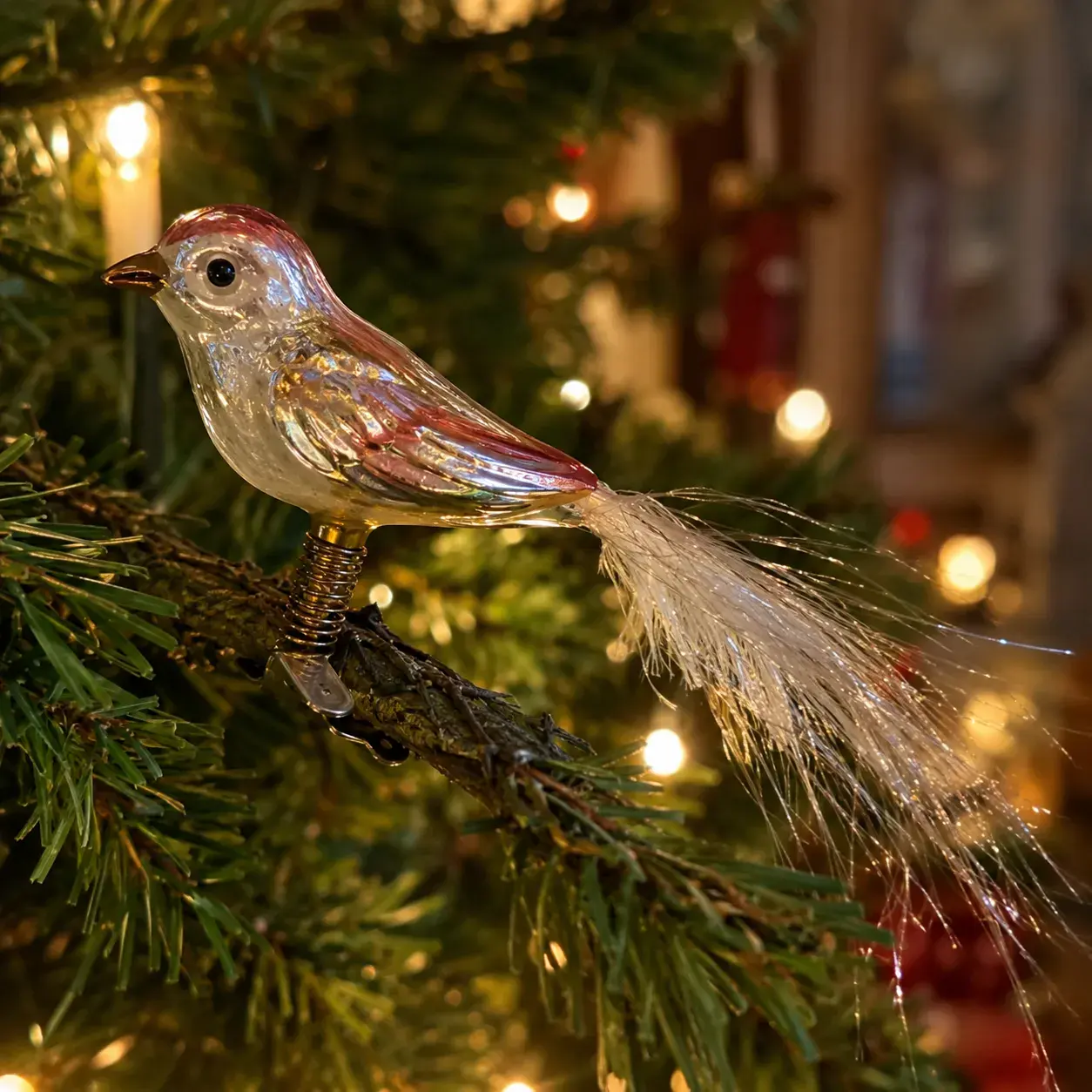
An older style that carried over.
Lauscha’s birds perch on a flexible metal coil, and their tails were traditionally made of cut glass fiber.
The molds still in use are 100 to 150 years old.
The Corning Museum of Glass holds one dated to roughly 1880 to 1910, a silvered bird with painted wings on a metal spring clip.
The same bird your grandmother clipped to a branch had a century of history behind it.
8. Italian Glass Characters
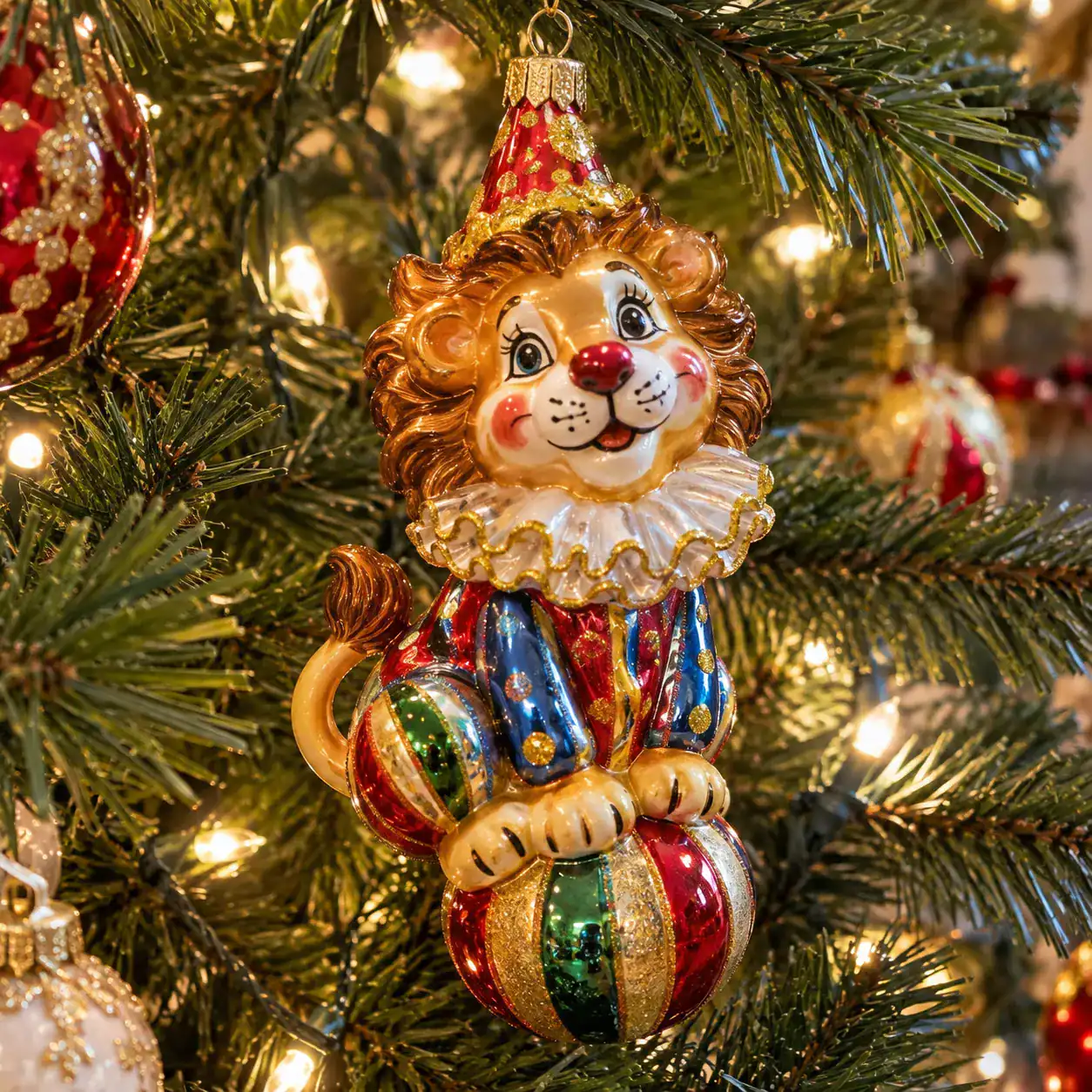
Italian glass ornaments entered the American market in the early 1950s, free-blown and hand-painted in small workshops.
They were first produced in the late 1940s, and the figures ran to animals, fairy-tale characters and comic-strip personalities.
Think clowns with faux hair and lions with manes.
The De Carlini workshop near Milan was known for that kind of trim, and early caps were marked “Italy.”
A clown or a lion in your family’s box with an “Italy” cap is worth a closer look.
9. Glass Bead Garlands
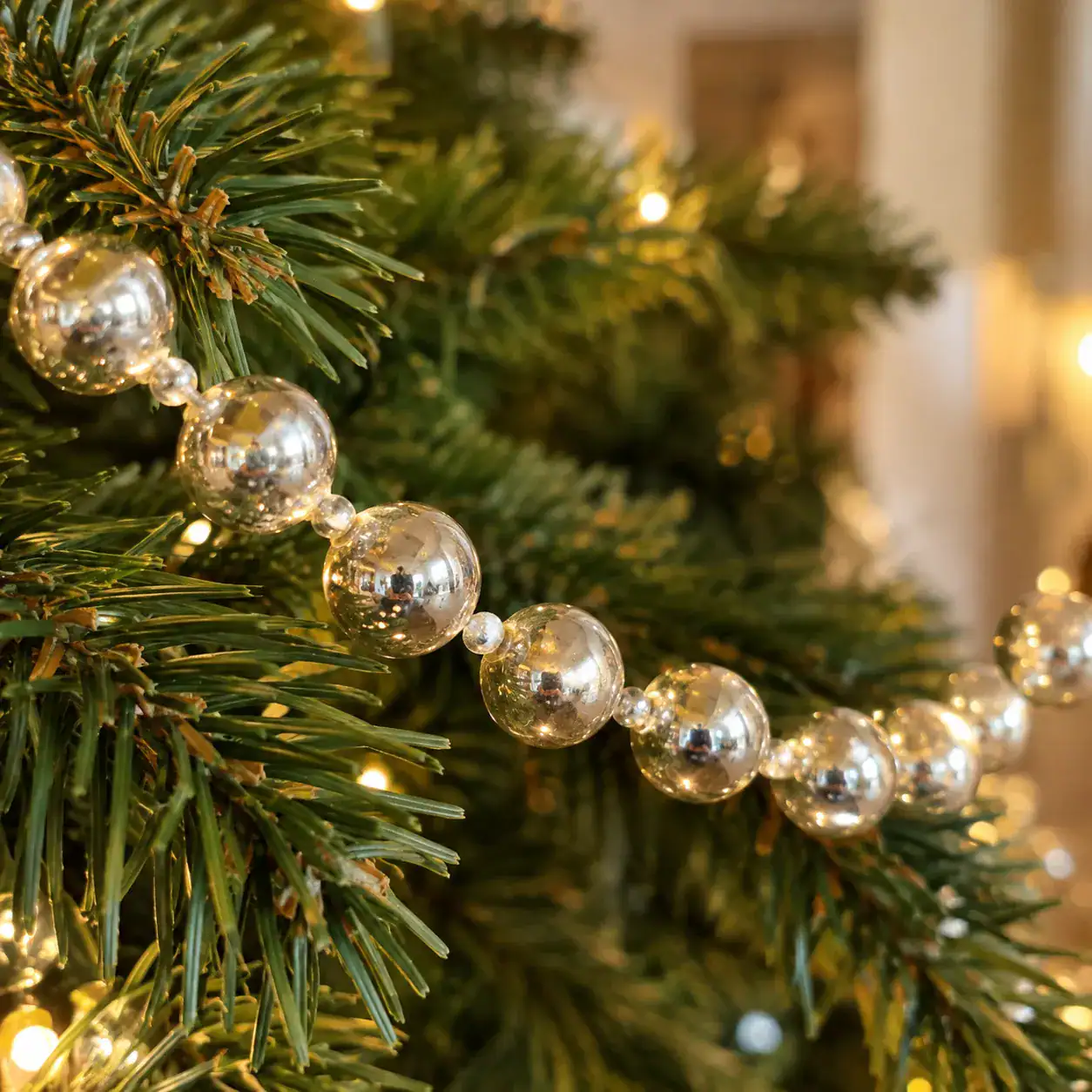
Silvered glass beads on a string, mostly made in Japan by the 1950s, in strands of roughly eight feet.
The silvering is the same mercury-glass trick that gave the balls their shine.
Earlier strands had come from Germany or Czechoslovakia.
By the time your family was buying them, Japan was the source.
If an old strand still has its box, the country printed on it can help you guess which decade it came from.
10. Lead Tinsel “Icicles”
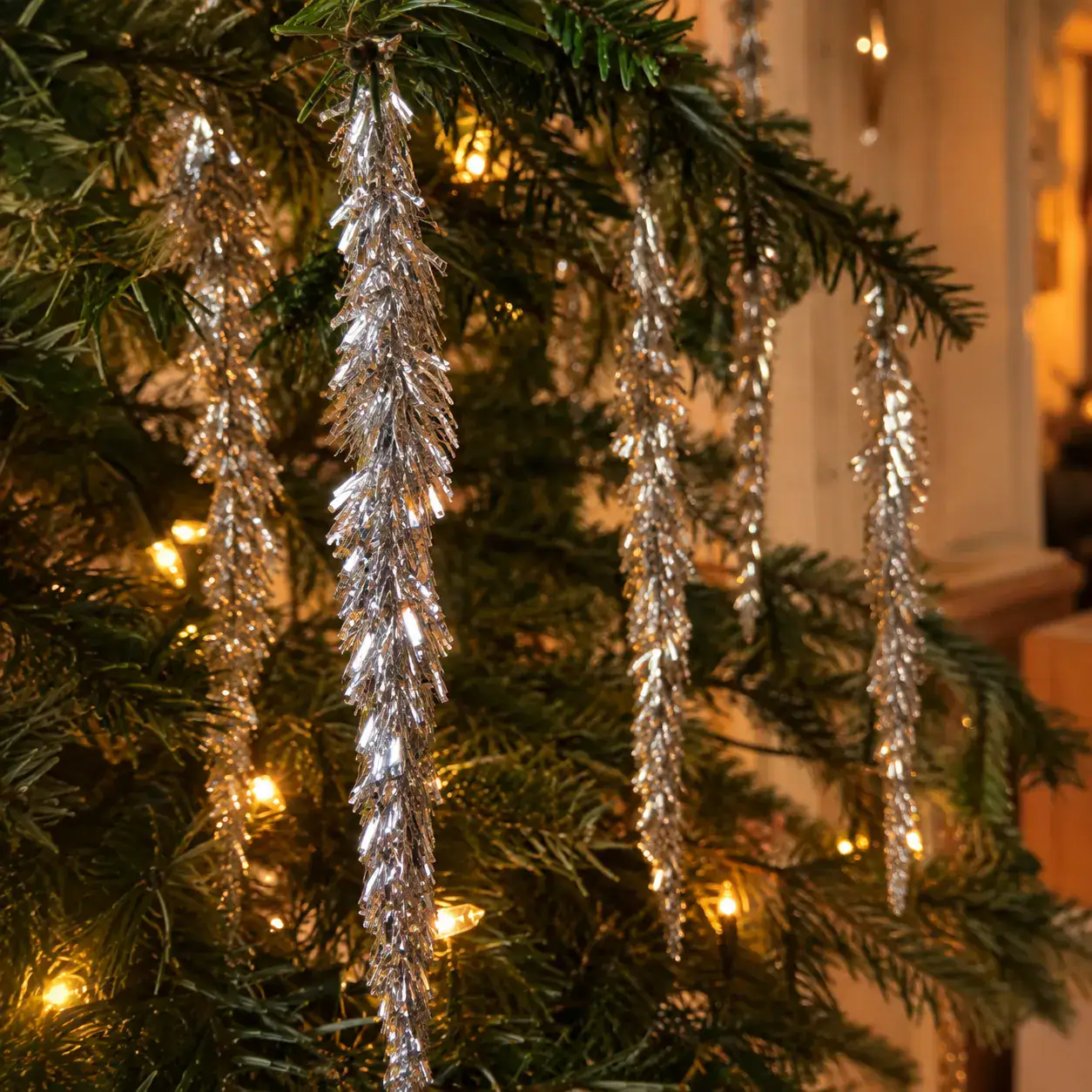
The tinsel you draped strand by strand was lead. Unlike silver, it didn’t tarnish.
Tinsel itself goes back to Nuremberg around 1610, originally extruded strands of real silver.
Lead held its shine so well that tinsel became a mid-century fad.
In August 1971, the FDA concluded it posed an unnecessary risk to children.
Makers voluntarily stopped producing it after January 1, 1972. It was never formally banned.
11. Angel Hair
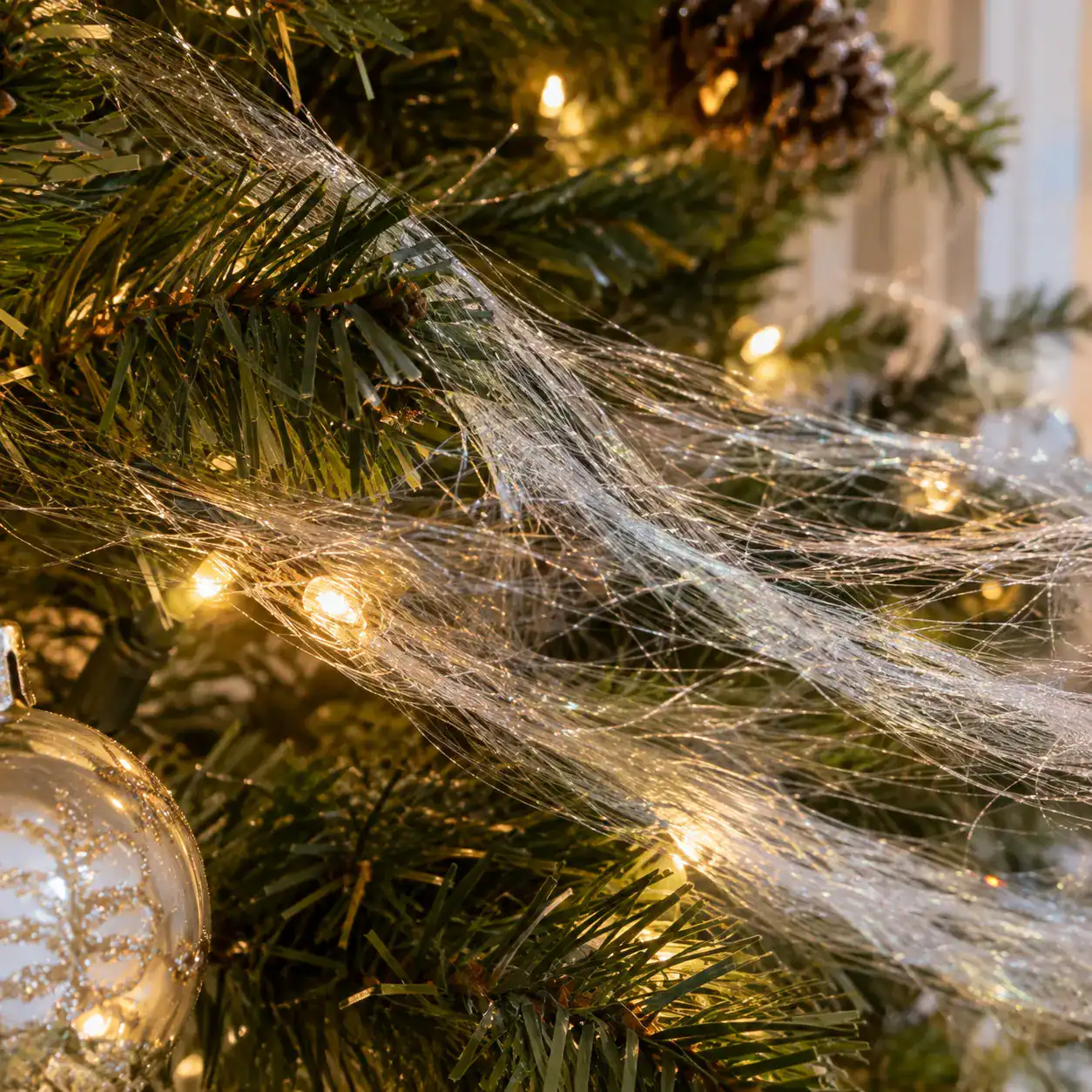
It’s spun glass.
Lauscha glassmakers were drawing those gossamer threads from glass rods by the mid-1800s.
Mid-century boxes, some sold by the National Tinsel Co. of Manitowoc, Wisconsin, were even marked “non-irritating.”
Anyone who helped spread it across the branches remembers the itch.
That itch is the kind of detail that brings a whole Christmas back, so ask an older relative who did the spreading in their house.
12. Bubble Lights
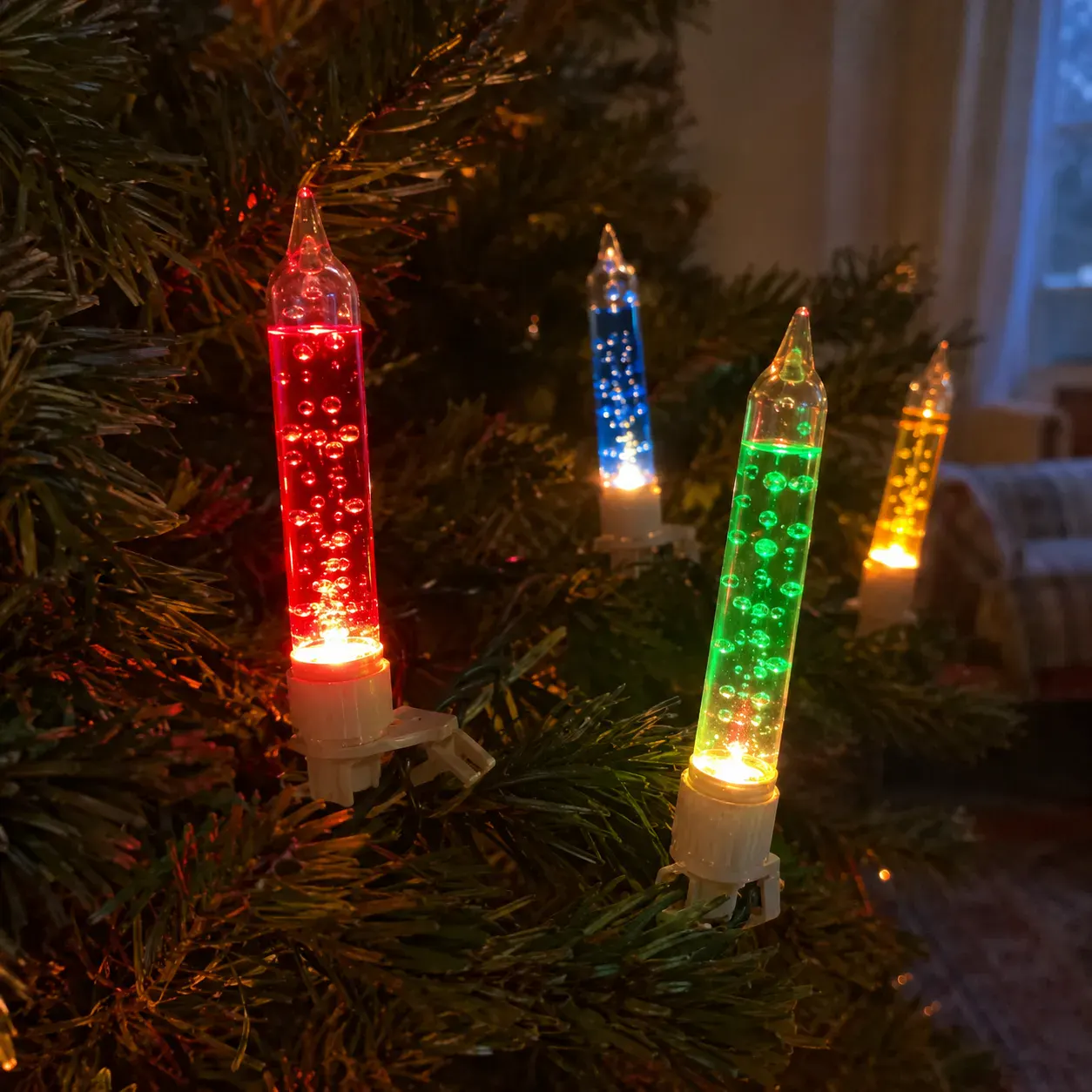
NOMA introduced them for Christmas 1946 and sold nearly one million that December.
Inventor Carl Otis had first patented the idea in 1944.
The liquid inside boils at 103.3°F, low enough to bubble from the warmth of your hand.
Otis was reportedly an accountant at Montgomery Ward.
NOMA made the lights from 1946 to 1960, and they stayed popular into the 1970s.
13. The Big Colored C-7 Bulbs
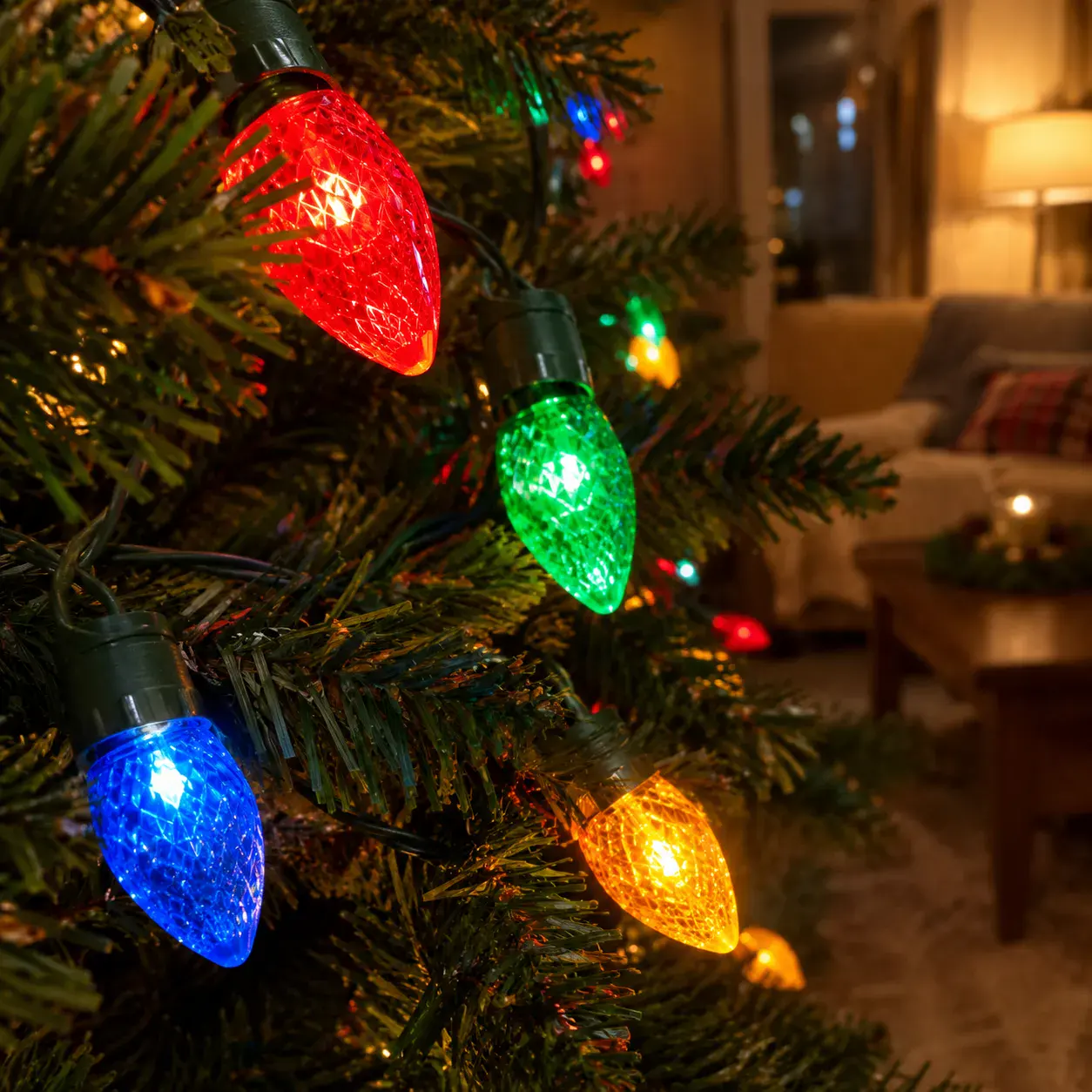
Each bulb burned on its own, so one dead lamp didn’t darken the string.
NOMA had brought out parallel-wired indoor sets back in 1934 to solve exactly that.
Before them, the older series strings had the maddening “one goes out, they all go out” problem.
They ran hot, though, and most household circuits could only support six strings of seven.
That’s 42 bulbs on the whole tree.
14. Foil Light Reflectors
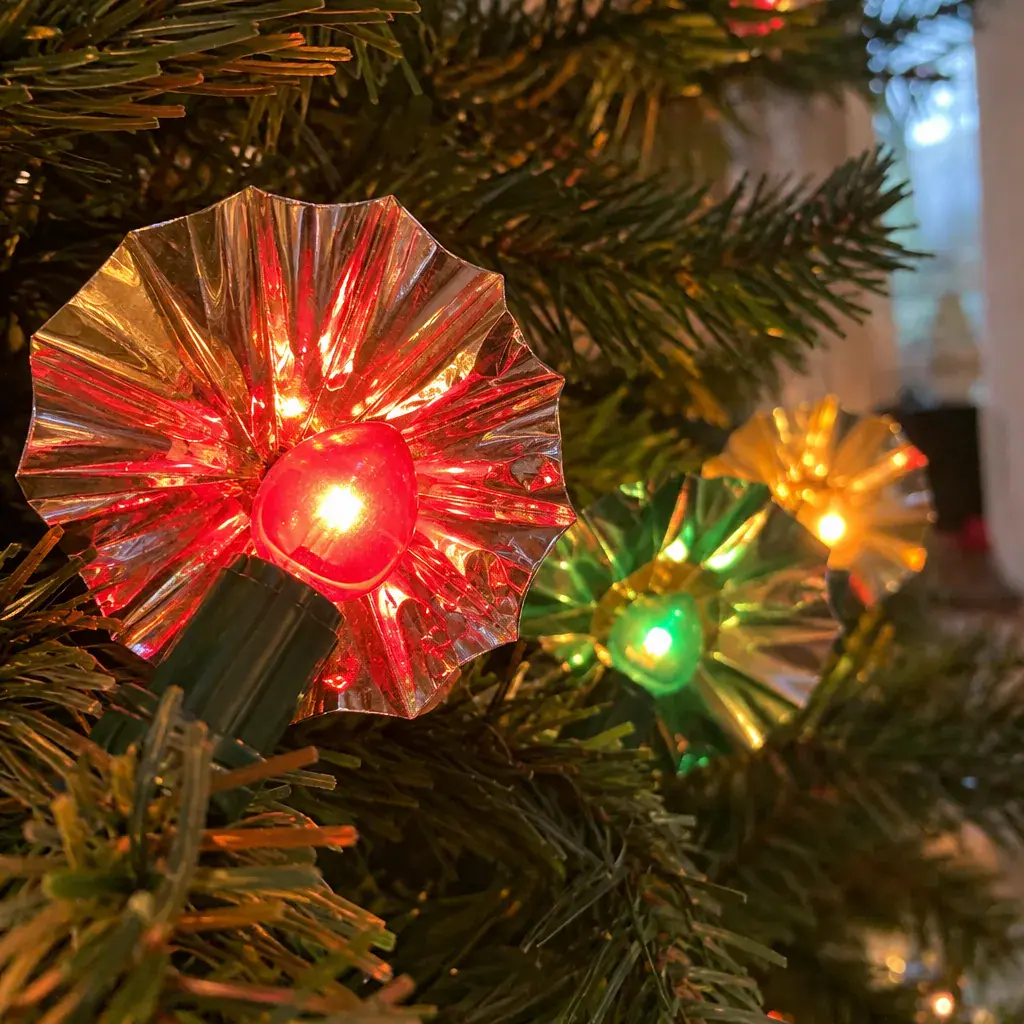
The foil reflectors that sat behind each bulb were first offered in the early 1920s.
The stamped design was patented back in 1917.
They came in sets of seven, one per lamp to fit a typical seven-light C-7 outfit, and stayed a fixture of the tree into the 1970s.
Look closely at an old snapshot of your family’s tree and you may catch the glint of one behind a bulb.
If a set ever turns up in the attic, ask who remembers fitting them onto the lights each December.
15. Hard Plastic Santas and Reindeer
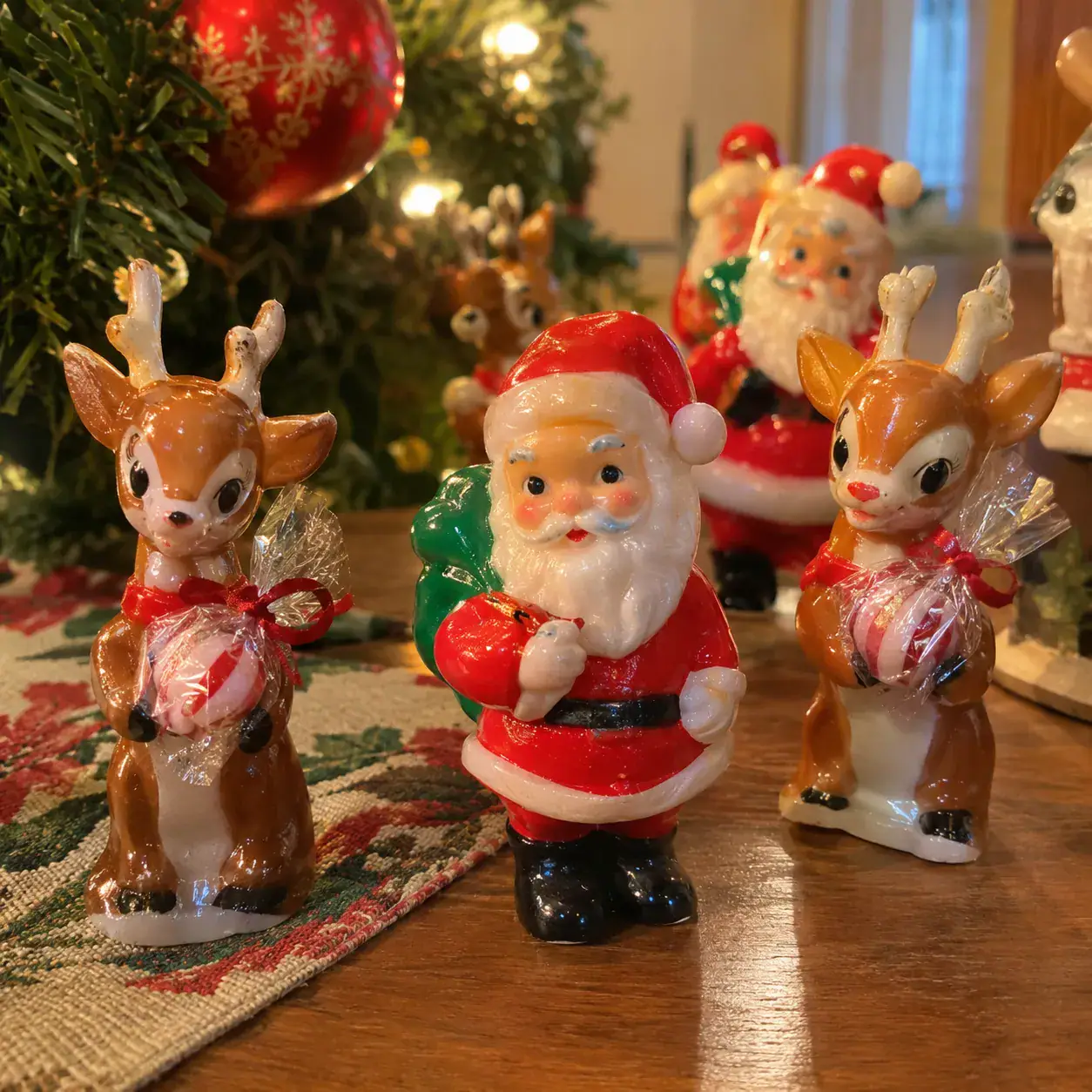
These often sold for less than 10 cents, usually holding a bunch of cellophane-wrapped lollipops.
Non-breakable plastic was the signature of the 1950s and ’60s tree, and it came as Santas, snowmen, reindeer and elves.
Their most popular run was from 1952 until around 1958.
The two major makers were Rosbro and Rosen, both of Providence, Rhode Island.
Because they didn’t break, a plastic Santa could outlast every glass ball on the tree.
16. Jewelbrite Diorama Ornaments
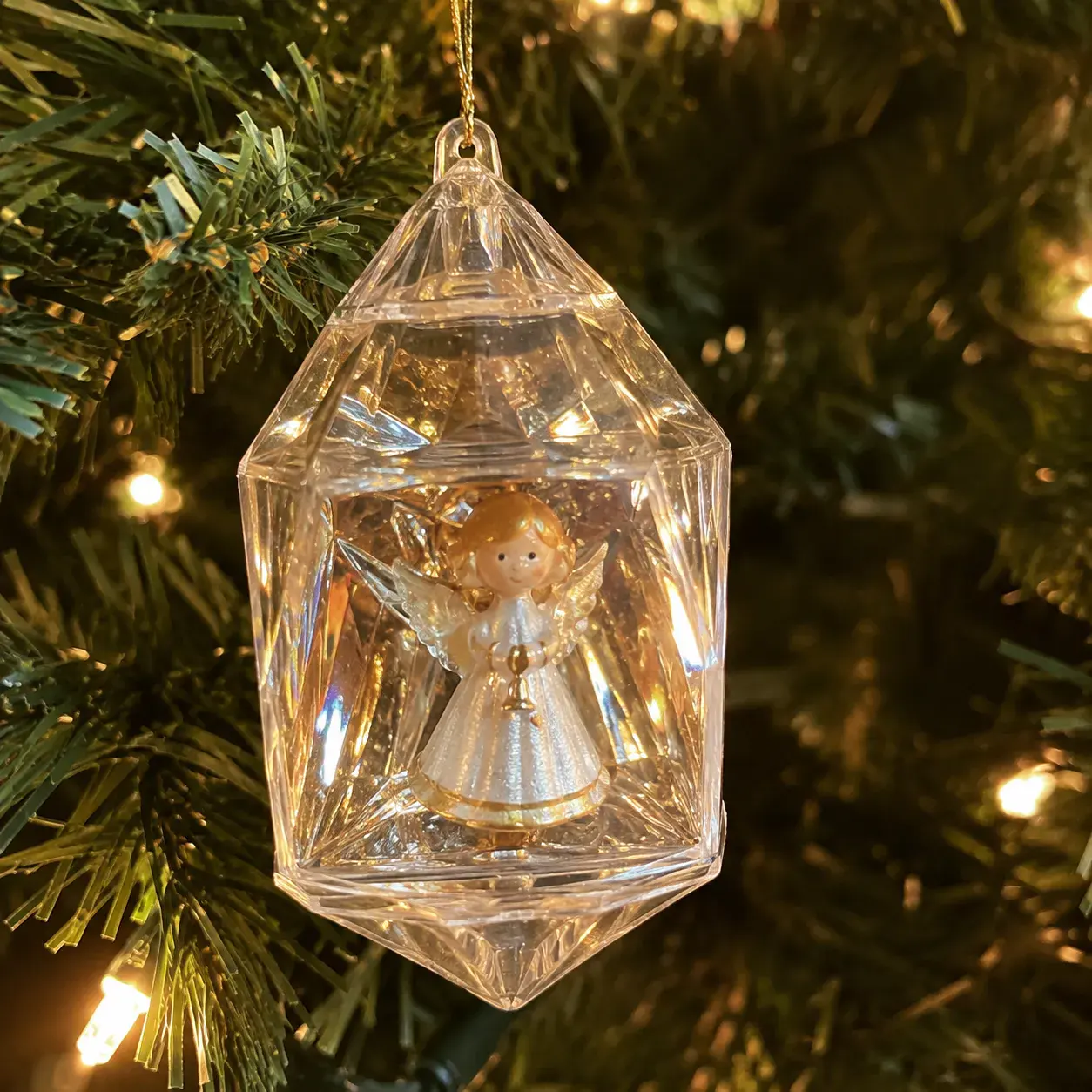
A tiny angel or bell sealed in a hard plastic case, with reflective material for extra sparkle.
These came out of Whitman, Massachusetts in the 1960s, made by Decor Novelties Inc.
The little scenes inside held flowers, bells, angels or snow people.
The Henry Ford museum now keeps examples, each standing about three inches tall.
One that has survived in your family’s box has been hanging on trees for about sixty years.
17. Chenille “Clay Face” Santas
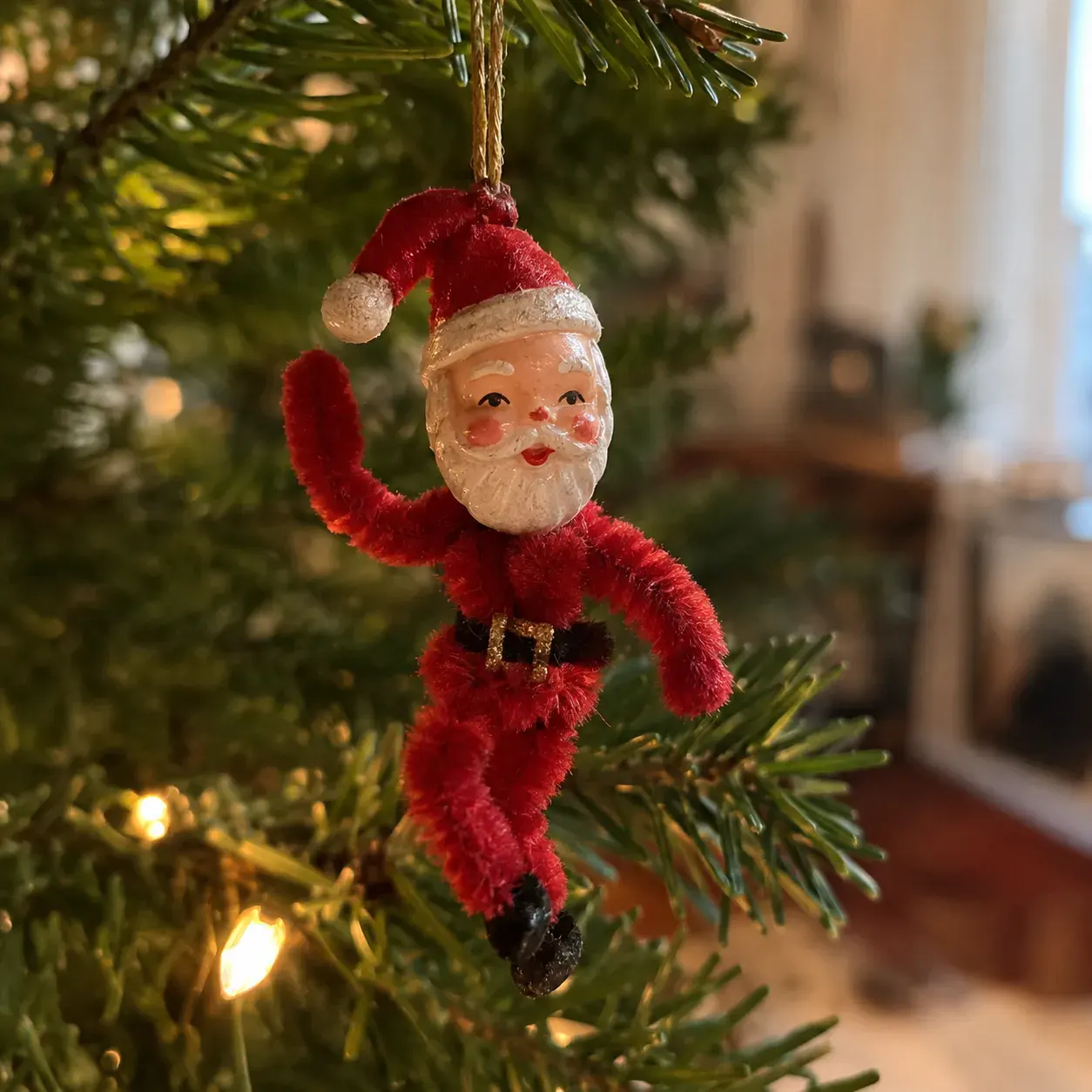
Made in Japan and sold at the five and dime as early as the 1930s.
The faces really were clay, rather primitively painted, glued to soft wired chenille bodies.
Those rough painted faces are part of what makes each one look a little different from the next.
Some even carry “Occupied Japan” marks, which date them to the years right after the war.
Turn one over and the stamp on the bottom can tell you roughly when it crossed the ocean.
18. Glittered Cardboard Houses
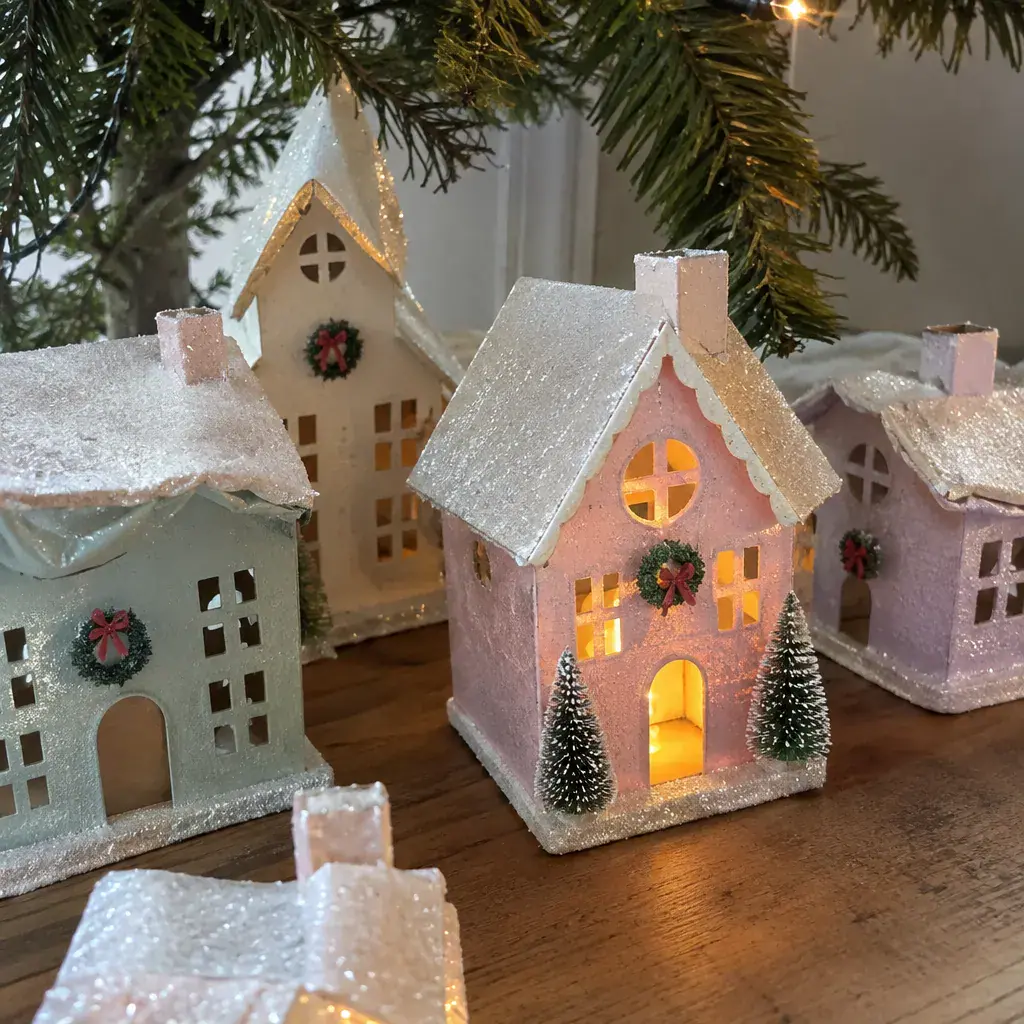
They began as candy boxes with a hole in the back for filling. Then someone thought to put a light in the hole.
Collectors call them “putz” houses, from the German for arranging a scene.
Japanese makers were turning them out for American dime stores by the late 1920s, and the sparkle was usually crushed mica rather than glitter.
They went on and under the tree.
By the middle 1960s, they had all but vanished.
19. Candy Canes
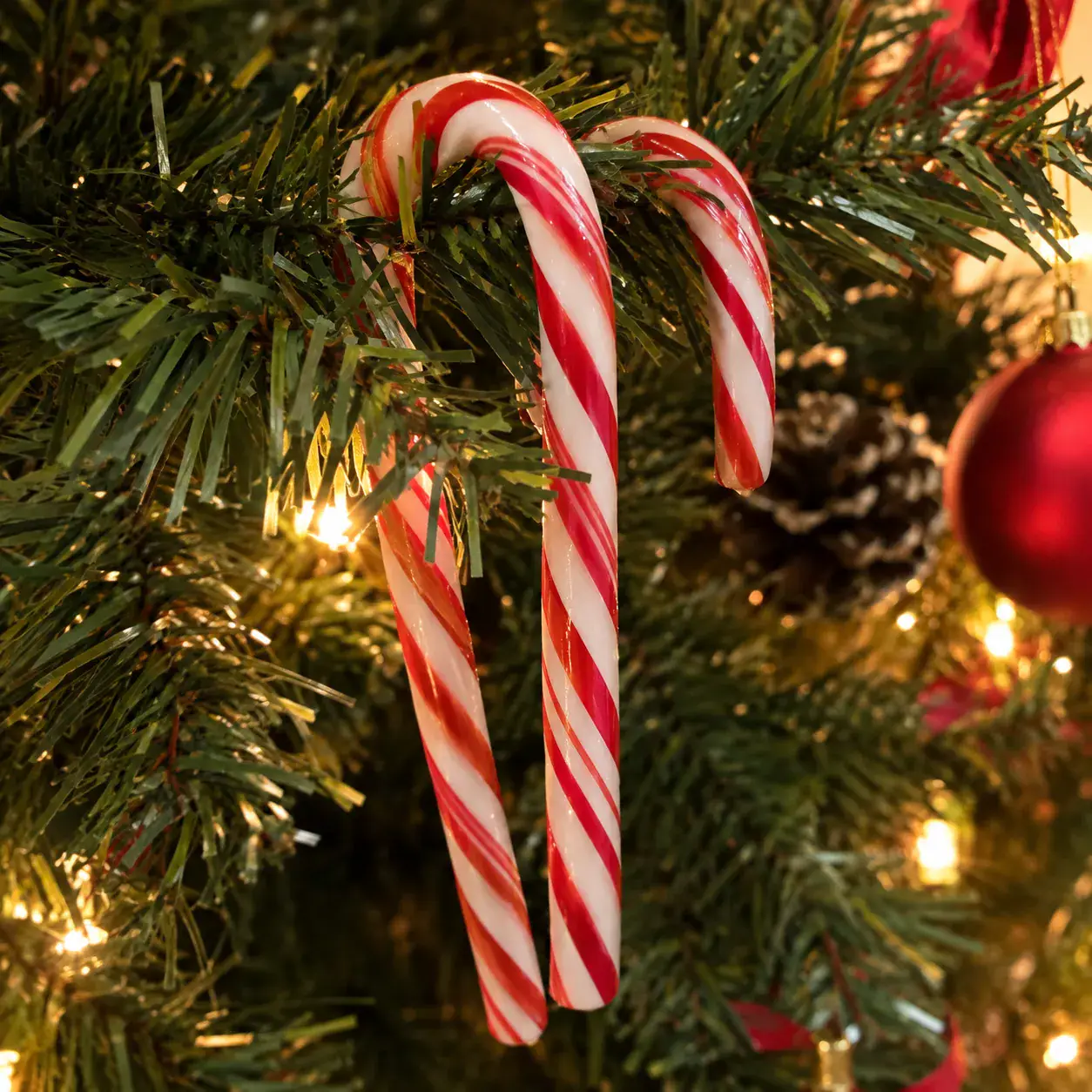
The hooked cane is a newer tree ornament than you’d guess.
Bobs Candies of Albany, Georgia, founded in 1919, only perfected a machine to mass-produce it by 1958.
Before that, bending each cane by hand kept the shape rare.
The inventor was the founder’s brother-in-law, a Catholic priest named Father Gregory Keller.
By the end of the 1950s, Bobs was turning out 1.8 million sticks of candy a day.
20. Popcorn and Cranberry Strings
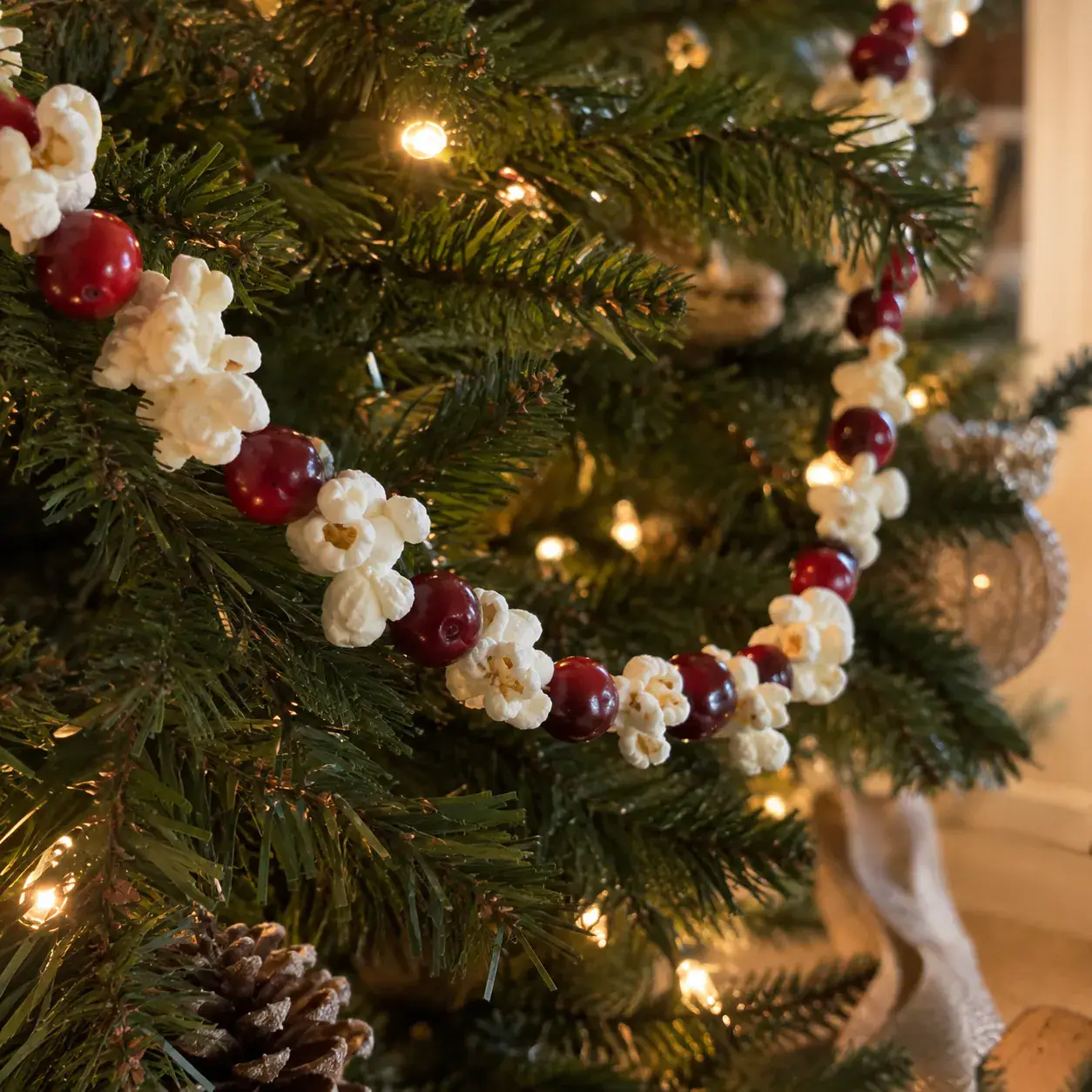
In 1842, a German-born teacher named Charles Minnigerode trimmed a tree with popcorn garlands.
Strings of dried cranberries joined them on 19th-century trees.
A century later the habit survived right next to the store-bought glitter.
It cost nothing but an evening and a needle.
If your family strung its own, ask who sat with the needle, and who ate more popcorn than made it onto the thread.
21. Sequin-and-Pin Styrofoam Balls
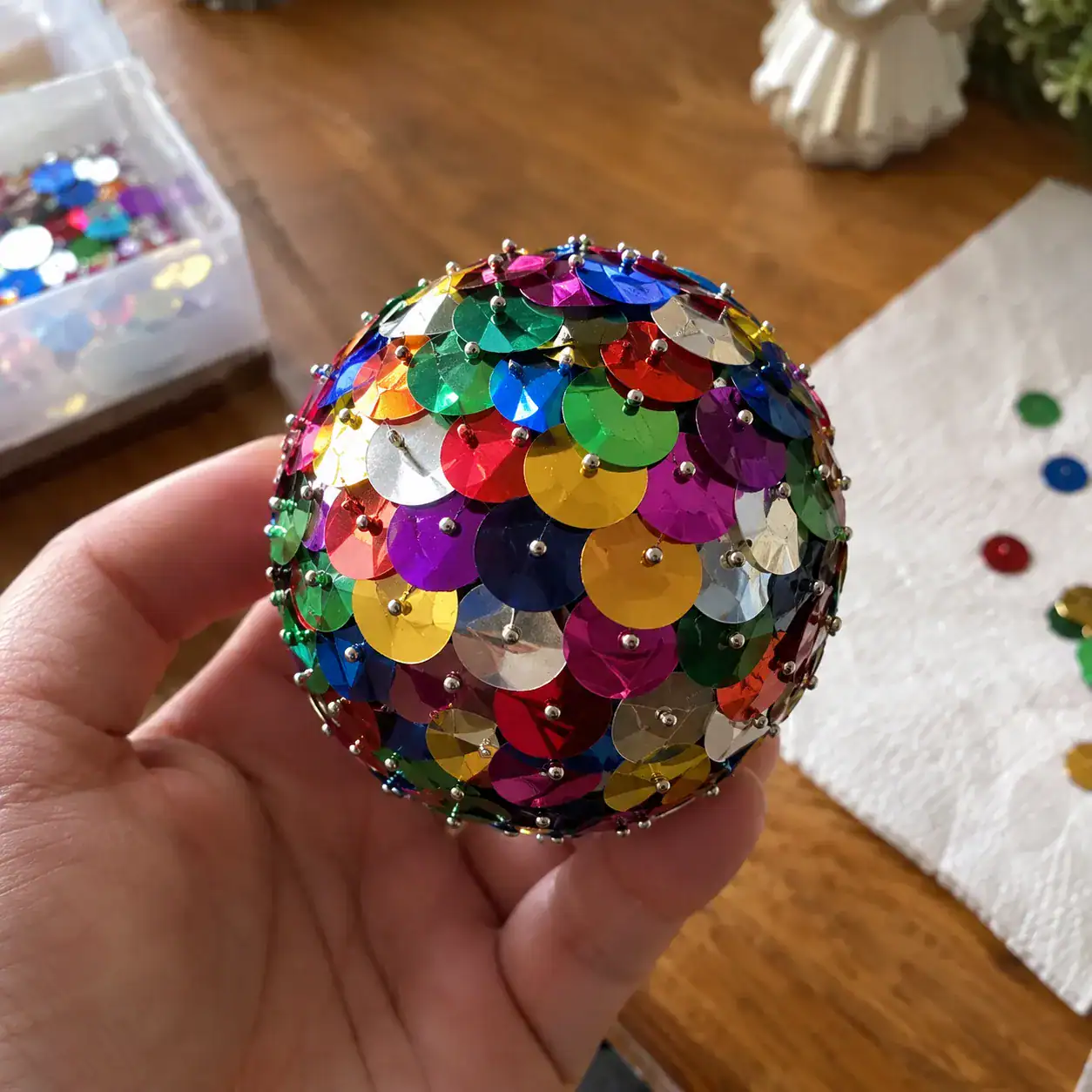
Family Circle promised in December 1964 that these were “so simple to make.”
Every sequin was pinned on one at a time.
By December 1969, one newspaper was asking readers if they’d ever “decorate a snowball.”
Kits from sellers like LeeWards ran through the ’60s and ’70s.
These are the ones somebody in your family actually made.
22. Satin Balls
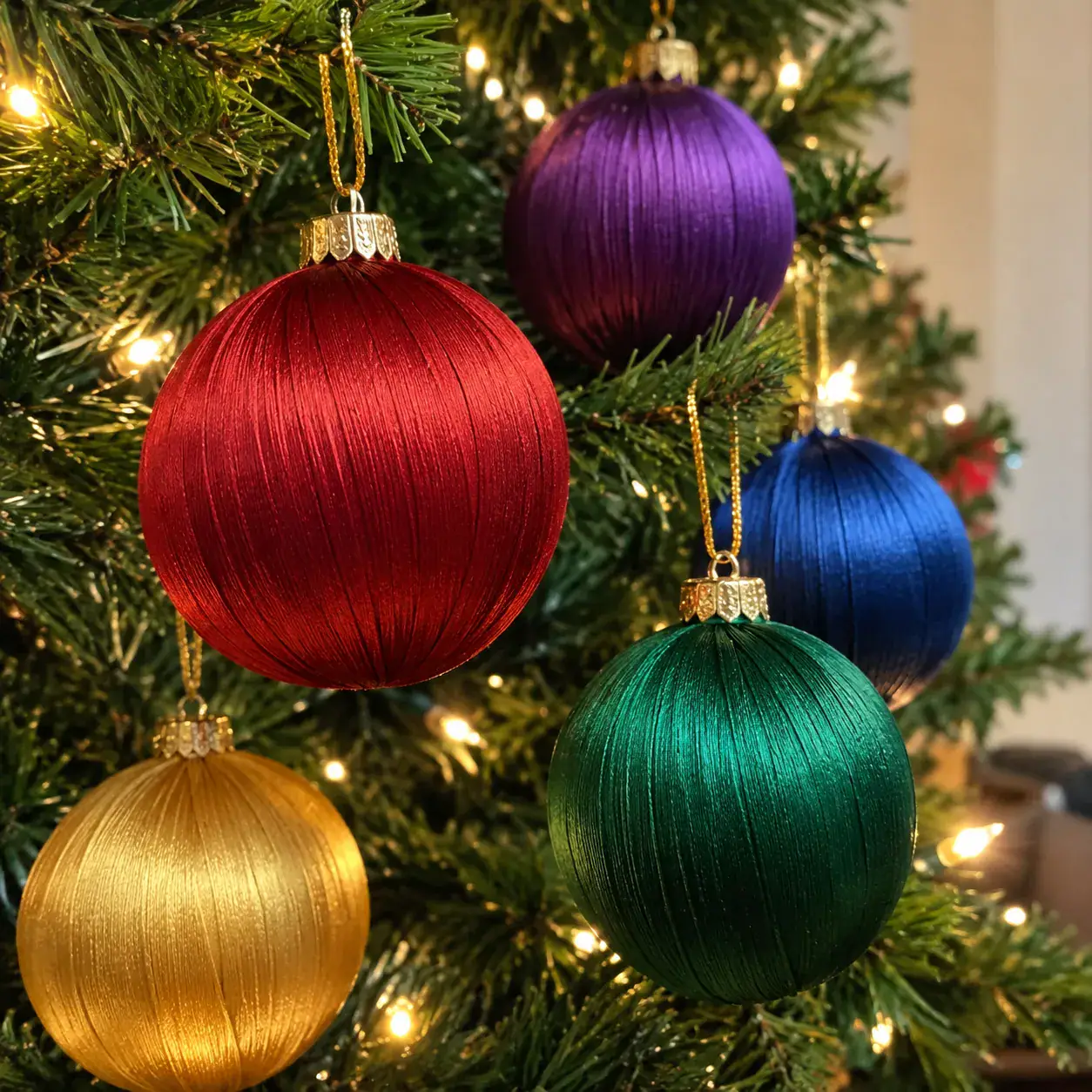
Marshall Rauch owned a textile mill in Gastonia, North Carolina.
The Spiegel catalog called to ask whether he could wrap Styrofoam balls in satin thread.
The first order was for Christmas 1962, and within two years he had patented the process.
Aluminum trees were in vogue, and their revolving color wheels made glass ornaments look dull while satin ones shimmered.
At one point, his factories made a million ornaments a day.
23. The All-One-Color Ball Set
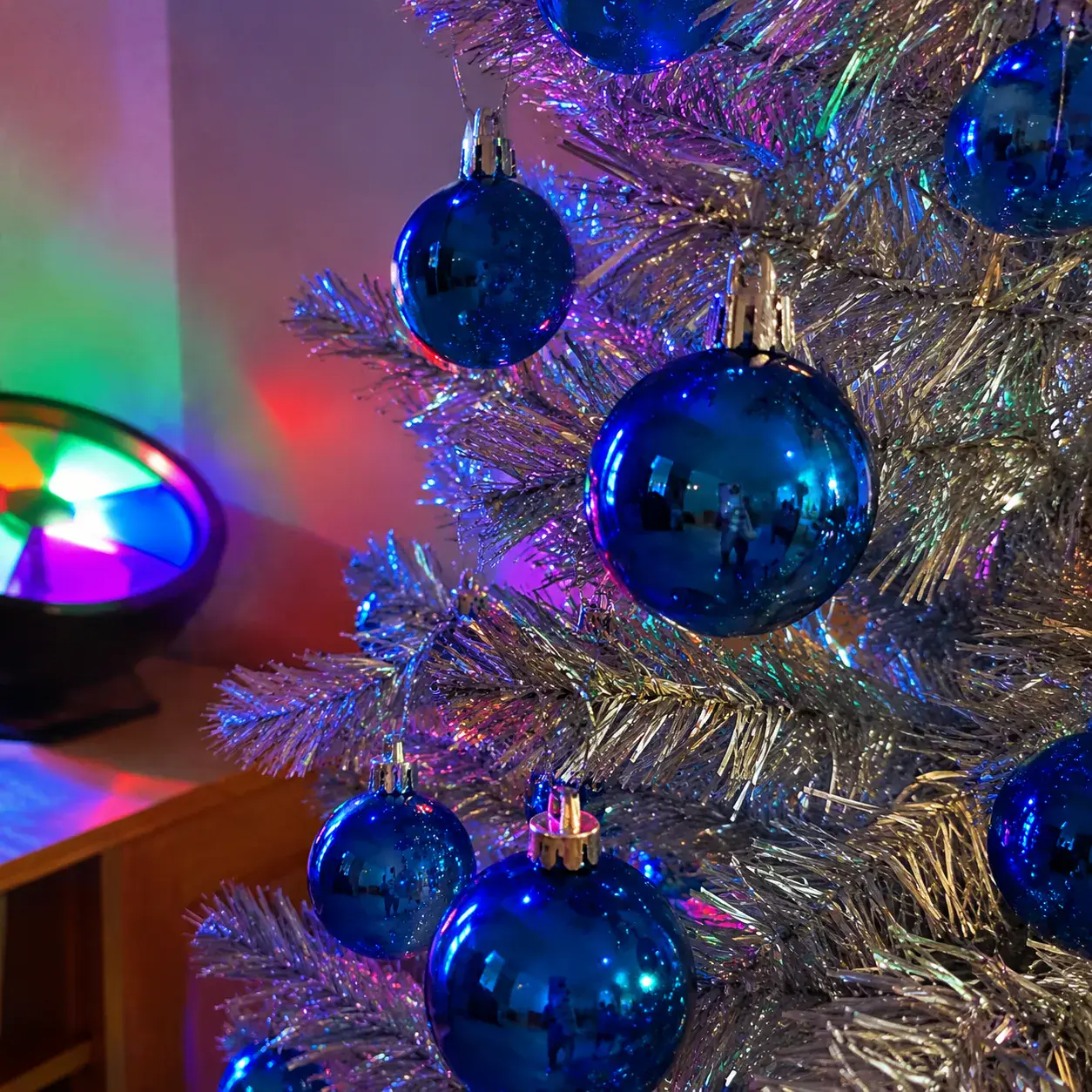
One Wisconsin company, Aluminum Specialty of Manitowoc, sold more than one million aluminum trees between 1959 and 1969.
Its flagship was the “Evergleam.”
The look called for just a few shiny blue or red balls and a revolving color wheel.
Then “A Charlie Brown Christmas” aired in 1965.
It has been blamed for cutting the whole aluminum-tree craze short.
24. The Foil Star on Top
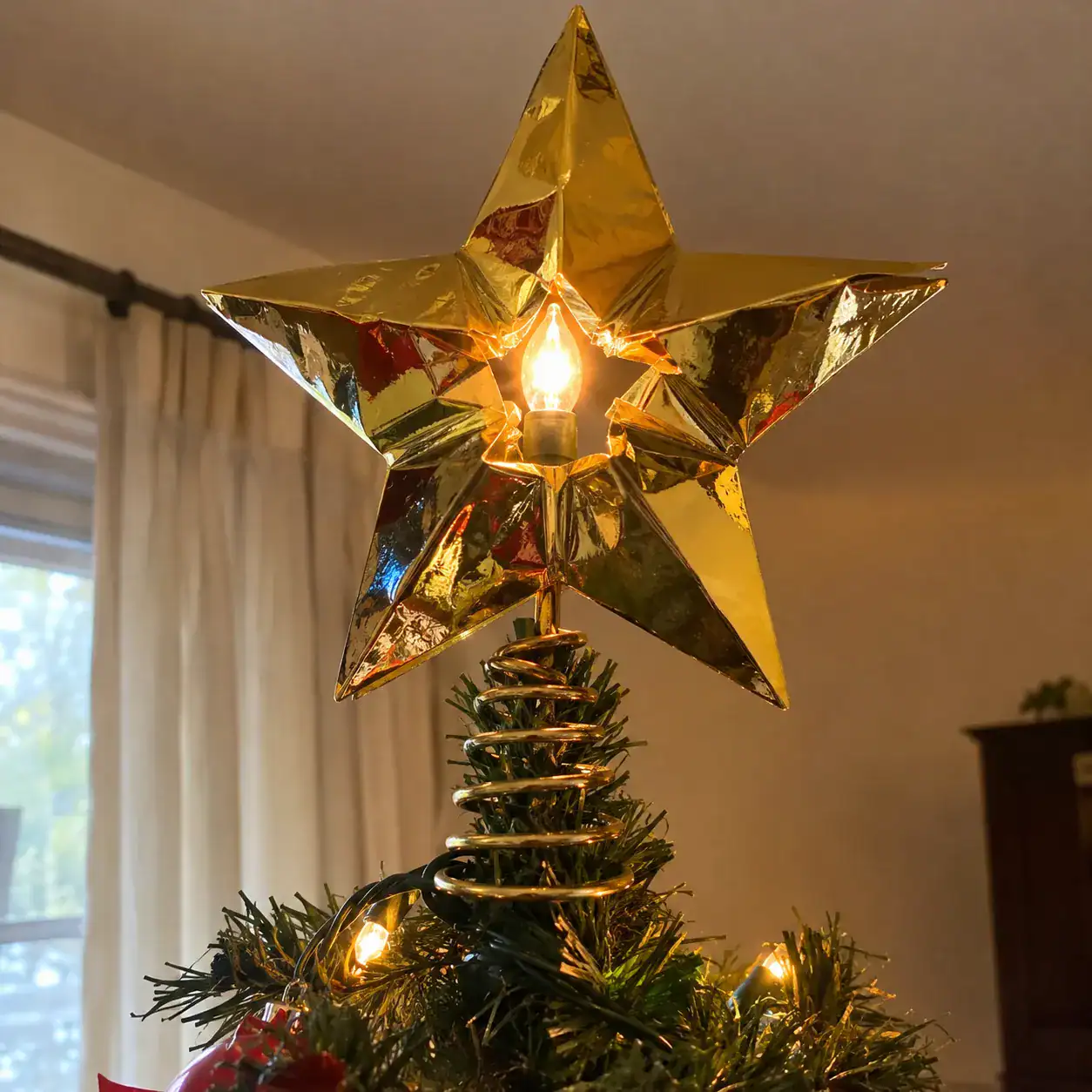
A coiled spring made it easy to place, and the hole in the center held the top lamp on your string of lights.
Foil toppers like it were popular through the 1950s and early ’60s.
NOMA had a lighted version too, introduced around 1938, that hung on into the late ’50s.
The foil ones were the cheap, bright answer to a glass finial.
Pull out an old photo of your family’s tree, and the star at the top can help you place the year.
25. Spray-On “Snow”

Flocking caught on in the late 1950s and 1960s.
General Mills marketed Sno-Flok home kits, applied with a gun that attached to your vacuum cleaner.
The idea wasn’t new.
A 1929 Popular Mechanics recipe mixed varnish, corn starch and flakes of mica.
Yes, the vacuum.
Open the Box With Someone This Year
Most of these cost pocket change, and they’ve outlasted the stores that sold them.
So when the box comes down, turn each one over. Check the cap. Check the box it came in. Then ask the oldest person in the room where it came from.
Write the answer down. Nobody else will.