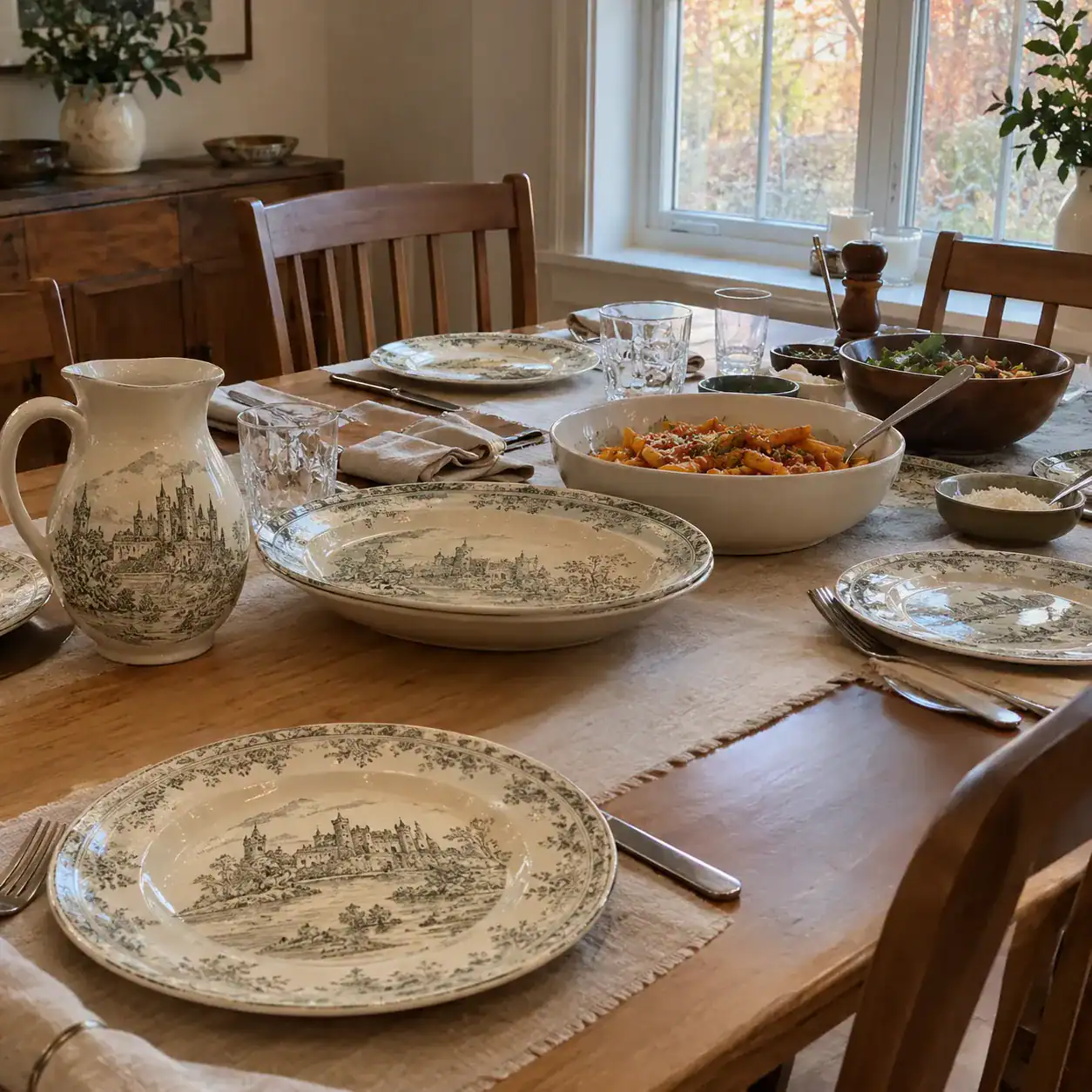
I’m setting out the dishes my Italian grandmother used for Thanksgiving. There’s an old English castle in the center of each plate.
Her Thanksgivings were Italian, but the castles belonged to my grandfather’s country. When I see them now, I think of both of them, even though I still call these her dishes.
I could keep them in the cupboard and bring them down just to look at. But I want them here, where we’re having dinner.
They’re good dishes, but that’s not why I keep bringing them out.
Castles on the plate
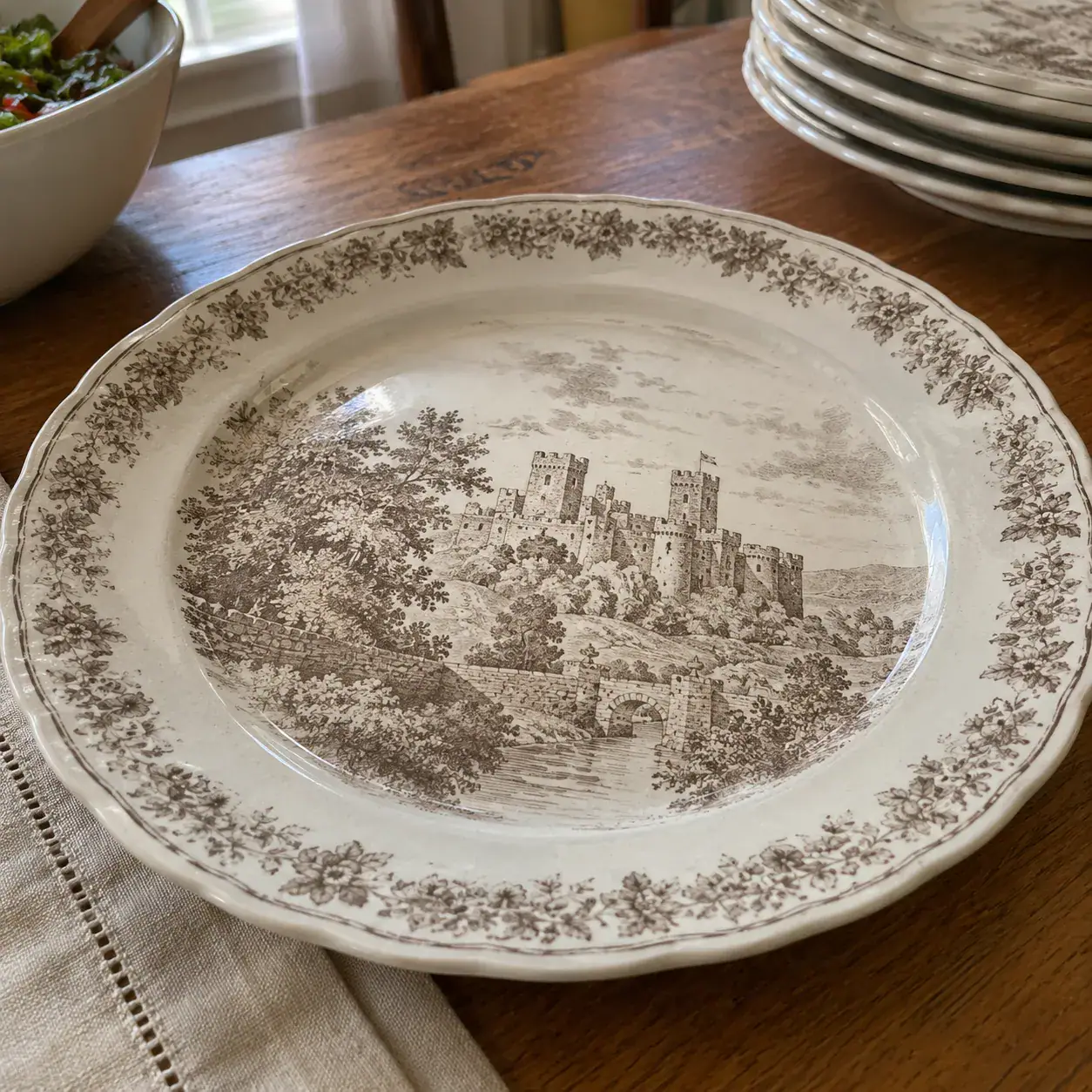
My grandfather was English. My grandmother was Italian. The dishes she set out for Thanksgiving were printed with old English castles.
I keep turning that over. It sounds like the setup to a joke, and it isn’t one. It’s just the truest description of my family I’ve ever found.
The castles are his country. Towers and walls in fine lines, sitting quietly under whatever got spooned on top.
When I was small, I think I only really saw the castles when a plate was empty. That was the reward for finishing. The food went away and the picture came back.
I don’t think I connected those castles to my grandfather back then. I just knew they were on Grandma’s good dishes.
Her table, her rules
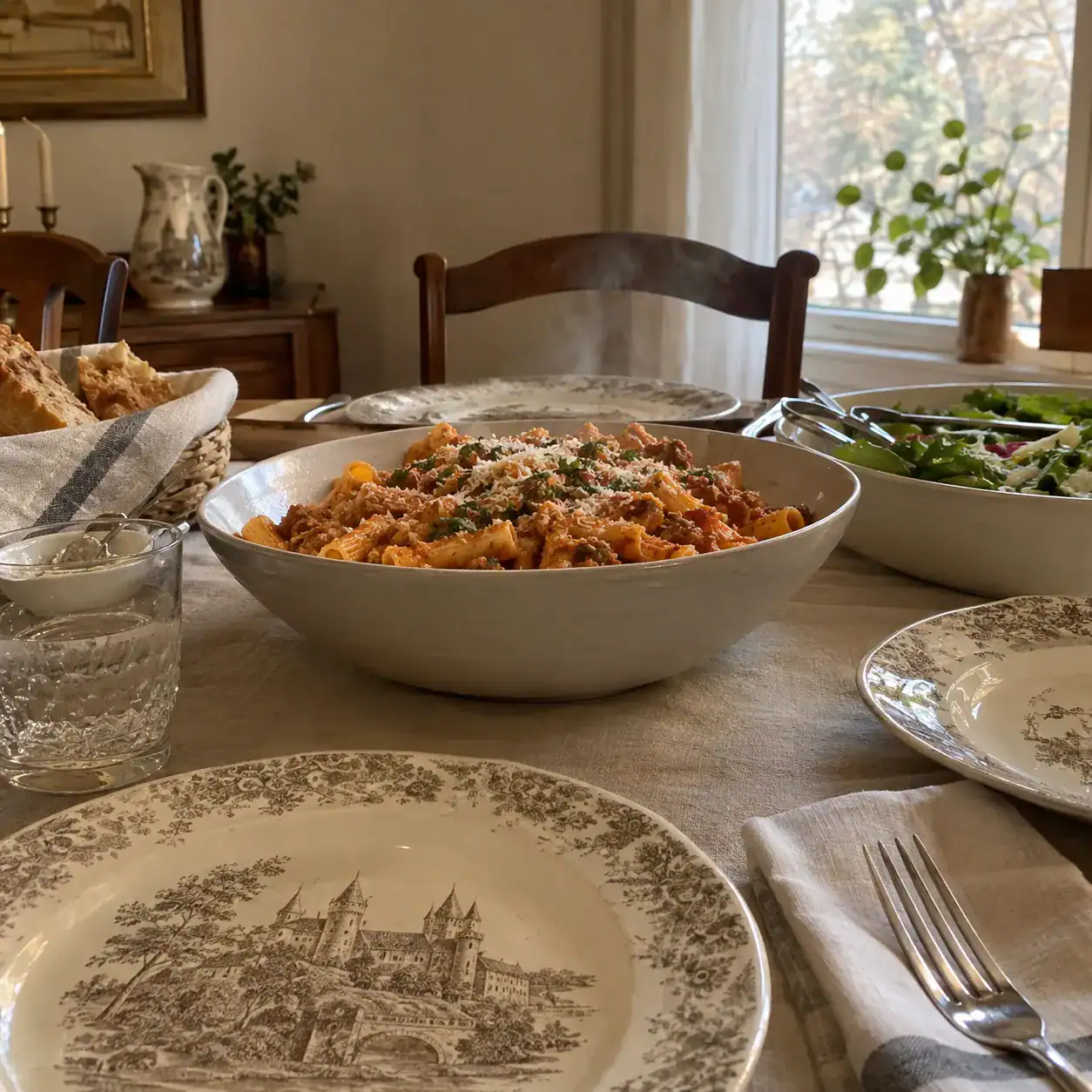
She hosted.
And her Thanksgivings were always Italian.
What I remember is steam. Noise. A table so full the serving dishes crowded each other for room.
I remember the feeling of that meal better than the menu.
I’m not the only one with a table like that in their past. In a lot of Italian-American homes, the pasta came first and the turkey came second. The holiday got folded into the shape of the big family meals those households already knew.
I can tell you whose holiday it was.
It was hers.
She took an American holiday and made it answer to her kitchen. Nobody had to explain the rules. You sat down, you ate what she made, and you came back the next year to do it again.
Two countries, one tablecloth
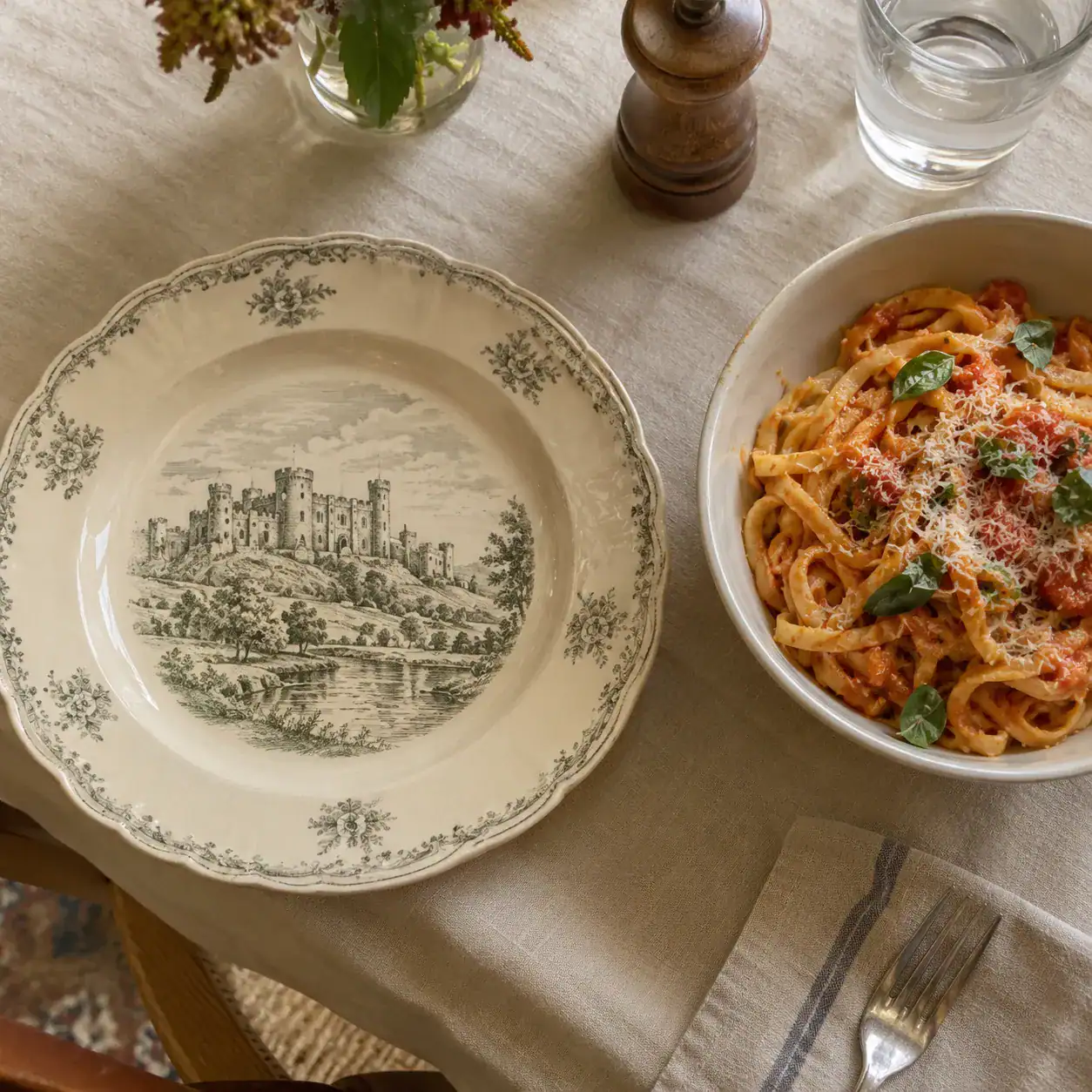
From above, that table must have looked like a map.
Her food. His country. An American holiday holding both of them up.
Italian food on English plates. I doubt anyone meant it as a statement. It was dinner.
Too good to keep in a cabinet
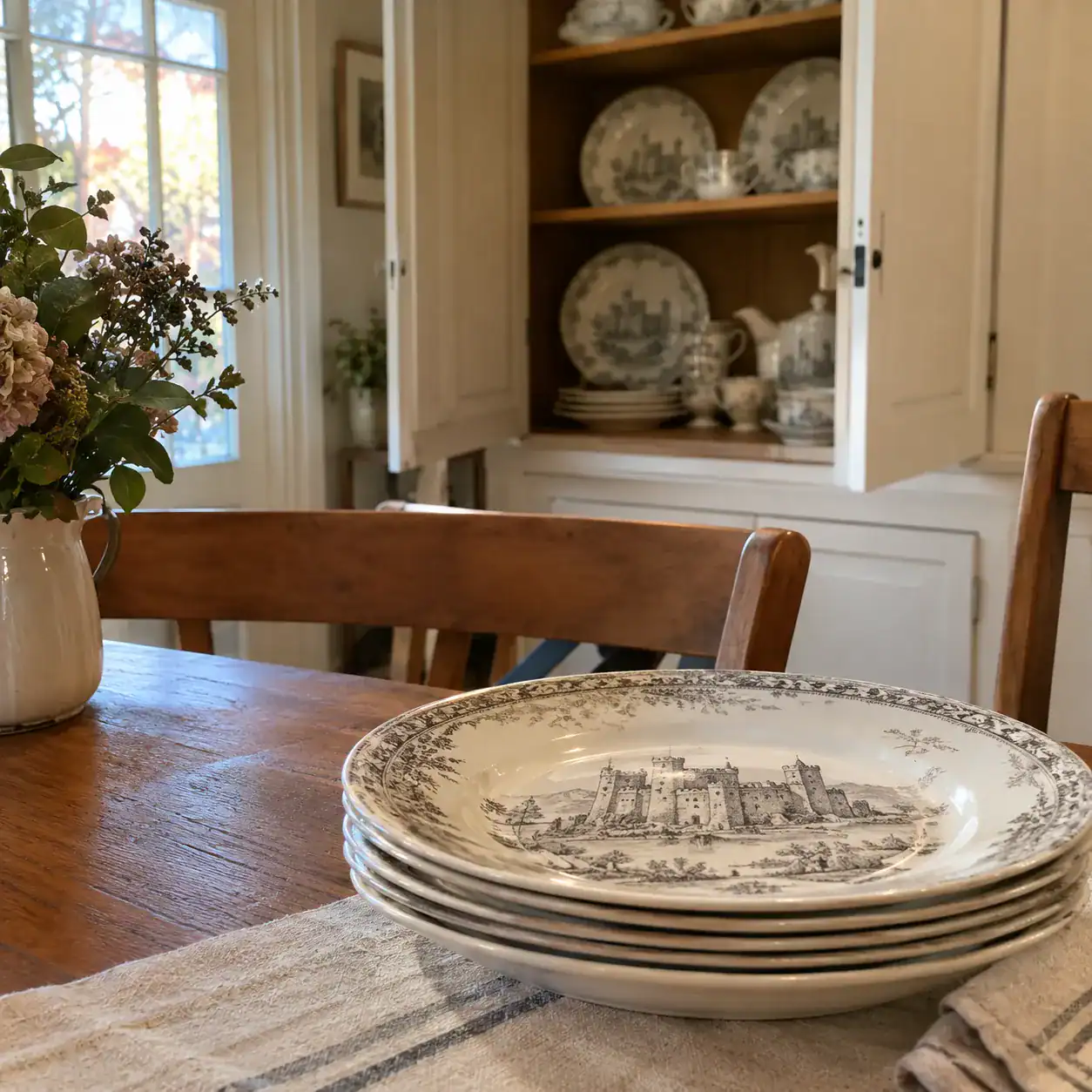
There’s a kind of dish that lives behind glass. You’ve probably seen it. The good set, wrapped in newspaper, brought out once a year or not at all.
I could do that with these. Wrap each one, stack them in a box, keep them safe.
But a plate in a box doesn’t hold anything. A plate on a table does.
As far as I know, nobody wrote down what she cooked, or who came, or what got said over dessert. There’s no list, no menu card tucked in a drawer.
The plates were there for all of it.
They’re the closest thing to a record that table has.
Old dishes belong in use only if they are known to be safe for food and are undamaged. Otherwise, they can join the table on display, with food served on other plates.
So I set them out. I’d rather they get used than get saved. If one chips someday, it can stay part of the story on display.
When the castles show up under my food now, she’s at the table.
So is he.
Set the table
Maybe you have something like this. Not castles, necessarily.
A gravy boat. A cake plate. A serving spoon somebody’s mother held for decades, or a set of glasses that doesn’t match anything else you own.
Maybe your family is a mix, too. Two countries, or three.
A grandmother from one place, a grandfather from another, and a holiday that belonged to neither of them until they made it theirs.
Look at what’s sitting on the shelf. Think about where it came from, and whose cooking used to go on top.
Then take it down.
Wash off the dust.
Give it a place.
If you’re not sure where your good dishes came from, or what used to be served on them, ask the people who sat at that table while you can.
Generational Journeys is an e-book of 170 interview questions to ask relatives, if you want somewhere to start.