The potatoes are still steaming when the bowl comes around. Somebody scrapes a chair back. In the next room the game is on too loud, and at the kids’ table a glass of milk is already tipping.
She sits where she always sits. She’s folding her napkin into a smaller and smaller square, or tearing a roll she won’t finish, or watching the little ones with her chin in her hand.
“Can you pass the gravy?”
She passes the gravy.
That’s most of what anyone asks her all day. Someone asks how the traffic was. Someone asks if she wants more pie, and she says she couldn’t possibly, and then she has a sliver.
A whole life is sitting at the end of the table, decades deep, and the talk is about traffic on the New Jersey Turnpike.
These are the questions you’ll wish you’d asked.
The Card in Her Handwriting
Whether she’s still in her chair this year or that table is long gone, these questions reach beyond the meal.
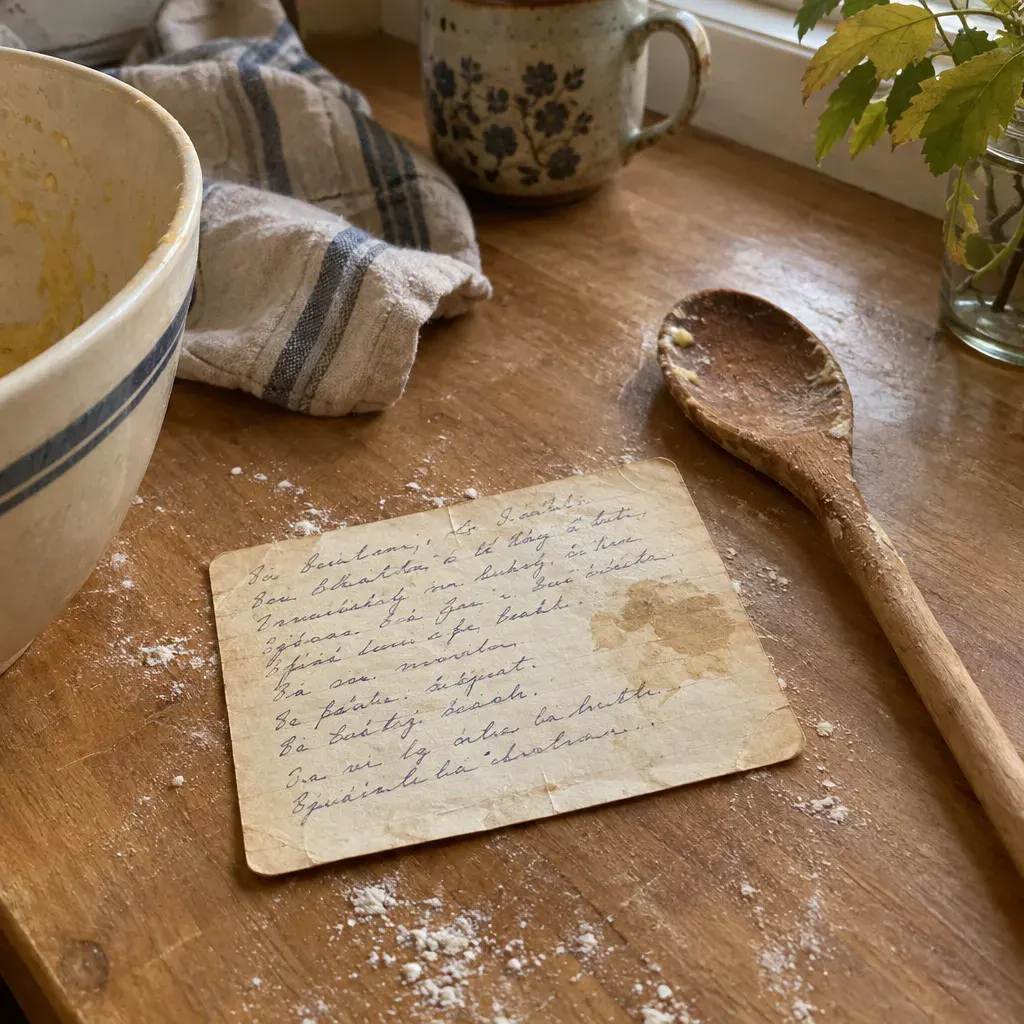
If yours was the grandmother at the stove, you know the card. Soft at the corners. A grease spot right over the oven temperature.
The measurements don’t help much: “a handful,” “enough butter,” “bake till it looks right.”
But the handwriting does something the measurements can’t. The loops on her letters, the word she always underlined, the note in the margin that only makes sense to her. You can hear her voice in it.
Pie. Stuffing. Something nobody else at the table could pronounce, and nobody thought to ask how to spell it.
The question was never really about the food.
Who taught you to make this?
Maybe somebody stood beside her in another kitchen, long before you came along, and showed her how much flour makes a handful.
The card keeps the measurements. It doesn’t keep the name of anyone who might have leaned over and said, “No, like this.”
Before She Was Grandma

It’s hard to picture her at fifteen. Harder still at twenty, with the rest of her life not settled yet.
You knew her with reading glasses, or a cardigan over the back of her chair, or whatever it was that made her look like herself. You never met the girl who came before all that.
Maybe that girl had a best friend she told everything. A song she played until someone told her to stop. Opinions about things that no longer exist.
What did you want to be when you were young?
Maybe she’d have laughed and waved it off. Or she’d have gone quiet for a second, then told you about a job she almost took, a city she almost moved to, a plan she folded up and put away.
There might have been stories from those years waiting to be told.
She was carrying all of it to the table. You asked about her knee.
The Couple in the Photograph
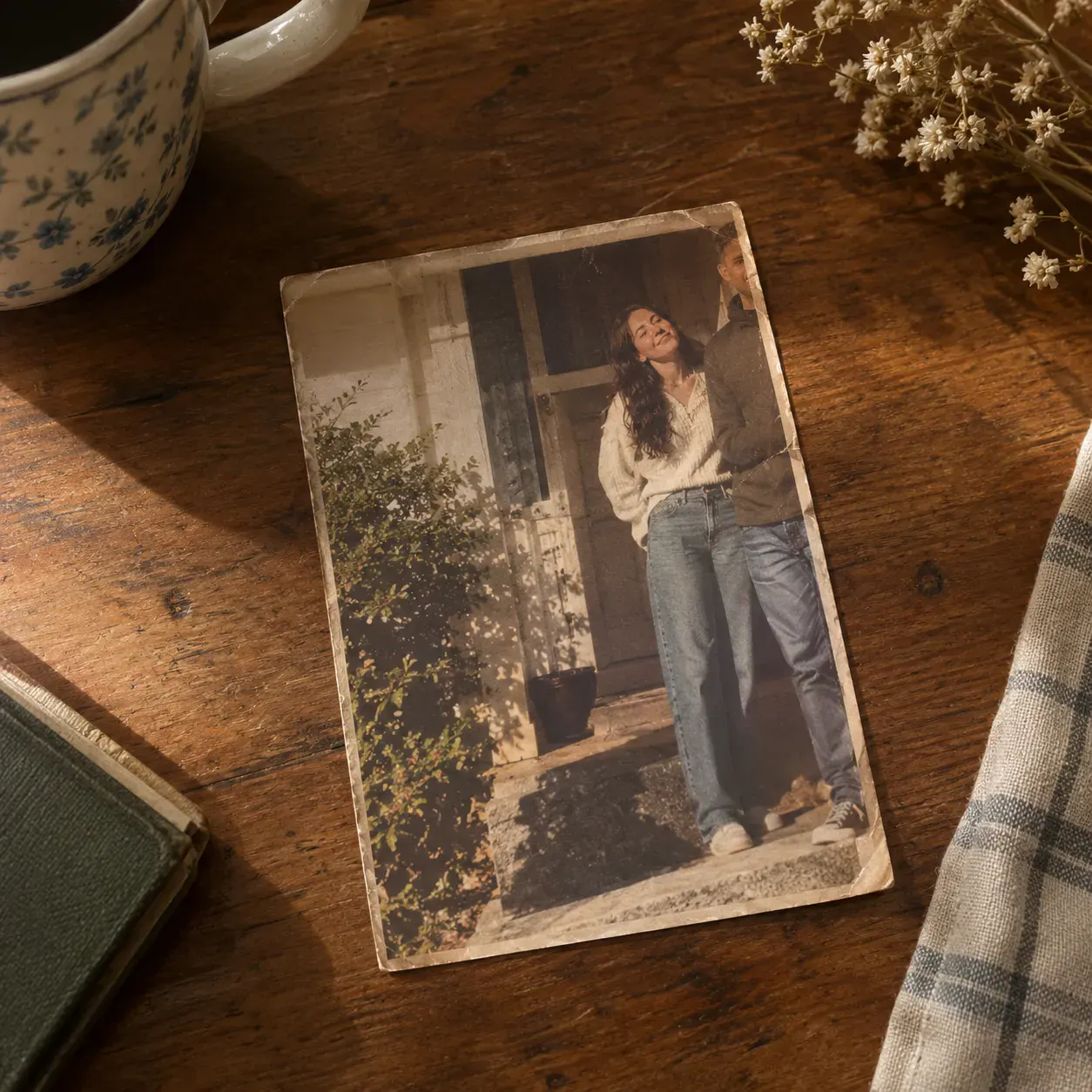
Somewhere there’s a photograph. The color has gone soft, or there was never any color to begin with. She’s young, and she’s squinting into the sun.
Someone is standing next to her. Or no one is, and she’s alone on a front step, and the real mystery is whoever held the camera.
Or, if that’s the wrong question for her life: Who was the first person you loved?
There’s a story behind that picture. A dance, a bus stop, a friend of a cousin, a letter that took weeks to arrive.
Sweet. Sensible. Or complicated in ways she’d only tell you once the dishes were done and the room had emptied out.
Maybe nobody asked. She might have blushed. She might have told you everything.
Her Mother’s Kitchen
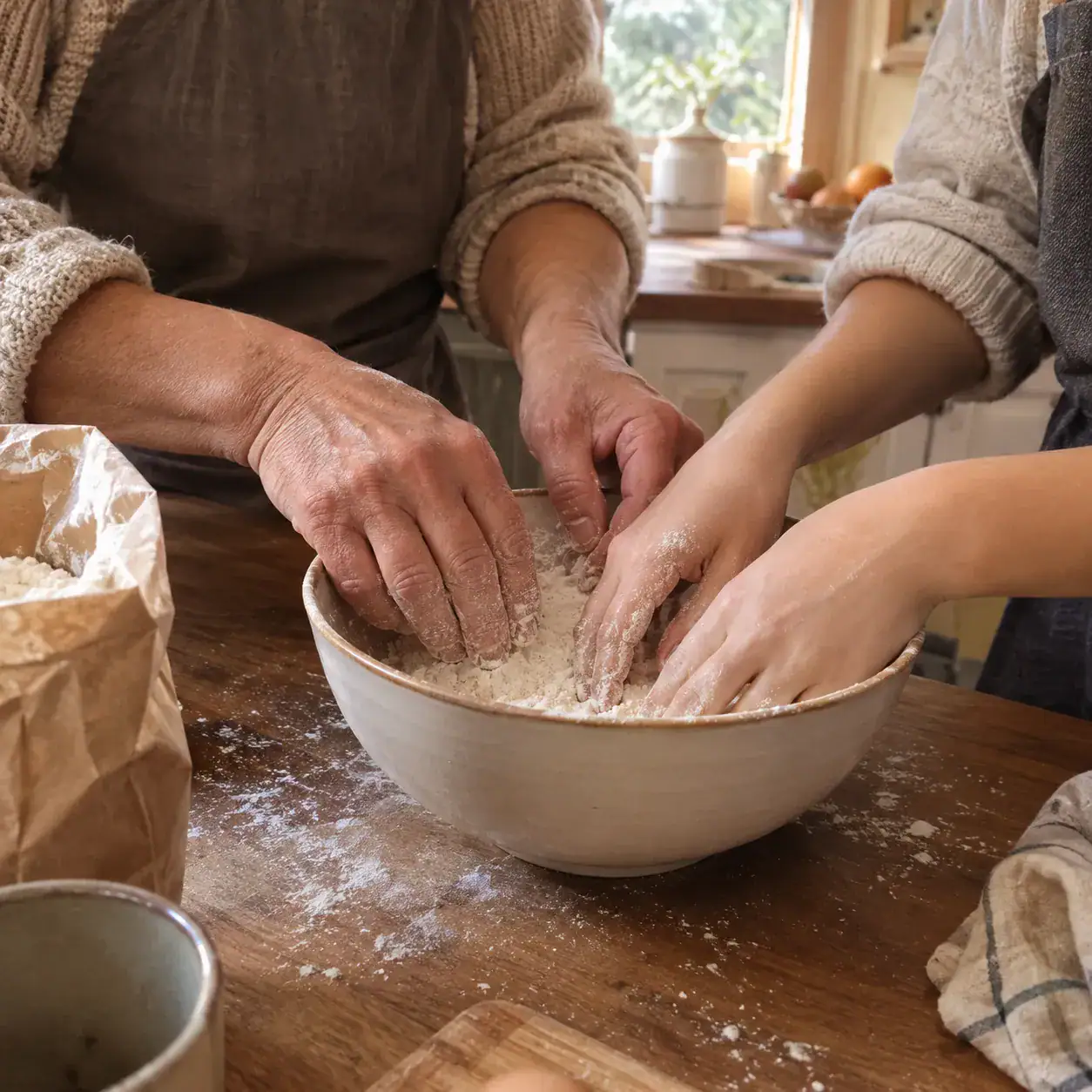
Your grandmother had a mother of her own.
You may never have met her. Maybe you’ve seen one photo, or heard her first name said once at a funeral. To you she’s almost a blank.
If your grandmother grew up with her mother, perhaps she was the whole world once.
A voice calling her in at dusk. Hands braiding her hair too tight. A temper, or a laugh, or a song hummed over the sink.
What was your mother like?
This is the question that reaches furthest back. Your grandmother may well be the only person at your table who knew that woman from the inside.
Perhaps behind her mother stood another mother, and another. A line of women, kitchen to kitchen, handing something down.
A little of it made it onto the card. Most of it lived in the telling, in the way a story changed slightly each time it was told and somehow stayed true.
Your grandmother is the bridge to all of them. Asking her is how you’d cross it.
The Hard Year
Maybe she had a year she didn’t talk about.
A lean winter. A move nobody wanted. An illness, a loss, a stretch when the money ran thin or the house went quiet.
You might have caught the edges of it. A look between her and an older relative, or a subject changed a little too quickly.
A song she’d switch off without saying why.
What was the hardest time, and what got you through it?
It’s a heavy question for a holiday. Maybe that’s why nobody asked.
Maybe she kept it from the kids on purpose. That counts as an answer too. Deciding what the next generation won’t have to carry is its own kind of strength.
But the last part of the question might have been the one she wanted to answer. Not the hard year. The getting through.
Who showed up. What she held on to. What she’d tell you to hold on to, if you were ever in the same spot.
Pass the Plate
So here’s the table again. This year’s.
If she’s still with you, sit near her. Not across the room. Near.
Ask one question. Just one.
Let her finish.
If she’s gone, ask the person who sat beside her. An aunt, an uncle, the cousin who spent summers at her house.
They’re carrying pieces of her answers, whether they know it or not.
And if you’re the one at the end of the table now, the one being handed the gravy, tell someone a story they didn’t ask for.
Nothing is wrong with you for not asking sooner. It’s hard to see what a table holds while you’re still sitting at it.
The potatoes will go cold.
The game will run long.
The gravy will come around again.
Ask her anyway.
If you’d like a longer list than fits on a recipe card, Generational Journeys is an e-book of 170 interview questions for drawing out family stories from the relatives who hold them.