

Somewhere in 1943, your grandmother stood in a butcher shop with a ration book in her purse and a worry in her chest, counting points, counting pennies, wondering whether there’d be a turkey at all this year, and whether the boy whose chair would sit empty was getting one wherever he was.
Then she went home and made Thanksgiving anyway.
Maybe the bird was a chicken. Maybe the cranberry sauce had corn syrup in it and the pumpkin pie had no eggs.
Maybe the green beans came out of a jar she’d canned herself from a patch of dirt that used to be the front lawn.
Whatever it was, she set it down in front of the people she had left at the table, and nobody complained.
If your family was in America that year, this was their Thanksgiving. Here’s what was on the table, and why.
1. The Army Got First Pick of the Turkeys
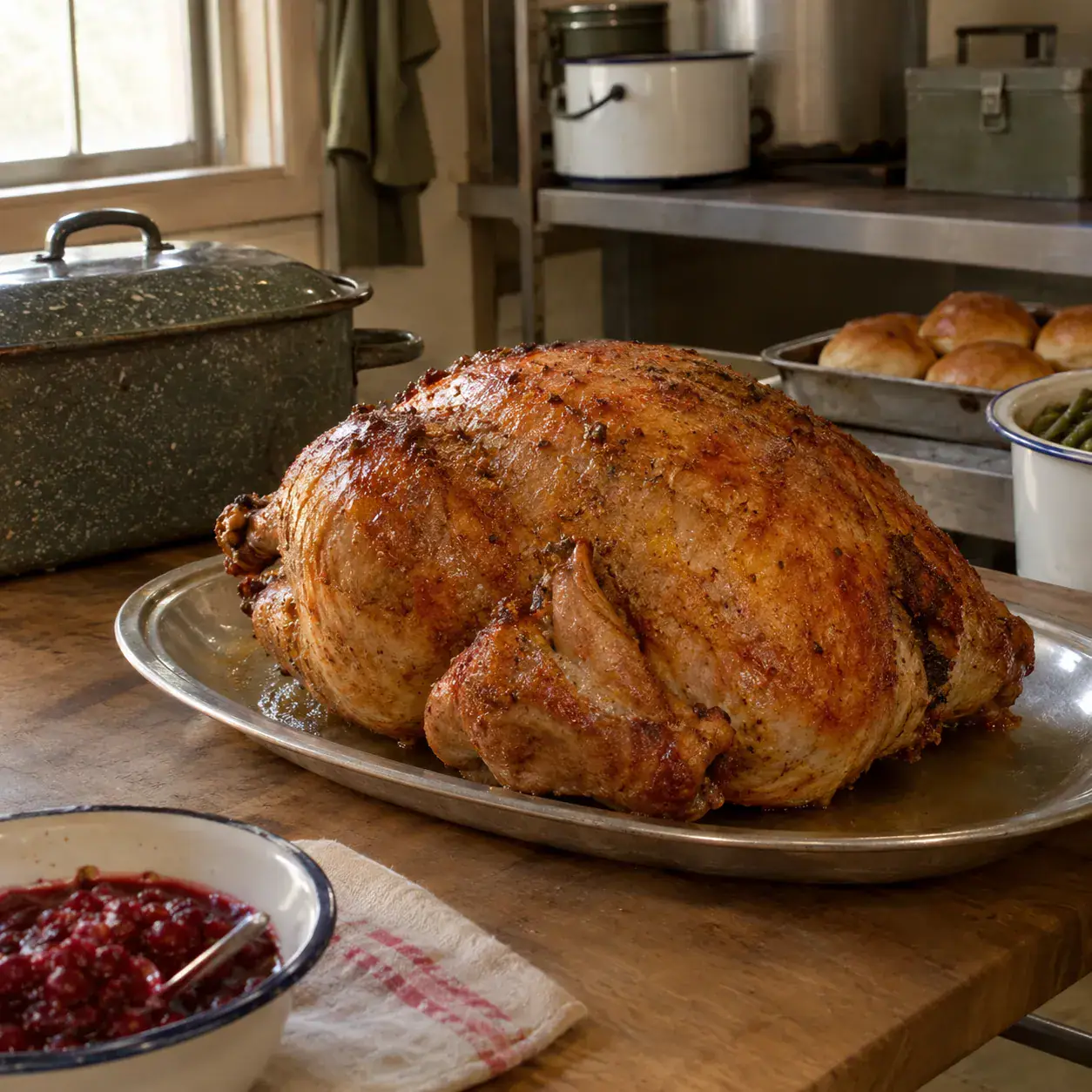
The Army’s claim sounds like the end of Thanksgiving. It wasn’t meant to be. The same TIME report said “hundreds of thousands more turkeys are gobbling and getting fat this year than last.”
The Army also made a promise. It said 90% of the turkeys would go to civilians and that there would be “plenty of Thanksgiving and Christmas turkey for all.” That was a forecast, not a count, and not everyone bought it.
One Georgia paper, the Columbus Ledger, warned cooks to order their birds early because a shortage was predicted.
According to a modern roundup of 1943 newspaper coverage, retail turkey was expected to run 42 to 54 cents a pound, and some butchers were reported to be selling turkeys for 13 to 18 cents above the government’s price ceiling.
So in 1943, turkey was neither gone nor guaranteed. It depended on where your family lived and how early someone got to the butcher.
2. Turkey Wasn’t Rationed, but the Roast Beef Was
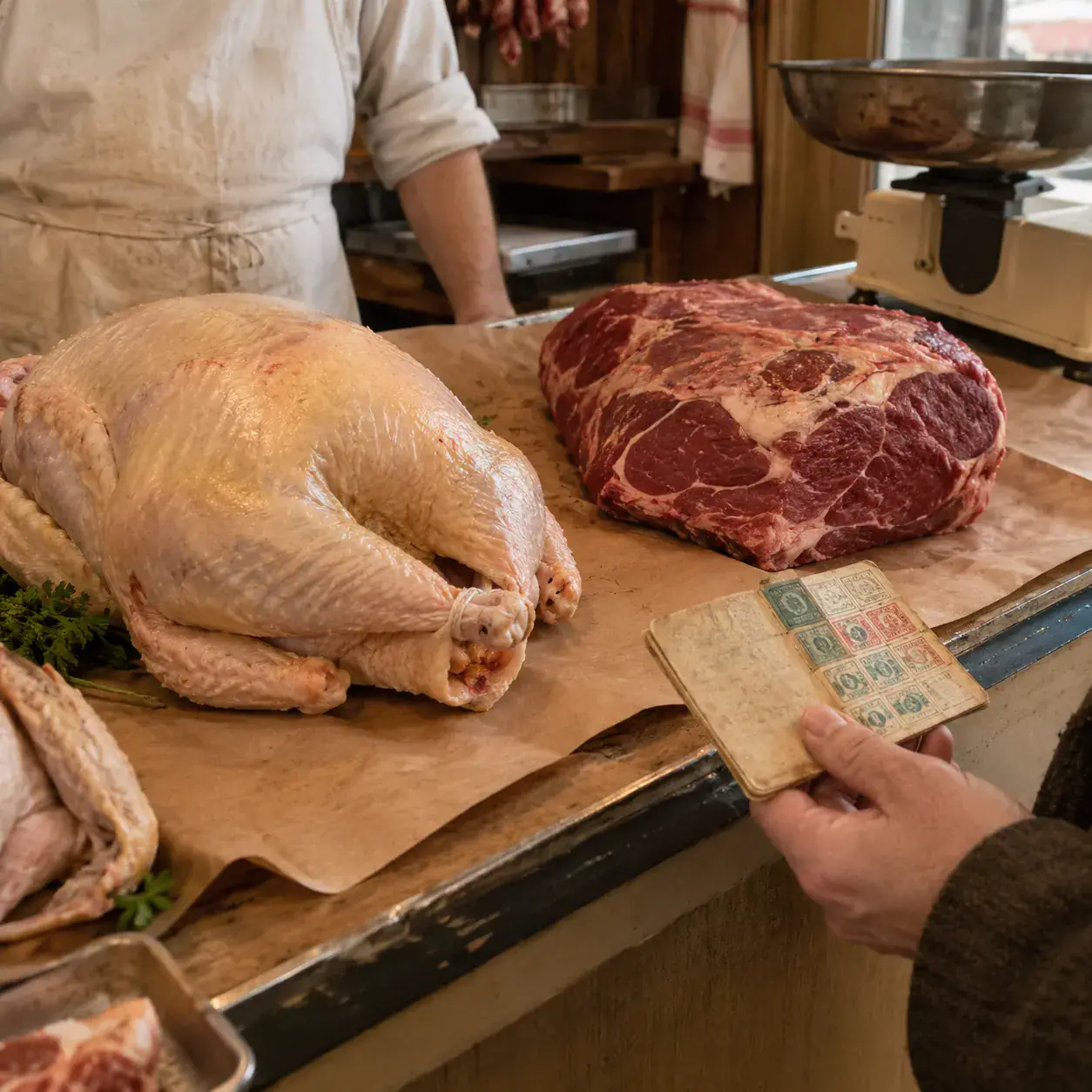
Meat went on the ration list in March 1943 and stayed there until November 1945. Fresh poultry and eggs did not, unless they came in a can.
Rationed meat was paid for with red stamps on top of cash.
Each person got 64 red points a month, so a family of four had 256 to work with. Premium beef steaks cost 9 to 13 points a pound, and a single steak could eat up half a month’s worth of points.
The cheap end of the counter was organ meat, as low as 1 point a pound. Officials gave it a friendlier name: “variety meats.”
That math explains a lot about the holiday. A fresh bird, turkey or chicken, cost no red points at all, and the National Park Service notes that Americans ate more and more chicken during the war.
3. The Bird in the Middle Might Have Been a Chicken
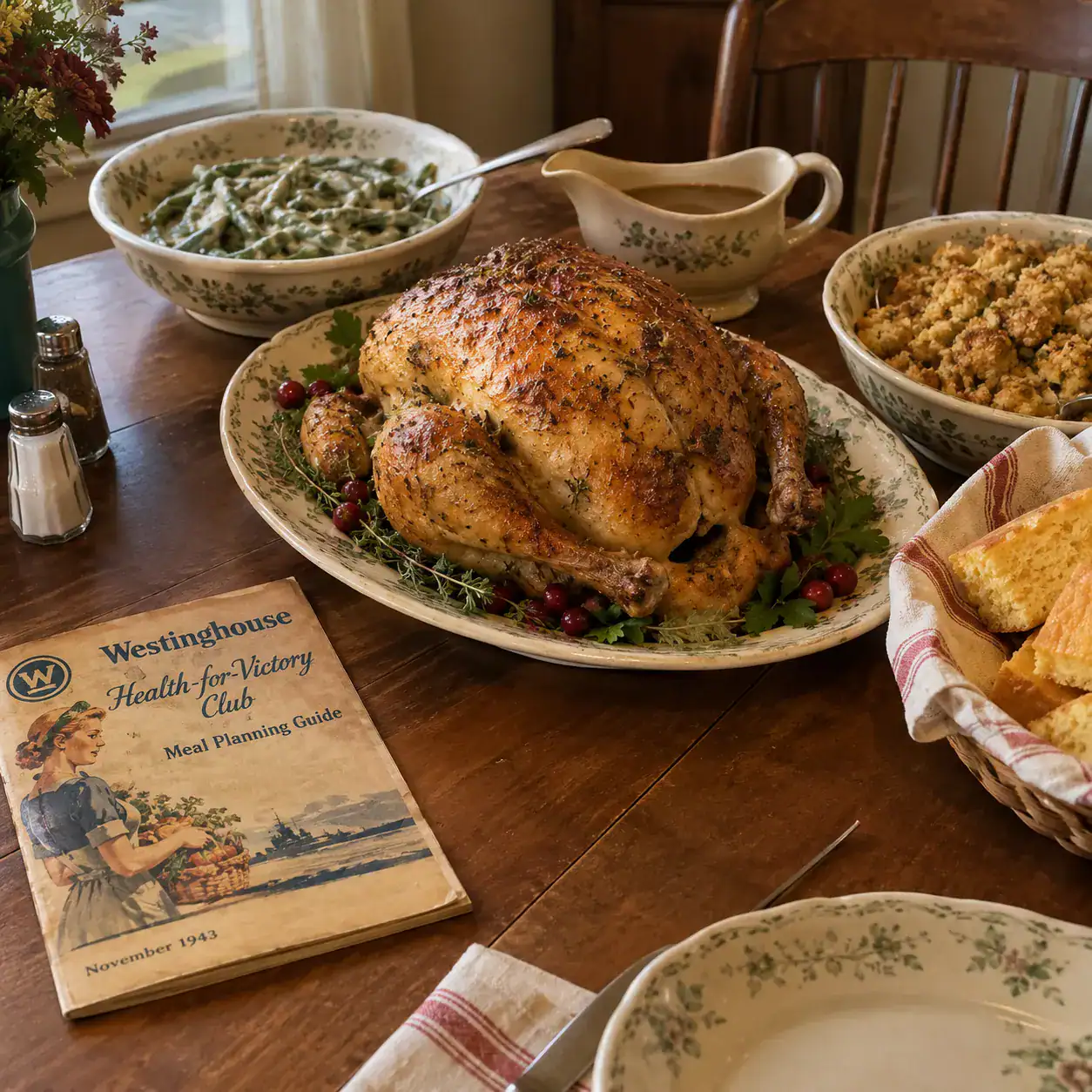
Westinghouse, the appliance maker, ran a Home Economics Institute in Mansfield, Ohio, that put out a monthly Health-for-Victory Club Meal Planning Guide during the war.
Its November 1943 issue suggested this Thanksgiving dinner:
Roast chicken with gravy, Southern corn bread dressing, mashed potatoes, wartime cranberry sauce, green beans in creamy sauce, enriched white bread, butter or fortified margarine, and eggless pumpkin pie with cream cheese topping.
No turkey. A modern collector who reproduced the guide online says turkey doesn’t appear in any of the World War II magazines or cooking pamphlets in that collection.
That’s one company’s suggestion, not a record of what most families ate. But with poultry off the ration list and chicken on the rise, a roast chicken in the place of honor made plenty of sense in 1943.
4. Cranberry Sauce Stretched with Corn Syrup
Sugar was the first food rationed during the war. Sales stopped on April 27, 1942, and restarted May 5 at half a pound per person per week.
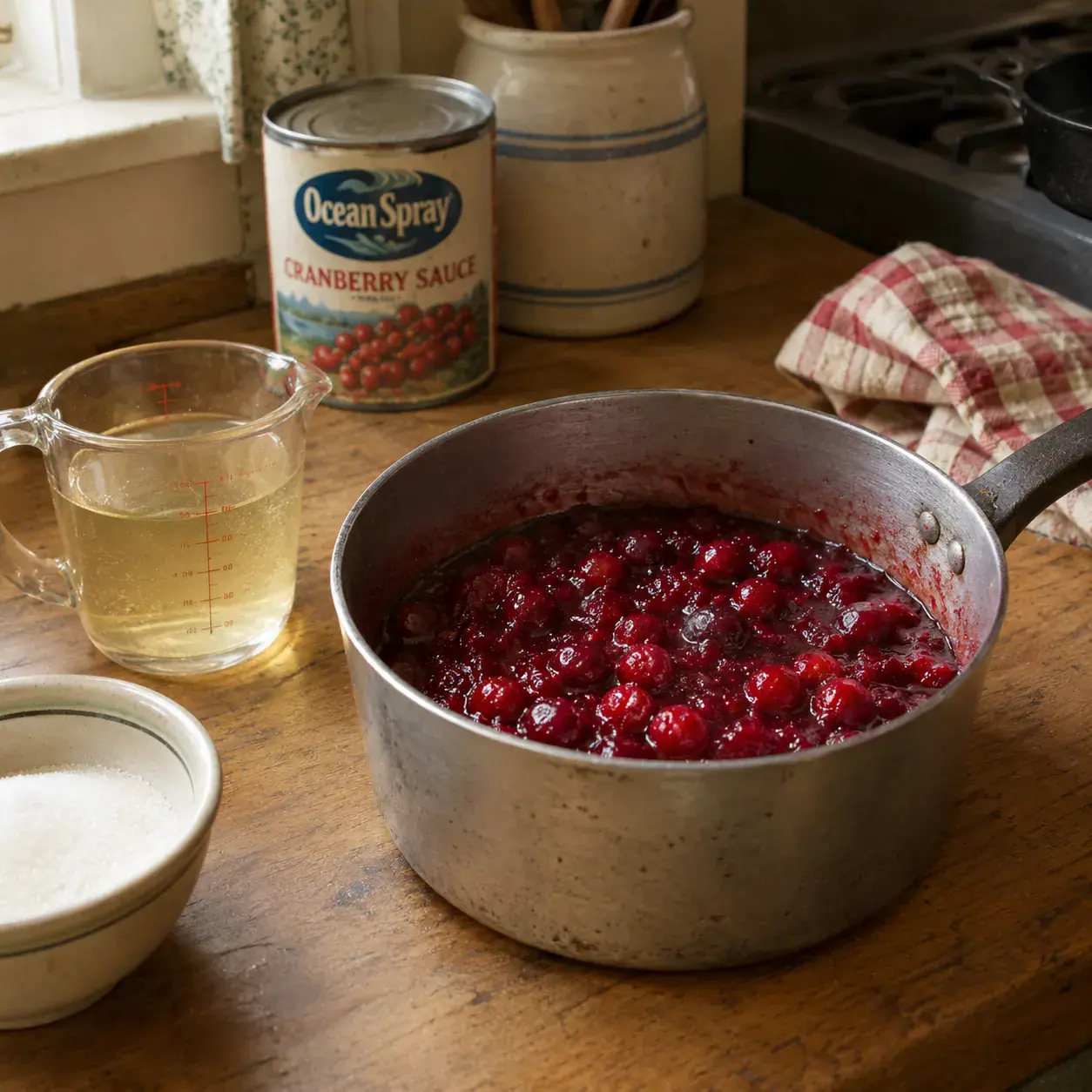
The same Westinghouse guide’s “Wartime Cranberry Sauce” worked around that. It called for 1 cup of light corn syrup, 1 cup of sugar, 1¾ cups of water and 4 cups of cranberries.
You boiled the syrup, sugar and water for 5 minutes, added the berries, and boiled them 5 more minutes without stirring. The corn syrup took on part of the sweetening, so the sugar ration didn’t carry the whole load.
Soldiers’ cranberries took a stranger route. In 1942 the government bought enough cranberries for 183,147,000 servings, and Ocean Spray ran its plant in Plymouth, Massachusetts, around the clock in three shifts for several months.
Those berries were cooked, strained and dried on a heated drum into a sheet like paper, then flaked into powder. Cooks in the field boiled it back up with sugar and water.
5. Pumpkin Pie with No Eggs
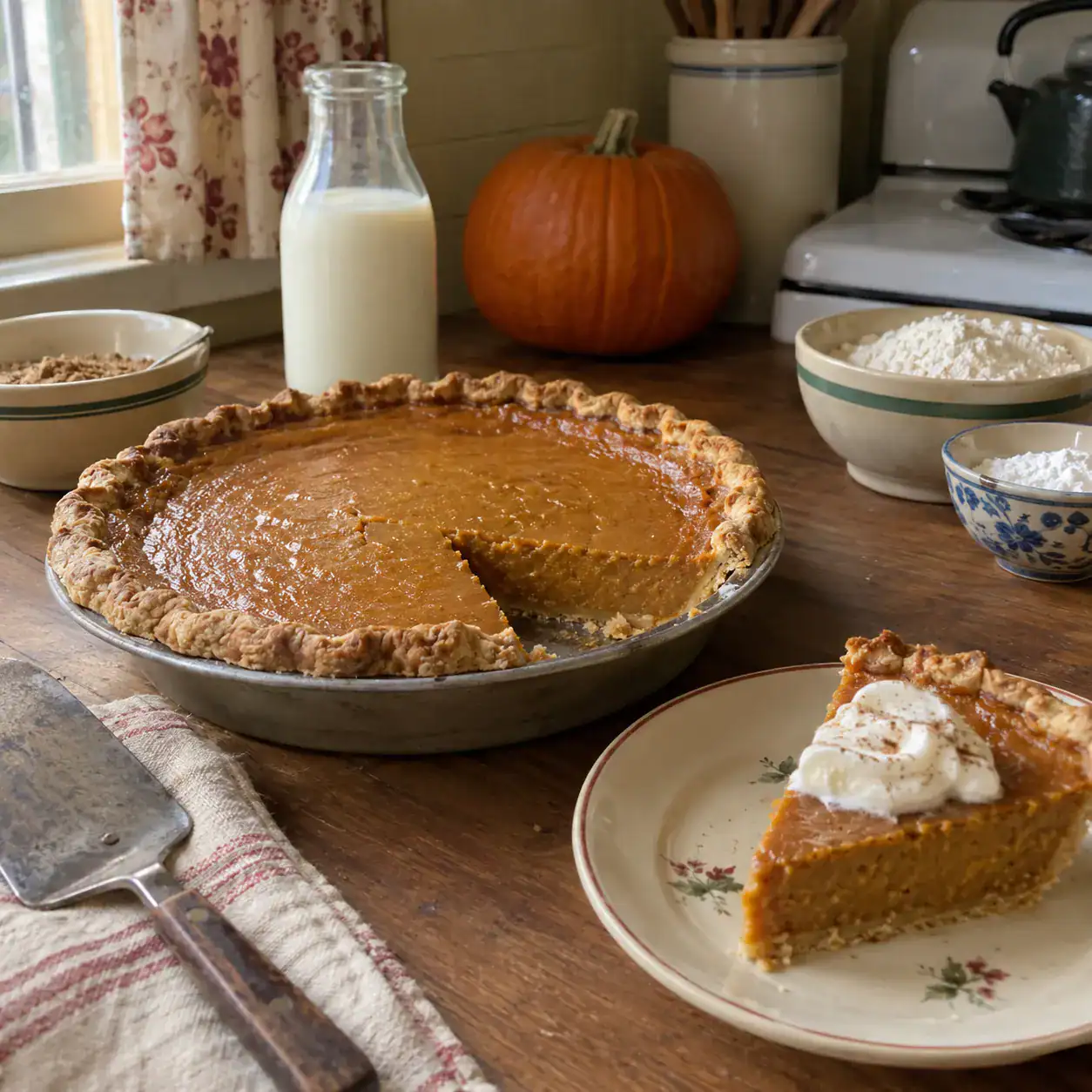
The Westinghouse menu ended with an “Eggless Pumpkin Pie.” The filling was 2 cups of pumpkin, 1 cup of brown sugar, 1 cup of milk, 2 tablespoons each of cornstarch and enriched flour, and 1 teaspoon each of lemon extract, cinnamon, salt and pumpkin pie spice.
It baked at 450°F for 10 minutes, then at 350°F for 30 minutes.
Here’s the surprise. Eggs weren’t rationed in 1943.
The guide doesn’t say why it left them out, and wartime recipes often worked around ingredients that were scarce or costly, so the reason is anyone’s guess.
The pumpkin itself had a cost if it came from a can. Over 300 processed foods went on the ration list starting in March 1943, paid for with blue points, and each person got 48 of those a month.
6. Vegetables from the Backyard
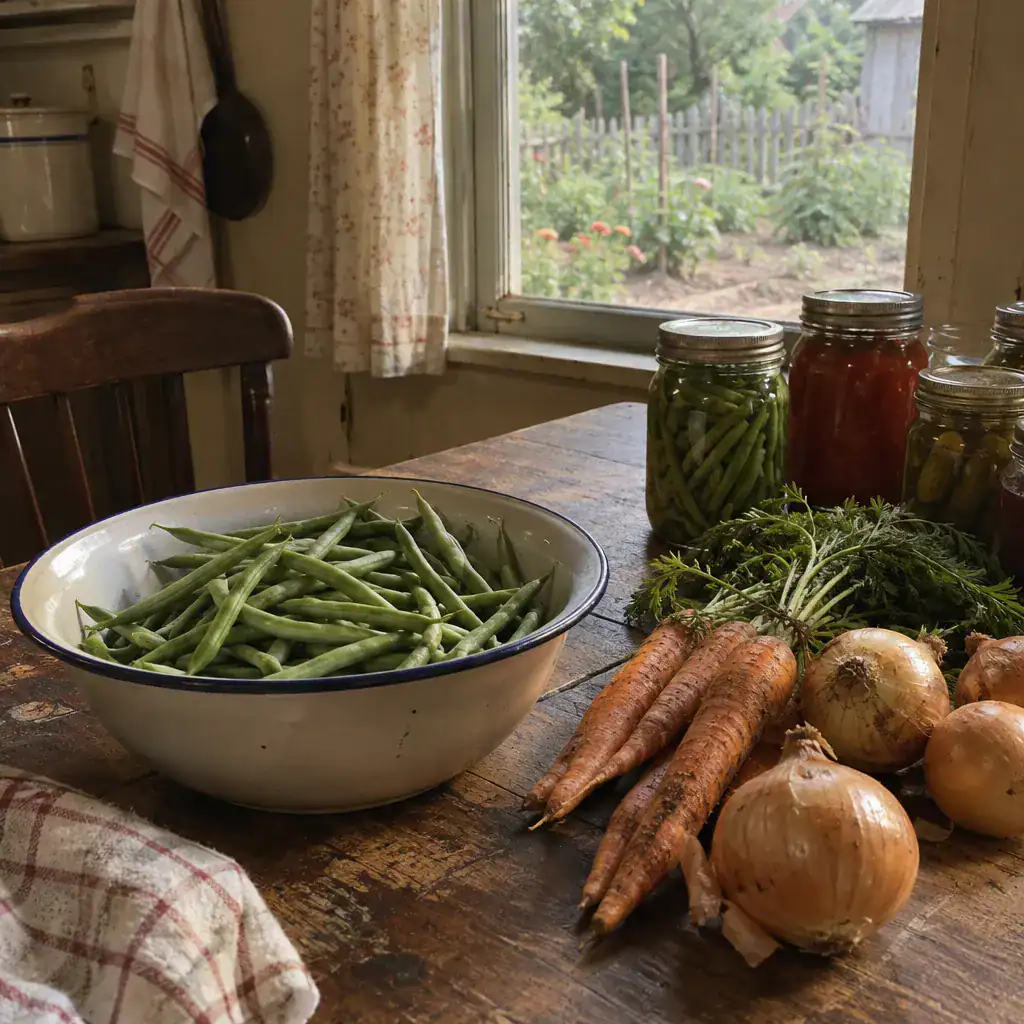
According to the U.S. Department of Agriculture, Americans planted more than 20 million victory gardens in 1943, and those gardens produced 10 billion pounds of food. Two-thirds of them were in towns, cities and suburbs, not on farms.
Tomatoes were the most popular crop. String or wax beans came next, then onions, lettuce, radishes, beets and carrots.
The green beans on that Westinghouse menu were exactly the sort of thing a backyard plot turned out, whether or not a given family grew its own.
Plenty of that harvest went into jars. In 1943, Americans bought 315,000 pressure cookers for canning, up from 66,000 the year before, according to a North Carolina state library history site.
FDR noticed. His Thanksgiving proclamation thanked “Victory gardeners” by name, right alongside the nation’s farmers.
7. The Coffee Was Back
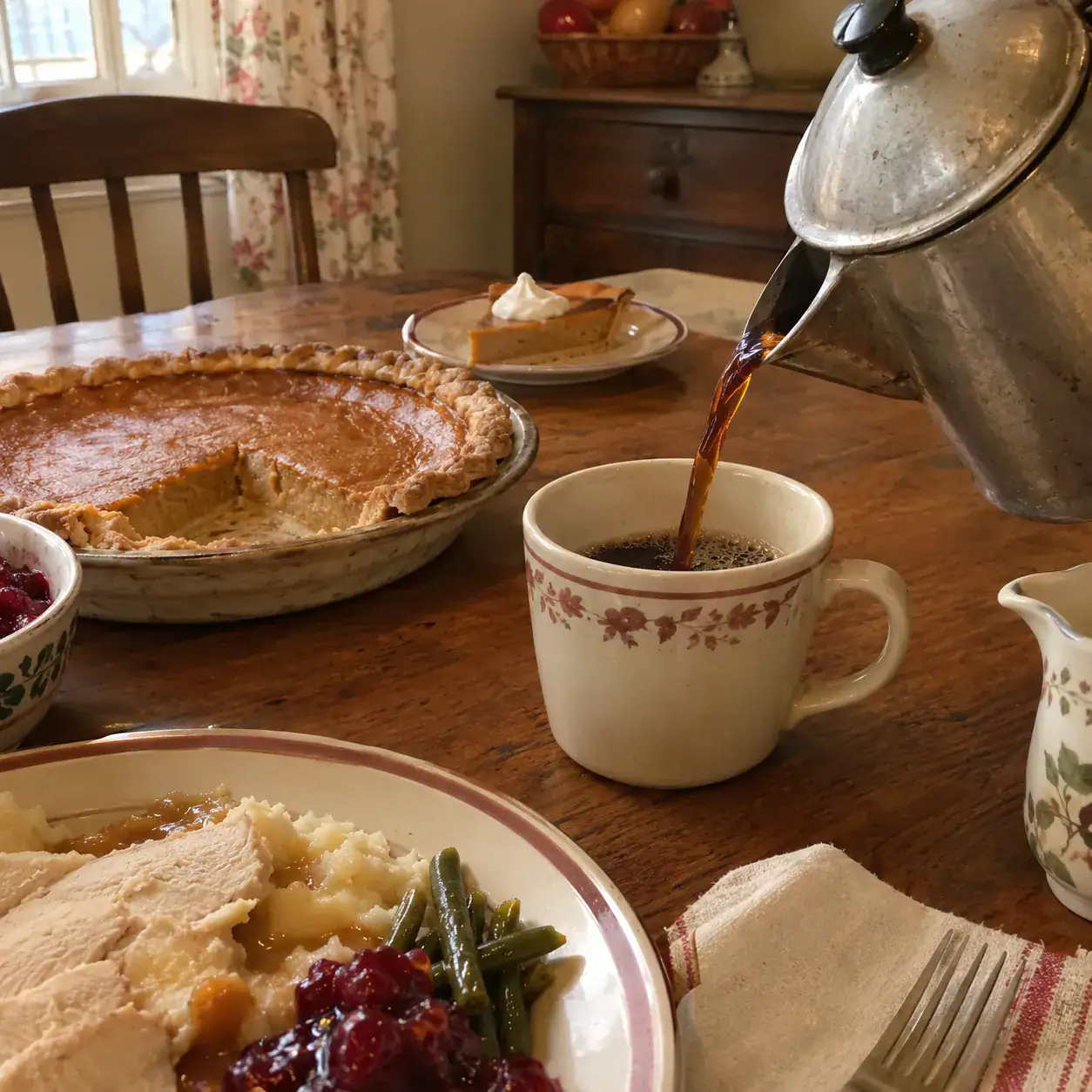
Coffee went on the ration nationally on November 29, 1942, just after that year’s Thanksgiving.
The allowance was 1 pound every five weeks, about half of what people normally drank, and it was soon cut to 1 pound every six weeks.
Then on July 28, 1943, FDR announced that coffee rationing was over. He credited more shipping space and success against German U-boats.
By Thanksgiving 1943, coffee had been off the ration list for four months.
If your family’s dinner ended with a pot of coffee and a slice of pie, that pot no longer came out of anyone’s ration book.
8. Margarine on the Rolls
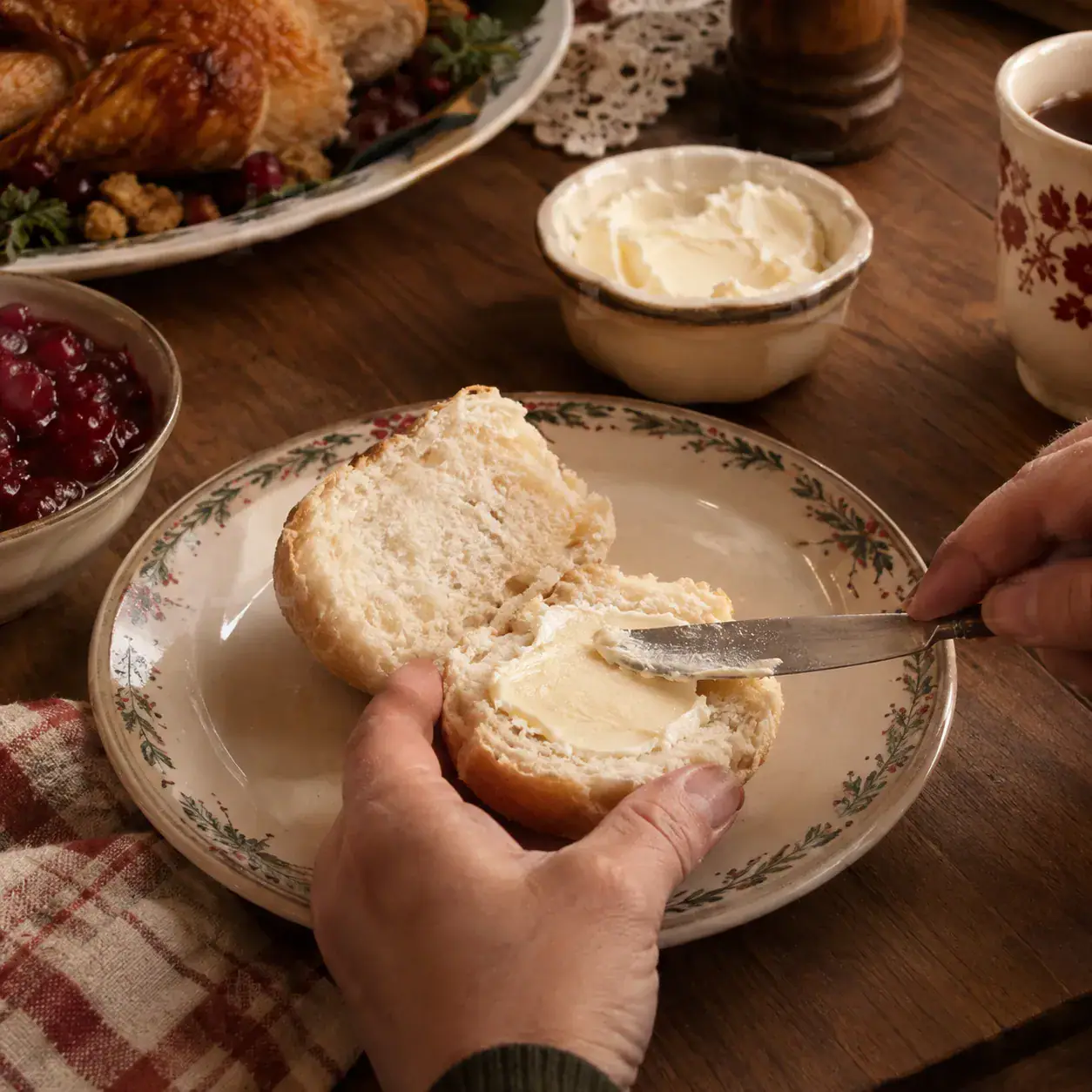
Butter, fats and oils went on the ration list on March 29, 1943, and butter and margarine stayed there until November 23, 1945.
Butter cost more points than margarine, so “oleo” margarine became more popular.
The Westinghouse menu hedged with “butter or fortified margarine.” Which one showed up next to the rolls could depend on how many red points a family had left that month.
Even the pan drippings were about to go to war.
Starting December 13, 1943, a few weeks after the holiday, anyone who turned in used kitchen fat got 2 red points and 4 cents for each pound. The fat was made into glycerin for explosives.
9. What the Serviceman Got on His Tray
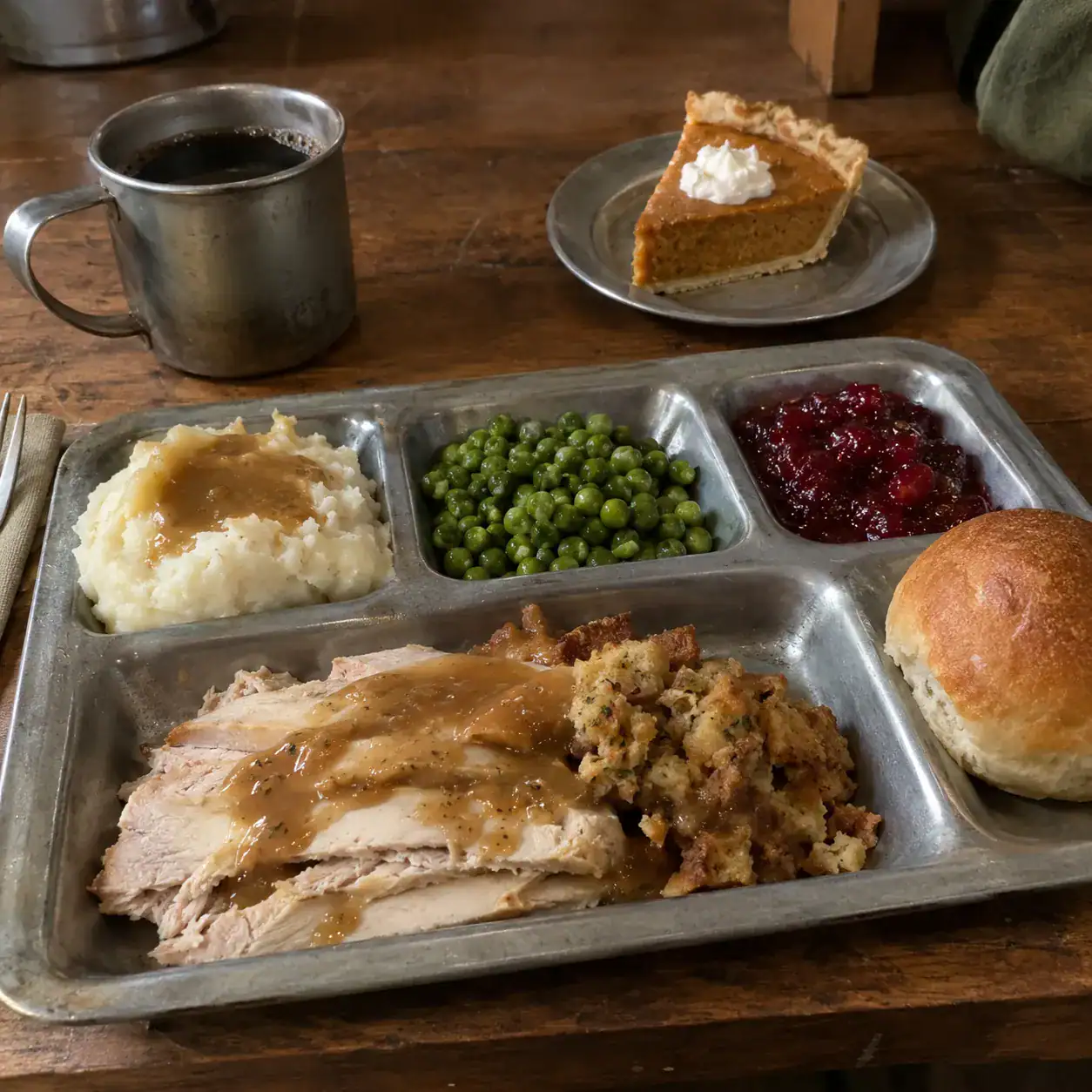
A Thanksgiving menu from November 1943, supplied by a veteran of Company C, 23rd Armored Infantry Battalion, reads like a peacetime feast. It started with fruit cocktail, cream of celery soup, olives, pickles and celery hearts.
Then came roast turkey with dressing and giblet gravy, cranberry sauce, mashed potatoes, rice, green peas, creamed corn, a tomato and lettuce salad, and hot rolls with butter. Dessert was pumpkin pie, ice cream, crackers and cookies, with coffee and lemonade, plus apples, oranges and grapes.
Set that next to the Westinghouse home menu. The company had turkey where the guide suggested chicken, and butter where the guide said “butter or margarine.” The menu doesn’t say where the company was that day, and it speaks for one unit, not the whole Army.
Some meals were remembered for where they happened. A wartime photo caption from Alexai Point on Attu, in Alaska’s Aleutian Islands, shows officers of the 77th Bomb Group and 54th Fighter Group at Thanksgiving dinner on November 25, 1943.
The caption called it the first one “celebrated by military personnel on former American territory recaptured from the Japanese.”
10. The President Carved Turkey in Cairo, and the Famous Painted Turkey Got Eaten
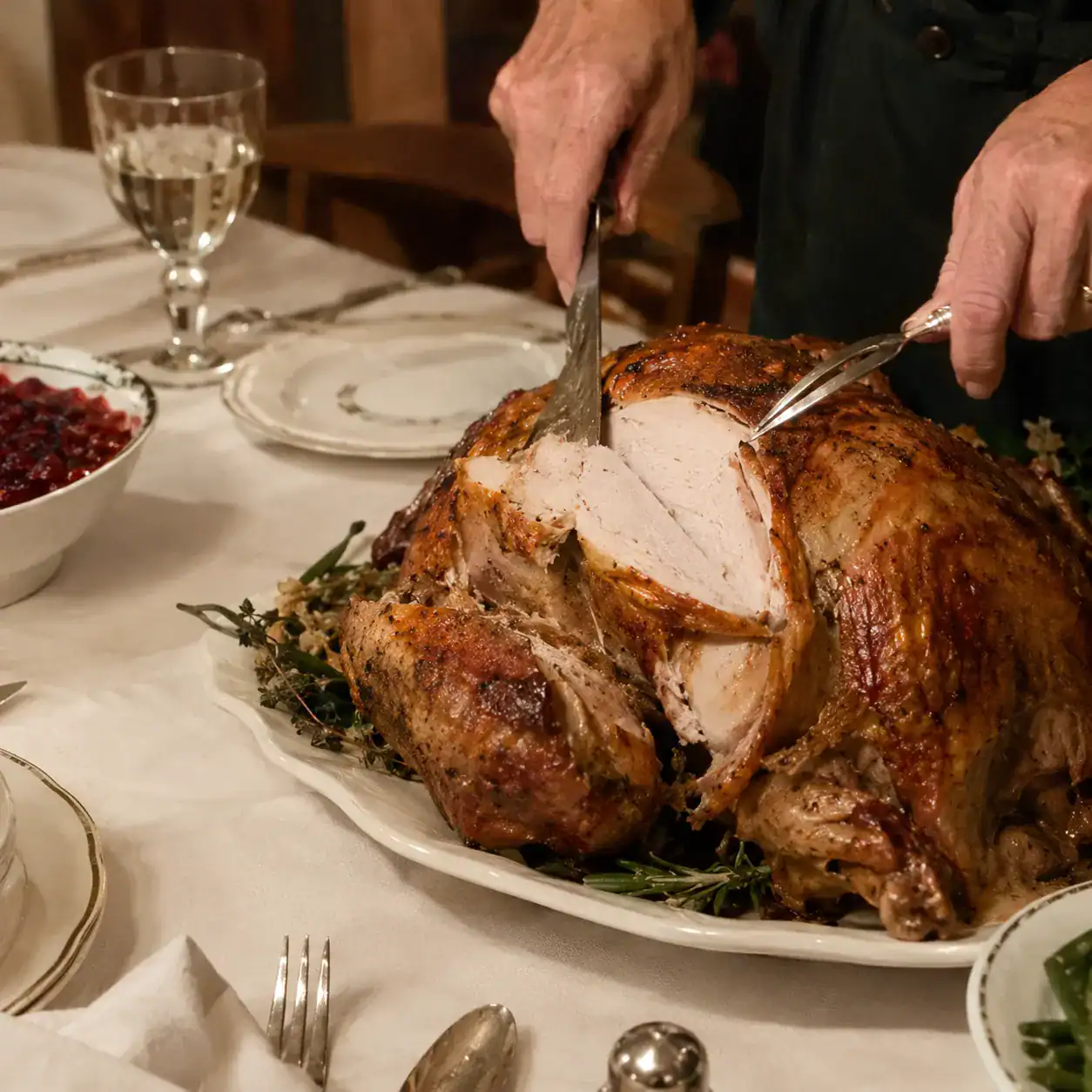
FDR usually preferred to spend Thanksgiving at Warm Springs, Georgia. In 1943 he spent it in Cairo, at a wartime conference with Winston Churchill and Chiang Kai-shek.
His diary says he had the Chiangs to tea and then the British to dinner “with two turkeys he had brought from home.”
Dinner was at 8 p.m. Churchill later wrote that FDR carved the birds with “masterly, indefatigable skill” and that “I had never seen the President more gay.” Churchill’s daughter Sarah was the only woman at the table.
That same year, the country’s best-known Thanksgiving turkey was a painted one. Norman Rockwell’s Freedom from Want ran in the Saturday Evening Post on March 6, 1943, after he painted it the previous November.
His models were friends and family from Arlington, Vermont, including his own mother, Nancy, and Mrs. Thaddeus Wheaton, the woman setting the turkey on the table.
The bird was real. “Our cook cooked it, I painted it and we ate it,” Rockwell said. “That was one of the few times I’ve ever eaten the model.”
The Office of War Information requested 2.5 million sets of Four Freedoms posters for its 1943 war bond drive.
Every Dish Had a Reason
The 1943 table was built from what families could get and what the war asked them to save.
If someone in your family remembers the war years, ask them what was on the table and who made it. If you’d like a few more questions ready for that conversation, Generational Journeys is an e-book of 170 interview questions for relatives.