Plenty of families sing about going over the river and through the wood to Grandmother’s house. But the original poem sends the sleigh to Grandfather’s.
Somewhere along the way, a lot of people started singing it differently, and the new word came to feel like the way it had always gone.
Maybe your family has a pie it insists on or a walk after dinner that feels just as settled. Even a familiar holiday leaves room for somebody’s new idea.
These traditions have room for a song in the car, a name stitched into cloth, or a little friendly competition. The wishbone contest once held out the promise of an earlier wedding as well as a wish coming true.
1. Sing “Over the River” on the Way There

Lydia Maria Child grew up in Medford, Massachusetts, and the river in her poem is the Mystic.
She published it in 1844 as “The New-England Boy’s Song about Thanksgiving Day,” in a book called Flowers for Children. The original runs twelve stanzas. Most people today sing four.
Her second line reads “To Grandfather’s house we go.” The house is believed to be the Paul Curtis House in Medford, though the New England Historical Society notes it may really have been her grandmother’s.
The poem caught on after the Civil War, and by the turn of the century it was a classroom standard.
If your family drives to someone’s house for the holiday, the song already fits the trip. The original even has a horse that “knows the way to carry the sleigh.”
2. Run (or Walk) a Family Turkey Trot
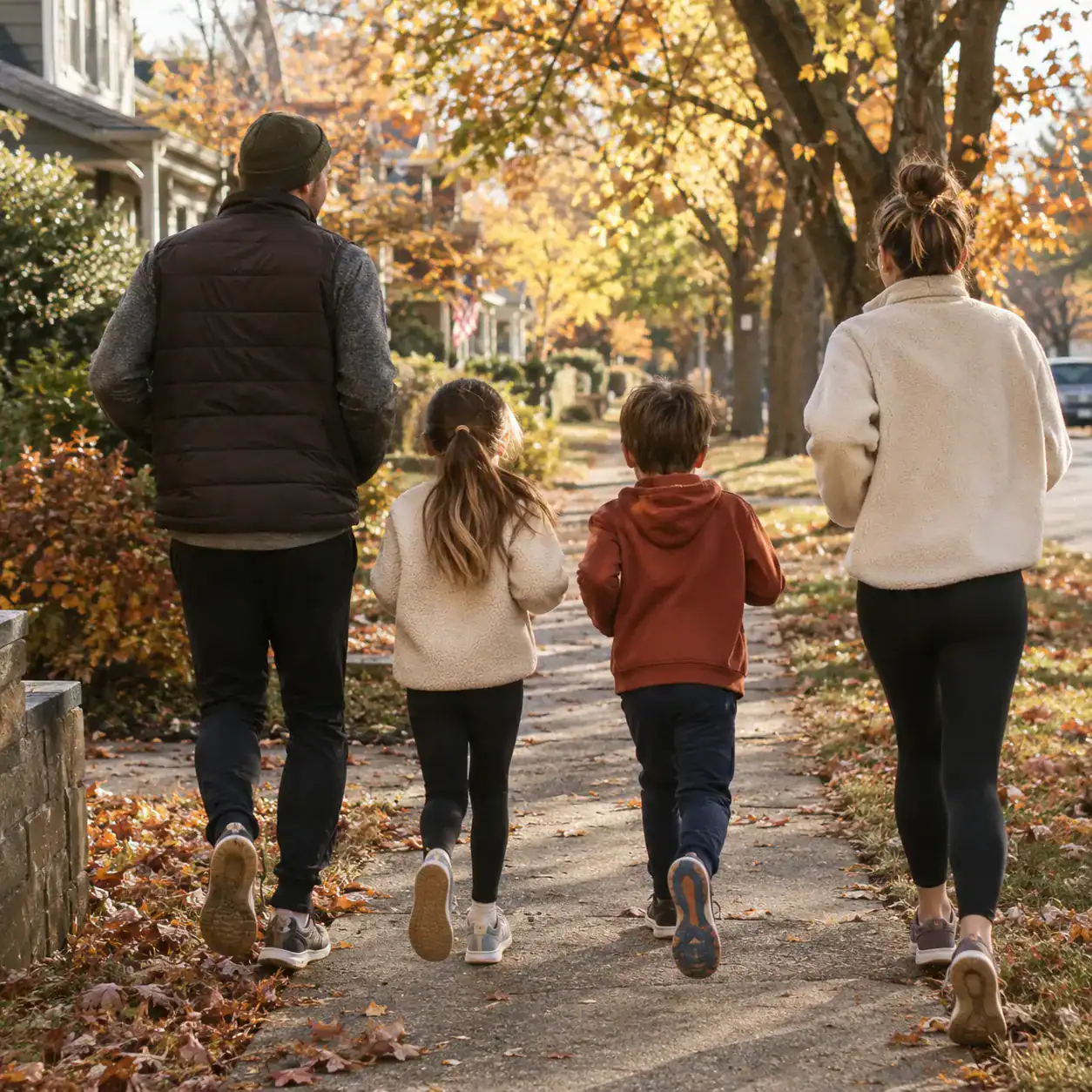
On November 26, 1896, six runners lined up in Buffalo, New York, for a five-mile cross-country race on a dirt course.
Four of them finished. A runner named Henry A. Allison won.
That race, the Buffalo YMCA Turkey Trot, is billed as the oldest continuously run public footrace in North America.
It has been held every year since that small start.
Your family’s version can be three cousins and a dog going around the block. Buffalo’s started with six.
3. Play a Backyard Football Game
Long before the NFL, Thanksgiving football was a college rivalry.
On Thanksgiving Day 1876, Yale and Princeton met at Elysian Fields in Hoboken, New Jersey, in the first game played under the Intercollegiate Football Association’s rules. Each side fielded 15 players, and they used a rugby ball.
The two schools played each other on Thanksgiving through 1893, and the crowds swelled from 4,000 to 40,000. Other colleges and high schools copied them.
Not everyone approved. Clergy and faculty sometimes condemned the games for disrupting what was supposed to be a solemn day of gratitude.
The pros came later. In 1934, radio-station owner George A. Richards bought the Portsmouth Spartans and moved them to Detroit. That year’s Thanksgiving game against the champion Chicago Bears went out on a 94-station NBC radio network.
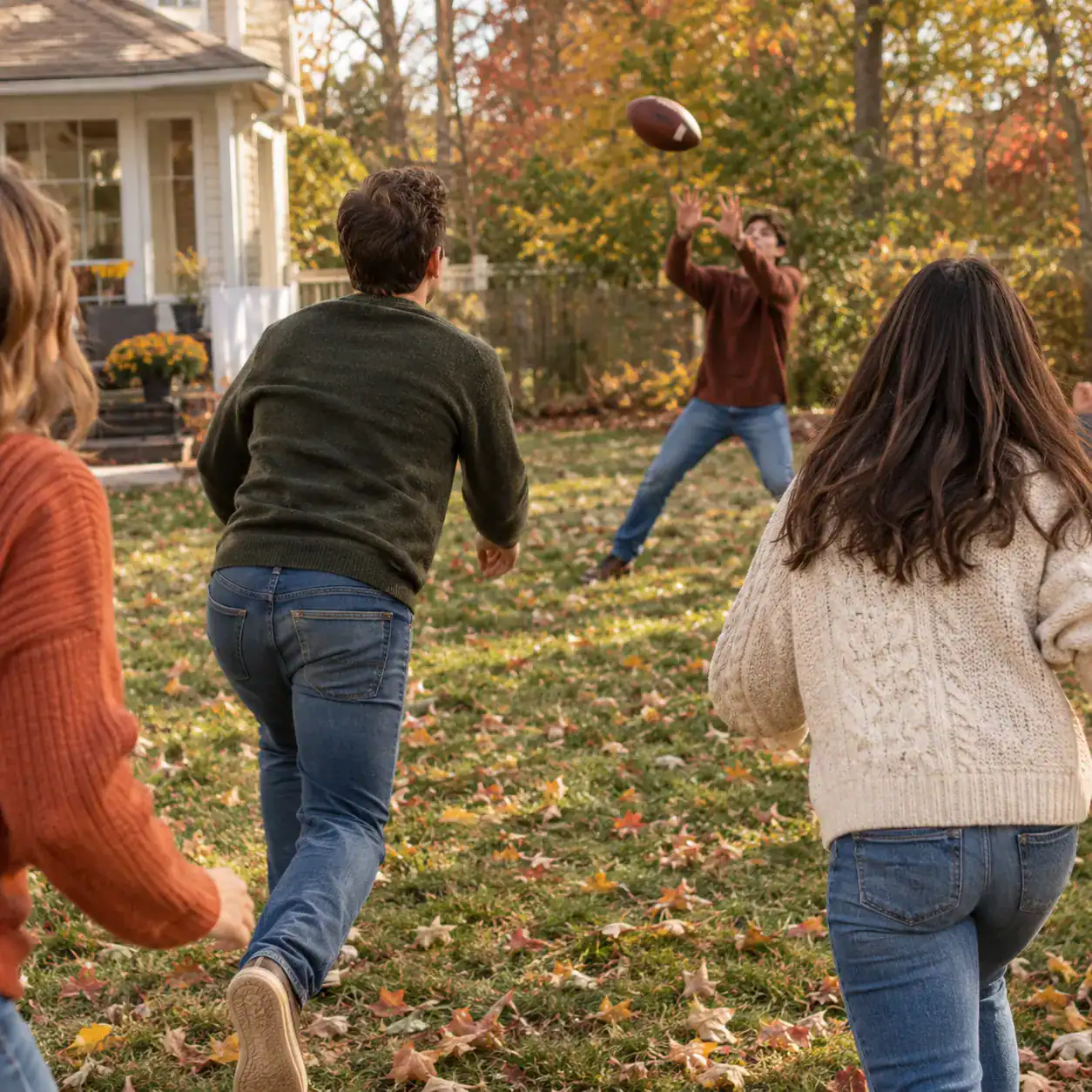
The game sold out two weeks early. If your family takes its football into the backyard, that holiday rivalry can shrink to relatives on opposite sides, with everyone back at the same table afterward.
4. Make a Morning of the Parade
The first Macy’s parade in 1924 wasn’t even called a Thanksgiving parade. It was billed as the Macy’s Christmas Parade.
Store employees marched in costume with floats, bands and live animals from the Central Park Zoo. It ended with Santa being crowned “King of the Kiddies,” and an estimated 250,000 people watched.
The first character balloon, Felix the Cat, arrived in 1927, “propped up with sticks.”
Helium came in 1928, and for a few years the released balloons carried cash rewards for whoever found them. That stopped in 1932, after a pilot nearly crashed trying to catch one.
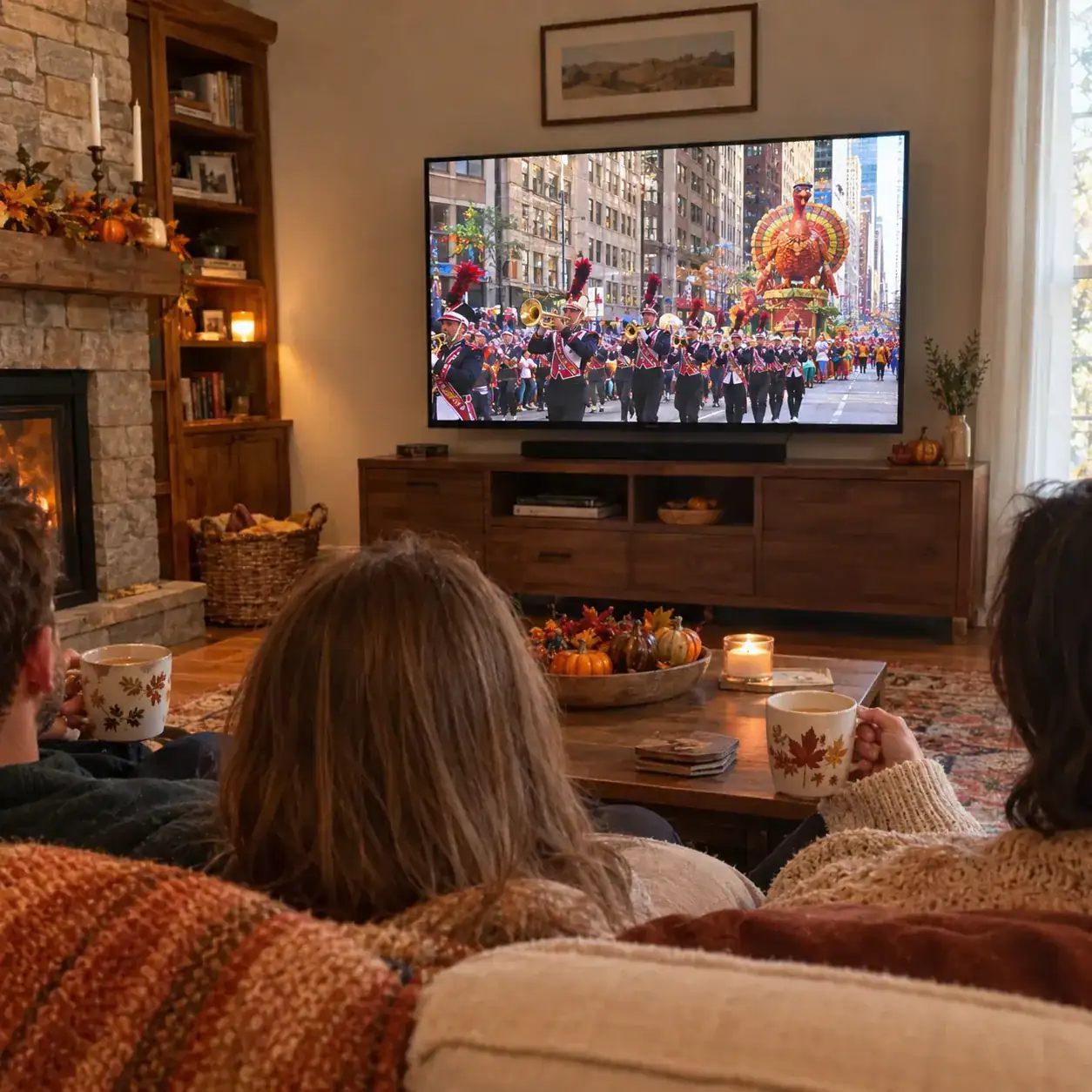
There was no parade from 1942 through 1944, because the rubber and helium were needed for the war effort. If your family already watches from the couch with coffee, you’re keeping a habit that began with zoo animals on a New York street.
5. Bring Back Ragamuffin Day for the Little Ones
New York kids once had their own costume holiday, and it fell on Thanksgiving.
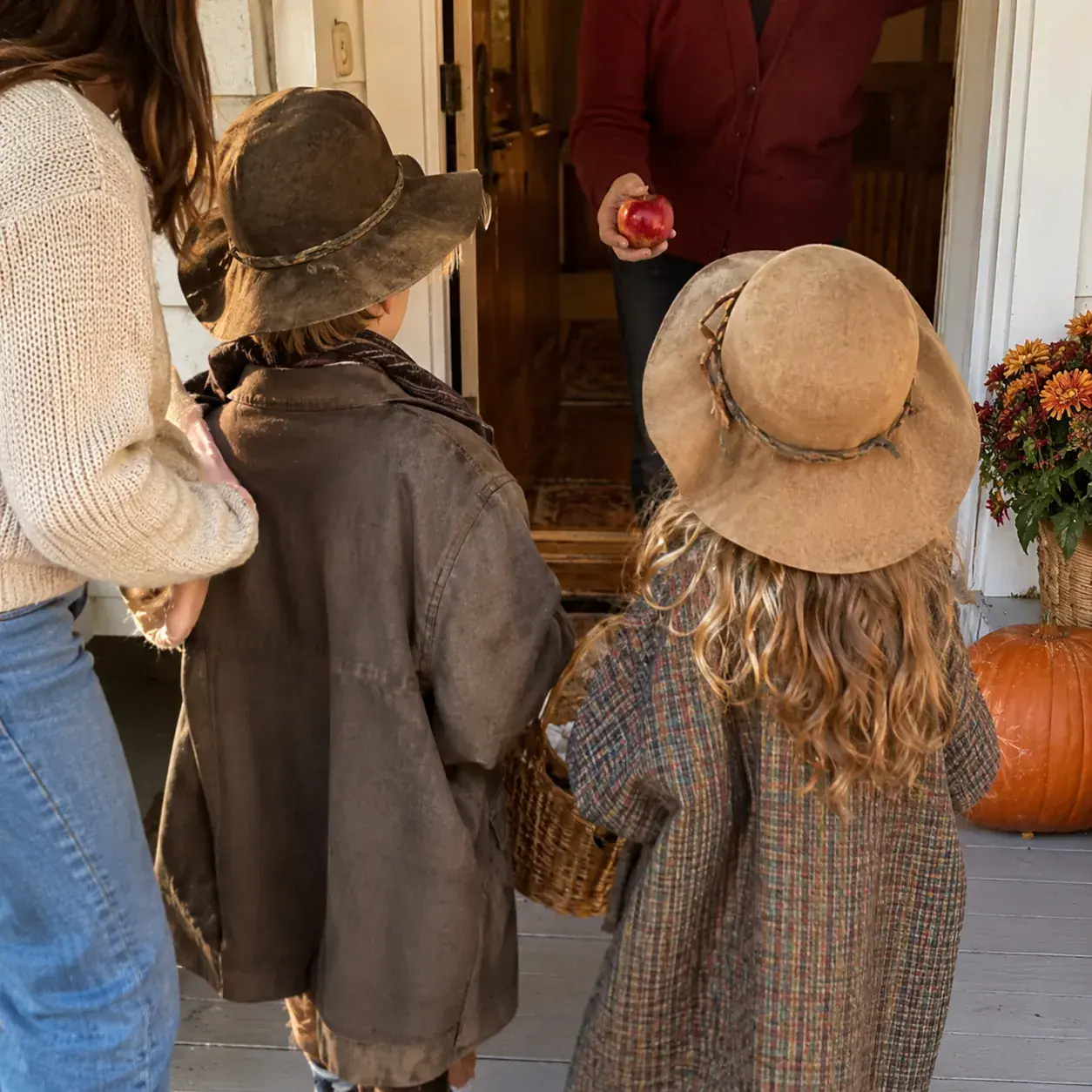
Children put on masks, hats and baggy hand-me-downs, sometimes an older sibling’s clothes, and roamed the streets asking strangers, “Anything for Thanksgiving?” Adults handed over pennies, nickels, apples or candy.
The custom goes back to at least 1891 and peaked in the early 1900s. A 1908 newspaper piece declared, “The Thanksgiving Ragamuffin is New York all through.”
Plenty of adults objected. They called the children rowdy and said dressing up as tramps was shameful. In the 1930s, Schools Superintendent William J. O’Shea complained that “modernity is incompatible with the custom of children to masquerade and annoy adults.”
One club tried to tame it. The Madison Square Club for Boys and Young Men ran organized Ragamuffin Parades, and its 1940 parade drew more than 400 children under the motto “American boys do not beg.”
Around the middle of the 20th century, Halloween took over and Ragamuffin Day faded. A few small kids in their parents’ old coats, knocking on Grandma’s door for a nickel, would be a fine way to bring it home.
6. Fight Over the Wishbone
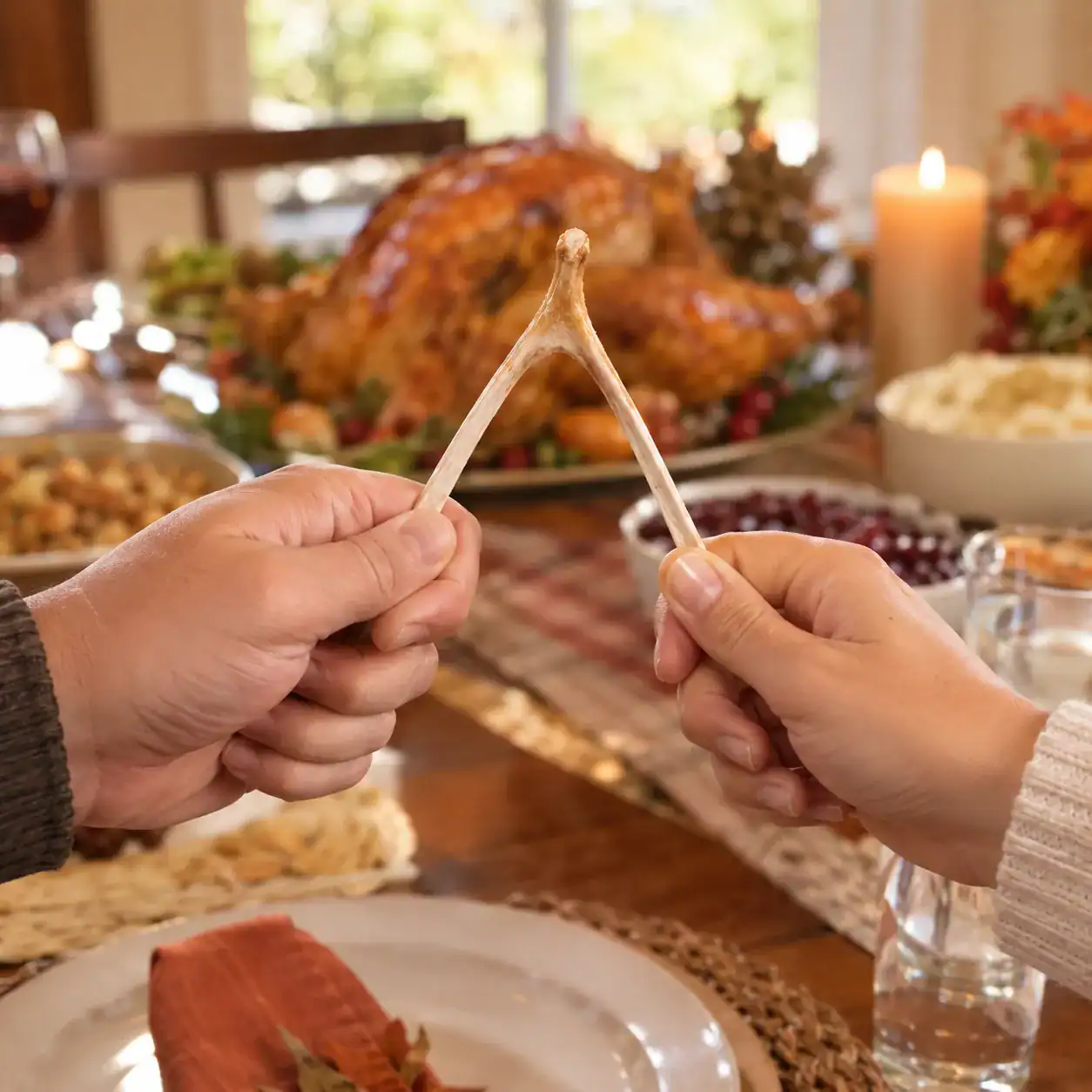
Two relatives, one wishbone, and a surprisingly big prize: the Oxford English Dictionary describes the longer piece as promising either an earlier marriage or a granted wish.
Families can argue for generations about who gets to pull.
The word “wish-bone” came much later. The earliest example found so far is from the Baltimore Sun on November 10, 1842, which hoped families’ “sons and daughters may have a frolic with wish-bones and mince-pies!”
That puts the wishbone at a November holiday table more than 180 years ago.
The older English name was “merrythought,” recorded in 1598. A little bone could carry a lot of hope.
7. Put Five Kernels of Corn by Every Plate
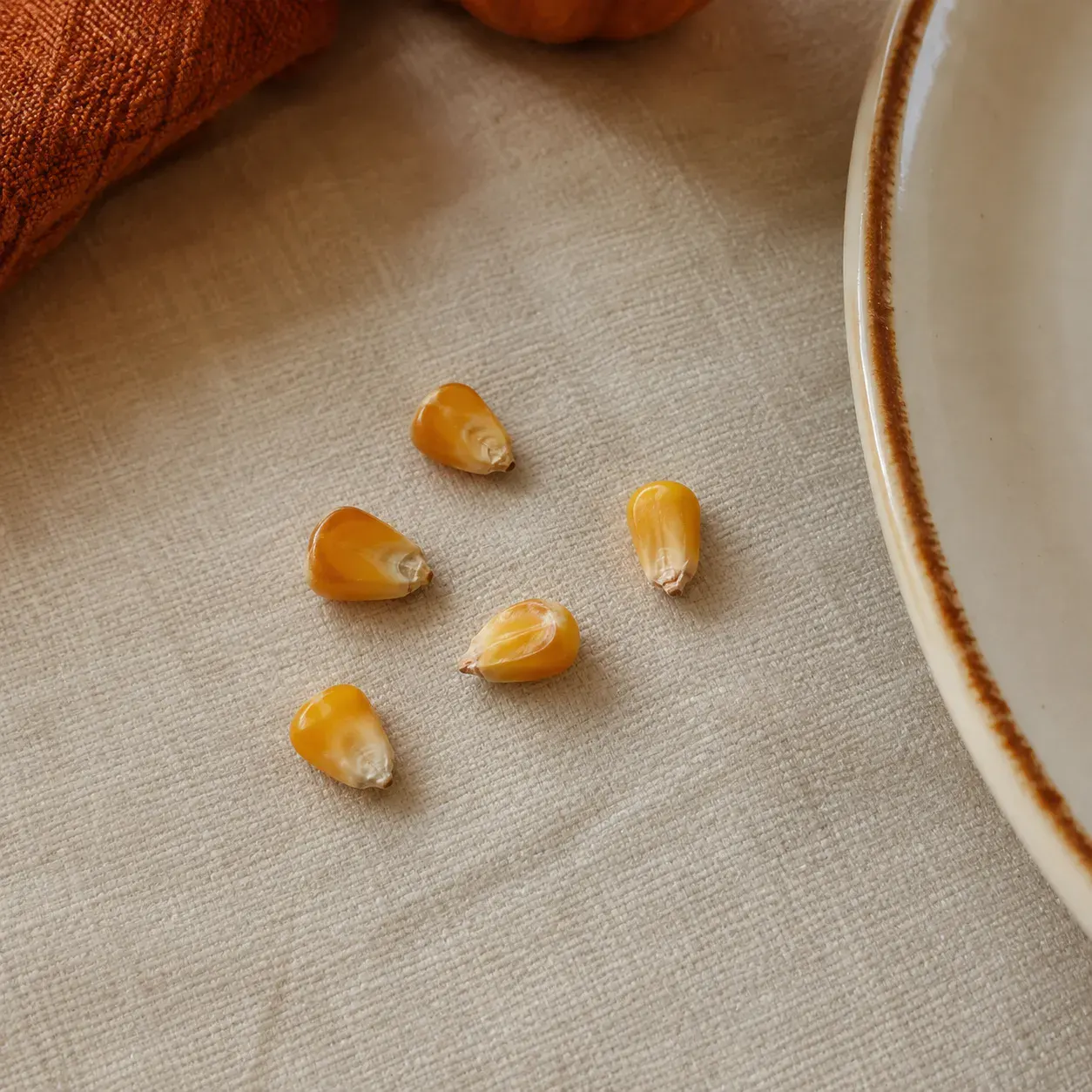
This one is a legend, and it’s worth telling as one. The story goes that during a hungry stretch at Plymouth, often placed in the spring of 1623, the Pilgrims’ rations fell to five kernels of corn per person a day.
Afterward, the tale says, families set five kernels beside each plate at Thanksgiving to remember it.
No primary record has been found that confirms a five-kernel ration. The story lives on anyway, and Hezekiah Butterworth put it into a 19th-century poem called “Five Kernels of Corn.”
It opens, “‘Twas the year of the famine in Plymouth of old,” and includes the line, “But to Bradford a feast were Five Kernels of Corn!”
The modern version has a gentle twist. Each person at the table names one thing they’re thankful for per kernel, which turns a story about hunger into five small moments of gratitude.
8. Write One Thank-You Letter a Year
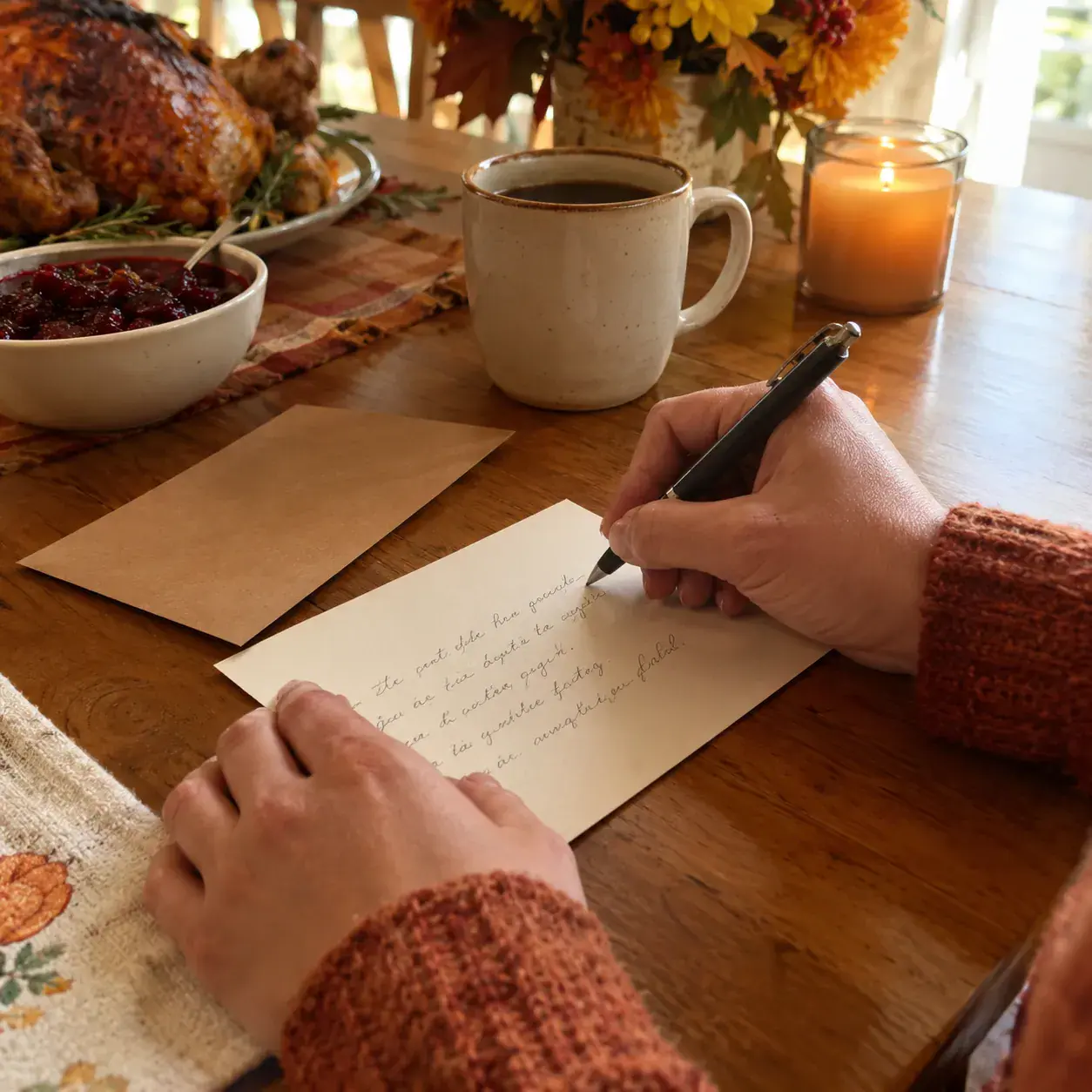
Sarah Josepha Hale wanted one national day of thanks, and she kept asking for 36 years. She became editor of Boston’s Ladies’ Magazine in 1828.
In 1846, by then editor of Godey’s Lady’s Book, she launched a letter-writing campaign.
On September 28, 1863, she wrote directly to President Lincoln. She asked that the day be “made a National and fixed Union Festival.”
Five days later, on October 3, Lincoln issued a proclamation setting apart “the last Thursday of November.” Secretary of State William Seward wrote it.
Her letter didn’t do it alone. The National Park Service ties the proclamation to recent Union victories as well.
Hale’s persistence is inspiration for an annual letter, not the origin of a thank-you tradition. A family’s version could simply tell someone what their kindness meant, with nothing asked in return.
9. Bake From a Recipe in Someone’s Handwriting
In 1796, a woman who described herself as “An American Orphan” published American Cookery in Hartford, Connecticut. Her name was Amelia Simmons, and almost nothing else is known about her.
Her book is widely regarded as the first cookbook written by an American and published in America. Fewer than 10 first-edition copies are known.
She wrote like an American, too. She used “molasses” where English cooks said “treacle,” and hers was the first cookbook to use the word “squash.”
Among her puddings is a “Pompkin,” baked in a crust with milk, eggs, molasses and spice. It’s widely credited as the basis of the American pumpkin pie.
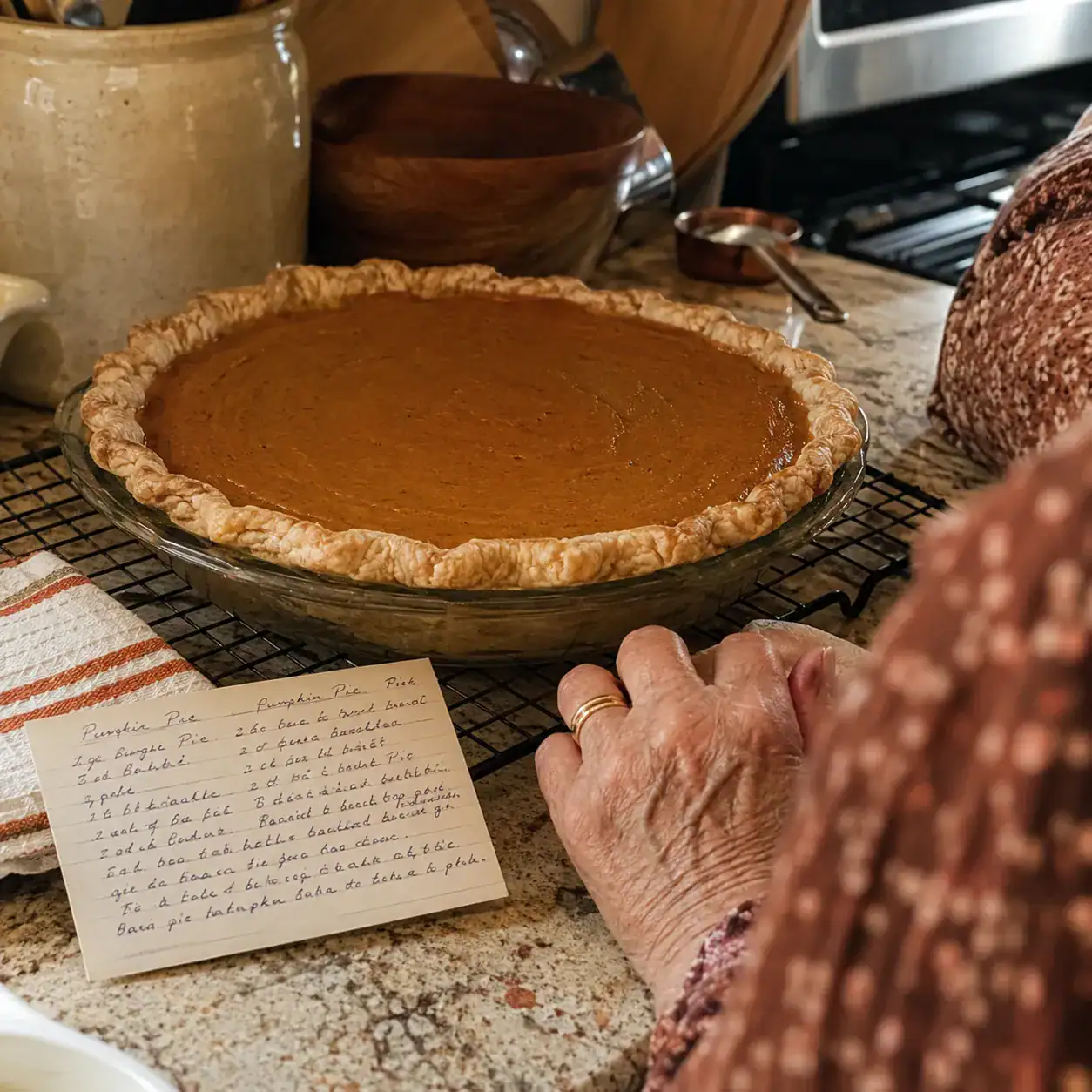
Simmons left almost nothing of herself behind except her recipes. If someone in your family makes the pie or the stuffing from memory, a written card in their handwriting may end up being the thing your grandchildren treasure most.
10. Take the Same Table Photo Every Year
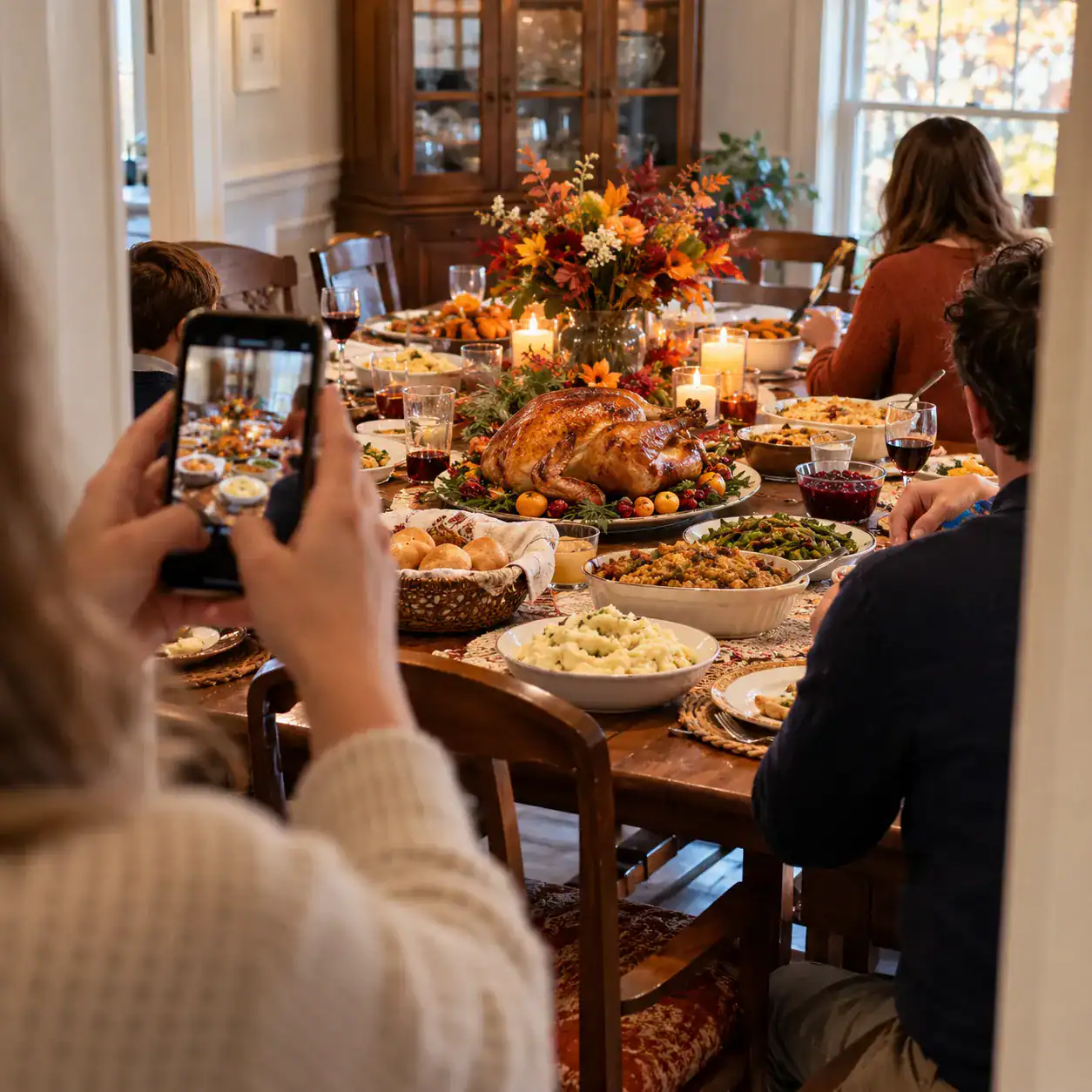
Norman Rockwell’s famous Thanksgiving dinner never happened, at least not the way it looks.
He painted Freedom from Want in Arlington, Vermont, with neighbors and family as models, including his wife Mary, his mother Nancy and the family’s cook, Mrs. Thaddeus Wheaton, who sets down the turkey. The models were photographed individually and combined in the painting, not seated together.
The turkey, though, was real. Rockwell photographed it on Thanksgiving Day 1942.
“Our cook cooked it, I painted it and we ate it,” he said. “That was one of the few times I’ve ever eaten the model.”
The painting ran in The Saturday Evening Post on March 6, 1943, and it now hangs at the Norman Rockwell Museum in Stockbridge, Massachusetts.
Your family’s picture doesn’t need a painter. Same spot, same angle, every year, and the gaps and new faces will tell the story on their own.
11. Start a Signature Tablecloth
Signature quilts, where each block carried someone’s name, became especially popular in the 1840s and 1850s.
Names, dates, places and verses were written in ink, and later often embroidered. On many surviving quilts, the ink has faded.
The American Folk Art Museum describes quilts made for weddings or for someone leaving a community. Names left in cloth could stay together even when the people moved apart.
Some raised money: each person paid something, a dime for instance, to have a name inked or stitched onto a square. Gift quilts included the “Surprise Quilt Presented to Mary A. Grow.”
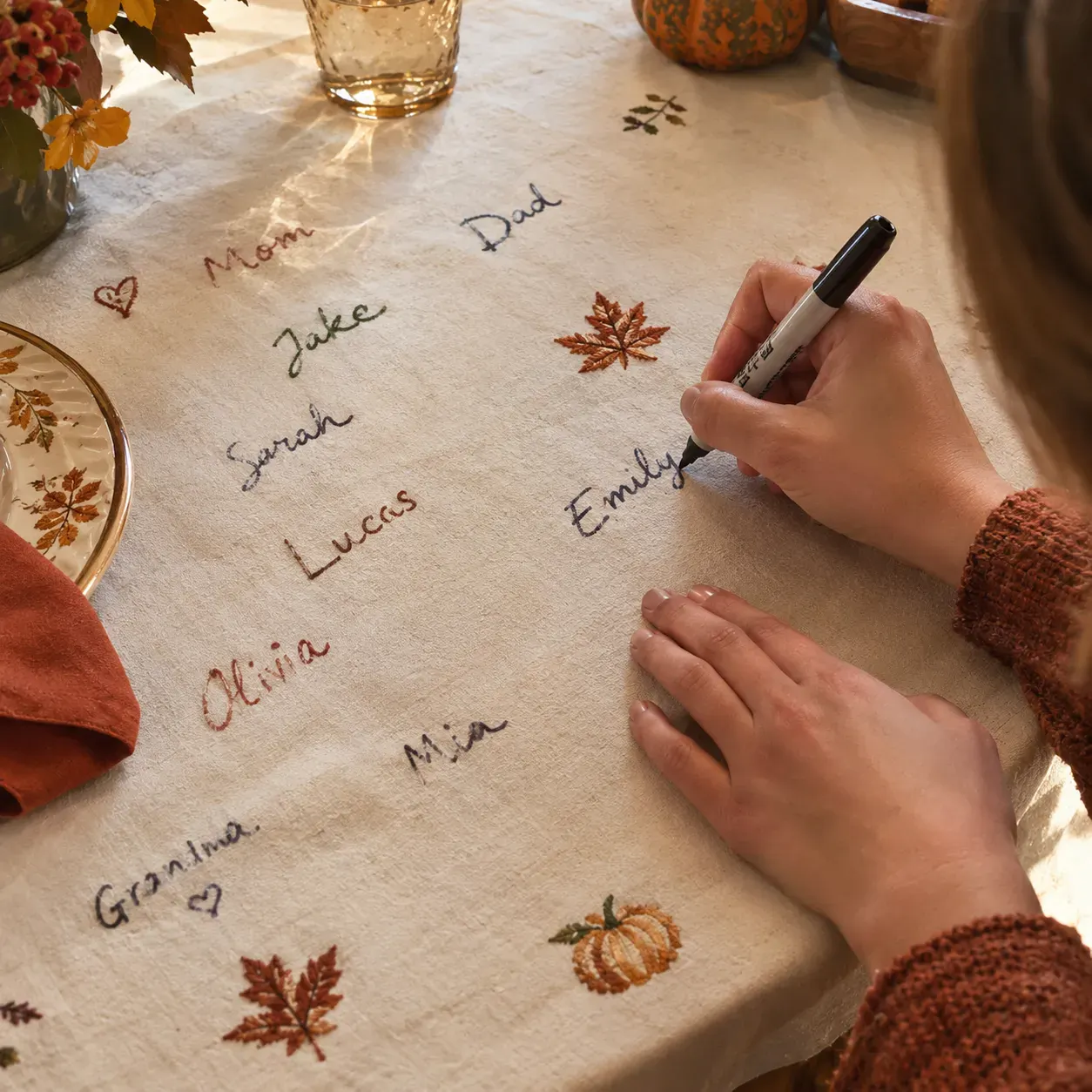
A tablecloth that everyone at the table signs each year, with the names embroidered over later, is the same idea in a new form. Decades from now, someone could run a finger along a name in a grandparent’s handwriting.
12. Record the Oldest Person at the Table
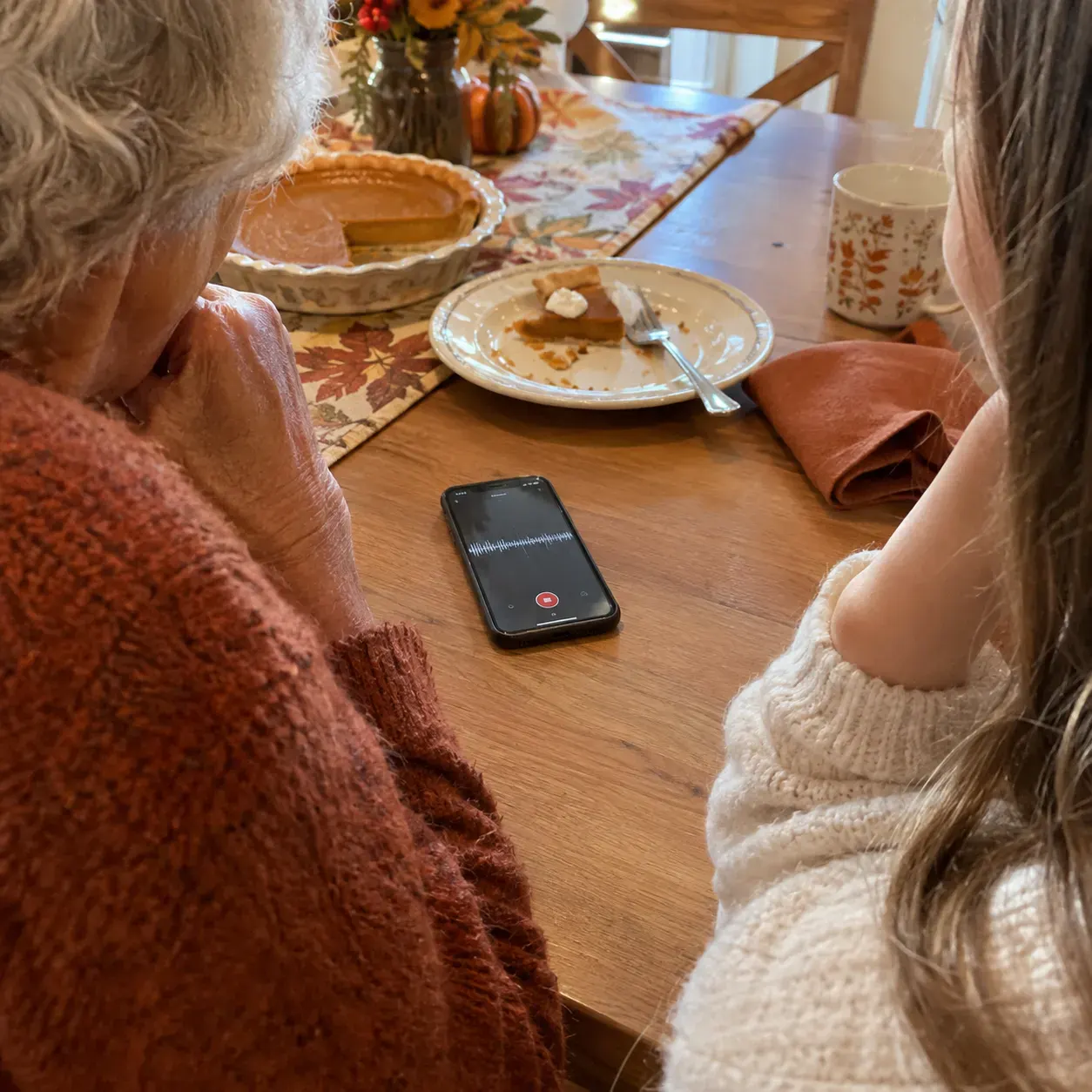
A high school student sitting down to listen to a grandparent was at the heart of the first Great Thanksgiving Listen.
StoryCorps launched it in 2015, asking students to record a conversation with a grandparent or another elder over 65. Tens of thousands of interviews came in during that first year.
With permission, those recordings become part of the StoryCorps Archive at the American Folklife Center at the Library of Congress.
A family conversation over a holiday weekend can end up in the nation’s library.
If your table has an elder at it, you don’t need an archive to make this one stick. A phone on the table and one good question after dessert is how it starts.
Somebody Always Goes First
Someday, a grandchild might unfold a tablecloth and find your name among the stitching. Something begun at this year’s table could become a way of feeling close to you.
Somebody always goes first. This year, it can be you.
If the recording tradition is the one you want to start, Generational Journeys is an e-book of 170 interview questions for drawing stories out of your relatives.